Tucson Gastropark debuts at Agave Heritage Festival
The Tucson Gastropark officially opened its doors during the 18th Agave Heritage Festival, bringing a long-awaited culinary hub to the Sunshine Mile and a permanent home for Tucson's UNESCO City of Gastronomy designation.
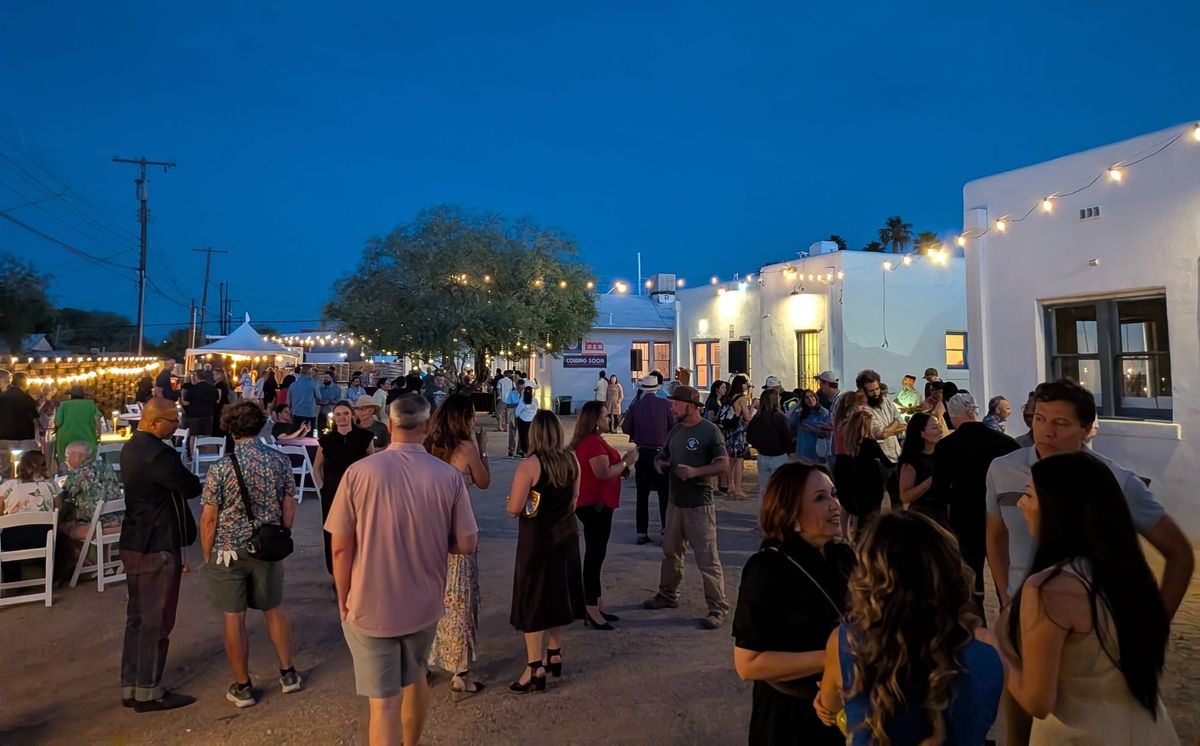
The Tucson Gastropark marked its official opening the way its founders intended: with mezcal, mesquite-roasted skewers and more than 200 guests gathered on the Sunshine Mile for the largest VIP event in the history of the Agave Heritage Festival.
The Gastropark, a culinary destination and community hub, co-hosted the opening event of the 18th Agave Heritage Festival with the Tucson City of Gastronomy, featuring vendors of alcoholic and non-alcoholic agave products alongside food from some of the city's top chefs.
Tucson City of Gastronomy Executive Director Jonathan Mabry said the Gastropark is the perfect spot to serve as a hub of Tucson's rich culinary history and excellence.
"We have lacked, until now, a place where people could come to learn about and experience what the city of gastronomy designation means," he said. "We're really happy to be partnering with the Gastropark, and we're going to explore how to make this a real place for locals and visitors to experience the first designated UNESCO Creative City of Gastronomy in the United States."
Attendees toured the Gastropark's seven historic casitas, which were spared from the 2019 Broadway Widening Project. The casitas featured restored interiors and renovated exteriors, with one serving as a recording studio for radio host Jennifer English and another housing an exhibit by Sandra Harper, an artist from Marfa, Texas.
The event culminated with an official ribbon-cutting ceremony for the Tucson Gastropark, with speakers including founder Peter Anadranistakis, Rio Nuevo Chairman Fletcher McCusker and Ward 6 Tucson City Councilmember Miranda Schubert.
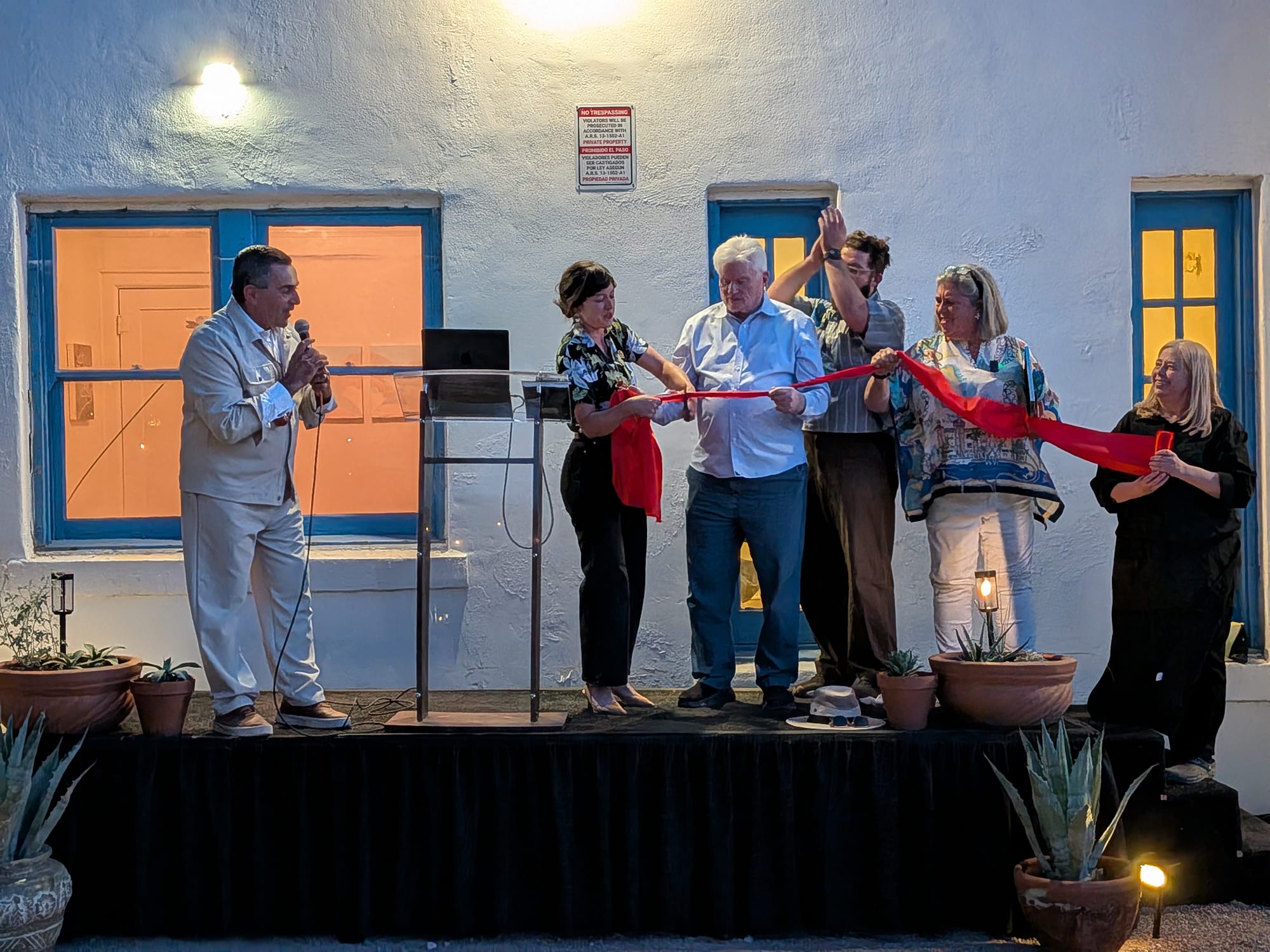
The ribbon-cutting symbolized the official introduction of the Tucson Gastropark to the Tucson experience and community, Anadranistakis said.
"Great chefs that are well known and up and coming can have a home here in collaboration," he said. "I am offering this space to benefit the culinary geniuses, the citizens of this great city, to eat, sip, taste, and explore."
Multiple vendors had the opportunity to showcase their products during the event, including Quiote Imports' agave nectar. Owner Greg Benson grows agave on his farms in Hidalgo, Mexico.
He said the event allowed him and other vendors to share their authentic and unique flavors with the community.
"There's such a joy in discovering that we live in a world of amazing variety and depth and flavor, and the sort of flattening of modern commerce has robbed us of a lot of that," he said. "But it is there for the discovering, if we're willing to look and if we're willing to be a little bit curious."
Alongside a wide variety of mezcal, bacanora, sotol and other agave products, attendees could also sample creations from three of Tucson's top chefs.
Private Chef Christian Padilla, Tito & Pep's John Martinez and Pablo Valencia, who owns the mobile restaurant Scratching the Plate, each created appetizers for attendees using ingredients and techniques that highlight Tucson's rich gastronomic history. Dishes included Padilla's mesquite-roasted skewers and Martinez's mezcal-cured seafood.
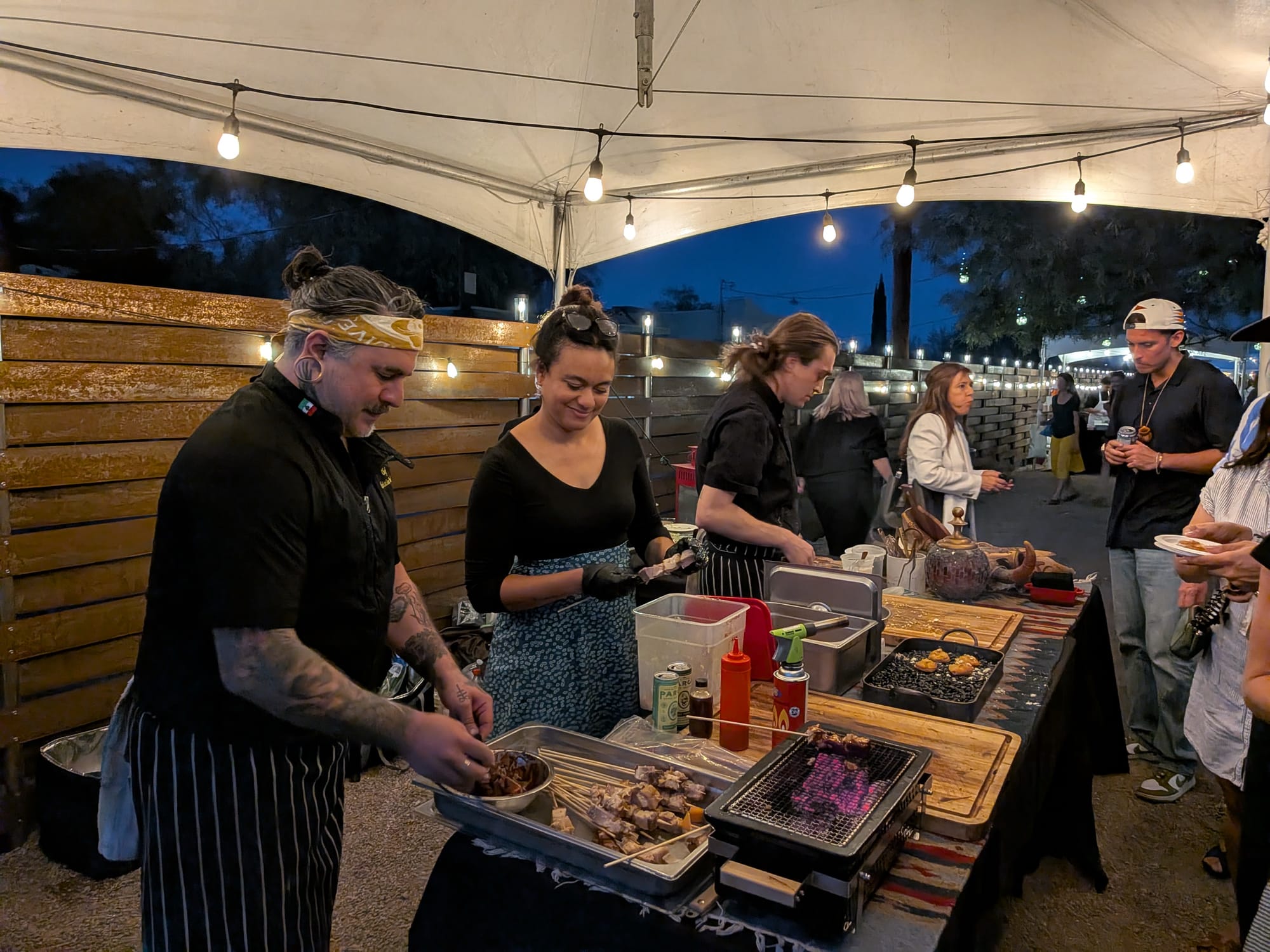
Valencia said the Agave Heritage Festival gave him the opportunity to spread the word about his mobile restaurant while contributing to the city's rich gastronomic scene.
Valencia said his goal is to cook with minimal equipment, relying on traditional live ember fires. The Gastropark, he said, gives him a place to showcase those techniques, one reason he has wanted to be part of the project since its beginning.
For Tito & Pep's Martinez, who grew up just a few neighborhoods away from the Tucson Gastropark, the restored casitas felt "like home."
"I grew up driving down this stretch of Broadway my whole life," he said. "It's really kind of keeping alive the spirit of the craftsmanship with these bungalows."
Tucson Gastropark is set to open in three phases, with Anadranistakis saying the Agave Heritage Festival marked the start of phase one.
"We have a whole city block in this beautiful outdoor space and very soon we'll be activating the inside of these seven historic casitas. So to me, it's just keeping the momentum going," Anadranistakis said.
By summer, the Tucson Gastropark will operate as a culinary co-working space with the Tucson City of Gastronomy, welcoming and collaborating with chefs from around the world.
Elias Bonilla is a journalism and political science major at the University of Arizona and Tucson Spotlight intern. Contact him at ebonilla1500@gmail.com.
Tucson Spotlight is a community-based newsroom that provides paid opportunities for students and rising journalists in Southern Arizona. Please consider supporting our work with a tax-deductible donation.