Tucson estate sale firm thanks critic of Nazi memorabilia
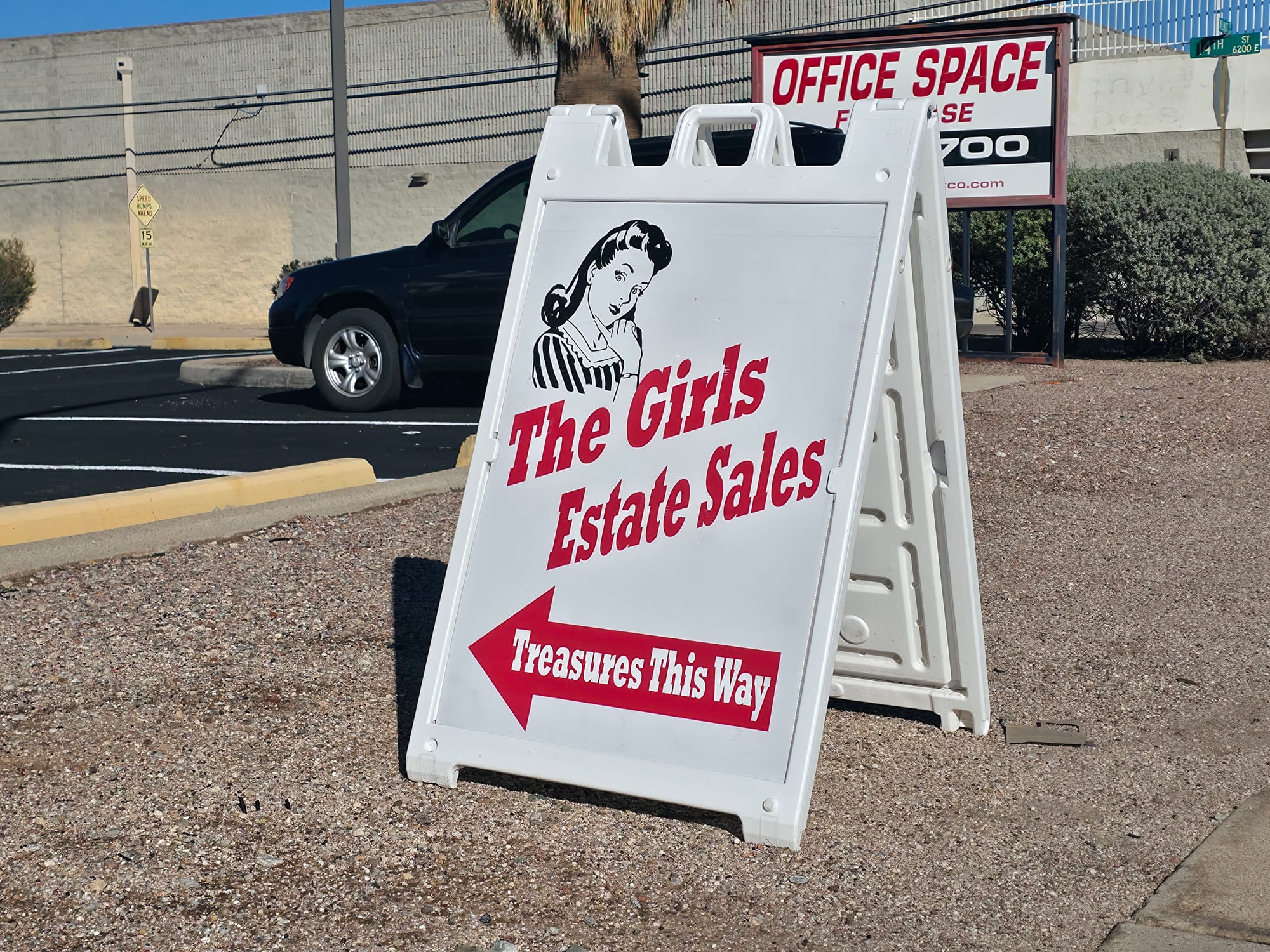
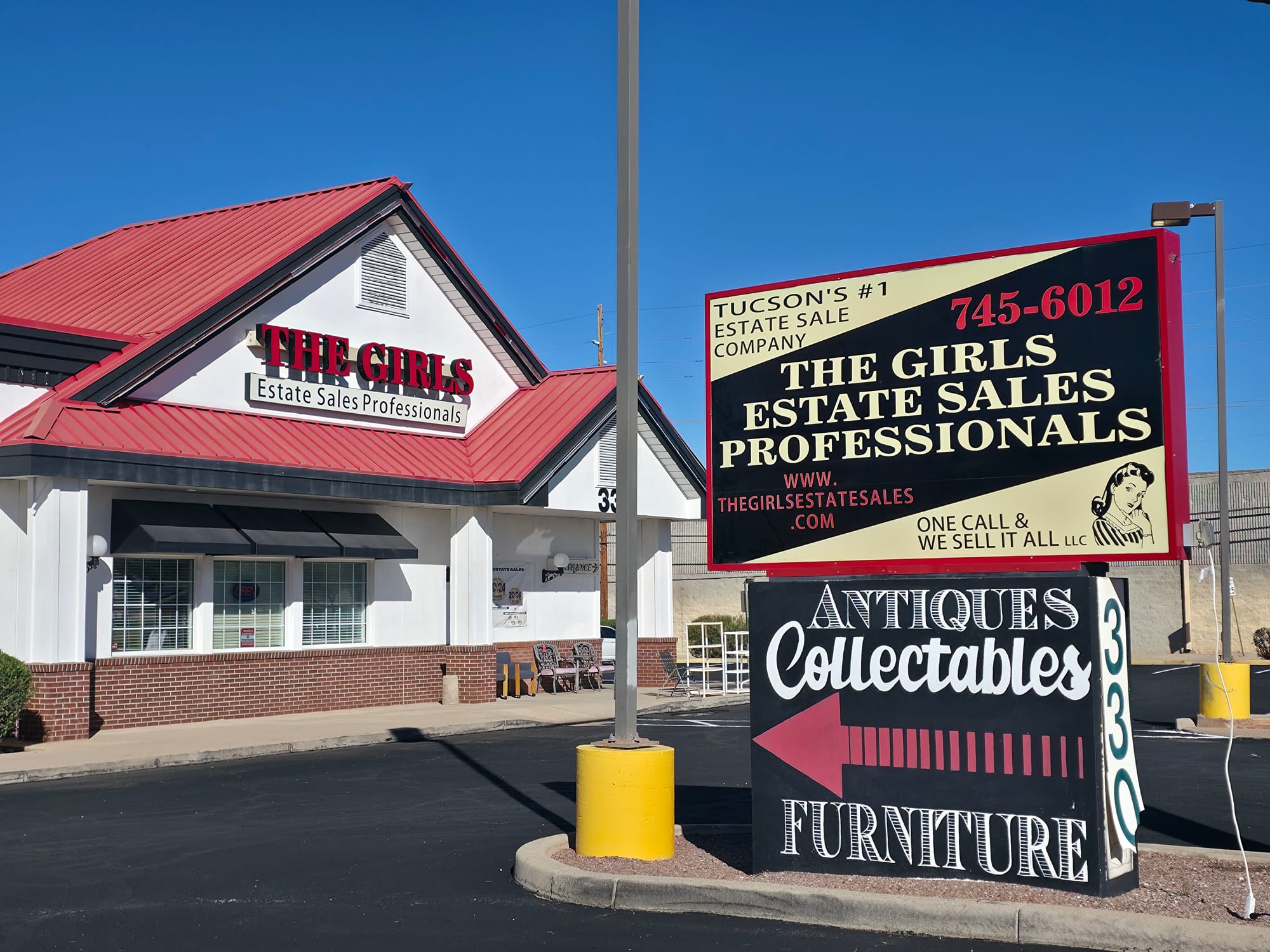
A Tucson estate sale company selling Nazi and Hitler memorabilia thanked a Jewish shopper for the “shout out” after he criticized the items online.

A Tucson estate sale company selling Nazi and Hitler memorabilia thanked a Jewish shopper for the “shout out” after he publicly criticized the items, then reacted to his post with a clapping-hands emoji.
EstateSales.NET, the site that hosted the listing for The Girls Estate Sales, said it is reviewing whether the listing followed its policy.
Andrew, who asked that his last name not be used, and his wife regularly browse estate sales around Tucson. He was scrolling through the photos posted on EstateSales.NET for The Girls' Oct. 24 sale near East Broadway Boulevard and South Houghton Road when one stopped him.
“I was going through the pictures, there’s a lot of, you know, matchbox cars, vinyls … and then I got to this picture and I did a double take, and I was like, ‘Hold up, that is a lot of Hitler memorabilia,’” Andrew said. “I zoomed in, and I was like, ‘That absolutely is a lot of Hitler memorabilia.’”
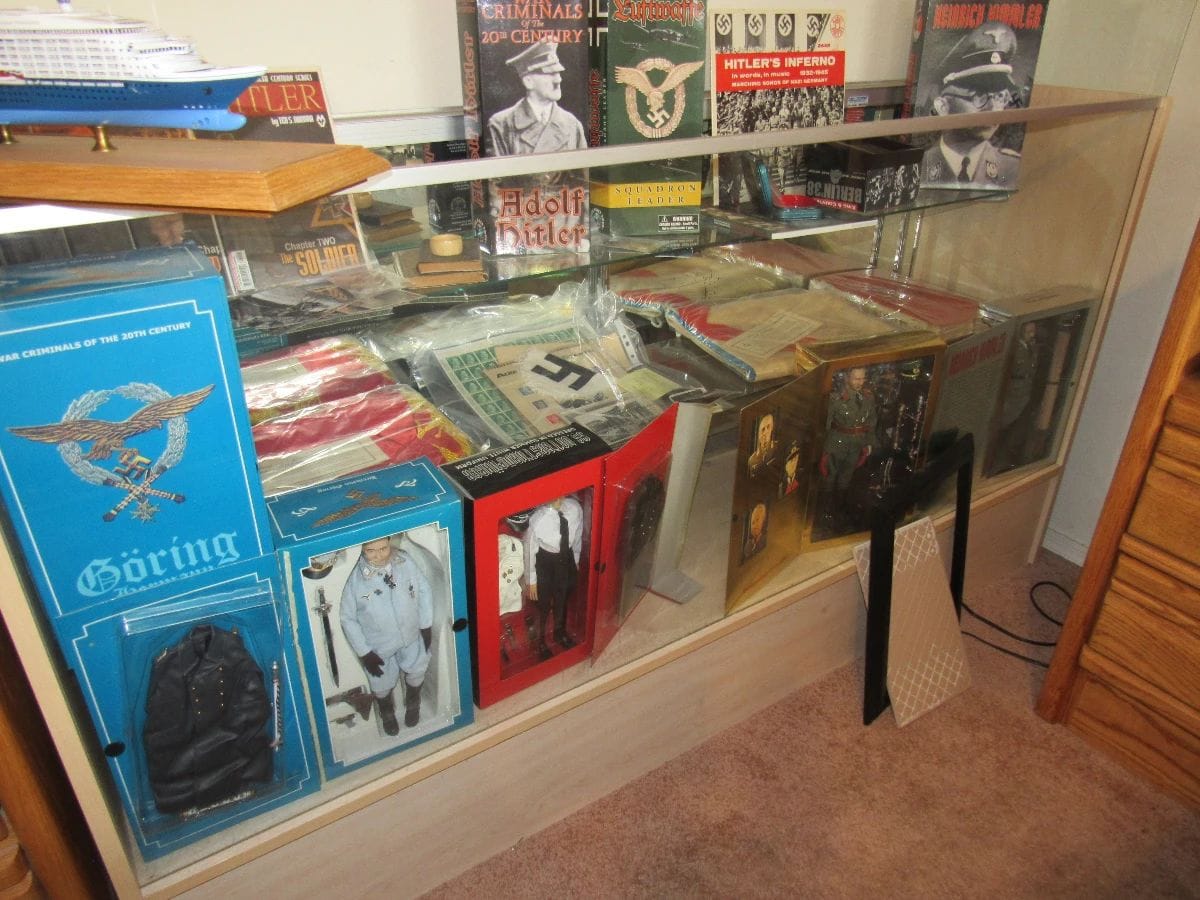
The photo showed a glass case holding books including “Hitler’s Inferno” and a book of Nazi marching songs, dolls depicting Nazi Party members including propaganda chief Joseph Goebbels and sealed pieces of red fabric that appeared to come from a Nazi flag. A nearby box was labeled with the name of Hermann Göring, one of Hitler’s top lieutenants.
The sale’s online listing doesn’t mention Nazi or Hitler items by name. In a long list of household goods and collectibles, from Noritake dishes to a signed Hootie & the Blowfish guitar, it includes a “German WWII history collection,” tucked between vintage toy tractors and a toy cannon truck.
Andrew’s grandmother, a Holocaust survivor from Poland, came to the United States through Ellis Island. She was among the first survivors interviewed by Steven Spielberg about their experiences and is featured at the Illinois Holocaust Museum and Education Center in Skokie, Illinois.
“Estate sales are going to have historical artifacts, but there’s a difference between historical artifacts like a replica fighter jet pilot and (items of) Hitler Youth,” Andrew said.
We're a nationally recognized newsroom, but we're still a nonprofit that runs on community support. Help us keep telling Tucson's stories.
He emailed the company to share his concerns and hasn’t heard back. He also posted about the sale on Instagram and tagged the company, which responded to the post with a heart emoji.
“(My wife) and I will regularly look at what Estate Sales are going on in Tucson… We found this one promoted by (The Girls),” Andrew wrote in the Instagram story. “In true disbelief, I had to double take,” he wrote in the story. “I get Estate Sales will have historic artifacts, however there is a significant difference in claiming to have ‘WWII history collection” and having Hitler/Nazi artifacts.”
The company’s account then sent him a direct message: “Thanks for the shout out.”
Andrew wrote back that it wasn’t a positive shout out and that the company should do better.
“Yeah definitely some good sales coming up. Can’t wait to see you there!” the company replied.
Andrew said the messages seemed like automatic replies. But after the exchange, the company’s account reacted to his post with a clapping-hands emoji, which made him question whether the response was intentional.
An office manager for The Girls Estate Sales, who gave only her first name, Stephanie, initially denied that the Instagram exchange had happened when Tucson Spotlight visited the group’s storefront Thursday. She later acknowledged it.
“I can’t take it back. … But what’s done is done,” she said. “The interaction on Instagram … could have been handled differently.”
Stephanie said the company didn’t photograph everything in the collection and after talking with its client, it held back items it considered more sensitive. She said none of the items it did photograph were illegal to sell.
“As far as the advertising goes, we try to be as delicate as we could,” she said.
She said employees are uncomfortable selling items like these, but the company’s contract with its client required it.
“Most of our employees don’t like selling that stuff, but we have to,” she said. “It’s part of history. Whether it is good history or bad history, it’s all there.”
Another Tucson estate sale company took a firmer stance.
Gaby Fleming and her husband, Chris McKulsky, who own Tucson Estate Sales said they come across Nazi-era items or other items with hate symbols two or three times a year.
In most cases, the company talks with its clients and declines to sell the items. Often the family just wants them thrown away.
“We once nearly filled a roll away dumpster with white supremacy propaganda, and it was a weight off a grieving family’s shoulders, and off ours to be honest,” the couple said in an email.
Fleming and McKulsky said the company has never sold items like these. Staff research every item, and anything that could upset an entire group of people is left out of the sale. The company does sell political and religious items, as long as they weren’t made for a hateful purpose.
“There is a line between preserving history and culture while educating others, and hatred, and in your soul you can feel it cross the line,” Fleming and McKulsky said.
They said there are few industry standards for estate sale companies, and each one does things a little differently.
“As a reseller, you should never feel forced to take on a client or sell something,” they said. “Sometimes it’s easy to get caught up on dollar signs, but by sticking to your gut, it will take you further.”
Selling Nazi memorabilia is legal in the United States, but several major online marketplaces restrict it. eBay expanded its ban in 2001 to cover Nazi memorabilia regardless of its age or historical value, though it still allows German coins and stamps from the period and other items without Nazi or SS markings. Etsy has said it doesn’t allow items that support or commemorate current or historical hate groups, including collectibles.
EstateSales.NET says on its website that it isn’t a curated site and doesn’t see items before they’re listed. Its policy allows some antique items tied to historic injustices when sellers provide transparent historical context, but it bars items that promote hate groups or glorify human tragedy. The site asks sellers to contact its support team for approval before listing items that may fall under those restrictions. Violations can lead to the item or sale being removed or the seller’s account being suspended or canceled.
A seller support specialist for the site said Nazi-related items are allowed if they were made before 1945, but they can’t glorify hate groups, historical atrocities or intolerant views. He said the site would send the listing to its compliance team and check its records to see whether The Girls asked for approval and whether anyone reported the listing before Tucson Spotlight’s inquiry.
“We take these matters seriously,” the specialist wrote.
The Anti-Defamation League told Tucson Spotlight it understands there’s a market for war memorabilia among serious collectors and doesn’t object to Nazi-era items being sold at auction. But it doesn’t want them ending up with people who would use them to glorify Hitler or the Nazis.
“There’s no line between historical artifacts and memorabilia. It all depends on the context of how it is being used,” said Sarah Martin, director of communications for ADL West. “We would rather see these items in a museum than in the hands of someone who might use them to spread hatred.”
The ADL said businesses that come across these items should give them appropriate context and consider donating part of the proceeds to anti-hate initiatives or Holocaust education.
Lynn Davis, interim executive director of the Tucson Jewish Museum & Holocaust Center, said the museum is built around the stories of the more than 270 Holocaust survivors who settled in Tucson and Southern Arizona after World War II. It displays Nazi-era artifacts, like a radio the Third Reich used to spread propaganda into German homes and a yellow Star of David a local survivor wore as a child. But it deliberately leaves out Nazi items like swastikas and SS uniforms because they can be triggering for survivors and their families.
“When these objects are removed from their historical context, they can take on an entirely different meaning,” Davis said. “What was once an instrument of persecution or propaganda can become a collectible, a status symbol or even an object of admiration.”
She said antisemitism has risen worldwide since the Oct. 7, 2023, Hamas attacks on Israel, and that Nazi artifacts on the open market risk being fetishized and glorified.
Davis said families who find these items should pause before selling them, photograph and document them, and contact a Holocaust museum. Museums can trace an object’s history, including whether it was taken from a Jewish family during the Holocaust. The museum accepts some donations, though it doesn’t necessarily display them.
“By donating these items to a museum, you know that they will be cared for appropriately, they won’t be celebrated and they can do their part to help tell one of the darkest stories in human history,” she said.
She said many of today’s survivors were small children during the Holocaust, and their memories often return as they age.
“How should it feel to see the insignia from the uniform of a soldier who ripped you from your mother’s arms offered at an estate sale?” Davis said. “It’s horrifying to think about.”
Jewish Philanthropies of Southern Arizona, which collects reports of antisemitic incidents through its community security program, also said the items belong in museums.
“In general, Nazi memorabilia should wind up in a museum rather than being sold to the highest bidder to preserve historical truth, prevent the glorification of hate and stop the commercial exploitation of a global tragedy,” said Carina Bien-Willner, the group’s director of public affairs.
Andrew said he isn’t sure an apology from The Girls Estate Sales would mean much, but he wants to see some accountability.
“Whether that’s educating themselves, donating some profits to the (Jewish Community Center) or the Holocaust survivorship memorial, I think that would be appropriate,” he said.
Caitlin Schmidt is editor and publisher of Tucson Spotlight. Contact her at caitlin@tucsonspotlight.org.
Topacio “Topaz” Servellon is a reporter with Tucson Spotlight. Contact them at topacioserve@gmail.com.
Tucson Spotlight is a community-based newsroom that provides paid opportunities for students and rising journalists in Southern Arizona. Please consider supporting our work with a tax-deductible donation.