Tucson community gardens grow food for local pantries
Community Gardens of Tucson and the Pima County Food Alliance are growing carrots, radishes and peas in unused garden beds for local food pantries.
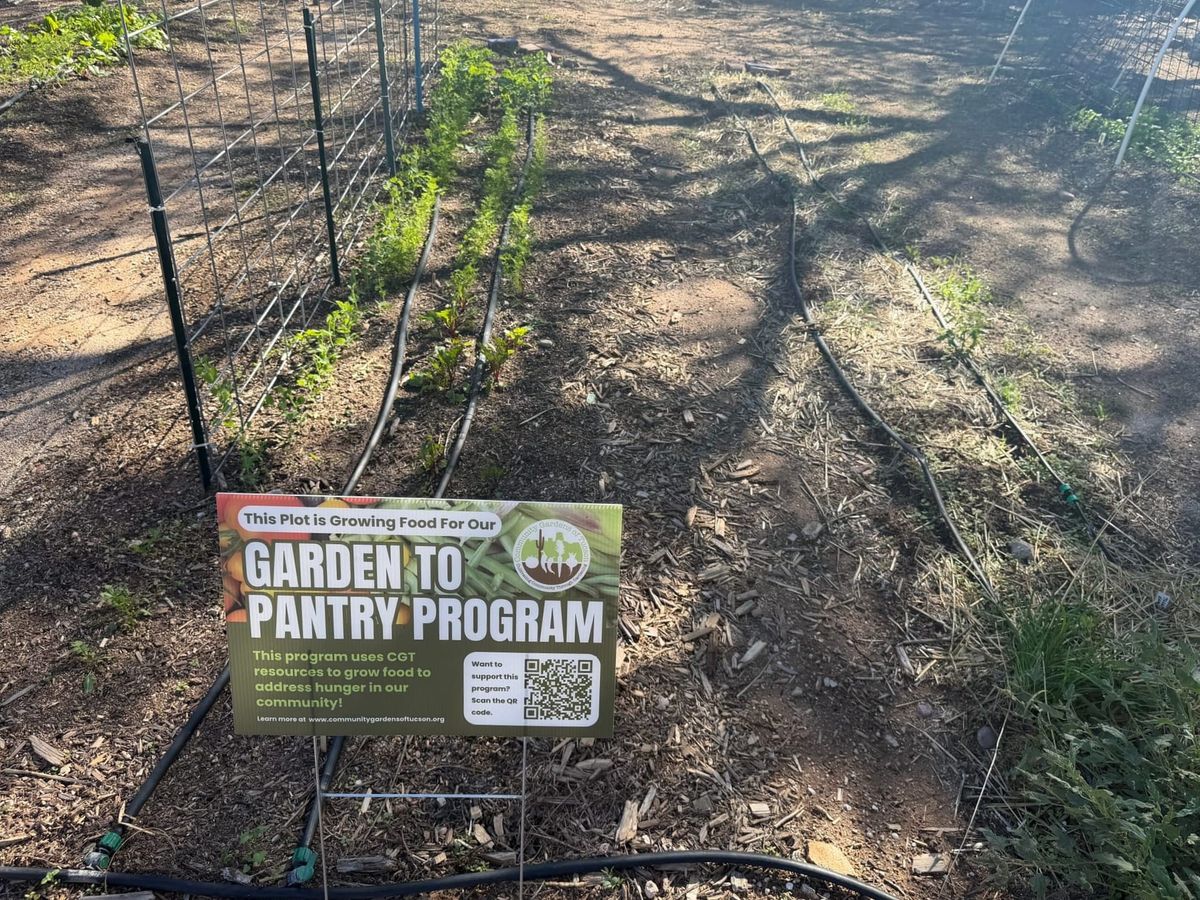
Unrented beds at Community Gardens of Tucson are being planted with carrots, radishes and peas, and the harvest goes to neighbors facing hunger through a new pilot with the Pima County Food Alliance.
The pilot, called Garden to Pantry, has volunteers grow high-calorie crops in garden beds that would otherwise sit empty and deliver the harvest to local food distribution partners. It also reaches people facing hunger who don’t have the time, ability or resources to tend a plot of their own.
Garden to Pantry pairs the Pima County Food Alliance’s food policy work with Community Gardens of Tucson’s existing garden sites.
“There’s a lot of individuals that maybe aren’t able to have the time and capacity to grow their own food, especially if they’re facing other issues,” said Brittany Guerrero, Community Gardens of Tucson’s operations manager. “We have empty plots in the garden, so we have space that we can utilize, and we’re putting those pieces together and saying, ‘Hey, let’s grow food and try to donate for individuals that utilize it.’”
Community Gardens of Tucson has long worked to eliminate financial obstacles for low-income residents seeking to grow their own food. Enrollment in the organization’s sliding-scale Food Resiliency Program, which offers plot memberships ranging from $0 to $16 per month compared with the standard $22 monthly fee, has grown from about 50 gardeners to 132, Guerrero said.
Despite this expansion, waiting lists for subsidized individual plots remain long. And many community members experiencing acute food insecurity lack the time, physical capacity or resources required to maintain a dedicated plot.
The Garden to Pantry pilot addresses these constraints simultaneously. By converting vacant, unrented garden beds into collective growing spaces maintained by experienced volunteer gardeners, the program produces fresh, nutrient-dense food specifically marked for free community distribution.
Community Gardens of Tucson garden educator Lou Haiduk leads the pilot, which focuses on high-density crops, drought-tolerant seeds and space-saving techniques such as vertical trellising.
Tucson Spotlight trains the next generation of Southern Arizona journalists and publishes their work free for everyone. No paywalls, no corporate backing — just readers who believe this community deserves better local news.
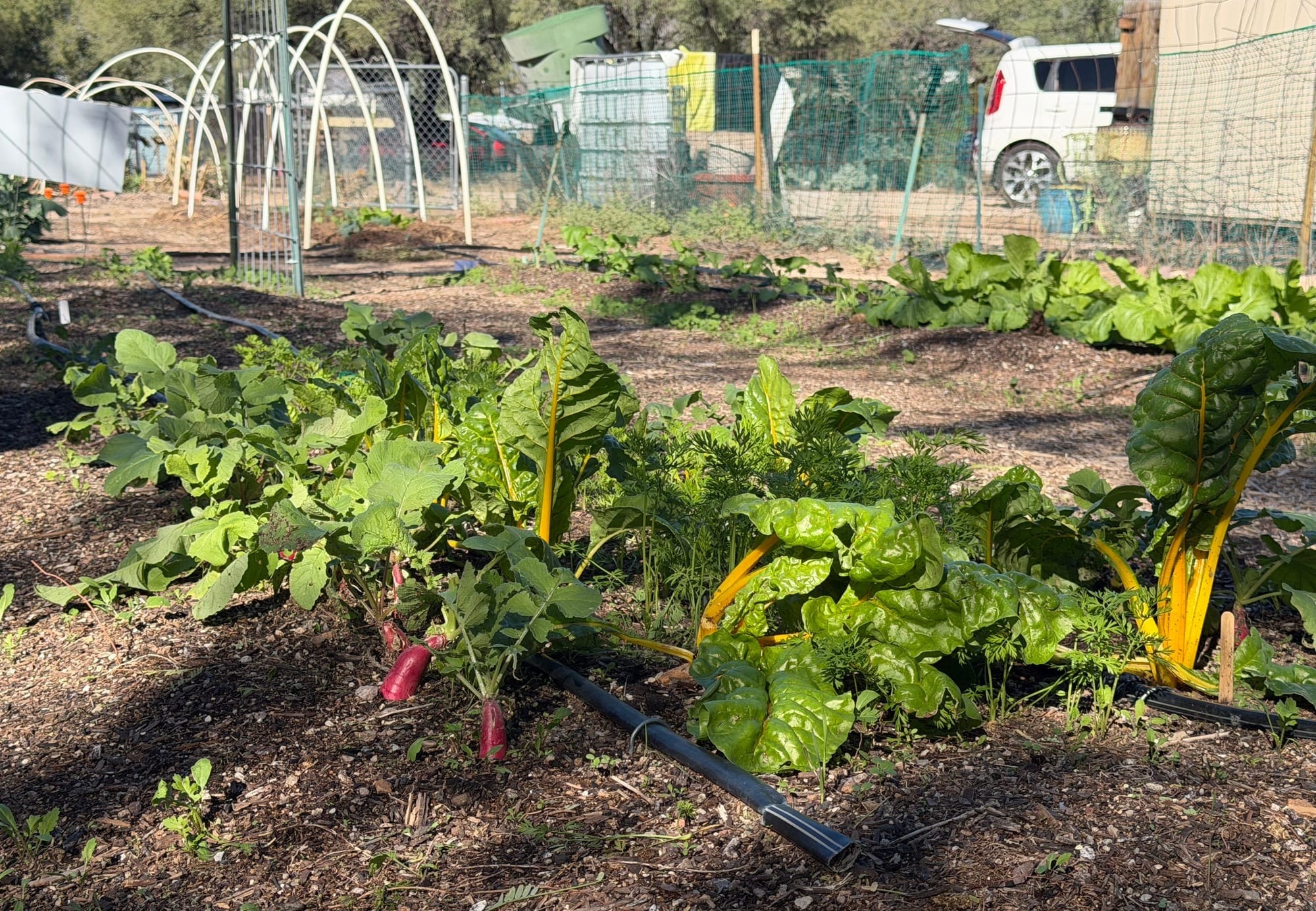
Unlike cold-climate regions where agricultural operations shut down during winter freezes, Tucson’s mild winter temperatures and summer monsoon season allow for continuous, year-round cultivation.
Carrots are prioritized because of their caloric density, nutrients and extended shelf life, along with fast-maturing radishes.
“We know carrots do super well here in Tucson, and carrots actually have some calories to them and some great nutrients. So that’s one that we’re prioritizing, as well as peas,” Haiduk said. “We’re not fighting the seasons in any way, we’ll just be sharing what actually grows well in each season.”
Radishes are ready weeks before other crops, so the pilot tracks how much it harvests and how often to arrange quick drop-offs with local distribution partners before the food spoils, Guerrero said.
So many people offered to help with the pilot that organizers have temporarily capped the number of volunteers at the garden sites.
“With this particular program, we’ve had so many people wanting to help,” Haiduk said. “That just makes me really hopeful. It tells me that people in Tucson want to grow food, but they want to really have a strong purpose behind it.”
Organizers are adding other ways for people to help.
Starting in December, volunteers will be able to work from home. They will receive seedling kits and grow lights to start plants that will supply future plantings at the gardens.
Beyond food production, Community Gardens of Tucson uses its network of sites as public third spaces, regularly hosting neighborhood association meetings, educational workshops, film screenings and open-air arts events.
Tucson residents can attend free community gardening workshops, support events at garden sites or donate to Community Gardens of Tucson. Details on upcoming events are on the Community Gardens of Tucson and Pima County Food Alliance websites.
Isabel Vidrio is a University of Arizona alum and freelance journalist in Tucson. Contact her at vidrioi@arizona.edu.
Tucson Spotlight is a community-based newsroom that provides paid opportunities for students and rising journalists in Southern Arizona. Please consider supporting our work with a tax-deductible donation.