Tucson study shows naloxone law boosted prescriptions
A UA study found Arizona’s 2018 naloxone coprescribing law sharply increased prescriptions, even for patients it didn’t cover.
Eli Joy was 18 and mixing benzodiazepines with opioids the first time an overdose nearly proved fatal.
That was more than 10 years ago, before most people knew how to respond to an overdose.
“Back then, they were trying to put me in the shower and dump ice on me because they thought it would wake me up,” Joy told Tucson Spotlight. “That’s what my friends were doing.”
Joy woke up in the hospital. Years of getting clean and relapsing followed. Through it all, his mother kept naloxone, the overdose-reversal drug commonly known by the brand name Narcan, on hand. She used it on him several times.
“It saved my life,” said Joy, who is in recovery and works at CODAC Health, Recovery and Wellness as a peer support specialist on the agency’s deflection team.
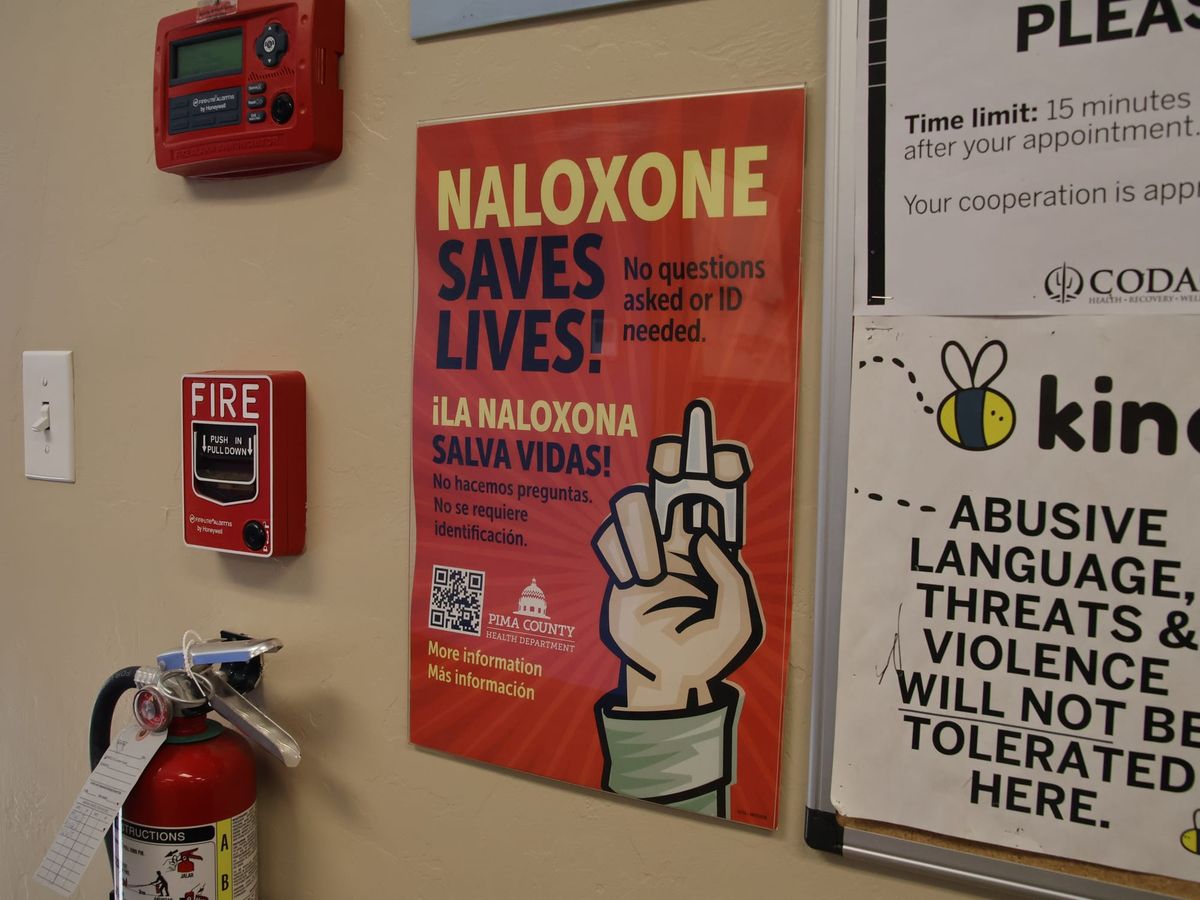
Naloxone is far easier to get in Arizona now than it was then, and state law played a part. A new University of Arizona study found that a 2018 law requiring doctors to prescribe naloxone alongside high doses of opioids sharply increased how often those patients filled naloxone prescriptions in the years that followed.
The law’s effects also reached well beyond what it required.
A simple mandate
Arizona lawmakers passed the law as part of the Arizona Opioid Epidemic Act during a special session in January 2018, after Gov. Doug Ducey declared a statewide public health emergency over opioid overdoses in June 2017.
Between June 2017 and January 2018, 812 Arizonans died of suspected opioid overdoses, according to the state. Nationally, more than 70,000 people died of drug overdoses in 2017, and about two-thirds of those deaths involved opioids, according to the Centers for Disease Control and Prevention. Naloxone reverses an opioid overdose in more than 90% of cases, according to the CDC.
The law took effect April 26, 2018. It requires any clinician who prescribes more than 90 morphine milligram equivalents of opioids per day, a threshold tied to a high risk of overdose, to also prescribe naloxone.
Help us build local news that brings people together, not apart.
To measure its impact, researchers analyzed every opioid and naloxone prescription dispensed in Arizona from 2017 through 2022, using data from the Arizona Controlled Substances Prescription Monitoring Program. Because the program tracks prescriptions when they’re dispensed, the data show patients actually picked up the naloxone.
The study, published in the American Journal of Preventive Medicine, was led by James Cunningham, a professor in the UA Department of Family and Community Medicine. Co-authors include Beth Meyerson, director of the Harm Reduction Research Lab at the UA College of Nursing, and three staff members with the state prescription monitoring program.
In the first two months after the law took effect, naloxone coprescribing jumped 360% for patients on the highest doses and 331% for those on 90 to 119 morphine milligram equivalents per day. It then settled at levels 123% and 97% higher than before the law.
Meyerson said the early spike was likely doctors catching up with patients already on opioids. The drop that followed makes sense, she said, because patients who already have naloxone don’t need a new prescription every time they refill their opioids.
By the end of 2022, about 1.5 to 2.3 naloxone prescriptions were being written for every 100 high-dose opioid prescriptions, up from roughly 0.5 before the law. That’s somewhat higher than national estimates.
An earlier study using commercial insurance data found the law had no effect in Arizona. The UA team said its use of complete statewide data likely explains the difference.
Beyond the law
Doctors also started prescribing naloxone to patients on moderate doses the law didn’t cover. Coprescribing for those patients rose 215% at first and settled 72% above prior levels.
The increase wasn’t limited to patients covered by the law, Meyerson said, adding that the law changed how prescribers think.
“It’s hard to get providers initially to think about naloxone, which is why the law was passed,” she said. “But once they did, they got it.”
Pharmacists stepped up too, even though the law didn’t mention them. Under a statewide standing order, Arizona pharmacists could already dispense naloxone without a doctor’s prescription. After the law took effect, that dispensing rose at least 111% across every dose category, including low-dose patients, and stayed elevated for about two years.
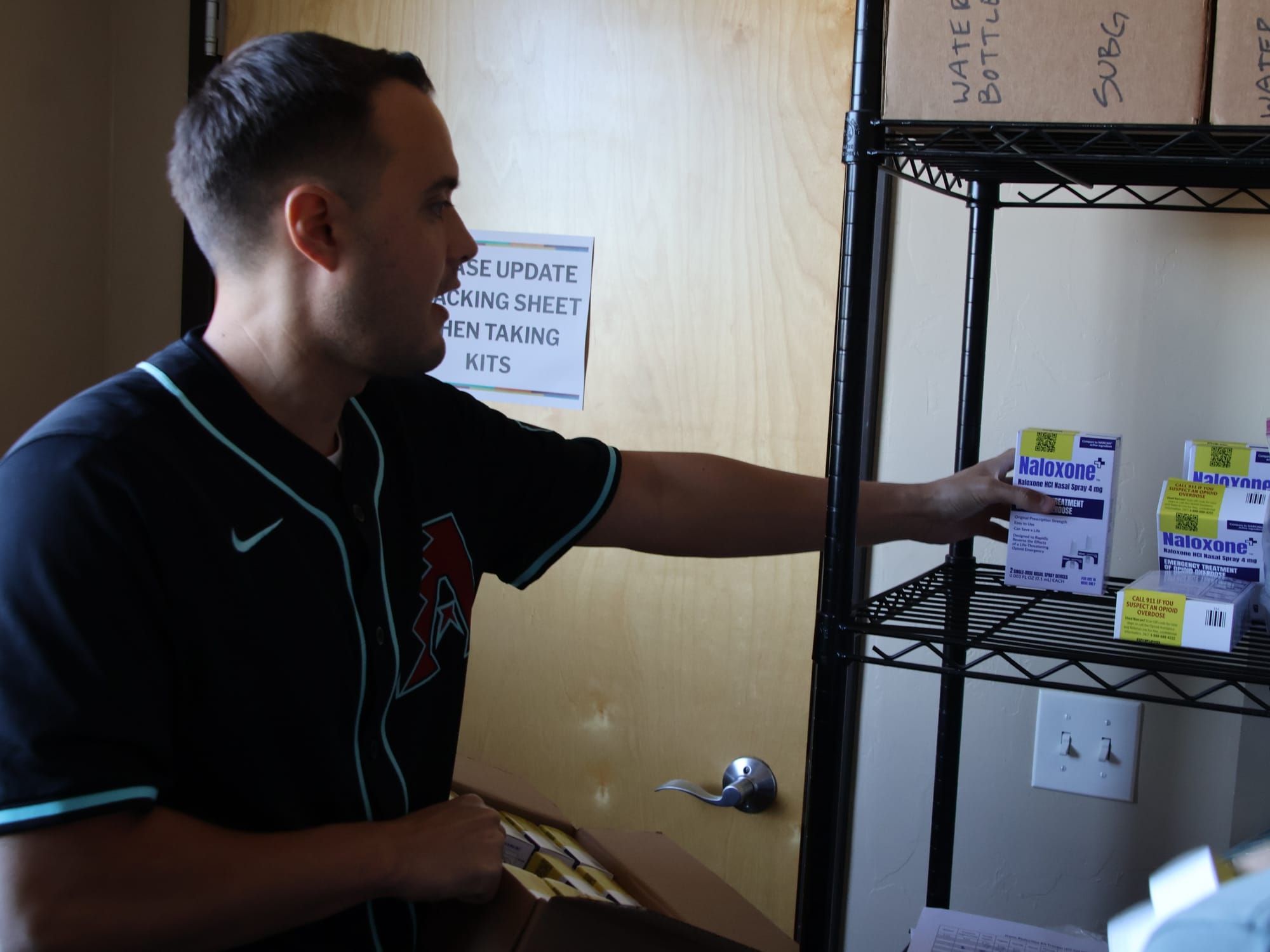
Meyerson said pharmacists often serve as gatekeepers for patients on opioids and many other medications, and they follow changes in the law closely. Later options, including state-subsidized naloxone in pharmacies and over-the-counter sales, likely explain why standing-order dispensing eventually declined, she said.
At CODAC in Tucson, providers now coprescribe naloxone even with addiction treatment medications like Suboxone, Joy said.
“Even if you’re in recovery, you never know what might happen,” Joy said. “You might come across someone else that’s overdosing.”
Who it reaches
Community groups like Sonoran Prevention Works hand out free naloxone, but they mostly serve people who use illicit drugs. Meyerson said the law reaches a group those efforts can miss: older adults.
Overdose deaths among people 65 and older have declined more slowly than in other groups, she said. Most of their opioids come from a doctor, and many take a long list of medications.
“So, they’re not going to be going to Sonoran Prevention Works or Southwest Recovery Alliance or all the cool places in our area to get naloxone; they probably don’t even know they need it,” Meyerson said.
She said every household should keep naloxone in the first aid kit, echoing a call from former U.S. Surgeon General Jerome Adams. A prescription for one person can save another.
That’s the point Dr. Mark Grant makes to his patients. Grant, medical director of medication-assisted treatment at CODAC, said naloxone is meant for the people around someone at risk, since no one can use it on themselves during an overdose.
“Give this to your partner, give this to your child,” he said.
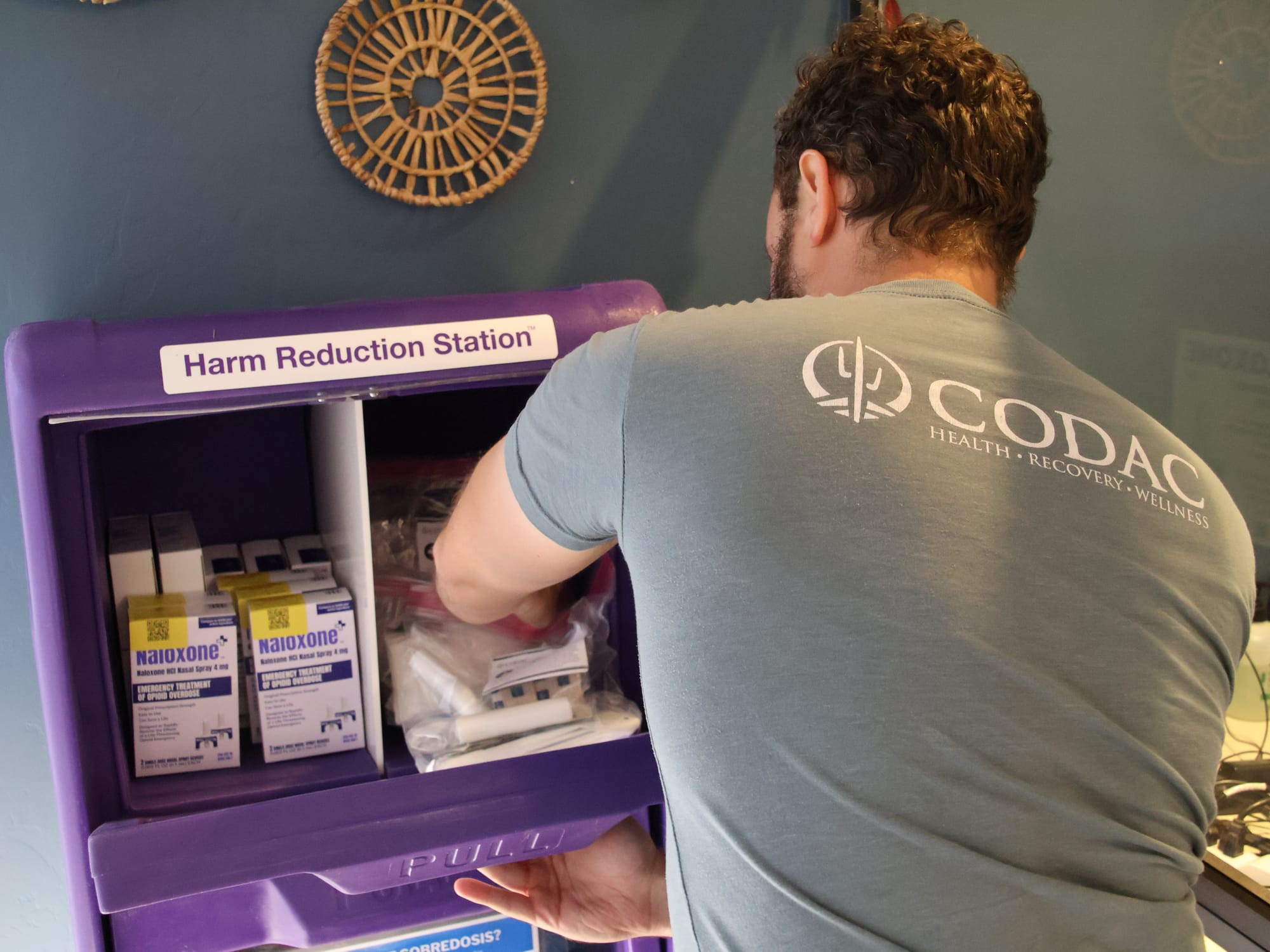
CODAC keeps naloxone in its lobby and hands it out during intake. Grant said awareness is high among the patients he sees, though he noted that people coming to an addiction treatment center are more likely to know about it.
“I don’t think I’ve ever encountered someone who doesn’t know what it is,” he said.
Gaps remain
The law was never meant to end the overdose crisis on its own. It was meant to put a lifesaving tool in the hands of more people at risk, and the study shows it did that.
Whether that translated into fewer deaths is harder to measure. Meyerson said researchers can track how much naloxone goes out but not when or on whom it’s used.
“We can say what goes out; we can’t say what’s used,” she said.
Tracking even that is getting harder. In 2024, Arizona stopped requiring pharmacists to report dispensed naloxone to the state prescription monitoring program, the data source for the study.
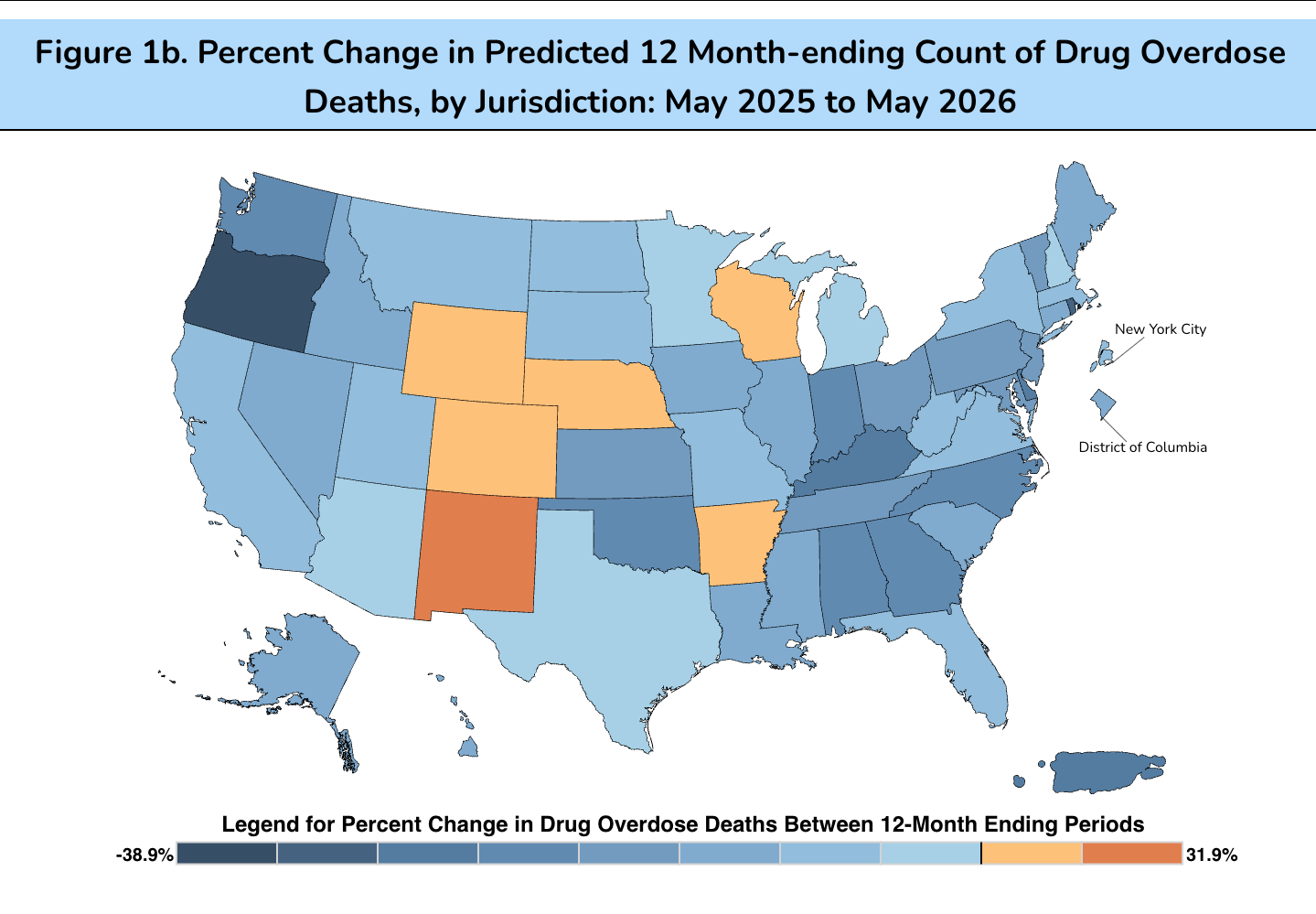
Nationally, overdose deaths have dropped sharply, from a peak of about 112,000 in 2023 to about 67,000 in the 12 months ending in May 2026, according to provisional CDC data. Meyerson credits naloxone becoming available to nearly everyone, along with federal rule changes since the COVID-19 pandemic that made addiction treatment easier to get.
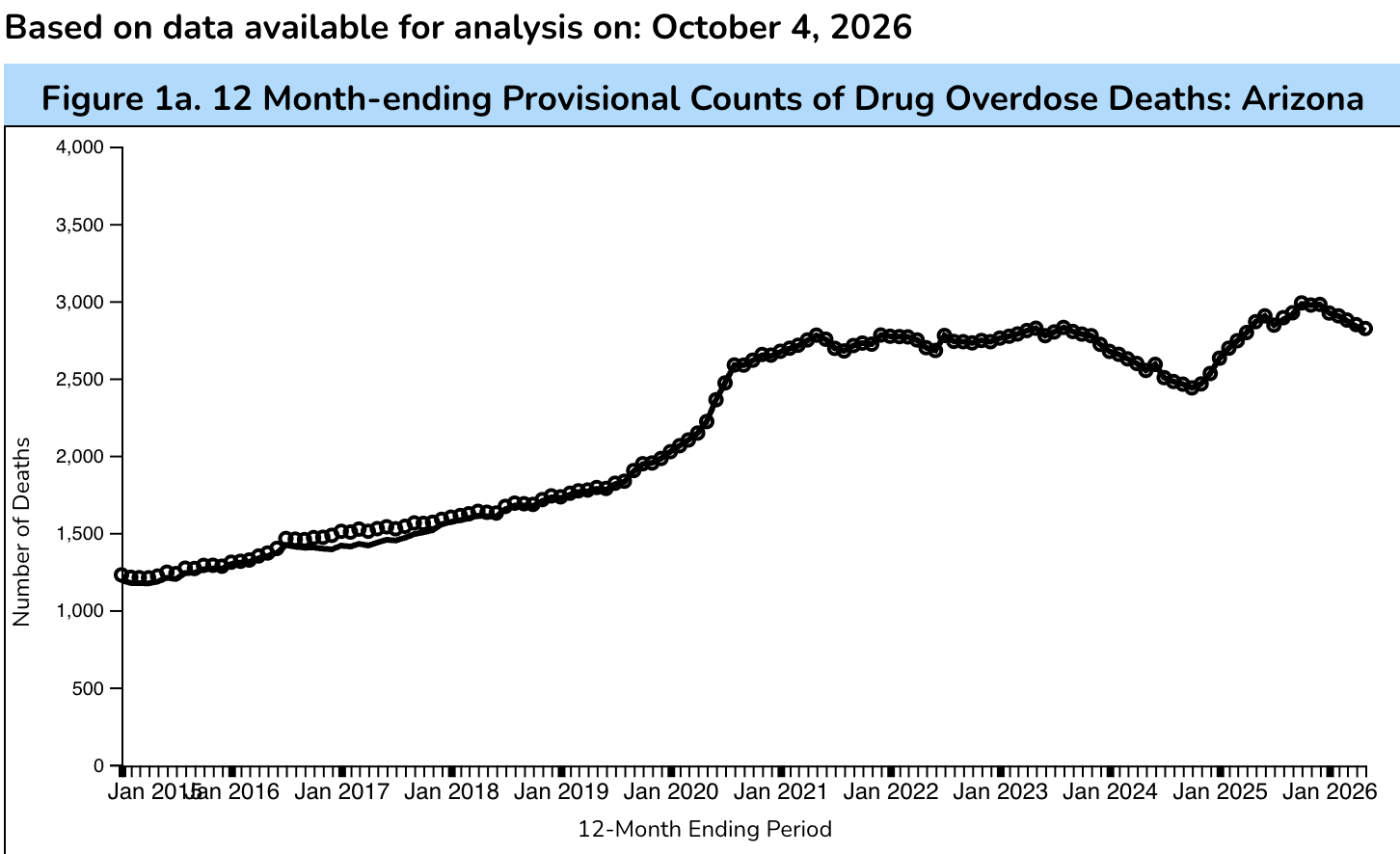
Arizona hasn’t seen the same drop. About 2,800 people died of overdoses in the state in the 12 months ending in May 2026, near a record high, according to the CDC.
Grant said naloxone works, but it can only buy time. The next step is getting more people into treatment.
“So there’s more Narcan out there, but are less people dying? I think the objective answer would be no,” he said.
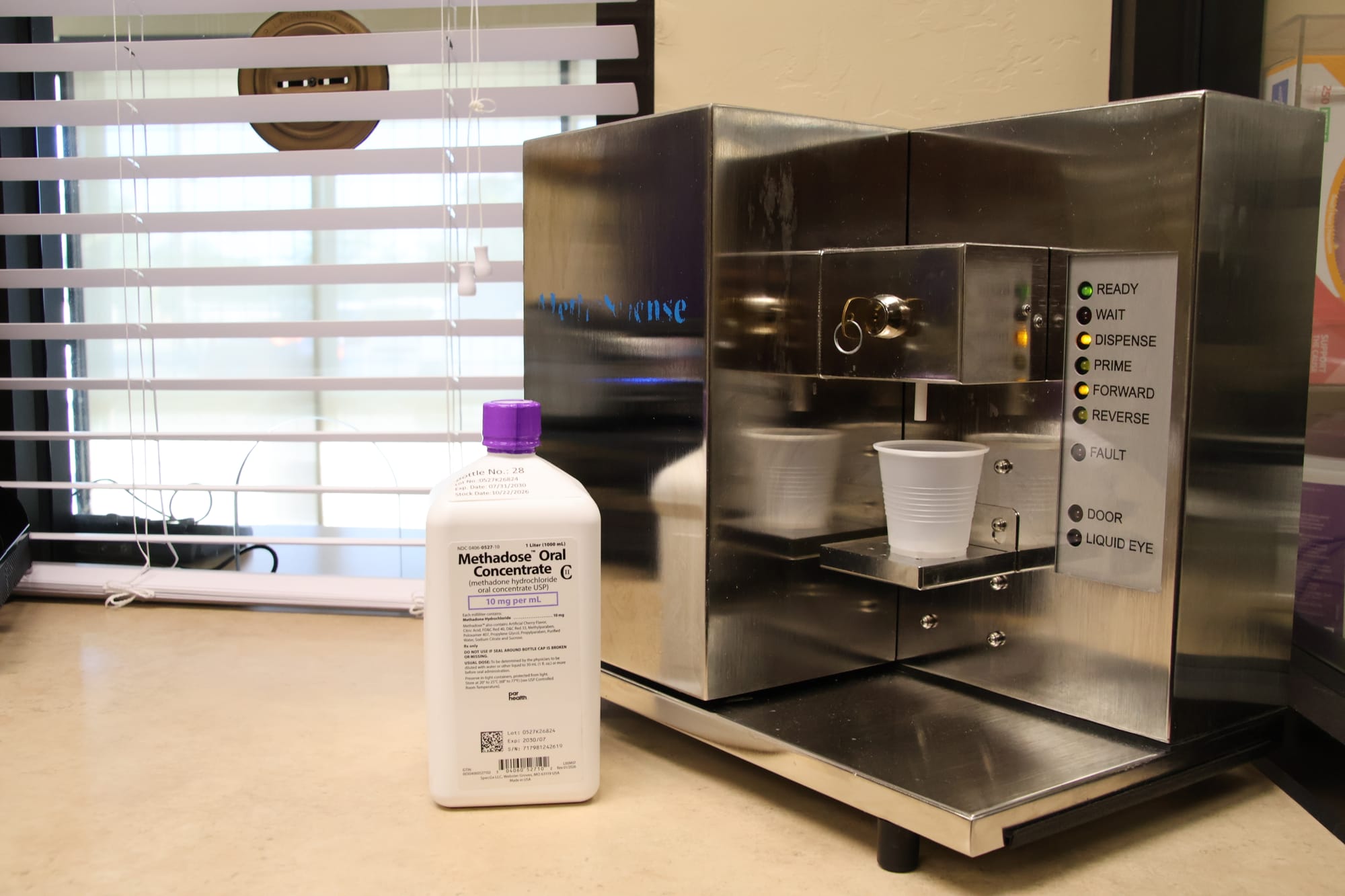
Nearly all of the prescriptions Grant writes are for Suboxone or methadone, medications he said cut the risk of relapse, overdose and death by about half. Yet he estimates only about 20% of people with opioid use disorder get medication to treat it.
“If you walked into El Rio or somewhere and they were like, ‘Oh, one in five of our insulin-dependent diabetics actually receive treatment with insulin,’ people would be appalled,” Grant said.
Some changes have helped. Pandemic-era rules that let doctors start Suboxone by telehealth and do methadone intakes by video have made a big difference, Grant said. Because CODAC is open 24/7, it also draws patients from Nogales, Three Points, Green Valley, Marana, Benson, Willcox and other areas outside Tucson.
Grant worries federal changes, including the budget law known as H.R. 1, could add financial barriers if patients lose coverage through AHCCCS, Arizona’s Medicaid program.
He also said the Pima County jail once sent people home with a week of Suboxone when they were released, but it stopped.
“Releasing people at 2 a.m. with a 12-minute walk to CODAC past hundreds of fentanyl sellers leads right back to the cycle,” he said.
Access can depend on the pharmacy, too. Grant said Suboxone is often out of stock at pharmacies in wealthier parts of Tucson. Meyerson’s lab is mapping that problem, with pharmacy students surveying about 300 Arizona pharmacies on whether they stock subsidized naloxone, sell syringes without a prescription and dispense buprenorphine, the active ingredient in Suboxone.
Cost and geography still matter. Over-the-counter naloxone, available nationally since March 2023, can be expensive without insurance, and free naloxone isn’t evenly spread across the state.
“Cost is always an issue,” Meyerson said.
Rural counties like Gila have fewer harm reduction groups and don’t benefit from the large opioid settlements of Pima and Maricopa counties, she said. She said the state’s share of settlement money could do more to fill those gaps, and that uncertain federal funding for harm reduction over the past 18 months has created new holes.
Stigma lingers, too. Joy said most people take naloxone during outreach, but some turn it down.
“I’ll hear people say, ‘Oh no, I don’t need that because I don’t use drugs,’” he said.
A model for other states
Nine states, including California and New Mexico, require naloxone coprescribing, Meyerson said, and eight more recommend it. She’d like to see research comparing the two approaches, but she believes a requirement is what moves doctors.
A mandate gets built into electronic health records, she said, so a prescriber writing a high-dose opioid prescription gets a prompt asking whether naloxone was prescribed.
“When you require things, it really does change practice,” she said.
It also costs almost nothing. Adding a naloxone prescription takes a prescriber about a minute, Meyerson said, and the state didn’t have to fund a new program to make it happen.
Still, she said, a prescribing law works best as one piece of a larger system that includes pharmacies, community groups, treatment providers, schools and fire departments. Good Samaritan laws, which protect people who call 911 during an overdose from arrest, are just as important, she said.
“Ultimately we need multi-pronged approaches with systemic access to Narcan to really continue on the path toward opioid overdose reduction,” she said.
Grant wants the next push to focus on treatment. He compared it to Arizona’s summer water safety campaigns, which teach parents to fence pools and put kids in swim lessons instead of relying only on rescue gear.
“It’s not just a lifesaver ring. It’s ‘learn how to swim,’” he said.
He said opioid settlement money could pay for public campaigns promoting addiction treatment, but when he raises the idea, no one has an answer.
Patients also hear from well-meaning relatives and sponsors that medication just trades one addiction for another, Grant said. He encourages patients to bring family members to CODAC so doctors can explain how the medications work.
Joy is now in nursing school, working toward becoming a nurse practitioner and eventually opening outpatient addiction treatment centers. He always carries naloxone and urges others to learn the signs of an overdose.
“People just need to be supported and helped through what they’re going through,” Joy said.
Caitlin Schmidt is editor and publisher of Tucson Spotlight. Contact her at caitlin@tucsonspotlight.org.
Tucson Spotlight is a community-based newsroom that provides paid opportunities for students and rising journalists in Southern Arizona. Please consider supporting our work with a tax-deductible donation.