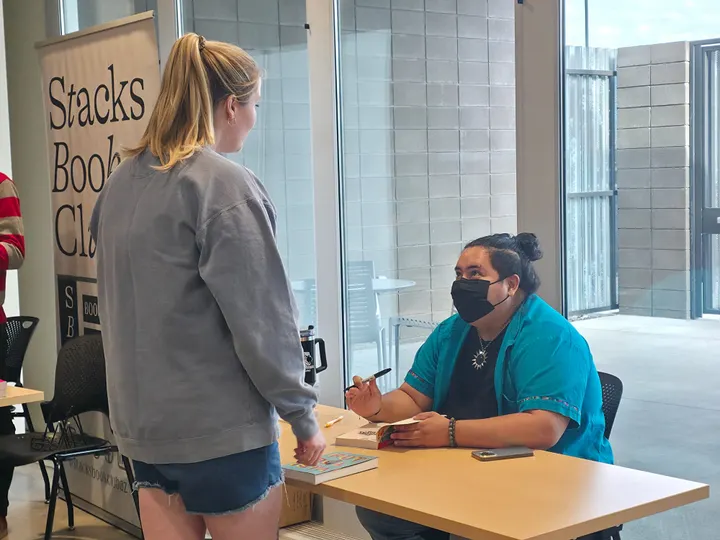
‘The Bear’ actor premieres Tucson-shot film at The Loft
Edwin Lee Gibson of “The Bear” premiered his directorial debut, a short film shot in Tucson with a mostly local crew, at The Loft Cinema.
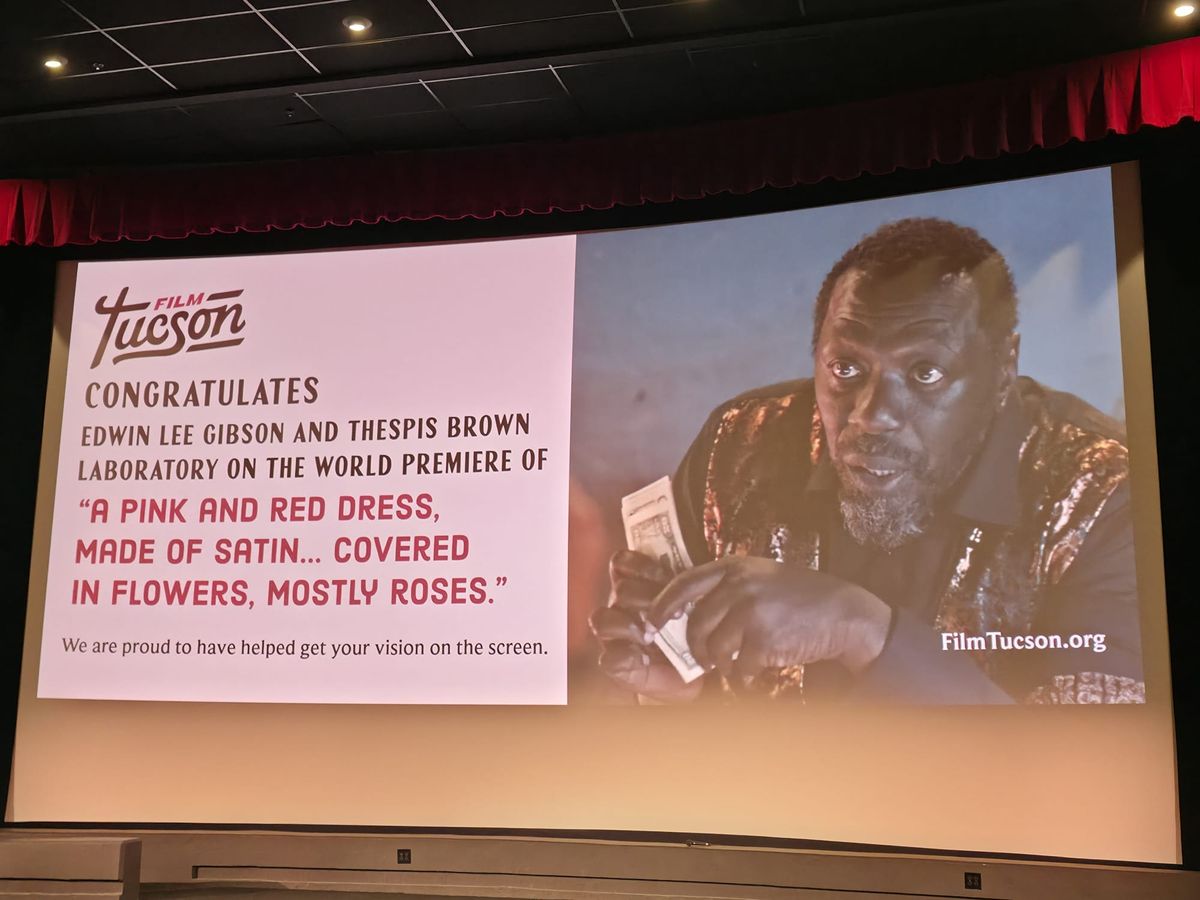
Edwin Lee Gibson landed his role on “The Bear” while living in a Fourth Avenue apartment during the pandemic. Now the actor has come back to Tucson for the world premiere of his directorial debut, a short film shot in the Sonoran Desert with a mostly local crew.
Gibson, who plays Ebraheim on “The Bear,” screened his 15-minute short film, “A pink and red dress made of satin... covered in flowers, mostly roses,” at The Loft Cinema on Oct. 28.
A self-described “theatre rat,” Gibson, a Houston native, grew up singing alongside his mother, who was trained in classical voice. At the age of 12, he started taking acting classes, deciding a few years later to seriously pursue the craft.
“When I was 14, (I) had this idea in my head that I would play in the major leagues, and then in the off-season I do theater,” Gibson said. “But then when I was 16, I had this moment that I was like, ‘Oh, I want to be an artist for the rest of my life and that’s what I’m going to do.’ I never wanted anything to get in the way of it.”
Although Gibson never studied acting directly, he earned bachelor’s and master’s degrees in fine arts. From 1998 to 2006, he taught musical theater at an acting conservatory in New York while performing.
“It was always just this extension of my art, extension of my work, and those eight years working with those kids … taught me so much about myself as an artist,” Gibson said.
In 2006, Gibson received an Obie Award, an Off-Broadway theater honor, for Outstanding Performance for his role as Oedipus in “The Seven” at the New York Theatre Workshop. In 2010, he made his television debut, with acting credits including roles on “Law & Order,” “Shameless” and “Chicago P.D.” He began acting in films in 2017.
Gibson’s ties to Tucson go back to his grandfather, who lived here. In the 1990s, Gibson would stop to see him on trips to Los Angeles, and the two would share meals at the Denny’s near Interstate 10 and St. Mary’s Road.
We're a nationally recognized newsroom, but we're still a nonprofit that runs on community support. Help us keep telling Tucson's stories.
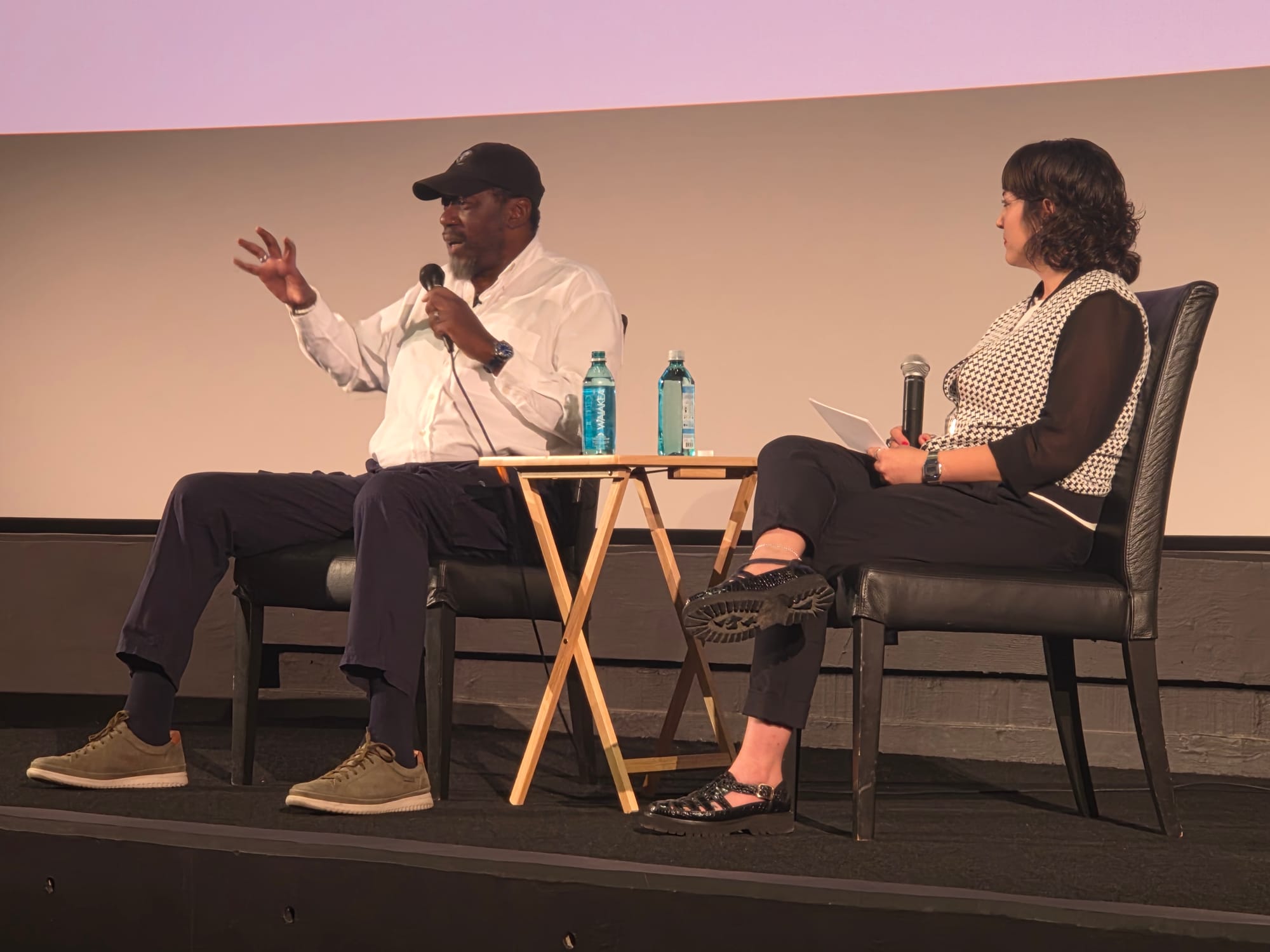
Tucson has also been the backdrop for some of Gibson’s most notable career moments. In 2019, he acted in Arizona Theatre Company’s production of “The Royale,” a play inspired by boxer Jack Johnson, who became the world heavyweight champion as a Black man at the height of the Jim Crow era. Gibson played the boxing trainer Wynton, a role he first took on in a 2015 American Theatre Company production in Chicago.
After his role in season 4 of FX’s “Fargo,” Gibson decided to stay in Tucson for a while.
“I always talk about Tucson being a healing place and a special place for me,” Gibson said. “It was the height of COVID, and it turned out Arizona Theater Company wasn’t doing any plays, so they didn’t have any people in their housing. I moved into one of the apartments, the exact apartment I stayed in before when I did (The Royale) and actually read for and got ‘The Bear’ here in Tucson, in a little apartment on Fourth Avenue and between 14th and 15th Street.”
Years later, Gibson returned to Tucson to make his first film as a director. The short was shot entirely on Kodak 35 mm film and produced by his production company, Thespis Brown Laboratory.
“A pink and red dress …” came to fruition after “The Bear” director Christopher Storer suggested Gibson turn his original 48-page script into a short film.
Inspired by one of his favorite films, “Like Water for Chocolate,” Gibson created an atmosphere of mysticism set in the Sonoran Desert. The intergenerational story follows Elsa, who only saw her mother, Adina, truly happy when she was singing.
Elsa was raised by her aunt, Leslie, because her mother had been admitted to St. Mary’s Mission as a sanatorium patient, the same mission where her father, Samuel, serves in the rectory.
Now an adult, Elsa sings on the same stage her mother did, performing in the same costume her mother wore: a pink and red satin dress covered in flowers, mostly roses. As she tries to reconnect with her mother, Elsa must also come to terms with the secret the dress holds about her family’s past.
“I love women. I love the complex relationship that women have with each other, and that mothers and daughters have, and how, and in a greater sense, how people repeat lives, traumas, and how repetitive small town life can be,” Gibson said. “They’re centered around this dress, which is a metaphor for any artifact that a family can have, any heirloom that a family can have. In this sense, it’s a dress, but it’s this daughter wanting to save her mother, asking the question, why did this vocation make her so happy?”
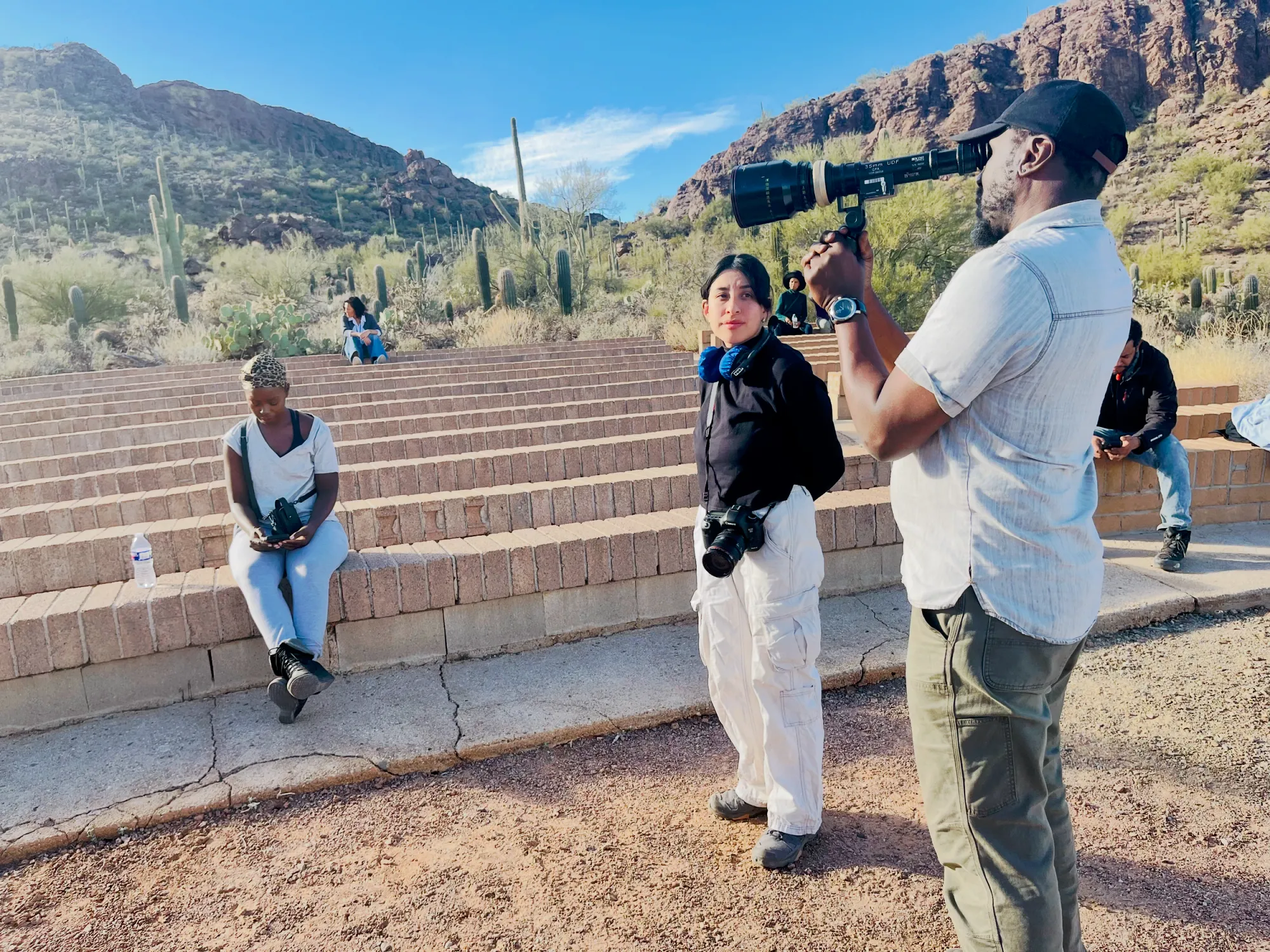
In 2024, Gibson reached out to Film Tucson, a program of the tourism nonprofit Visit Tucson that works with film productions in the region. Film Tucson helps productions with locations, permits, crew and equipment.
Senior Production Manager Mónica López met with Gibson and helped him find filming locations, including a private home in Barrio Viejo and Teatro Carmen. She also assisted with permitting, scouting and crew recruitment, as Gibson envisioned a crew made up predominantly of Black, Indigenous and other people of color.
“More than Afro-Latina, it’s (also) Afro-Mexican,” Gibson said. “The first president of Mexico was an Afro-Mexican (from Sonora). The Pico Brothers that founded L.A. were both Afro-Mexicans from Sonora. Shooting it in Tucson, which is right here in Sonora state, we were always here. Everything about this was very intentional.”
Gibson said he doesn’t want the project to be about him, but he hopes it shows other actors of color that a career in the industry is within reach.
“Hopefully, people will just see it and they’ll be like, ‘Okay, yeah, it is possible,’ because it is,” Gibson said. “You can keep yourself the center, rather than feeling like you can only be involved in this if you’re an appendage to someone else being the center. I’ve always felt like I was the center.”
The Tucson screening was free, a decision Gibson made so that costs would not keep his cast and crew from attending the premiere.
“It’s very rewarding to see the final product on the big screen,” López said. “Hosting the world premiere is even more special. We’re very proud of it. That speaks a lot on how much Edwin loved being here in Tucson.”
Felipe Garcia, president and CEO of Visit Tucson, said projects like Gibson’s show the city still has a place in the film industry.
“We remember the past of Tucson as a film destination,” Garcia said. “We remember the John Waynes and the westerns, but in the present, we’re having success stories with the film world.”
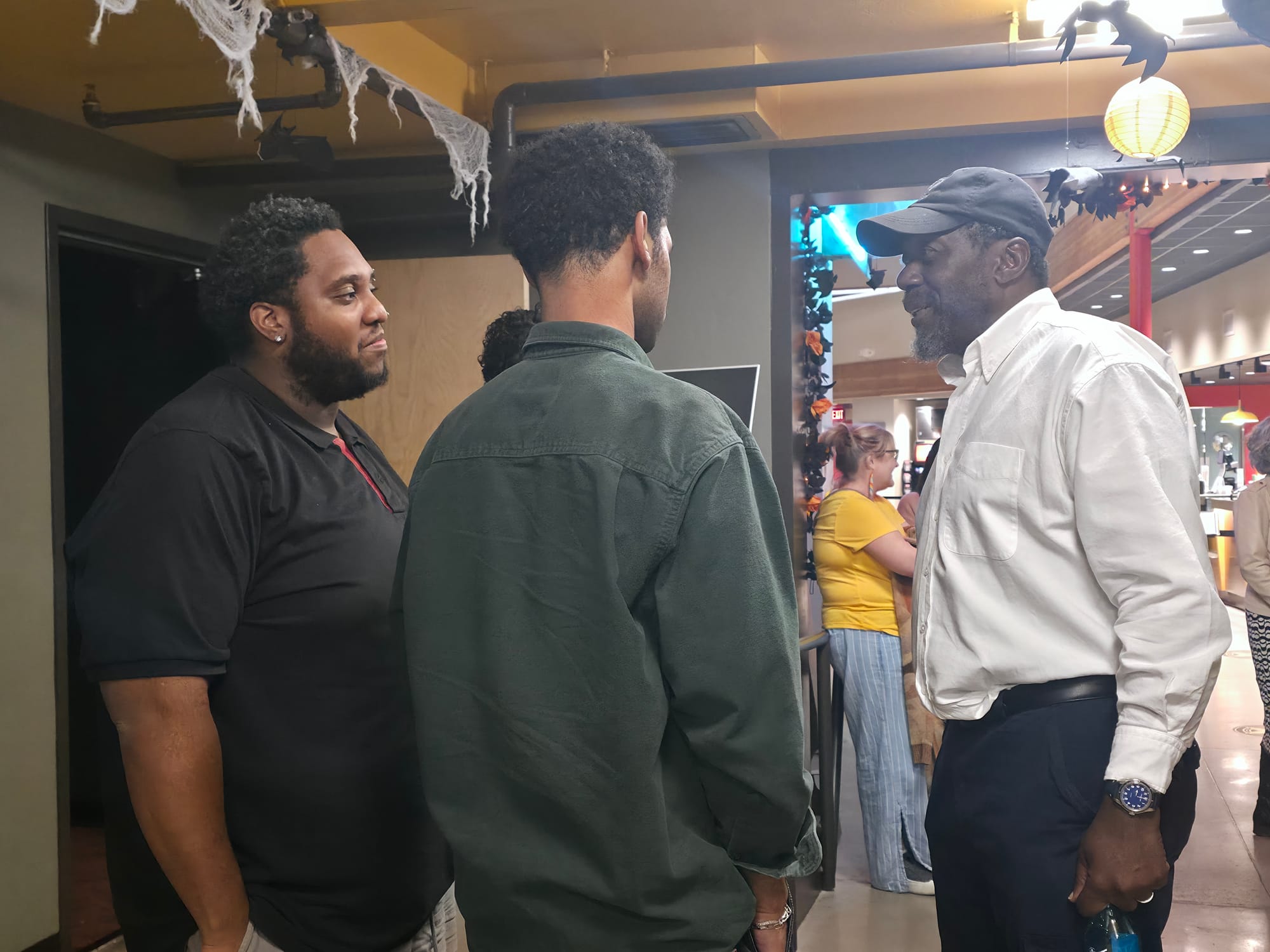
Garcia said Tucson’s film office is very active in pursuing filmmakers and encouraging them to use Tucson for their TV and movies.
“It’s great when we have someone like Edwin that says, ‘Hey, I’m gonna do a project, and I’m choosing this community to film.’ (and) know that we support and help those filmmakers,” Garcia said.
Fausto Olmos Rentería was a background actor in Gibson’s short film. He has been involved in the industry for 25 years, most recently in a Spanish soap opera filmed in Tucson, “Tierra de Amor y Coraje.” He’ll also be featured in “Choir Practice,” another film shot in Tucson that includes actor Danny Trejo.
“It was a good experience,” Olmos Rentería said of Gibson’s film. “There’s a lot of people, a lot of diversity, which is always great to see on sets. Working with Edwin was just wonderful. He’s a great, not only a great actor, but he’s a great director.”
Musomi McDowell Jr., a wardrobe assistant on the short, saw it for the first time at The Loft, expressing his gratitude for being a part of the crew.
“It was my first paid (Screen Actors Guild) film set. It was a good experience,” McDowell Jr. said. “I was really grateful that I had the opportunity, especially being African American in Tucson. I was grateful for Edwin and his team for giving me that opportunity.”
Arizona State University student Caleb Bailey worked as a production assistant while finishing his arts degree.
“It was my first time being on an actual professional indie set, and it was really cool to meet (Gibson), especially watching his work,” Bailey said. “When you’re behind the scenes, sometimes you don’t see certain things … but to actually see it and be immersed in the film is actually really cool.”
Gibson said he’s happy with how the film turned out but leaves it to audiences to draw their own conclusions.
“As a director, it’s not up to you,” Gibson said. “You have the vision, and then you assemble people to assist you with the vision, and that’s what I did. The way I just always pictured it is, if you took the first scene and you put it on a wall in a museum, and you stood there, and then it started to move, that’s what I think this piece is.”
Topacio “Topaz” Servellon is a reporter with Tucson Spotlight. Contact them at topacioserve@gmail.com.
Tucson Spotlight is a community-based newsroom that provides paid opportunities for students and rising journalists in Southern Arizona. Please consider supporting our work with a tax-deductible donation.