
Adaptive trikes help Tucson stroke survivors find words
Friends of Aphasia and Southern Arizona Adaptive Sports use trikes and handcycles at Kino Sports Complex to support stroke survivors’ speech recovery.
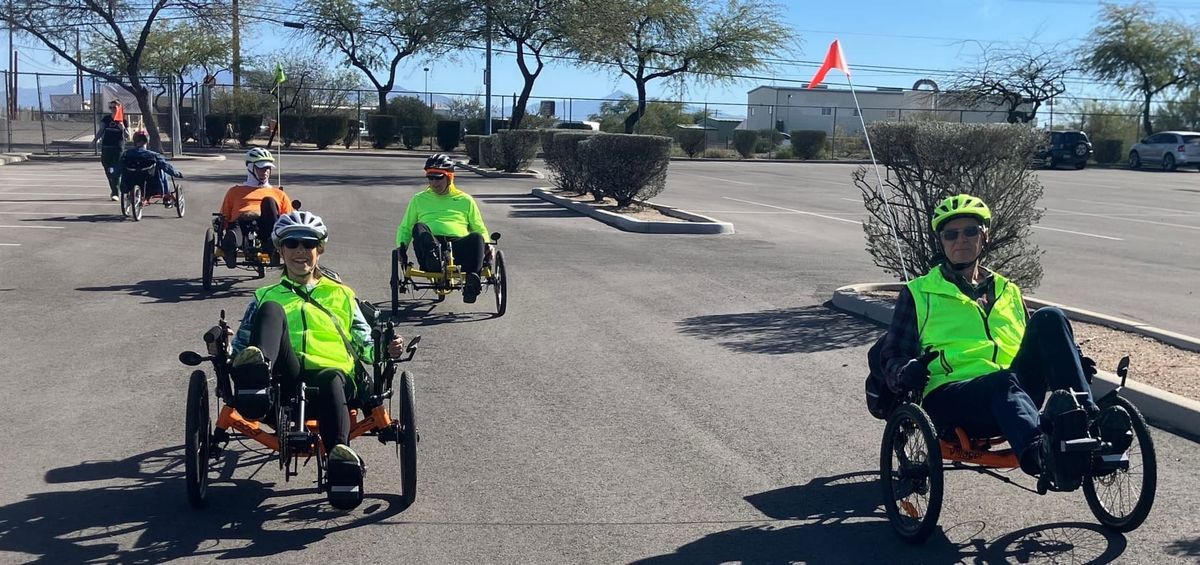
Tucson stroke survivors who struggle to speak are working on their language from the seat of an adaptive trike.
For individuals living with language and communication disorders, social isolation remains one of the most significant challenges following a stroke or traumatic brain injury. To address these barriers, local nonprofit Friends of Aphasia is partnering with regional organizations like Southern Arizona Adaptive Sports to provide community-based recreation and rehabilitation.
Although high winds recently forced the postponement of their latest adaptive cycling session, Friends of Aphasia and SAAS continue to build on a series of joint initiatives designed to keep members active and engaged.
Founded by former U.S. Rep. Gabby Giffords, who developed aphasia after surviving an assassination attempt in 2011, Friends of Aphasia works to bridge the gap in long-term rehabilitation.
Aphasia is a language disorder caused by brain damage that impairs an individual’s ability to speak, read, write or comprehend spoken language, while leaving intellect intact.
Strokes account for 40% of aphasia cases across Pima County, according to Friends of Aphasia executive director Kymberli Olsen.
While traditional post-stroke medical therapies frequently taper off after six months, the nonprofit provides continuous support structures to promote ongoing neurological recovery.
Help us build local news that brings people together, not apart.
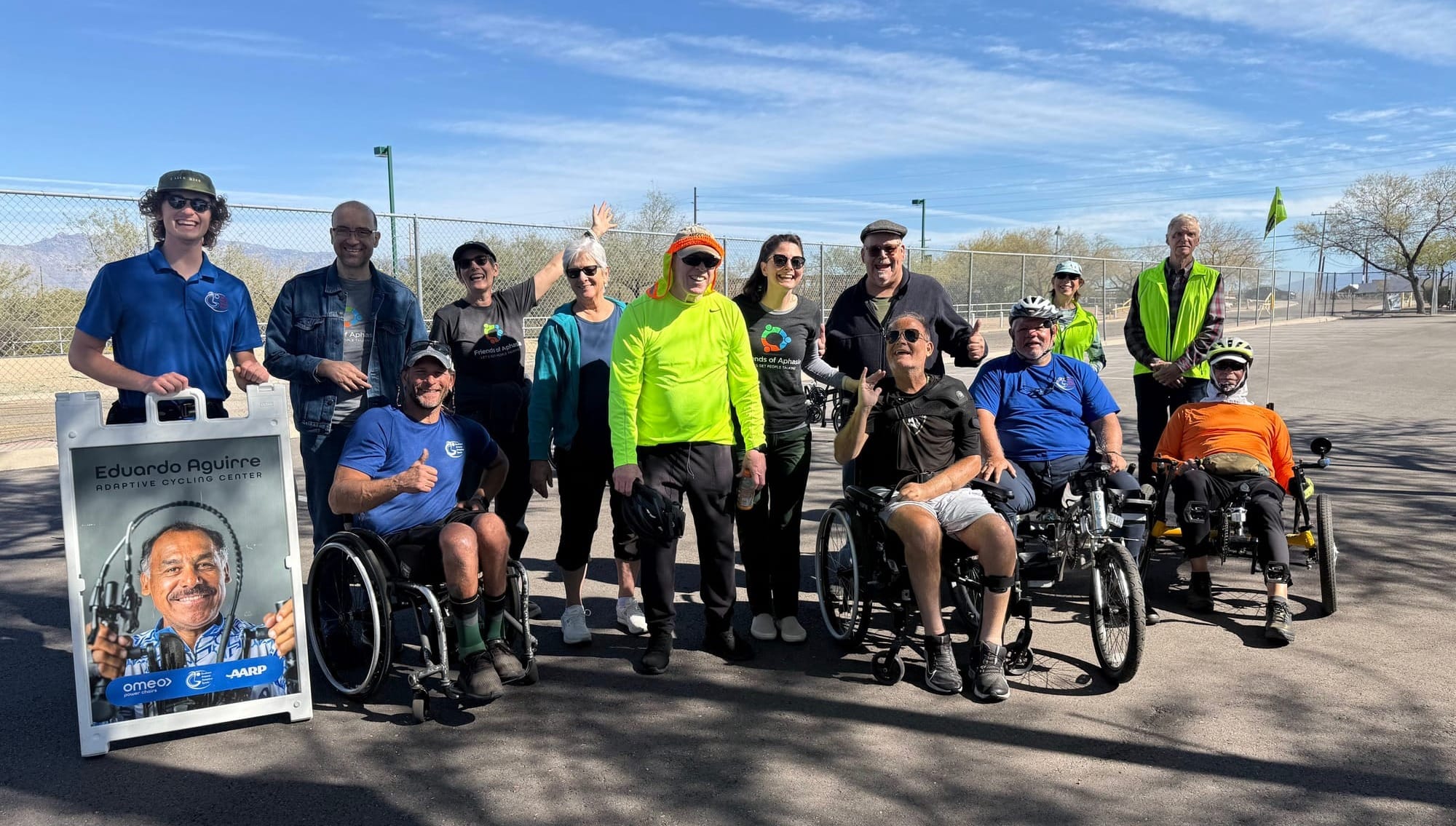
The adaptive cycling program operates out of SAAS’s Eduardo Aguirre Adaptive Cycling Center at the Kino Sports Complex, where SAAS maintains a fleet of specialized equipment, including recumbent trikes, handcycles and tandem configurations, tailored for individuals with physical mobility limitations or hemiparesis.
“Adaptive cycling is about approaching recreation in a way that improves inclusion and access for all people,” said SAAS executive director Mia Hansen. “For someone experiencing balance issues due to a stroke, a three-wheeled recumbent trike lowers the center of gravity and eliminates the need to balance.”
SAAS staff and volunteers fit riders with custom hook-and-loop support straps, weighted pedals and modified gear shifters so participants with paralysis on one side or reduced grip strength can operate the equipment safely. Riders first test their bikes on a secure 2-mile loop around Sam Lena Park before moving to the Chuck Huckelberry Loop.
Clinicians say combining physical activity with outdoor navigation can support speech recovery through neuroplasticity, the brain’s ability to rebuild neural pathways.
“Physical movement, visual processing and social interaction happen simultaneously during adaptive sports,” said Clare McNamara, speech-language pathologist and clinical director at Friends of Aphasia. “Combining these skills stimulates brain plasticity. As those neural pathways rebuild, it directly supports the work we do on language and communication recovery.”
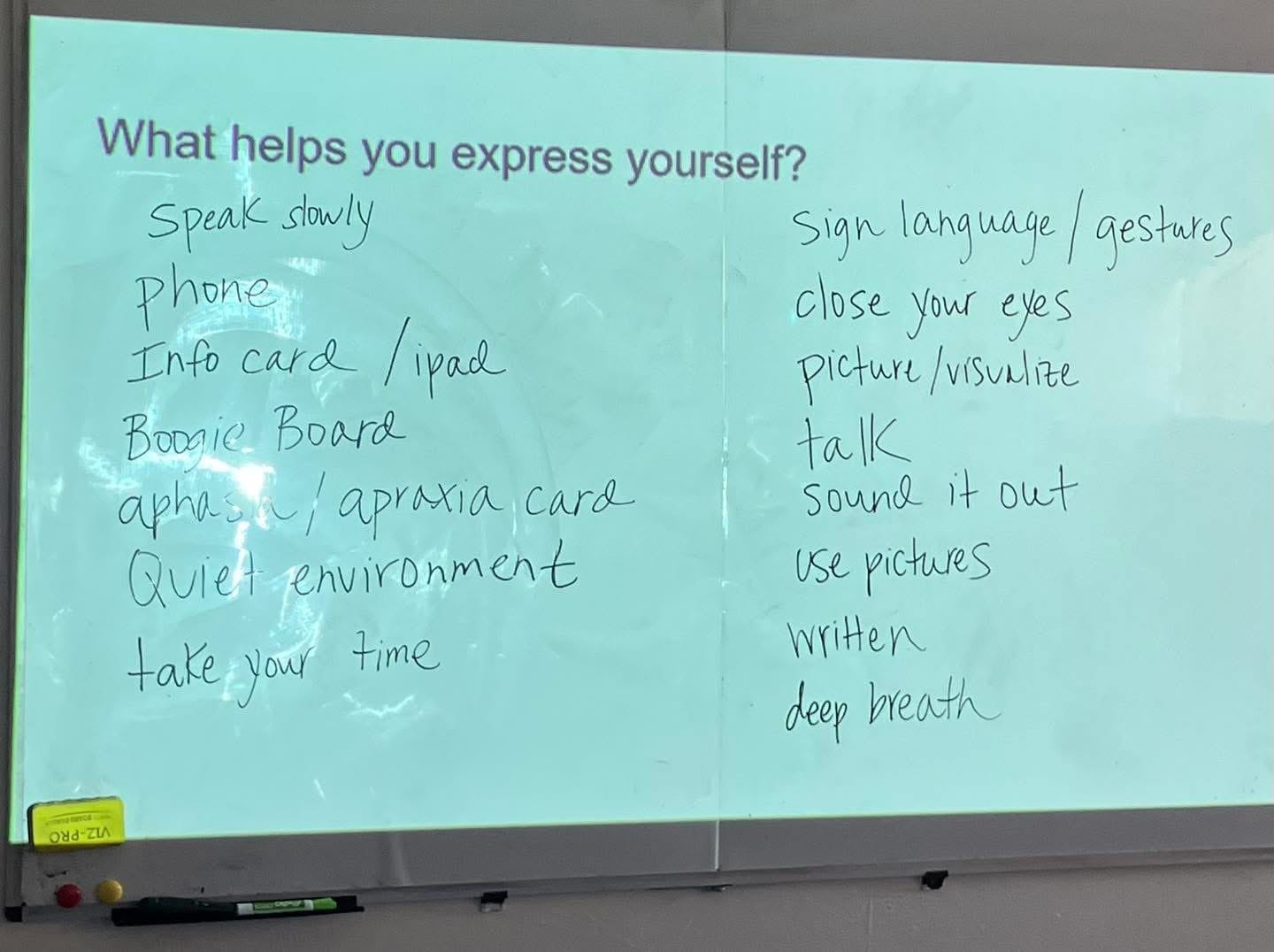
Beyond the neurological benefits, the outings also target the emotional toll of brain injuries.
“Our vision is that aphasia does not limit your quality of life,” Olsen said. “Exercise boosts dopamine, and participating within a supportive community helps members regain their independence.”
According to McNamara, the environment gives participants the confidence needed to transition from tandem bikes to solo trikes, helping individuals rebuild self-reliance after life-altering health events.
In addition to adaptive cycling, Friends of Aphasia offers biweekly support groups, music therapy, local art presentations and community outings, including adaptive bowling at Lucky Strike Bowl, birdwatching with Birdability at Fort Lowell Park and wilderness excursions through Luke 5 Adventures at Sabino Canyon.
Looking ahead to 2027, Friends of Aphasia plans to expand its clinical outreach by hiring a bilingual speech-language pathologist to serve Spanish-speaking families in Tucson.
Concurrently, SAAS is expanding its regional footprint through a new adaptive mountain biking initiative and the “Parks for All” accessibility project in partnership with Saguaro National Park.
Friends of Aphasia holds regular sessions featuring communication strategy groups, music programs and community presentations. To learn more about Friends of Aphasia, visit friendsofaphasia.org or follow the group on Instagram at @friendsofaphasia.
Isabel Vidrio is a University of Arizona alum and freelance journalist in Tucson. Contact her at vidrioi@arizona.edu.
Tucson Spotlight is a community-based newsroom that provides paid opportunities for students and rising journalists in Southern Arizona. Please consider supporting our work with a tax-deductible donation.