
Queer Latine authors share their stories at Tucson library
Authors Sonido Reyes and Jonny Garza Villa talked friendship, identity and writing as queer authors of color at a Pima County library event.
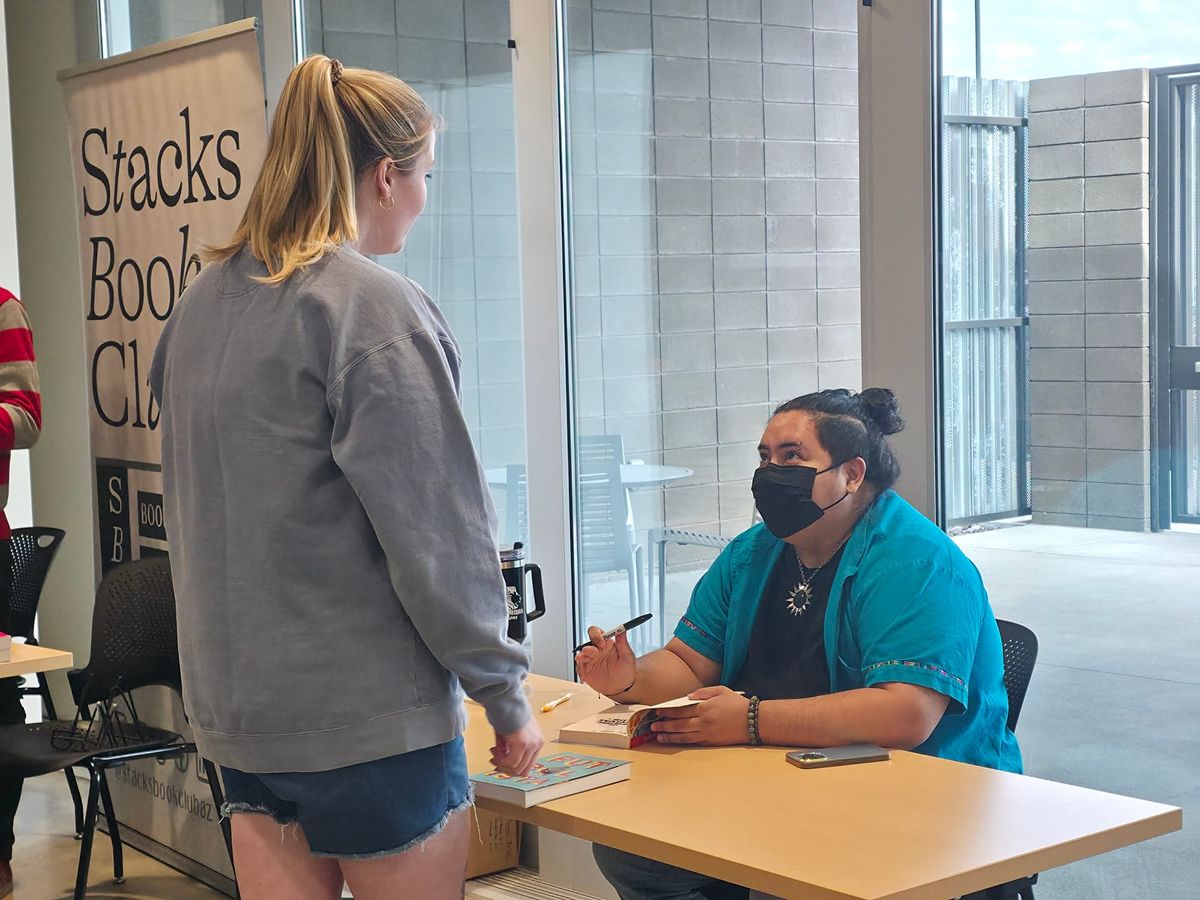
Two queer Latine authors who became friends online, then quarantined together in a cabin during the pandemic to write novels, told a Pima County Public Library audience how that friendship shaped their books.
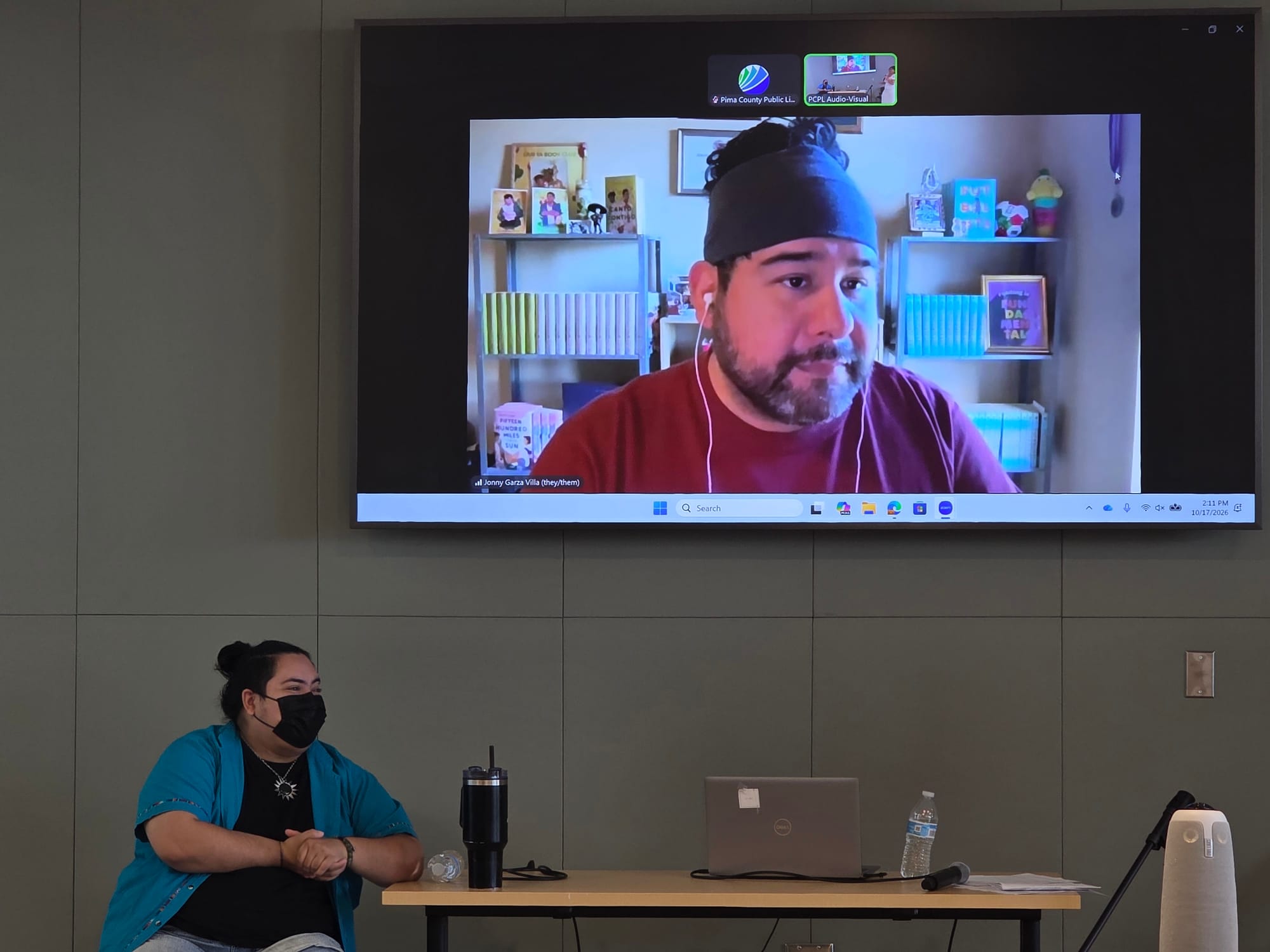
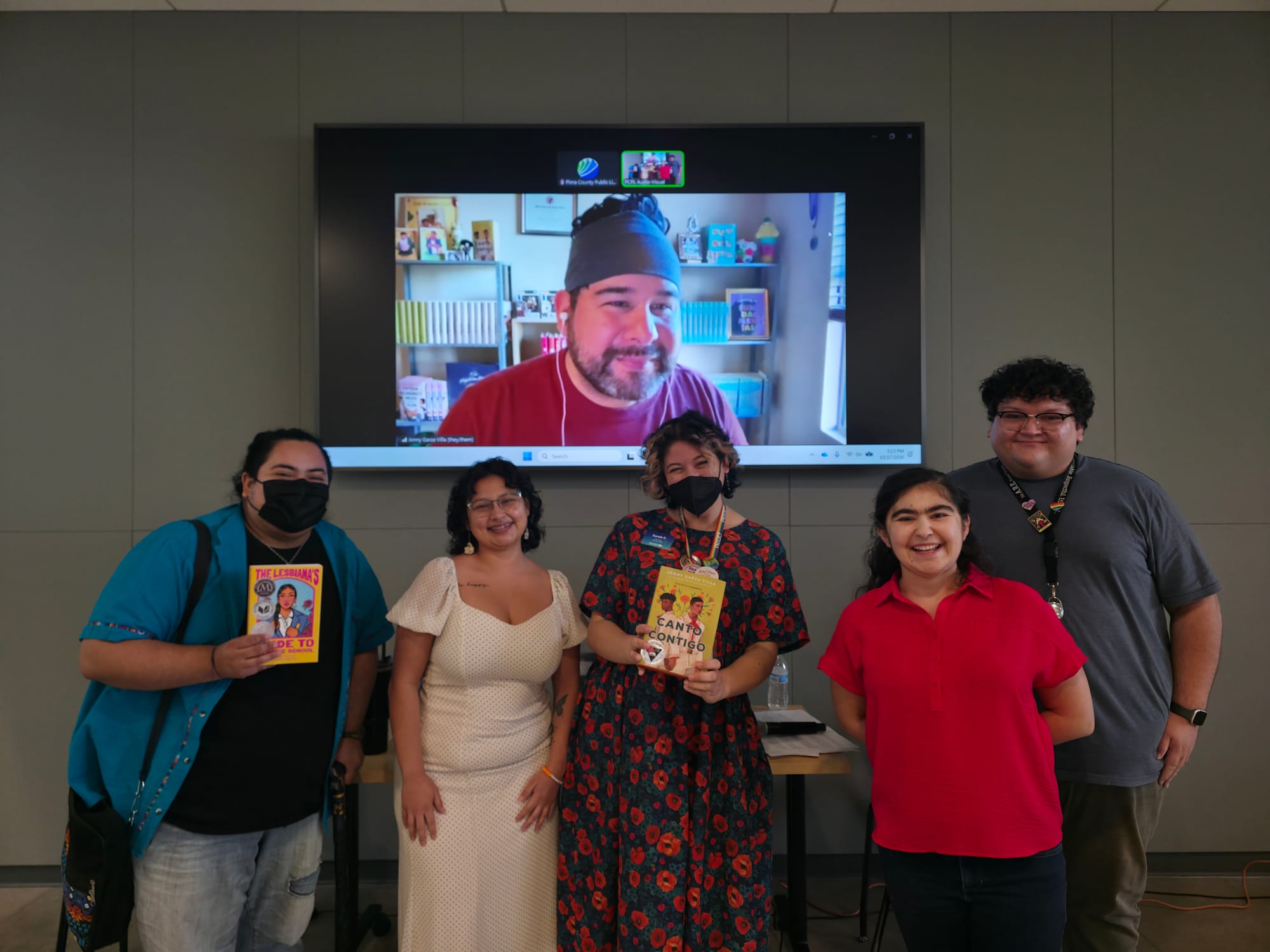
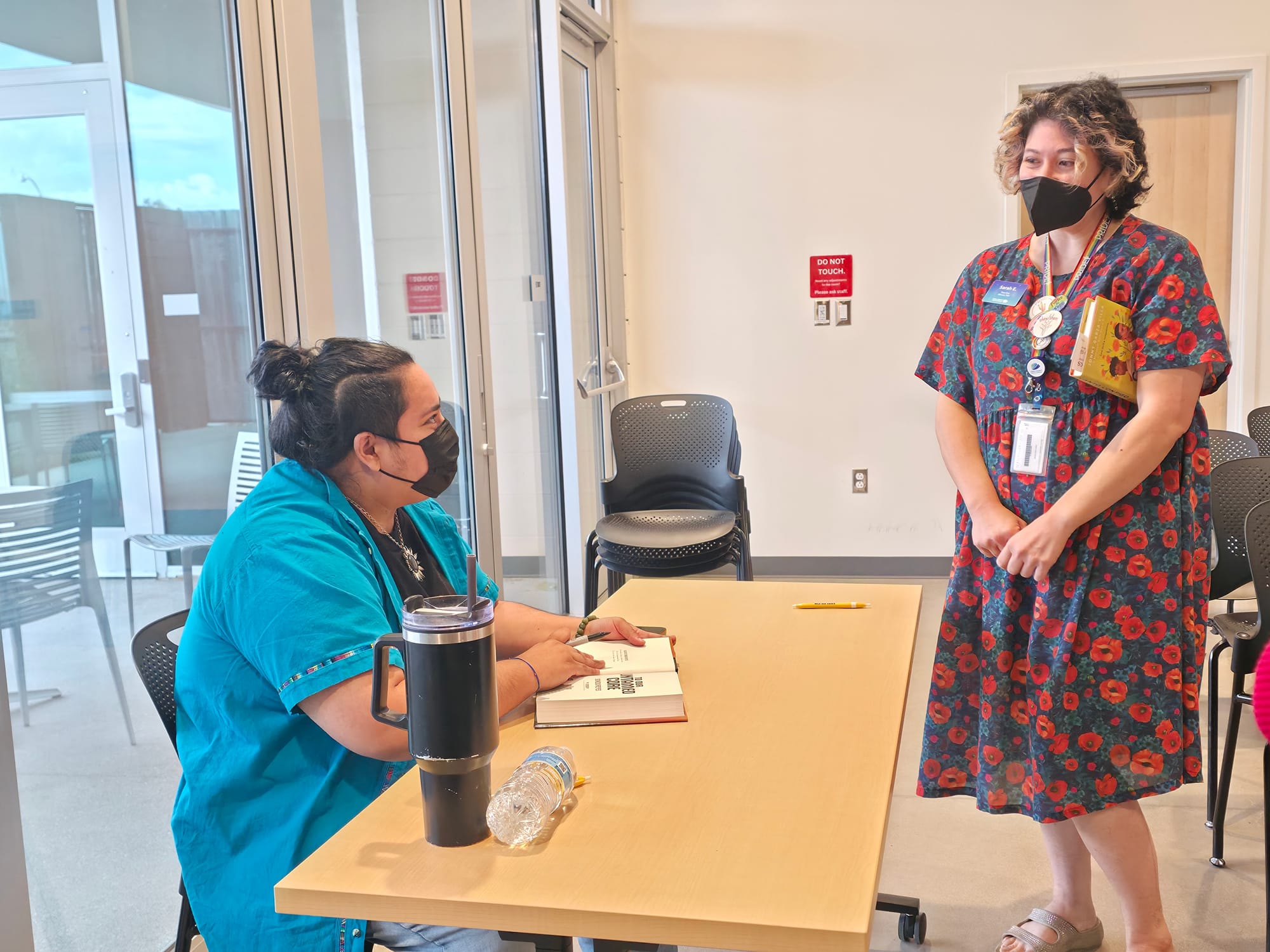
The Pima County Public Library’s Pride committee and Nuestras Raíces team hosted a hybrid conversation Oct. 17 at the Richard Elías-Mission Library, 3770 S. Mission Road, with Mesa-based author Sonido Reyes and Texas-based author Jonny Garza Villa, who talked about their stories, collaborations and what it means to be a queer author of color. Garza Villa joined by Zoom while Reyes attended in person
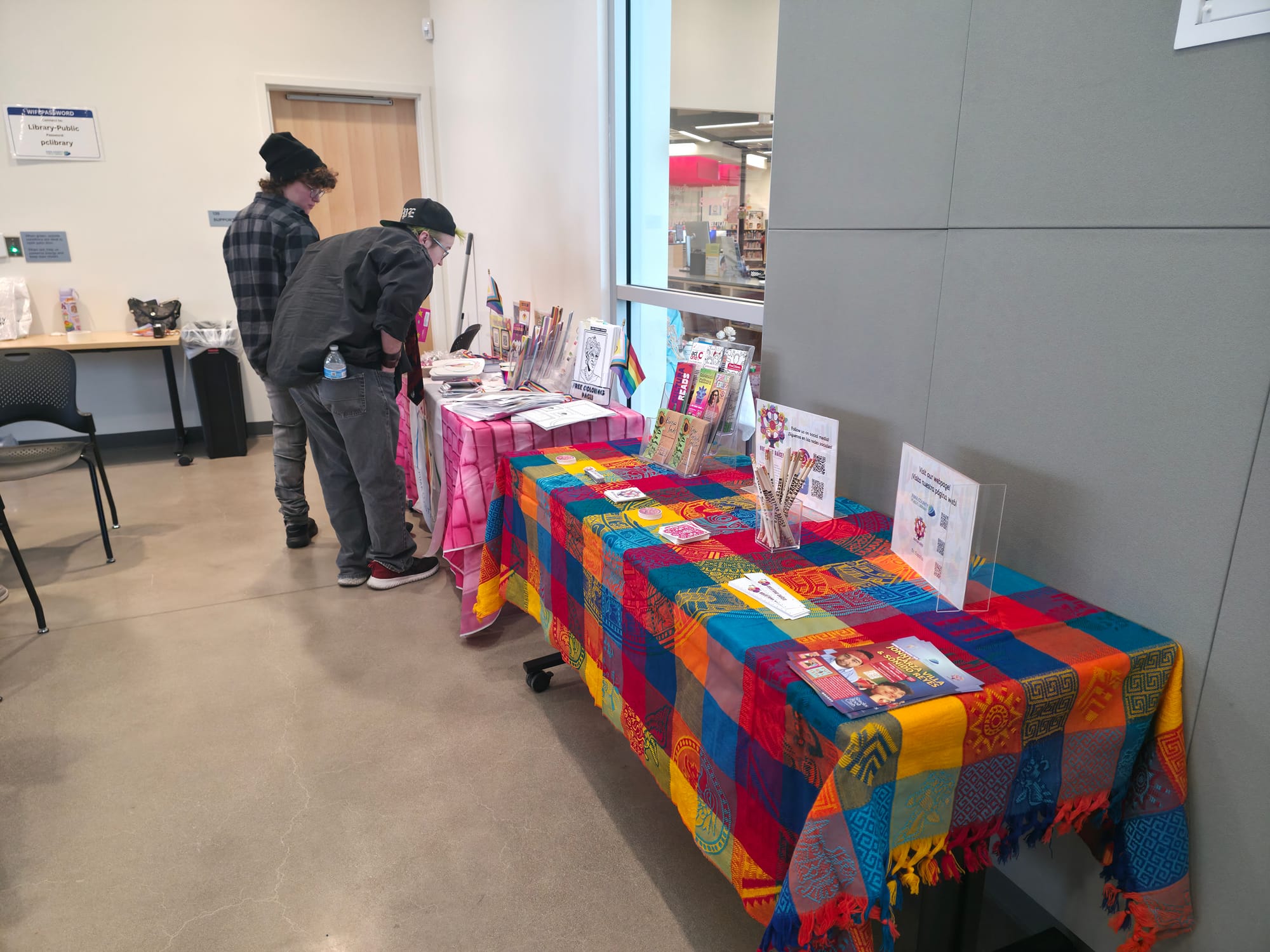
The library’s Pride committee was established in February 1997 by a group of staffers advocating for domestic partner benefits and library services for Tucson’s queer community. The library was one of the first in the country to have a committee dedicated to LGBTQ+ services, according to the library. One of the committee’s longest-running programs is the Pride Author Talk, which started in 1998.
“Part of our mission as the Pride Team is to create welcoming spaces for our diverse community,” said Pride committee co-chair Sarah Evins. “I’m incredibly honored to be part of such a special team and to work for a library system that actively supports the LGBTQIA+ community in this way.”
Nuestras Raíces, Spanish for “our roots,” is the library’s oldest affinity team and began roughly four decades ago, providing opportunities to celebrate and engage with the culture and heritage of Latine and Spanish-speaking communities locally.
Nuestras Raíces grew out of the Chicano civil rights movement. Arnulfo Trejo, a founder of the national library group REFORMA, was a University of Arizona professor who helped start the Graduate Library Institute for Spanish Speaking Americans, which ran from 1975 to 1980. Its graduates went to work for the library and started the “Services to the Spanish Speaking” committee, now known as Nuestras Raíces.
“We are incredibly passionate about celebrating la cultura and connecting our community with resources,” said Nuestras Raíces co-chair Samantha Neville.
Reyes is known for books including “The Lesbiana’s Guide to Catholic School,” which won a Lambda Literary Award for Young Adult Literature, “The Broposal” and the dystopian novel “To Our Untamed Core,” which combines queer representation, “The Hunger Games” and Mexican culture.
We're a nationally recognized newsroom, but we're still a nonprofit that runs on community support. Help us keep telling Tucson's stories.
And while they’ve made a career out of writing, it did not come naturally to Reyes.
“I was actually very averse to writing for most of my life,” Reyes said. “I did not like reading. I did not like writing. I had a learning disability, I’m autistic and I’m dyslexic, and I just did not think that reading and writing were for people like me. I thought they were for smart people, and I did not think that I was smart.”
Reyes eventually found a writing voice through creative writing, including DC Comics fan fiction and experimenting with slam poetry.
“It was my fan fiction friends that peer-pressured me into writing a novel. From there, I never looked back,” Reyes said.
Writing still came with challenges when addressing identity, belonging and vulnerability. While Reyes was writing their book, “The Golden Boy’s Guide to Bipolar,” in which the protagonist comes to terms with their bipolar diagnosis, Reyes was experiencing the same thing.
“I knew that I wanted to write a book about bipolar disorder because I had been recently diagnosed with schizoaffective, which is like for me bipolar and schizophrenia together,” Reyes said. “I was reflecting on how I was really afraid of writing a book about bipolar that further stigmatizes the illness. I did not want anyone to read a book about bipolar and walk away thinking, ‘Oh wow, bipolar people are scary or crazy.’”
Reyes wanted to make sure people could read the book and see themselves or somebody they love in a character with a mental illness that is often stigmatized.
“I wanted to show someone with bipolar that specifically having a happy ending without curing the illness,” Reyes said.
Readers have thanked Reyes for helping them realize they needed to seek help.
“Someone told me that that book made them realize that they needed help, and they asked for help, and they got it,” Reyes said. “Somebody else told me that that book made them realize that they needed to get a diagnosis, and they were able to get diagnosed with bipolar because of the book. That was super, super special . . . if one person got the help that they needed, that means everything.”
Reyes wasn’t the only author on the panel writing about identity and belonging.
Garza Villa is known for books including “Fifteen Hundred Miles from the Sun,” “Ander & Santi Were Here” and, most recently, “Futbolista,” a story in which Gabriel Piña, a college goalkeeper with professional soccer dreams, slowly falls for his philosophy classmate while attempting to come to terms with his bisexual identity.
Garza Villa was inspired to write after reading Becky Albertalli’s “Simon vs. the Homo Sapiens Agenda,” a queer story that made an impact on Garza Villa and their friends.
“(I) never had taken a creative writing class, didn’t major in English, had no idea what I was doing,” Garza Villa said. “Becky showing me that like queer people can exist in a contemporary way really struck me . . . Becky was the push that I needed to really figure it out and try something.”
Garza Villa said they struggled with imposter syndrome at the beginning of their writing career.
“I remember drafting ‘1500 Miles from the Sun,’ and at that time there was just a lot of discourse about no need for coming-out stories anymore. It was a lot of trying to find the confidence not just to tell my story in the way that it wants to be told, but also doing so in a way that is fearless as a storyteller,” Garza Villa said. “I can both be confident as an author and also be confident as a storyteller.”
Garza Villa’s authentic writing has given readers characters they say they rarely see in books.
“The first time I did a book festival here in San Antonio . . . there were just so many readers who said, ‘I’ve never read a story about (people) like us said here in South Texas, and like with a family that looked like mine,’” Garza Villa said. “I was doing like a Canto Contigo tour and I had this one girl come up to me, and she was like, ‘I love this book because like I’m a trans Chicana, and I have never seen a trans Chicana in a book before.’ The happiness of feeling seen, I think is just so meaningful and so that you really can’t take away.”
Garza Villa also found community among other authors in Reyes’s “QPOC Chat,” a group where queer and trans authors of color talked about what they were reading and writing.
The two met through a giveaway Reyes held called “Query Critiques,” in which up-and-coming authors who donated to a cause received Reyes’s feedback on their book’s query letter before sending it to literary agents.
“Jonny entered . . . and then we became friends, and then we started trading manuscripts and reading each other’s books,” Reyes said.
Reyes and Garza Villa first met in person during the COVID-19 pandemic, when both authors quarantined together in a cabin in the woods for Novel November, a challenge to write a novel in one month.
During that time, Reyes wrote a novel that will be published in the future, and Garza Villa wrote their 2024 book “Canto Contigo.” The book, which won the Stonewall Book Award for Young Adult Literature, is described by Garza Villa as a “half grief novel, half rivals-to-lovers of romance,” set in a world of high school mariachi.
With Twitter’s transition to X, the community chat broke off, but Reyes was still looking for ideas on how to retain that sense of community.
“I texted the group chat, which Jonny is a part of, and I said, ‘Somebody tell me that I don’t have time to start a podcast,’” Reyes said. “Instead of telling me that I don’t have time, Jonny said, ‘Do you need help?’ This would be so much more fun with a friend. So I responded, ‘Yeah, I need help. Let’s do it.’”
Reyes and Garza Villa started the “Bidi Bidi Book Pod” podcast to highlight queer and trans BIPOC storytellers while sharing their personal experiences within the publishing industry.
Reyes and Garza Villa both write books that pay homage to their Hispanic heritage, a major connecting point to readers.
“When I wrote ‘The Lesbiana’s Guide to Catholic School,’ I knew I was going to allow (the protagonist) to be like as Mexican as she is, as as Mexican as I am, and I thought that that meant that I had to pull back on other aspects, like I couldn’t make her neurodivergent,” Reyes said. “When it’s about my experience, whether it’s my culture, my identity, my queerness, my neurodivergence, my heritage, all of those things, they come more naturally, and I don’t necessarily have to think about how am I going to fit this in here.”
For Garza Villa, connecting with that heritage came later in life.
“I really love celebrating my culture as someone who grew up super assimilated and had to kind of figure out how to de-assimilate myself,” Garza Villa said. “If I’m going to tell a story, (I) celebrate those sort of cultural aspects and ancestral aspects that I’m now really proud of as an adult.”
Garza Villa also uses stories to critique parts of that community.
“I love mariachi. It’s such a big part of my upbringing and my family . . . but it’s also incredibly traditional, and when you have something traditional, like it can easily be queerphobic and transphobic and anti-Black,” Garza Villa said. “To be able to tell a story that shows both of those things and can appreciate one while also showing what it is to make your own space.”
Topacio “Topaz” Servellon is a reporter with Tucson Spotlight. Contact them at topacioserve@gmail.com.
Tucson Spotlight is a community-based newsroom that provides paid opportunities for students and rising journalists in Southern Arizona. Please consider supporting our work with a tax-deductible donation.


