Tucson confronts deadly heat at community town hall
Hundreds of Tucson residents, health officials and elected leaders gathered March 31 to address the city's growing extreme heat crisis, following the earliest triple-digit temperature ever recorded in Arizona.
When Tucson recorded its first triple-digit temperature in March, the earliest such reading in Arizona history, it wasn't just a weather milestone. It was a warning.
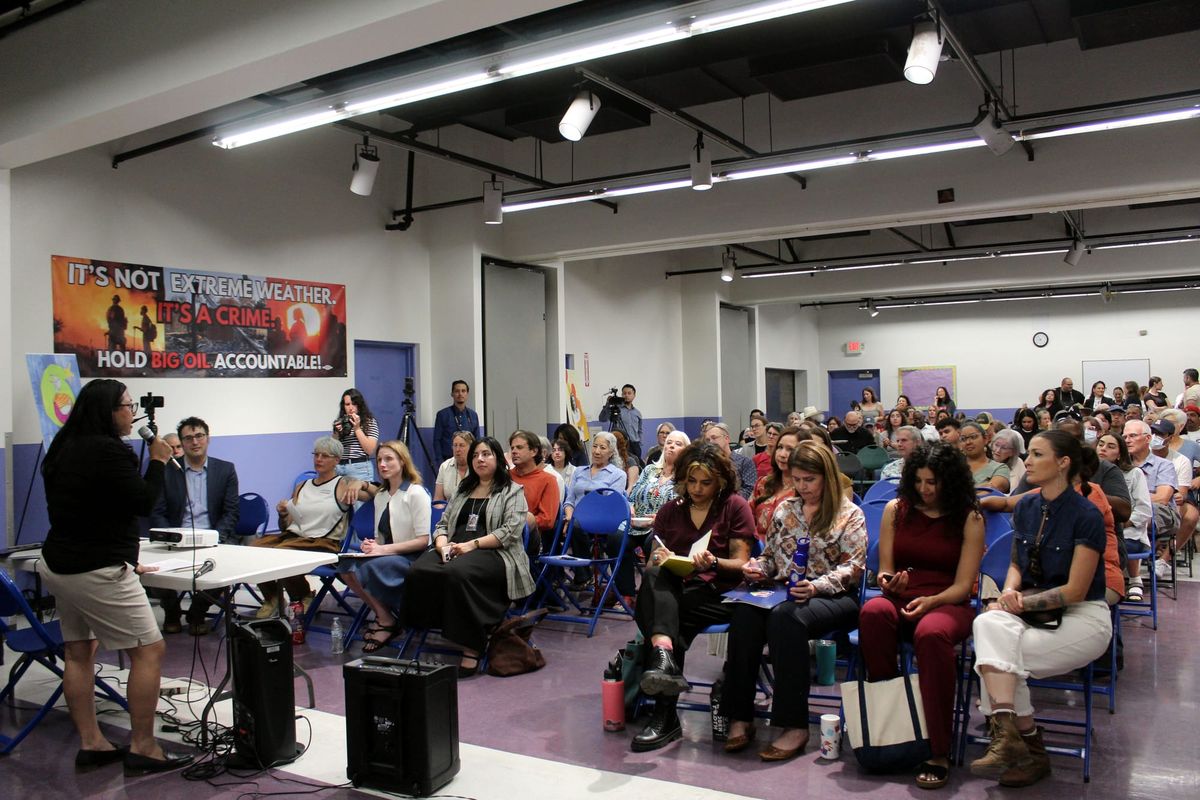
On March 31, hundreds of residents, public health officials and elected leaders gathered at the Donna Liggins Recreation Center to demand answers about what comes next.
The packed room reflected the frustration many Tucsonans feel toward utility rate hikes and the fossil fuel industry's role in driving extreme heat.
More than a dozen organizations sent representatives, with speakers describing how rising temperatures are hitting their communities in different ways.
Tucson Mayor Regina Romero, Ward 1 Councilmember and Vice Mayor Lane Santa Cruz, Ward 6 Councilmember Miranda Schubert, Ward 3 Councilmember Kevin Dahl and Congresswoman Adelita Grijalva were among those in attendance.
In 2024, the city of Tucson adopted a Heat Action Roadmap to inform and protect residents and find ways to cool neighborhoods. The city has also implemented a tree planting initiative, water harvesting program, affordable solar program and sustainability campus.
"It hits first and worst to our most vulnerable communities," Romero said. "We see a world waste-free. We are really doing lots of work."
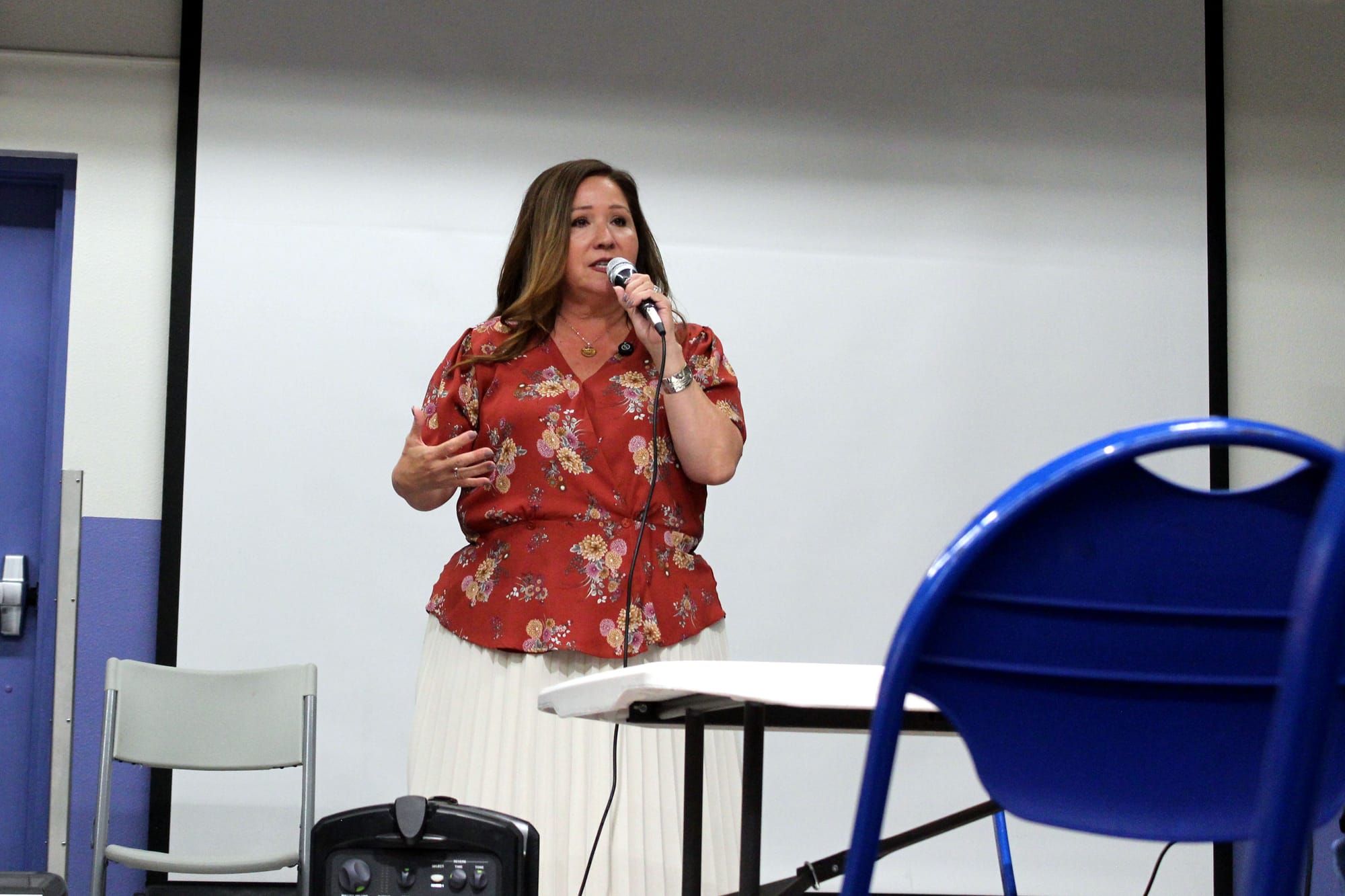
The city council has been working on setting local regulations for data centers since last summer, and is also working on land and large water use ordinances, as well as creating an energy collaboration agreement with Tucson Electric Power.
"If we pass it, it would be the first in the state and only sixth in the country where we do a collaboration agreement with a private utility," Romero said.
Even with these local efforts, both Romero and Grijalva stressed that federal funding cuts are undermining the city's progress on climate change.
"We do not have the type of investment that the previous administration made available to cities like Tucson," Romero said. "The federal government and the Trump administration are dismantling programs that could help us move forward."
Grijalva said she believes it is the federal government's job to find local solutions to climate change problems.
"Tonight is not just a town hall, it is a call to action to each and every one of us," Grijalva said. "Because climate change is real."
Grijalva said she is working to rebuild the coalition behind the Environmental Justice For All Act, which includes consulting tribal communities and other groups on the front lines of climate change.
"This is how change happens," she said. "Not from the top down, but from communities coming together, raising our voices and refusing to accept the status quo."
That sentiment was felt personally by at least one person in the room.
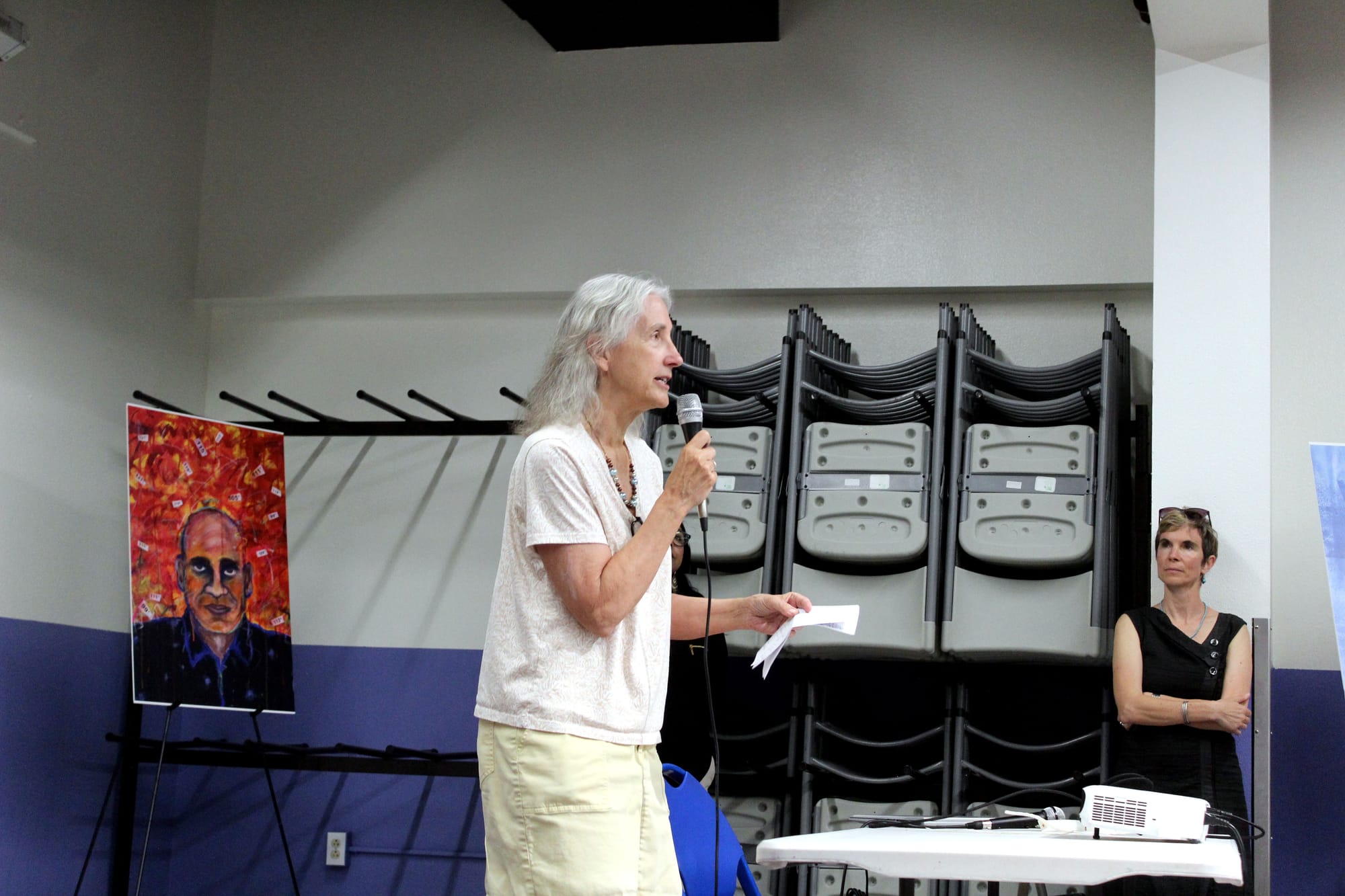
Attendee Amy Dishion lost her husband, Evan, to extreme heat a few years ago. She talked about the personal toll of climate change, saying she wants to hold fossil fuel companies accountable for their role.
"Every heat-related death results in trauma and despair," Dishion said. "Arizona is getting hotter year over year, and it's deadly and it's insidious."
In the past three years, 350 people have died from heat-related illnesses, according to Pima County Health Director Theresa Cullen.
"The public health department along with the mayor and council, the city and the other jurisdictions do what we can to keep you safe," she said. "But if the temperature keeps going to 22 degrees above where it is, there will be a point that no matter what we do, we will not be able to keep you safe."
Arilynn Hyatt is a journalism major at the University of Arizona and Tucson Spotlight intern. Contact her at arilynndhyatt@arizona.edu.
Tucson Spotlight is a community-based newsroom that provides paid opportunities for students and rising journalists in Southern Arizona. Please consider supporting our work with a tax-deductible donation.