Tucson case fuels push to limit courtroom recording
A Tucson prosecutor's petition to restrict courtroom recording in Arizona, sparked by a harassment case involving his wife, has drawn support and fierce opposition ahead of a December 2026 Arizona Supreme Court decision.
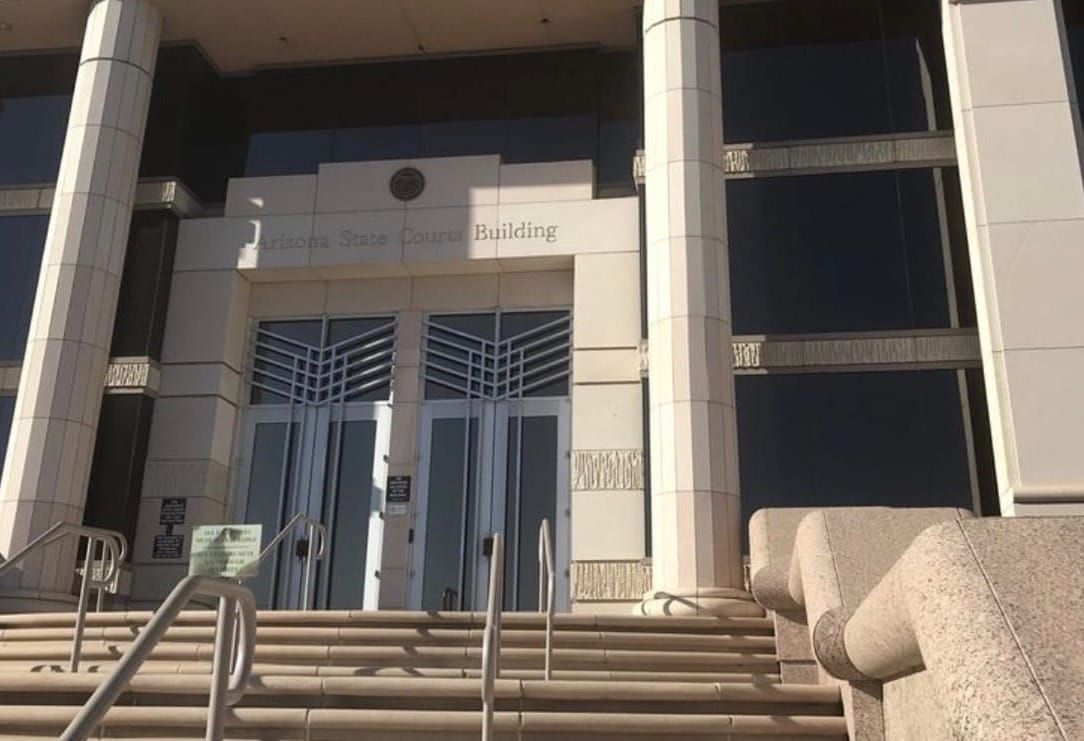
A petition to change how cameras and livestreams are allowed in Arizona courtrooms has drawn support from Pima County prosecutors and defense attorneys alike, but critics say it could give judges too much power to block public access to hearings.
Matthew A. Walker, a prosecutor with the city of Tucson, has petitioned the Arizona Supreme Court to amend Court Rule 122, which would broaden a court's power to restrict recording or broadcasting court proceedings.
Petition R-25-0031 seeks to give judges clearer, stronger authority to restrict or ban recording and broadcasting when it threatens safety, privacy or courtroom order.
Under the current rule, members of the public and media must submit a request to record at least a week before a hearing, which the judge can approve, approve with exceptions or deny. An exception allows anyone to use a small personal recording device without prior approval, as long as they announce it first, though broadcasting is not covered.
Rule 122 was written in 1993 and last amended in 2014. The personal-device exception has stayed in place even as smartphones have made recording far more accessible.
In Walker's January 2025 filing with the Arizona Supreme Court, he wrote that the rule has been "misused—if not openly weaponized— by individuals who are livestreaming court hearings on the internet to intimidate and harass others who are appearing or testifying in court."
After the filing, the Arizona Supreme Court opened the petition for public comment, drawing formal feedback and counter-proposals from entities including the Pima County Attorney's Office, before deciding to extend its review timeline.
It initially pushed the evaluation from its August 2025 cycle to November 2025, then shifted it to August 2026, and ultimately deferred a final decision to late 2026 to allow the state's task force sufficient time for review.
Your membership pays emerging journalists to cover Southern Arizona the way it deserves.
Walker's interest in amending the rule stems from his dealings with Lane Myers, who has a history of charges in Tucson City Court ranging from disorderly conduct to trespassing and harassment.
Walker represented the city in a 2024 disorderly conduct case in which Myers was accused of being disruptive during a Tucson City Council meeting, making crude remarks and gestures that led to his removal.
After the charges were dropped by the prosecution, Myers made claims about Walker's personal life and targeted his wife, leaving voicemails on her phone, calling her boss and visiting her place of work, court documents show.
Walker's wife was granted an injunction against harassment, but Myers responded with a series of YouTube videos about the family that included personal information and photos, leading to additional harassment by unknown individuals.
The case was elevated to aggravated harassment charges, with Myers facing at least six felony counts in Pima County Superior Court.
Myers, representing himself, wrote in court filings that his actions were constitutionally protected under free speech, arguing that Walker's wife's status as a public employee meant his use of her personal information was lawful.
During several hearings, Myers used a personal recording device to livestream the proceedings, which Walker said in his filing violates Rule 122.
Myers pleaded guilty to one felony and one misdemeanor in connection with the case and was sentenced to two years in prison and three years of probation.
The terms of his probation included not using social media to share information about victims or the trial, and a no-contact agreement barring him from contacting Joshua Grey and Mark Kelly, who runs the YouTube channel "Reluctant Prophet" and was involved in creating social media content about the case, court documents show.
Myers is accused of violating his probation nearly a year later by discussing his case in a livestream and contacting the barred individuals.
His hearing is scheduled for Monday, Sept. 14.
In his petition, Walker said the rule's unclear language leaves judges uncertain whether they have the power to deny someone access. He wrote that the rule is also vague on the limits of broadcasting, since livestreaming has become a more accessible form of it in recent years.
"This is particularly problematic where the livestreaming is used as a means to embarrass or harass another person, such as a victim in a criminal case, or a party seeking to have an injunction against harassment upheld," Walker wrote.
Supporters include the Pima County Attorney's Office, the Pima County Bar Association, the Arizona Prosecuting Attorneys' Advisory Council and Arizona Commission on Access to Justice chair Samuel Thumma, who argue the amendment gives courts needed clarity to curb harassment.
Opponents, including Tucson-area residents, civil liberties advocates and attorney Jeremy Turner, argue judges already have broad discretion under existing case law and say the change would create a prior restraint on recording that chills public oversight of the courts.
A spokesperson for Pima County Superior Court said most people who request recording access are generally no more disruptive than those who don't record. The spokesperson said it's uncommon for a request to be denied and that each is handled on a case-by-case basis by the presiding judge.
The Arizona Supreme Court's review of Walker's petition is now set for the December 2026 Rules Agenda.
Quentin Agnello is a University of Arizona alum and freelance journalist in Tucson. Contact him at qsagnello@gmail.com.
Tucson Spotlight is a community-based newsroom that provides paid opportunities for students and rising journalists in Southern Arizona. Please consider supporting our work with a tax-deductible donation.