Tucson art vending machines dish out $1 prints
Mini print vending machines have landed in Tucson at 1989 Bake House and Bookman's, offering locals a dollar's worth of original art.
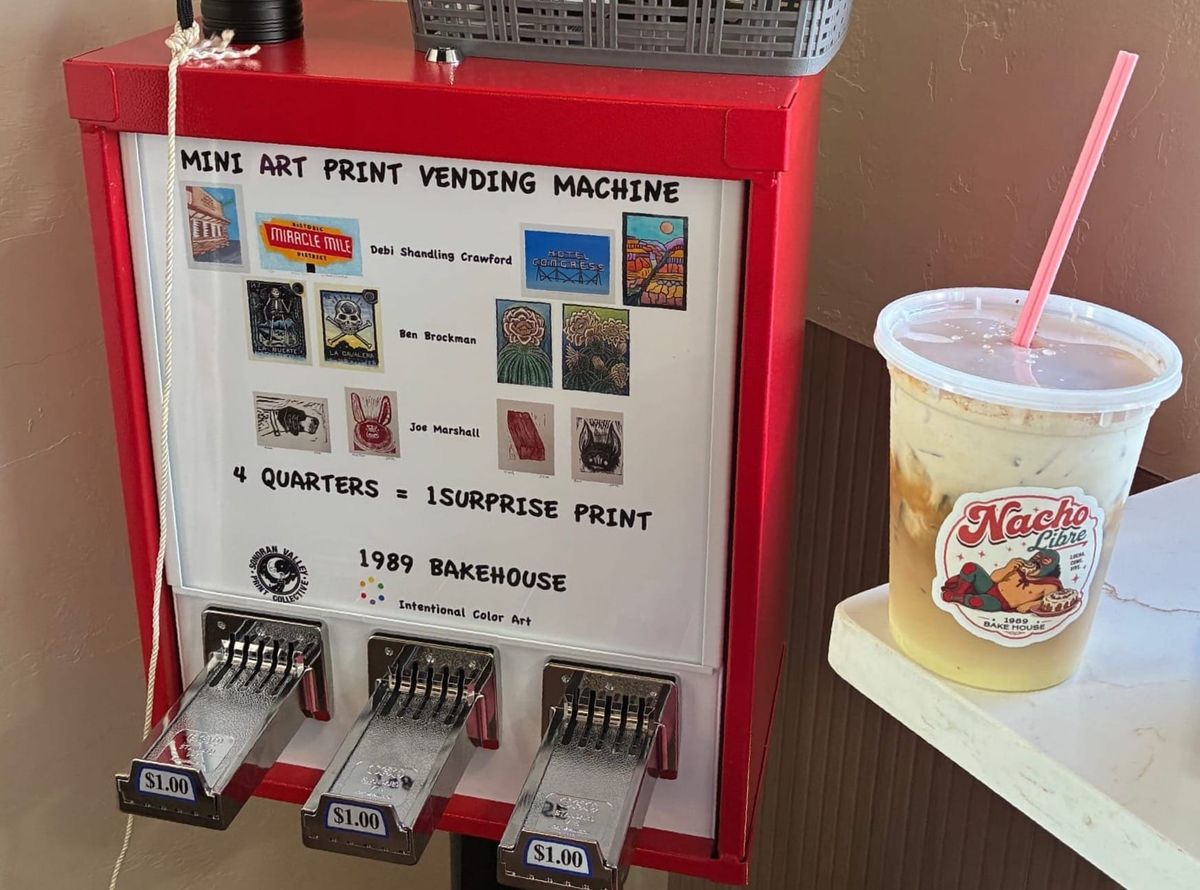
Mini print vending machines have landed in Tucson, with new ones at 1989 Bake House and Bookman's offering locals a dollar's worth of original art.
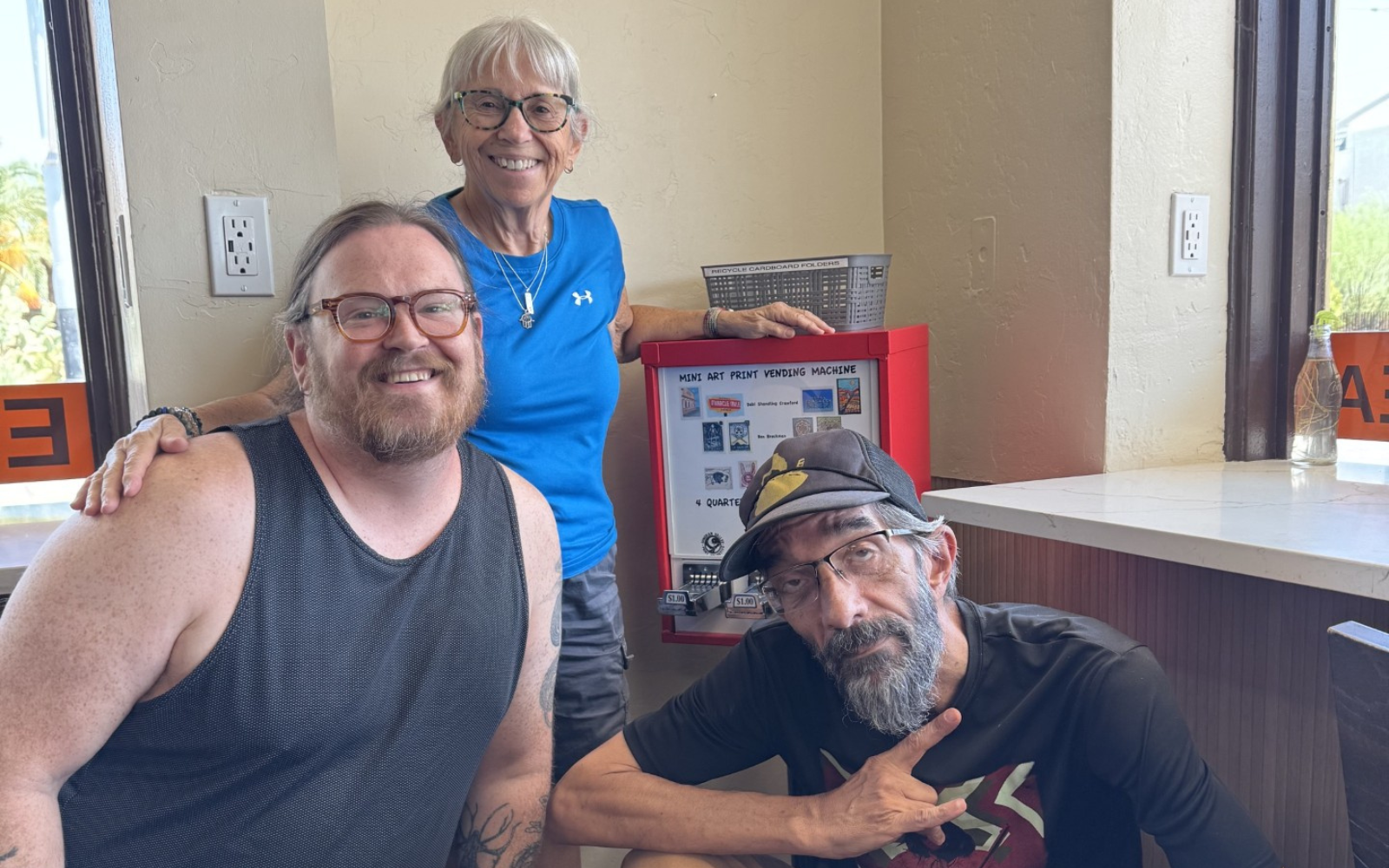
Local artist Debi Crawford installed the Bake House machine. She got the idea on a birthday trip to New York, where she and her daughter tracked down several machines built by Ana Inciardi, the format's originator, around the city.
Inciardi's prints are hand-carved linocuts converted into riso prints, a sustainable process using soy-based inks that gives each copy slight variations. Her first machine launched in 2022 as a nostalgic nod to the temporary-tattoo vending machines of her Brooklyn childhood.
Inspired by what she saw, Crawford built her own machine with a twist: multiple artists instead of just one.
"We have three different artists in there. We each have four prints and our styles are very different," Crawford said. "The attempt is to promote local printmakers. I'm trying to gear it towards a more local flavor."
Bake House's mini print machine launched in early August. It holds four prints each from local artists Crawford, Ben Brockman and Joe Marshall. Prints cost a dollar in quarters and are random.
Bookman's first mini print machine landed at its River Road location Sept. 26, after employee Katie Downing spotted Inciardi's prints on Instagram, said Bookman's Director of Communications Ryan Dillard.
The store went from idea to launch in about two months, after Downing set up a Zoom call with members of the Inciardi team to scope out logistics.
"I really liked the vibe that they had and their philosophy, and everything seemed to fit in line," Dillard said. "They are very, very efficient. Every time we had a question about something, it was like an immediate response."
When a poster meant for the machine's faceplate went missing in shipping, Inciardi overnighted a replacement without being asked, Dillard said.
Inciardi's prints aren't made by local artists, but Bookman's chose designs from the company's catalog with Tucson in mind, including a prickly pear, a taco and a playing-card print that nods to the cards the store used to hand out at its trade counter before the pandemic.
"We thought that was a nice little nod to our history and a little Easter egg for our longtime customers if they could catch on to it," Dillard said. "We got to be a little bit creative on what we thought was a good representation of where we live."
The response has been strong. Bookman's sold several hundred prints in the machine's first few days.
"We had a group of women come in and they bought like four or five each and they didn't buy anything else," Dillard said. "They just came into the machine, bought some tokens for it and then came over and just had a blast seeing which designs they got."
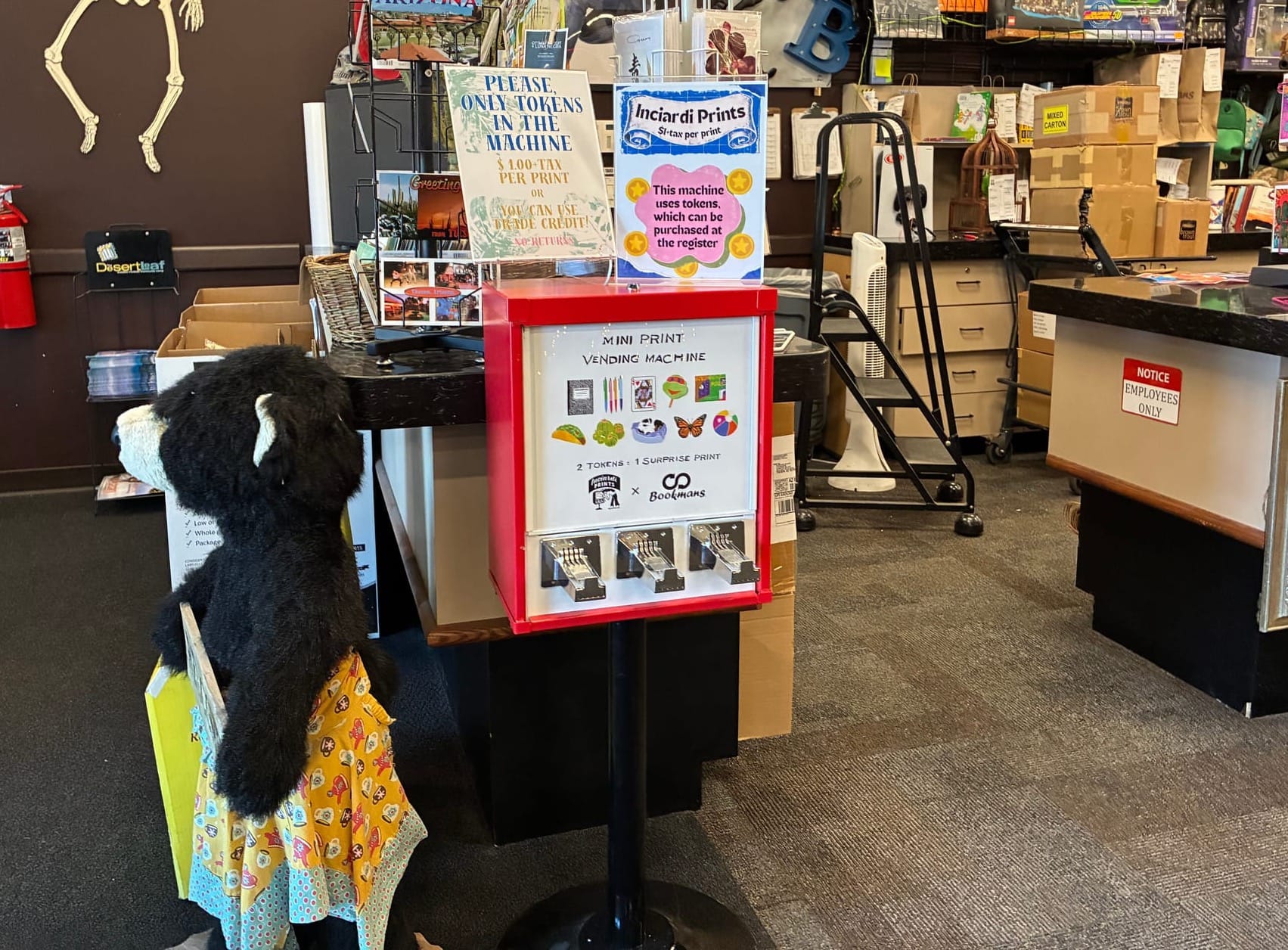
Bookman's made a point of letting customers buy tokens with store credit rather than cash only, Dillard said, part of a broader push to keep art accessible.
"I know that there's been so many different hobbies and things that didn't feel accessible to me unless it was through Bookman's," Dillard said of his pre-employment days, recalling saving up store credit to buy music as a teenager rather than paying full price for a CD. "It's just a really awesome way that people can get something that is considered a genuine piece of art."
Bookman's is weighing adding machines at other locations, though nothing is confirmed.
Crawford has similar plans.
"I'd be happy if I had a few machines that were strategically placed around Tucson with local images," she said.
Part of the draw is how inexpensive and collectible the prints are. Dillard pointed to online groups where collectors trade prints rather than sell them.
"You'll find Facebook groups and subreddits that are just dedicated to people trading these prints," he said. "It just seems like people do like straight-across trades … and they find each other and they swap them."
Cerese Vaden, a printmaker and art professor at the University of Arizona, said she's glad to see the format spreading locally.
"It's a really fun way to get an original piece of art," Vaden said. "A dollar for an original, fun little thing is amazing."
Zaida Josephene-White is a Sahuaro High School student and Tucson Spotlight intern.
Caitlin Schmidt is editor and publisher of Tucson Spotlight. Contact her at caitlin@tucsonspotlight.org.
Tucson Spotlight is a community-based newsroom that provides paid opportunities for students and rising journalists in Southern Arizona. Please consider supporting our work with a tax-deductible donation.