
PACC vacancies ease after June outbreak, overcrowding persists
Pima Animal Care Center's vacancy rate has dropped since a June distemper outbreak, but staff and advocates say chronic overcrowding remains the shelter's core challenge.

Vacancies at Pima Animal Care Center peaked near 20% during a June disease outbreak that forced the shelter to halt adoptions, and while the vacancy rate has since eased to under 15%, advocates say chronic overcrowding, not hiring struggles, remains the root problem.
As of Aug. 10, 150 PACC positions funded through the county were budgeted, with 22 vacant, a 14.7% vacancy rate, according to data provided by the county. Five of those vacancies have sat unfilled for more than 240 days. That's down from a peak of 30 vacancies, or 20%, in early June, just before a distemper outbreak temporarily disrupted the shelter's operations.
As of May 18, 2026, nine of PACC's 29 vacancies, 31%, had sat unfilled for more than 240 days, county data shows. The shelter is not new to criticism over its work environment and long-term staffing struggles, with Grayson pointing to chronic overcrowding as its main driver.
"We're always hiring because of turnover," PACC Director Steve Kozachik told Tucson Spotlight. "I think the challenge that we have is more retention than the inability to attract applicants to begin with."
Kozachik said PACC advertises vacant positions nationally and locally, depending on the type of role being recruited.
"I believe staffing is partly a symptom of a larger system problem, not simply a hiring problem," said Nancy Kate Grayson, a local animal advocate and caregiver with Rodeo Kittens & Pups.
Grayson said increased intake creates a heavier workload for employees and volunteers, likely leading to burnout and vacancies, which in turn puts even more pressure on the remaining staff.
Your membership pays emerging journalists to cover Southern Arizona the way it deserves.

PACC oversees a large volume of animals daily and faces periods where intake numbers significantly outpace releases.
Still, the shelter maintains its no-kill status with a 90% live release rate; as it notes on its website, "no municipal, open-admissions shelter can operate without euthanizing pets in instances of severe medical or behavioral issues."
Staffing problems and overcrowding create a lot of internal stress at the shelter, and Kozachik acknowledges PACC can be a frustrating place to work.
"This is a fairly emotionally charged environment," Kozachik said. "We see this every day. We have a shelter right now that is chronically overcrowded and here it is, 5:30 at night and some people drive up and want to drop two more dogs off with us."
PACC has counselors who work with families to try to keep pets in their homes, but it doesn't always succeed, Kozachik said. As an open-admission shelter, PACC must accept every animal brought to its doors regardless of space, age, health or behavior, even at or over full capacity.
Grayson said this isn't always the case. She recounted an experience shared by a couple who brought in their dog after a change in their apartment complex's rules meant it could no longer stay with them. They told her PACC refused to take the dog, saying it was their responsibility.
"At PACC, the counselor is supposed to sit down and try to find alternatives. But what's happening is they're just plain turned away. Animals don't receive the care they need, and everything like that," Grayson said. "It's not easy to give up an animal."
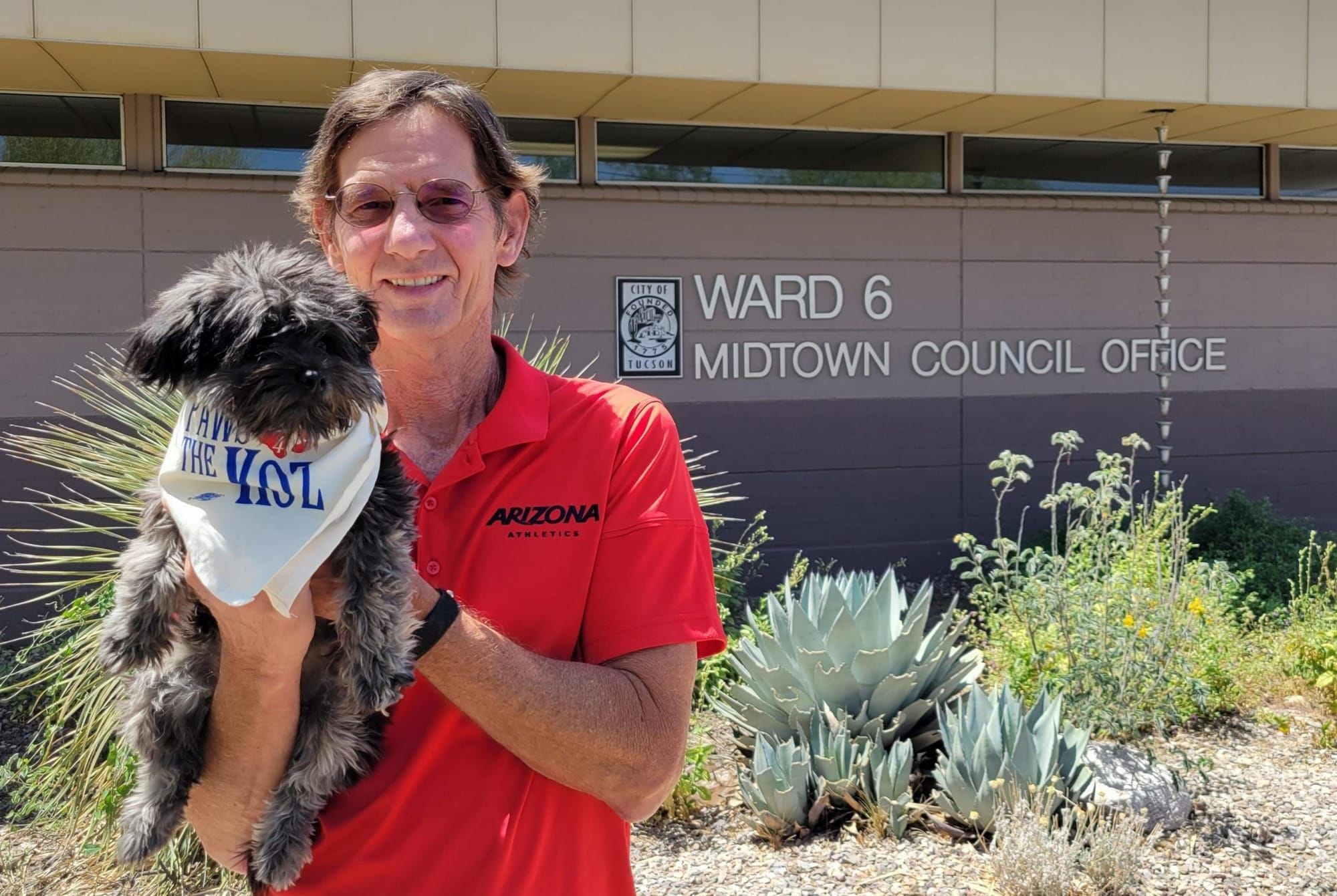
PACC takes in approximately 19,000 to 23,000 pets annually, housing upwards of 700 at a time with another 1,400 in foster care.
On June 17, an outbreak of canine distemper and respiratory infections forced the shelter to halt adoptions and limit intake. Staff and volunteers treated the outbreak through quarantine and vaccination, and the limited intake was lifted July 6, but Grayson said the episode raised concerns about overcrowding and the disaster it could have caused.
"Seventy-five percent of that work goes to volunteers. It's not done by staff. There's no way they can physically vaccinate that many dogs," Grayson said. "People don't get that picture of it, you know, they only see the picture of staff vaccinating."
Kozachik said he understands the mental toll that working at an open-admission shelter takes on staff, and that PACC has been working to secure resources for those involved with the shelter.
PACC has recently begun working with a program called Struggle Well, which describes itself on its website as "a prevention-focused program...focused on transformation of the active serving military and first responder culture, rather than the implementation of another wellness program."
PACC staff voluntarily attend the five-day program, based in Sonoita, where they receive support to manage stress and difficult workplace scenarios. PACC has worked with the program for about a year, and roughly 50 employees have gone through it.
"The challenge is, it's a five-day program, and so we're losing an employee for five days every time we do it," Kozachik said. "But it's something that we have found very beneficial for our staff's psychological well being. People, the employees, come back grateful for having had the experience, and they feel more confidence in their own sense of self."

Beyond staffing and wellness programs, PACC's operations are also shaped by its relationship with an outside nonprofit partner.
Friends of Pima Animal Care Center is a private 501(c)(3) nonprofit partner and fundraising arm that describes itself as "(supporting) Pima Animal Care Center and enhancing its efforts to save the lives of pets in need." The organization regularly receives donations and grants that go back into PACC and its needs.
Grayson said the central concern about Friends of PACC is its lack of transparency: as a private nonprofit, it must provide specific federal tax and formation documents to the public upon request, but it isn't required to share internal operational or donor records. She's also raised concerns about the organization's annual contract with Pima County, citing limited oversight of its supervisors.
"This ties into employment because of the crisis of so many animals and so many animals by prior directorships, being … hidden in foster," Grayson said. "Those expenses go to the foster families for the most part, except for some medical (expenses.) This turnover in paid staff, depending on who's funding it, Friends (of PACC) or Pima County, is going to be hard to nail down because it's just all so all over the place."
Grayson advocates for a different approach to reducing staff stress: prevention.
"It's vicious, this endless stream of animals. There's no break, ever. It just gets larger and larger," Grayson said. "(There have) been recent articles and editorials in the newspaper, and it's spot on."
Grayson pointed to Española Humane Society, an open-admission nonprofit shelter in Española, New Mexico, that offers free spay and neuter surgeries and free pet vaccinations to state residents.
"What they do, everybody can do. Everyone can do what Española Humane is. They can treat the community like us. They can treat people respectfully," Grayson said.
Kozachik echoed Grayson's concerns about prevention, asking residents to spay, neuter and microchip their pets. He also encouraged people to seek alternatives to bringing stray animals straight to PACC, in order to help combat overcrowding, including posting lost pets on social media, neighborhood lists, or sites like Petco and Love Lost.
"There are lots of tools that the community can use to help us. And we try to message that out every single day," Kozachik said.
Gabrielle Cotnoir is a University of Arizona journalism student and Tucson Spotlight intern. Contact her at gabriellecnews@gmail.com.
Tucson Spotlight is a community-based newsroom that provides paid opportunities for students and rising journalists in Southern Arizona. Please consider supporting our work with a tax-deductible donation.