Marana approves rezoning for massive data center project
The Marana Town Council unanimously approved rezoning 661 acres for a data center after hours of debate over water use, power demands, jobs and growth.
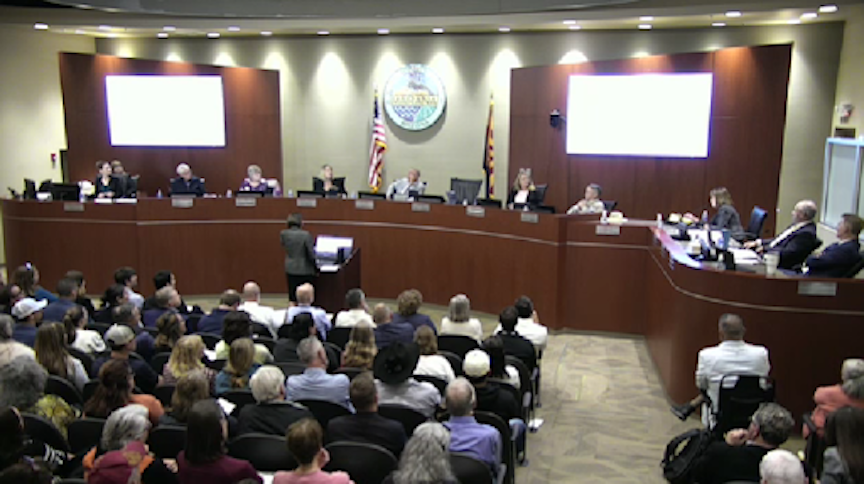
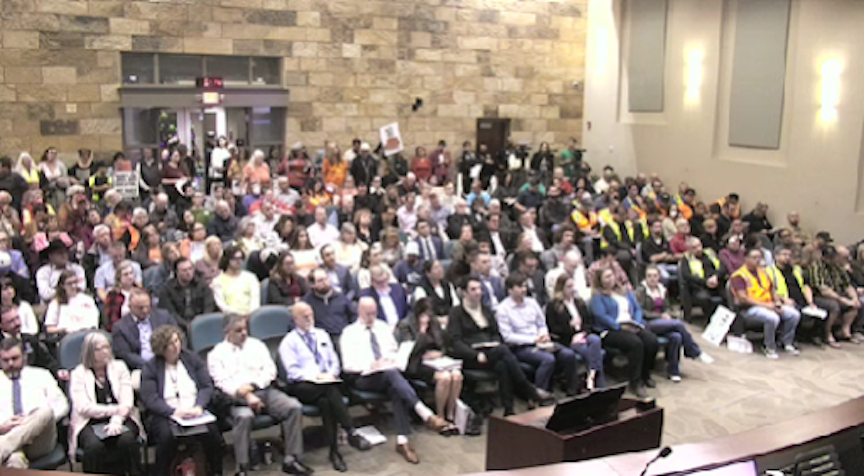
After hours of packed public testimony and debate over water, power and growth, the Marana Town Council voted 6–0 Tuesday to rezone 661 acres of agricultural land for a large data center development.
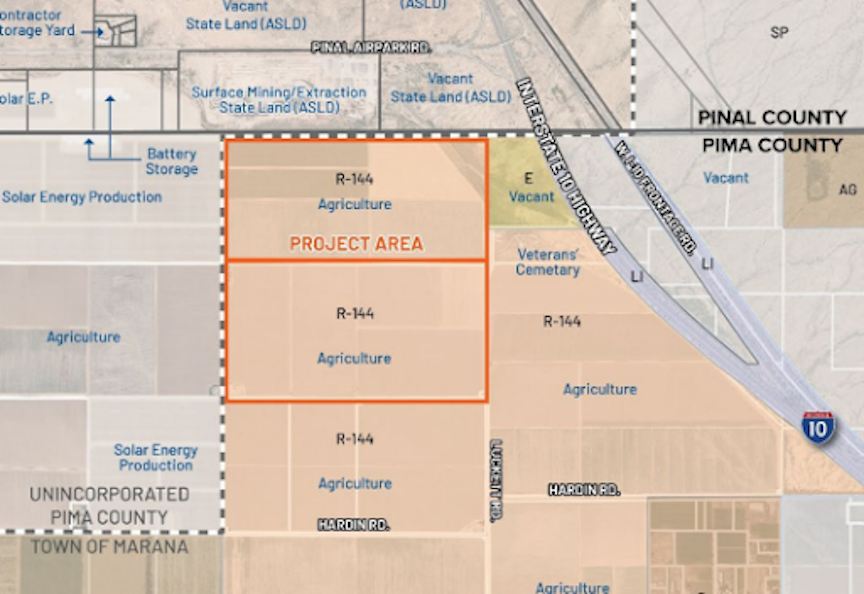
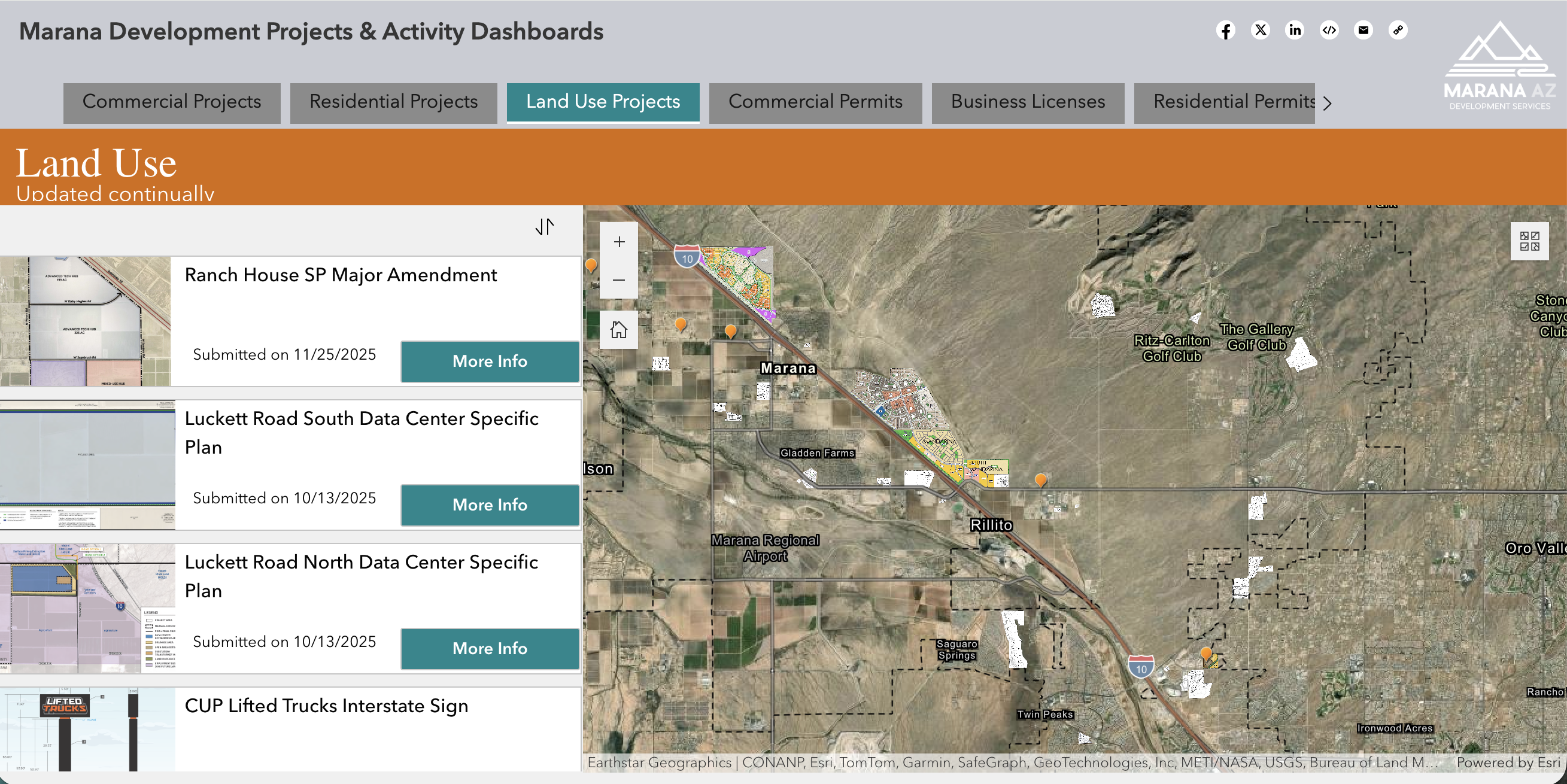
The two parcels — both previously designated for agriculture — are located along Luckett Road and are surrounded by agricultural and solar production zones, with a veterans’ cemetery to the east.
The north parcel is owned by the Church of Latter Day Saints and borders Pinal County, while the southern parcel is owned by the Kai Family Trust. Herbert Kai, a member of the Kai family, serves on the Marana Town Council but did not attend the Jan. 6 meeting or vote after declaring a conflict of interest related to partial ownership of the southern parcel.
The Marana Planning Commission unanimously recommended last month that the Town Council rezone the parcels, saying the proposed data center meets all requirements of the town’s data center ordinance. The ordinance is one of only a few that specifically regulate data centers and is the only one adopted by a town that does not currently have any.
The council adopted the Planning Commission’s recommended language with an added provision requiring the removal of all data center equipment and infrastructure if the use is discontinued, a requirement not imposed on any other business in town.
Lazurus and Silvyn PC, which represents the owners of both parcels, presented the project to the Town Council alongside representatives of Beale Infrastructure, the developer behind Pima County’s controversial Project Blue data center. The council has not been told who would ultimately occupy the site.
“Beale works closely with communities to understand local resource constraints and develop a responsible roadmap for growth,” said Lazurus and Silvyn partner Keri Silvyn. “Beale was founded on the values and commitments to sustainability, community investment and health and safety.”
Welcome a new class of interns by doubling your donation for local journalism
Trico Electric Cooperative will provide the north site with 550 to 750 megawatts of power, and Tucson Electric Power will provide a matching amount to the southern portion. Because Marana town code prohibits the use of potable water for cooling systems, the facility has been proposed as air-cooled. Additional water needed for irrigation, industrial use and fire suppression would be provided by the Cortano Marana Irrigation District.
The project would also require infrastructure changes. Luckett Road north would be extended from its current end at the entrance to the veterans’ cemetery to connect with Pinal Airpark Road. The route has not been determined, but the extension is estimated to cost $20 million and would be paid for by the developer before being turned over to the town of Marana for ownership and maintenance as a public road.
The project would also include a three-mile extension of potable water to serve the site and two miles of force main pipelines to pump wastewater, along with a lift station. Each is estimated to cost the developer between $15 million and $20 million.
The town of Marana said the data center project would create about 4,500 temporary construction jobs and approximately 400 permanent jobs once operational. Council members said job growth that attracts new residents is a top concern they frequently hear from constituents.
Silvyn said the data centers would generate $145 million in tax revenue and serve as a backbone for technological innovation.
“Data centers support all of the local industries enabling both day-to-day operations and technological innovations on things like airspace and defense, bioscience and healthcare, advanced manufacturing, financial services, education and research, tourism and all levels of government,” she said.
Silvyn also stressed the importance of building data centers in the United States, saying the stakes are too high to rely on foreign markets.
The developer would be responsible for designing and constructing 30% of a drainage channel flowing west into the Santa Cruz River. The total project cost is estimated at $66 million, with the remaining portion of the channel to be funded either by the town at a later date or by future developers within the drainage pathway.
The town’s data center ordinance includes noise limits to be monitored by a third party chosen and paid for by the developer. Vice Mayor Roxanne Ziegler said she was frustrated by the arrangement, saying the town should have final say, or at least mutual agreement, on the monitor.
Supporters of the Marana Veterans’ Cemetery welcomed the ordinance’s noise provisions. The cemetery sits on land formerly owned by the Kai Family Foundation, which also once owned the southern parcel proposed for the data centers before donating the cemetery land to the Arizona Department of Veterans’ Services. David Seia, a retired airman and chairman of the Marana Veterans’ Cemetery Foundation, thanked the Town Council for addressing potential noise impacts on the cemetery, which has more than 5,700 people interred.
As in previous meetings, many residents spoke in opposition to the data center, citing concerns about water use and energy infrastructure. Some accused council members, including Ziegler, of accepting campaign contributions from groups associated with the project, such as Lazurus and Silvyn. Ziegler said she accepted campaign contributions while running for office on a fixed income and said she received $300, not the larger amounts alleged.
Several residents also spoke in favor of the data centers, citing benefits such as increased tax revenue, particularly for first responders and education.
Sue Ritz questioned the companies’ promises to conserve water through measures such as air-cooling, noting that the data center would not be the only water consumer involved in the process.
“That does not address the amount of water that is consumed by the generating stations that provide the power to this data center,” Ritz said. “Coal-fired plants are currently only operated seasonally. If this goes through, they’re not going to be able to do that.”
Ritz said she reviewed coal-fired power plant data and estimated they consume 11,100 acre-feet of water annually.
Lloyd Kursch praised town staff for crafting the data center ordinance but said unresolved issues remain. He said Beale Infrastructure and its parent company, Blue Owl, have transparency problems that could lead to legal disputes.
“Blue Owl’s capital value in 2025 decreased by 33%. They have liquidity issues,” Kursch said. “If we approve this data center in the absence of clear robust regulations regarding end-of-life responsibilities, funding and planning would be premature and potentially detrimental to Marana’s long-term interests.”
Amanda Wiggins, president and CEO of the Marana Chamber of Commerce, spoke in favor of the data center, highlighting the town’s business ecosystem and quality-of-life improvements, including a 14% increase in median income and new facilities and schools.
“That doesn’t happen by chance. That happens because our mayor and council say yes to growth, they say yes to economic opportunity and they say yes to progress, while also putting the right guardrails in place to protect our residents,” Wiggins said.
Ryan Zupi, executive vice president of the local Northwest Firefighters union, said the data center would provide “immense financial benefit” to his members and generate tax revenue for first responder equipment, likening opposition to the project to NIMBY policies.
“I have been nothing short of flabbergasted by the misleading information, convenient emission of the full picture and outright lies that the opposition to approval of the data centers has flooded the media with,” Zupi said.
Councilmember Patrick Kavanaugh said his main concern was whether energy rates would remain locked in amid grid stress and potential power shortages. A Tucson Electric Power representative said contract commitments approved by the Arizona Corporation Commission guarantee the rates.
Kavanaugh said he entered the meeting leaning toward a no vote but was swayed after hearing arguments in favor of the data center.
“A lot of us had the same concerns that were expressed by people here tonight,” said Town Manager Terry Rozema. “Going through all that and researching that, we came to the conclusion fairly quickly that there was a real opportunity for us here to move forward with data centers.”
Rozema likened the data center effort to past controversial decisions he said were ultimately successful for the town, such as the Town Council’s takeover of animal control.
Mayor Jon Post presented a stack of 96 letters the town received about the data center, saying 56 supported approval and 34 opposed it.
He also noted that the city of Tucson lost jobs in 2024 and faces challenges related to substance use and homelessness, saying he views the project not as a data center but as a “job center.”
“They avoid doing things in that community that would seriously help that situation,” Post said. “Marana can’t do that. Marana cannot be the community that ignores opportunities."
The Town Council also unanimously approved a fee schedule increasing water, groundwater and reclaimed water rates. The changes will raise the average Marana water bill from $107 to $114, with phased increases beginning Feb. 1 and continuing through Jan. 1, 2030
Ian Stash is a journalism major at the University of Arizona and Tucson Spotlight intern. Contact him at istash@arizona.edu.
Tucson Spotlight is a community-based newsroom that provides paid opportunities for students and rising journalists in Southern Arizona. Please consider supporting our work with a tax-deductible donation.