Karla Toledo loses bid to end Tucson DACA deportation case
An immigration judge denied Tucson DACA recipient Karla Toledo’s motion to terminate her deportation case, saying DACA “is not an absolute protection.”
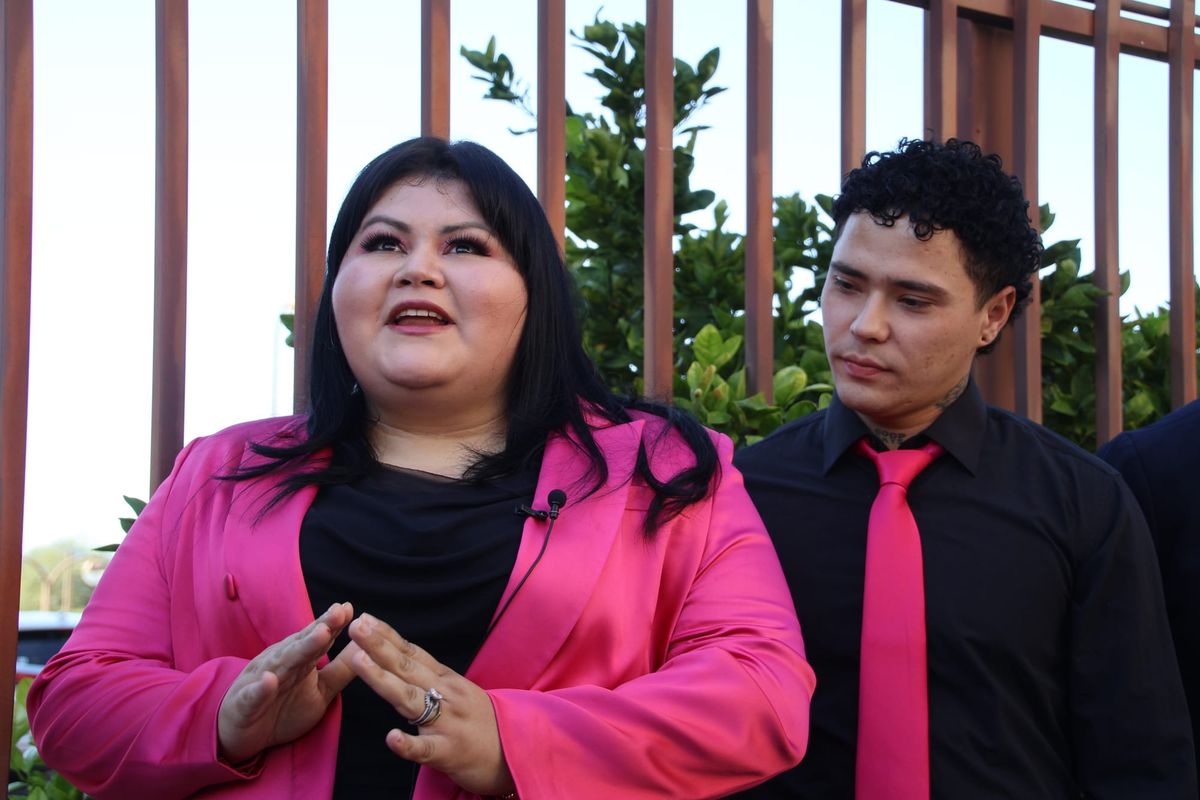
An immigration judge on Tuesday refused to terminate deportation proceedings against Karla Toledo, a Tucson DACA recipient, saying that “DACA is not an absolute protection.”
DACA, or Deferred Action for Childhood Arrivals, is a program created in 2012 that lets certain people brought to the U.S. as children apply for a renewable two-year reprieve from deportation and a work permit.
U.S. Immigration and Customs Enforcement agents detained Toledo at her Tucson home in May. Video footage shows agents bursting through the door and not providing a search warrant when she asked for one. At the time, Toledo was waiting for her DACA to renew, held a valid work permit and had no prior criminal history.
She was held for 12 hours at the Tucson ICE Field Office, then transferred to an ICE processing center in Florence. After 18 hours of processing, she was moved to the Eloy Detention Center, where she was held for a few days before being released on bond.
Toledo was summoned to immigration court June 3 to face deportation proceedings. The day before, the Department of Homeland Security filed a motion asking the court to terminate the case. On June 3, she received a letter from DHS saying it had filed a new notice to appear, reinstating the proceedings for July, and had summoned her husband, who has asylum, as well.
Toledo’s DACA was renewed for another two years in late June, after which her court appearance was rescheduled from July 7 to Oct. 6.
“Despite having active DACA status and no criminal record, DHS is continuing her attempt to deport Karla because she is speaking out about the injustices her and other DREAMers throughout the country are facing,” said U.S. Rep. Adelita Grijalva, who was at Toledo’s Tuesday hearing. “Her courage is inspiring, and I will continue standing with her in this fight.”
We're a nationally recognized newsroom, but we're still a nonprofit that runs on community support. Help us keep telling Tucson's stories.
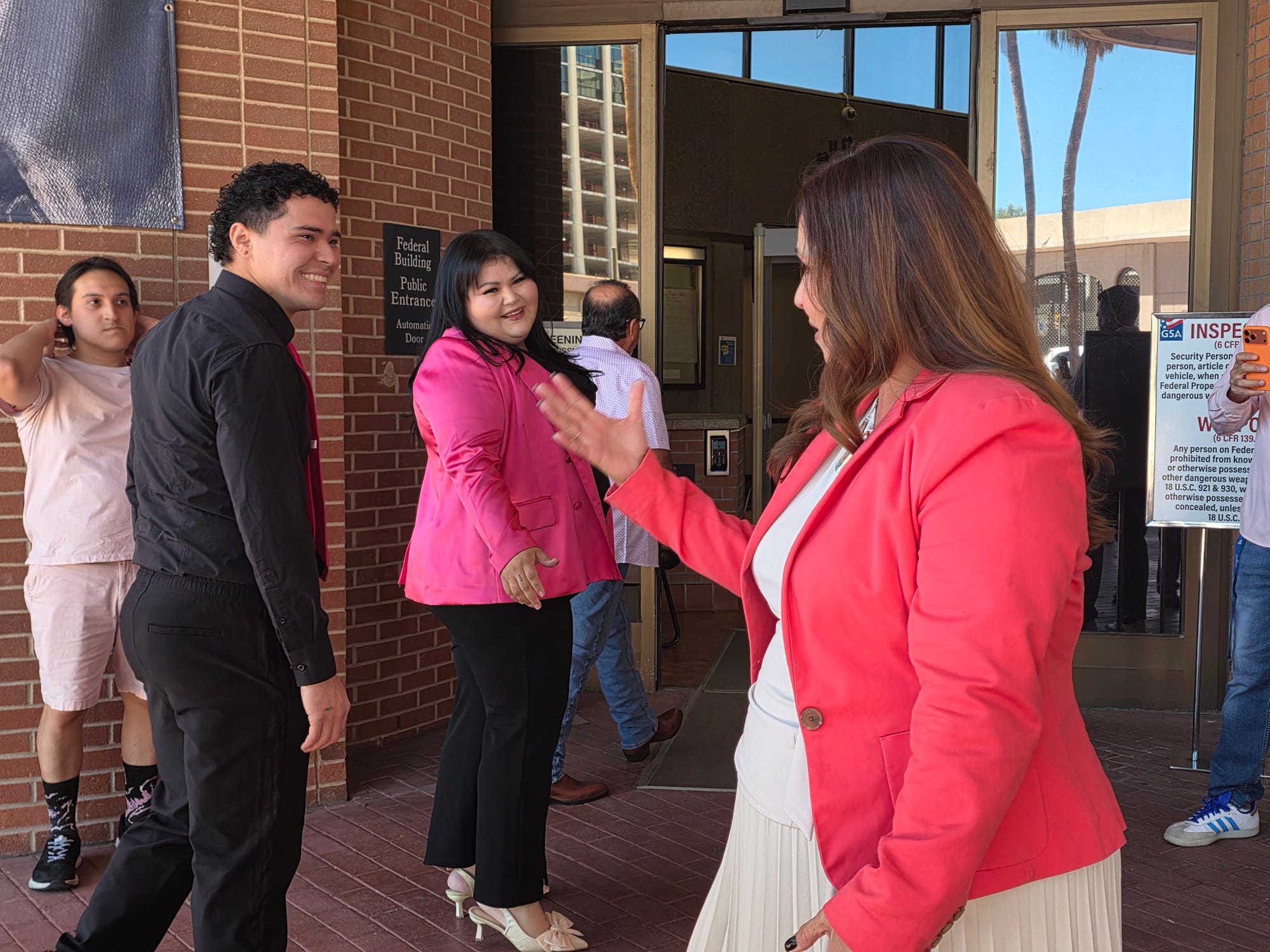
During oral arguments, Toledo’s attorney, Mo Goldman, disputed the main allegation in the charging document: that she did not have proper documentation when she returned to the United States from a trip to Mexico a few years ago.
“She did come in with the proper document,” said co-counsel Luis Campos after the hearing. “The Department of Homeland Security, the very same department that’s here today, issued (Toledo) an advance parole document to travel and reenter the United States. She presented that document to the Department of Homeland Security at a port of entry. They were satisfied, it was a good document (and) they let her into the United States with that document.”
Goldman told Judge Michael Lloyd that Toledo had a valid entry document at the time under the Immigration and Nationality Act and asked him to consider terminating the deportation proceedings, given her current DACA status.
DHS countered that “DACA does not provide legal status” and that anyone approved for advance parole who leaves the country and returns is “treated as an arriving alien,” according to the application instructions for advance parole.
Goldman asked the judge to reconsider terminating the proceedings, saying “nothing in the respondent’s past … warrant termination of DACA.” He questioned why DHS would renew Toledo’s DACA while putting her in deportation proceedings.
Campos agreed, saying DHS could have moved to end Toledo’s DACA protection if it wanted to.
“The Department of Homeland Security approved her DACA renewal, and at the same time, is trying to have it removed. It’s contradictory,” Campos said after the hearing.
Lloyd denied the motion to terminate the case and sustained the charges against Toledo, saying DACA status does not provide “any right or entitlement” to remain in or reenter the United States.
Lloyd also agreed with DHS that Toledo was paroled into the U.S. and did not enter legitimately.
Lloyd’s decision follows an April ruling by the Board of Immigration Appeals that being a DACA recipient, by itself, is not enough to terminate removal proceedings. The decision also requires judges to thoroughly explain any reasons for terminating a case beyond the fact that a person has DACA.
Goldman disagreed with Lloyd's decision.
“These judges have discretion, but this discretion that they have has been pulled away from them by the current administration,” Goldman said. “We presented the court with numerous letters, evidence that she graduated from school, we even put her … resume in there. We put all this evidence in there showing strong equities. Meanwhile, the court didn’t care.”
After the hearing, Toledo thanked the community members who came out to support her and explained why she continues to pursue her case.
“My strength right now is that I’m doing it not just for me but for other DACA recipients. I’m doing this for myself and for my husband, yes, but for other DACA recipients because they deserve not to go through the process that I went through,” Toledo said. “I have the support of both of my lawyers, and as long as they say we can fight, I will continue fighting.”
Toledo also encouraged community members to vote in the Nov. 3 election.
“Not voting is not cool. Not voting doesn’t make you different,” she said. “Vote. Use your right. There’s people like me and a lot of people in our community that cannot vote, but you represent us. Use that. Use your voice.”
Goldman said he plans to appeal the decision while other aspects of the case move forward.
Toledo and her husband are to reappear to immigration court in March.
Topacio “Topaz” Servellon is a reporter with Tucson Spotlight. Contact them at topacioserve@gmail.com.
Tucson Spotlight is a community-based newsroom that provides paid opportunities for students and rising journalists in Southern Arizona. Please consider supporting our work with a tax-deductible donation.