
Tucson DACA recipient faces deportation again
DACA recipient Karla Toledo is facing renewed deportation proceedings after ICE detained her without a warrant and federal officials reversed a motion to dismiss her case.
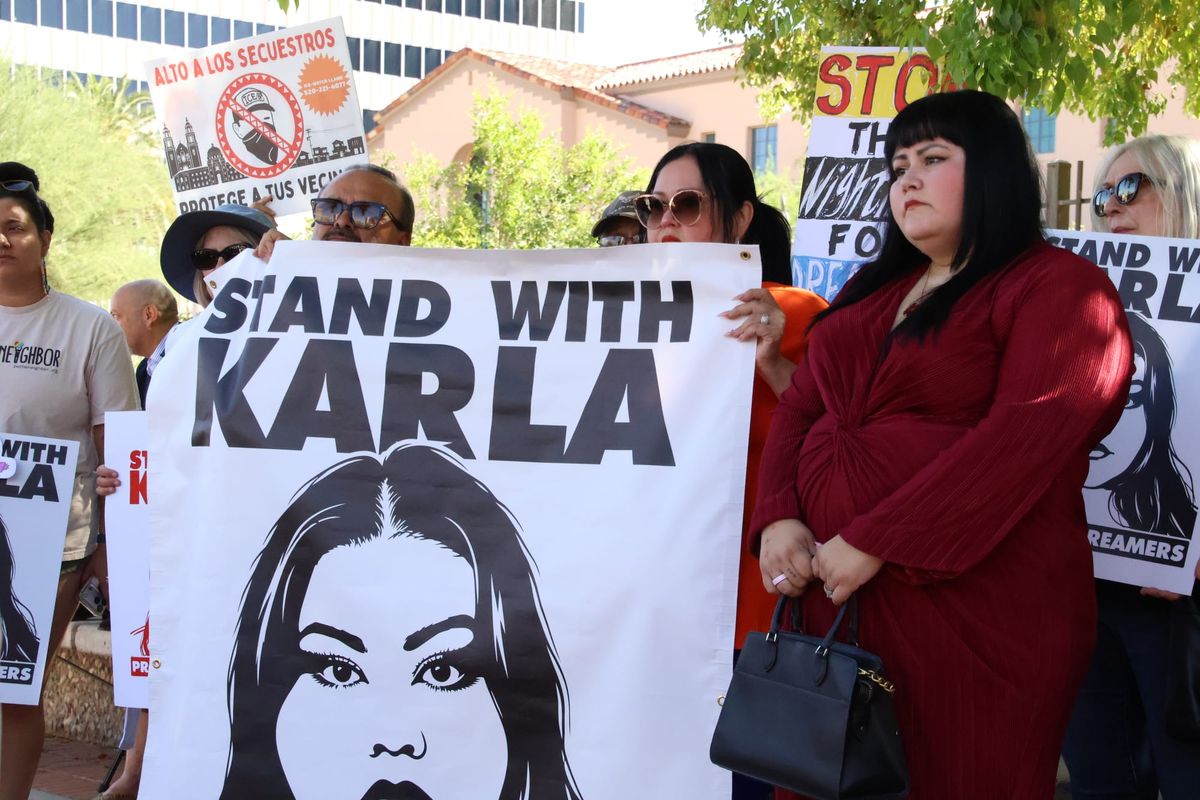
Karla Toledo, a DACA recipient detained by ICE without a warrant last month, is facing deportation proceedings again after federal officials abruptly reversed a motion to dismiss her case, a move her attorney called evidence of "bad faith" by the government.
Deferred Action for Childhood Arrivals, or DACA, recipients have protection from deportation and two-year renewable work permits if they maintain a clean criminal record.
On May 18, Toledo was taken from her home without a warrant by ICE agents and held at the ICE Regional Office for 12 hours before being transferred to the Eloy Detention Center. She was released several days after her arrest on a $1,500 bond.
The Department of Homeland Security claims Toledo assaulted an officer while she was being detained at her home. Surveillance footage from her home contradicts that claim, and requests by Toledo's defense team for bodycam footage have gone unanswered. DHS has not filed assault charges against Toledo.
On June 2, a day before her scheduled immigration court appearance, the U.S. Department of Homeland Security filed a motion asking the court to dismiss Toledo's deportation proceedings.
"Circumstances of the respondent's case have changed after the notice to appear was issued to such an extent that continuation is no longer in the best interest of DHS," the motion said. An immigration judge later signed the motion for approval.
On June 3, Toledo received a letter from DHS notifying her that it had filed a new notice that copied her previous immigration court summons word for word, misspelled her middle name and ordered her to appear in court again, reinstating potential deportation proceedings.
The new notice also requested that her husband, who has been granted legal asylum status, appear in court.
Tucson Spotlight trains the next generation of Southern Arizona journalists and publishes their work free for everyone. No paywalls, no corporate backing. Just readers who believe this community deserves better local news.
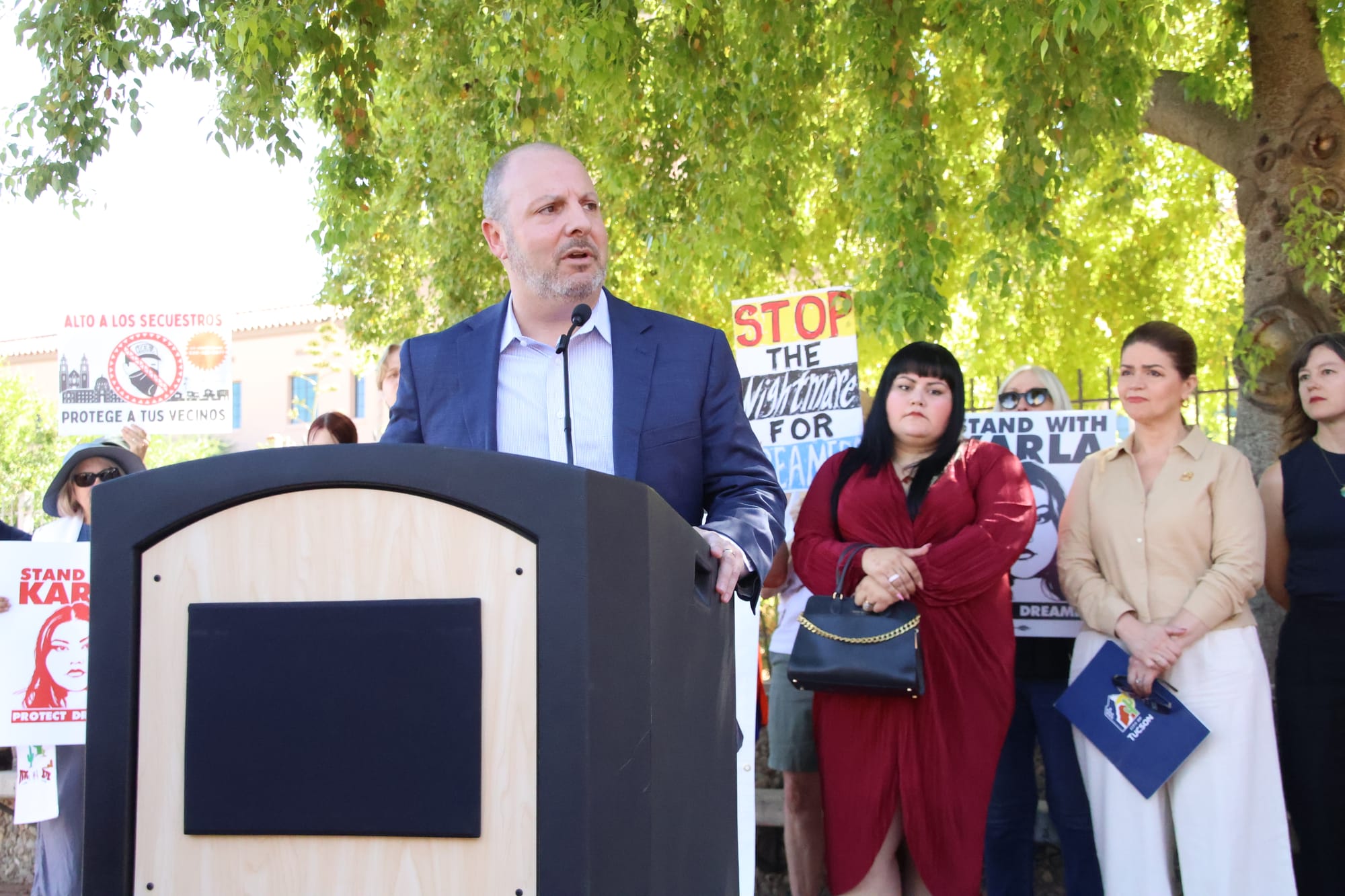
Toledo's attorney, Mo Goldman, said during a Monday news conference there is no justification to summon both parties.
"Her husband has his own separate case, asylum, and this was the pretext for why they put her back in removal. They claim that they were doing it to bring them both in. That's their basis," Goldman said. "That shows bad faith on the part of the government. It questions a lot about their tactics."
Goldman said Toledo still has DACA protection, which is meant to shield recipients from deportation, and has a pending application to extend it. He said similar cases involving DACA recipients are happening elsewhere in the country, which he finds alarming.
Goldman and co-counsel Luis Campos filed a motion Monday, requesting that the case be dismissed on the same grounds it had previously been dismissed.
"We're going to fight this case if the case is not terminated," Goldman said during the news conference.
Toledo told attendees she had to work harder than other students in her high school and knew that even after graduating, life would come with adversity.
"The first time that this administration … took DACA away … I was very fortunate that my DACA was still present. But I remember thinking, should I stay here?" Toledo said. "Now, it's completely uncertain and I never thought that I was going to have a court here with immigration, because I thought that I was doing everything correctly."
Toledo said it's been strange to watch DACA applications filed in April get approved while applications from November, December and January have not.
"Many (people) have lost their jobs … their income … they lose their driver's license. You can't even do work on the side because you can't legally drive," she said.
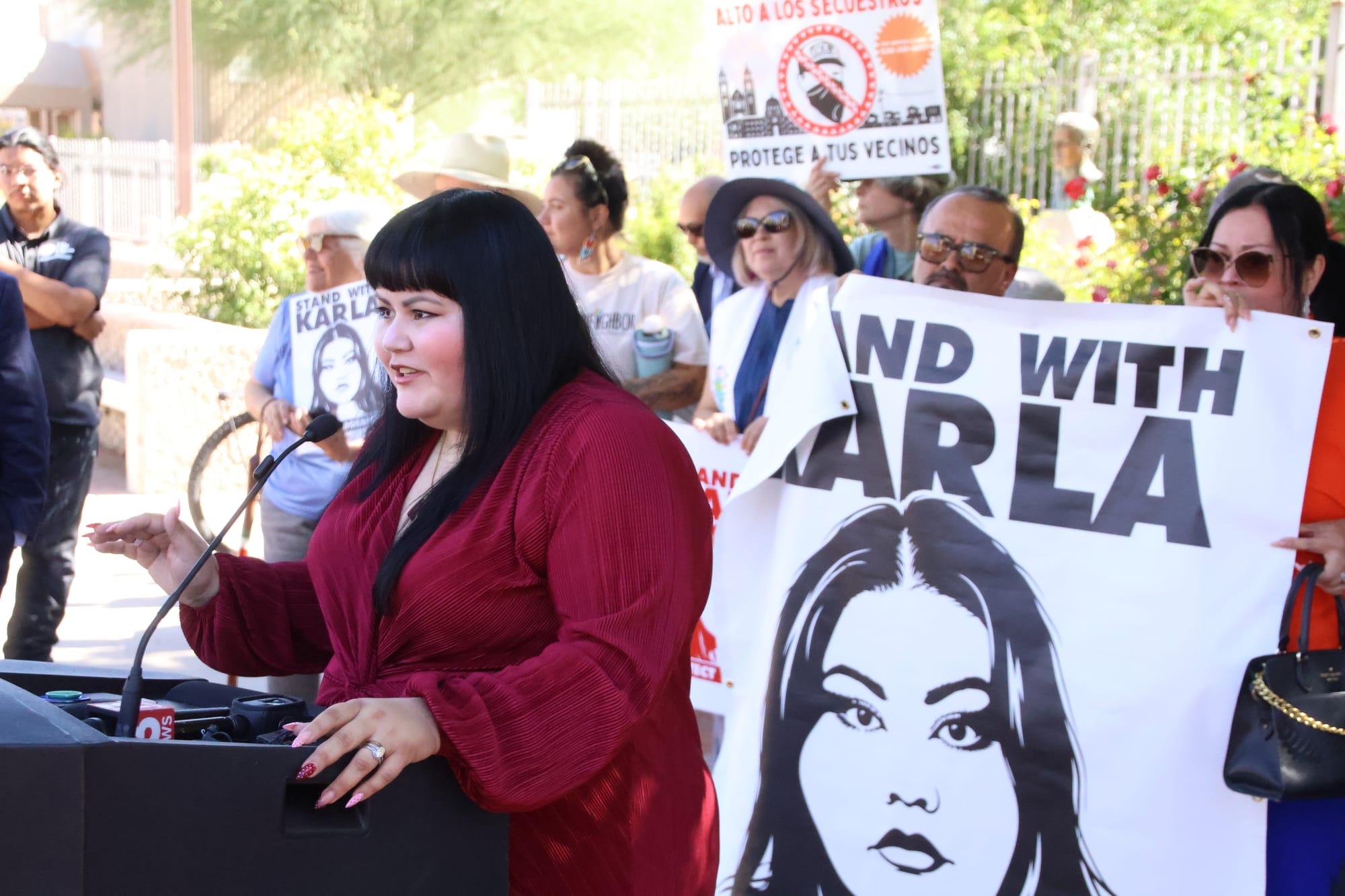
Toledo said the sound of doors opening has affected her mental health ever since ICE agents entered her home without a warrant.
"I'm seeking therapy because right now. I'm very fortunate with other organizations who have helped me," she said. "I could act like nothing's happening, but there's a lot of things that are happening."
Toledo pushed back against recent negative comments directed at her, saying immigrants remain vital to the community as she continues her work supporting others.
"I'm trying my best to not think about this, and trying to stay busy, and trying to do things for the community. I feel like when you're in the community, it just erases everything," she said. "Tucson is my community too, I belong in Tucson."
Tucson Mayor Regina Romero voiced her support for Toledo while calling for increased protection for DACA recipients.
"It is my responsibility to protect and advocate for every Tucson resident, regardless of where they are born. When members of our community are targeted, despite following the law, it affects all of us," Romero said. "(Karla) has contributed to Tucson, followed the legal process, and deserves to be treated with dignity and fairness. When residents who have legal start status are suddenly placed in jeopardy, it creates fear and uncertainty for families, employers, schools, entire neighborhoods, and cities."
Romero said DACA recipients registered with the federal government, passed background checks and followed the rules set for them, and shouldn't be punished for doing so. She said she stands with Toledo and her family and is joining calls to drop her deportation proceedings.
"Karla is a part of our community, she is our neighbor … and she deserves to be treated with dignity and respect," U.S. Rep. Adelita Grijalva said in Spanish. "After putting Karla's family through weeks of uncertainty, they have reversed course and started the process all over again, that is reprehensible."
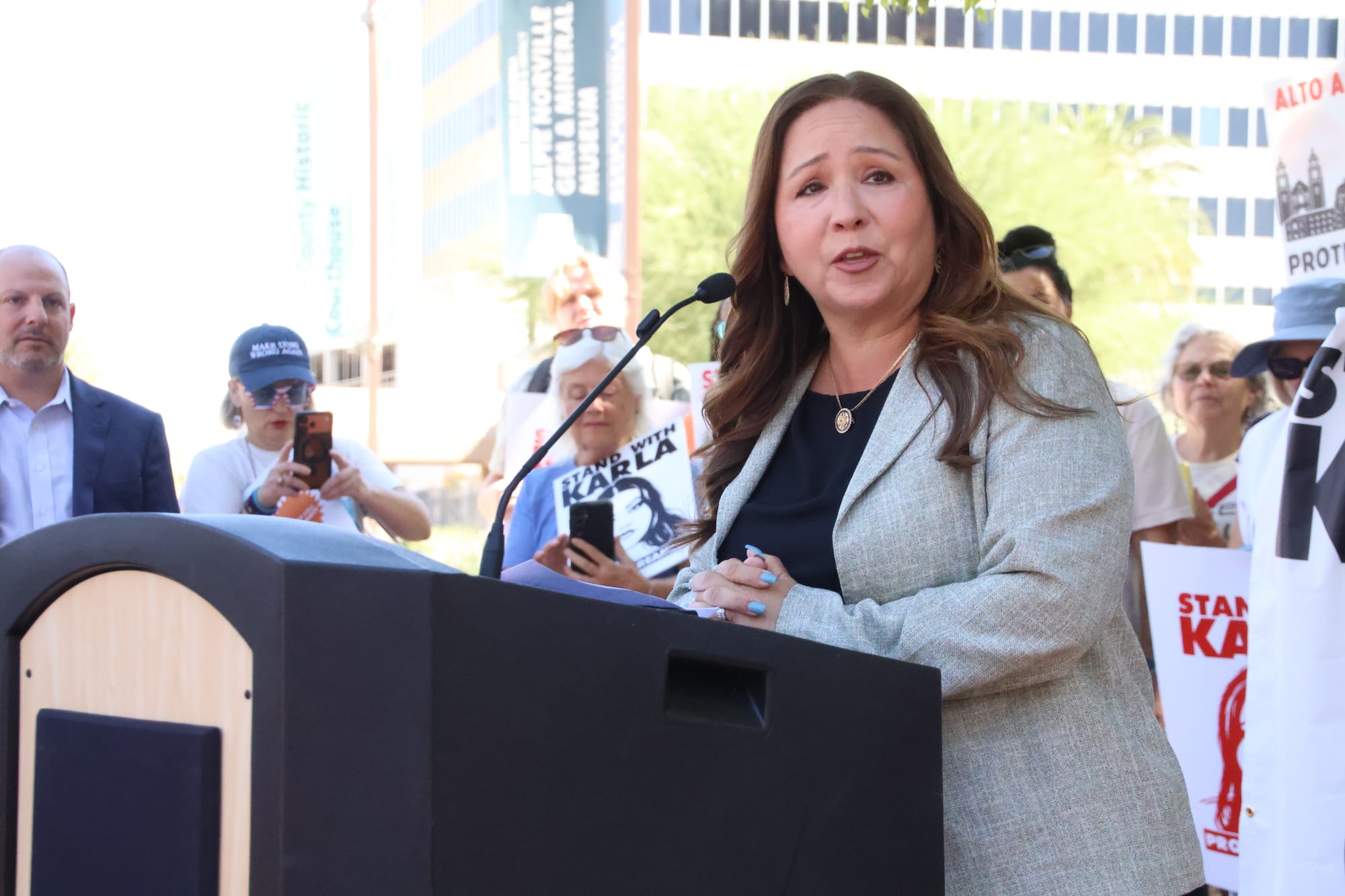
Grijalva said Toledo could have stayed silent but chose to share her story, not just for herself but for other Dreamers — undocumented immigrants brought to the U.S. as children, a term rooted in the long-standing DREAM Act and closely tied to DACA — and immigrant families facing similar fears, including the 19,000 DACA recipients in Arizona.
"Dreamers, I want you to know something: You are not alone, we see you, we support you and we'll continue to fight for you," Grijalva said. "(For) 14 years, Dreamers have strengthened our communities, taught in our schools, cared for our parents and hospitals, started businesses, and contributed to this country in countless ways. Karla represents the very best of that legacy."
Grijalva said Toledo's case also serves as a reminder that immigration policy is more than just abstract political debate and affects real people, families and communities.
"It's an imprisonment of our community members. They're putting them in not jails, it's like warehouses, like it's supposed to store supplies, not people," Grijalva said, adding that she's visited ICE detention centers in Arizona, as well as the Dilley Detention Center in Texas, the only center in the country holding children. "It is dehumanizing at every step."
Grijalva spoke about a community member, Herman, she recognized while at the Florence detention facility, who at the time had been detained for four months.
"When I visited him, he could not even describe without choking back tears what it felt like for him, and how he was treated, and how they're treating them so horribly," Grijalva said.
Herman was eventually released, after which Grijalva met with him again at her church.
"I didn't recognize him, because the person I saw in detention was a shell of the person that I saw," Grijalva said, noting that Herman had been in the process of getting legal permanent residence when he was detained, which he received in the mail two weeks after his release. "This is all about intimidation and scaring the rest of us into silence, and we're not going to do it."
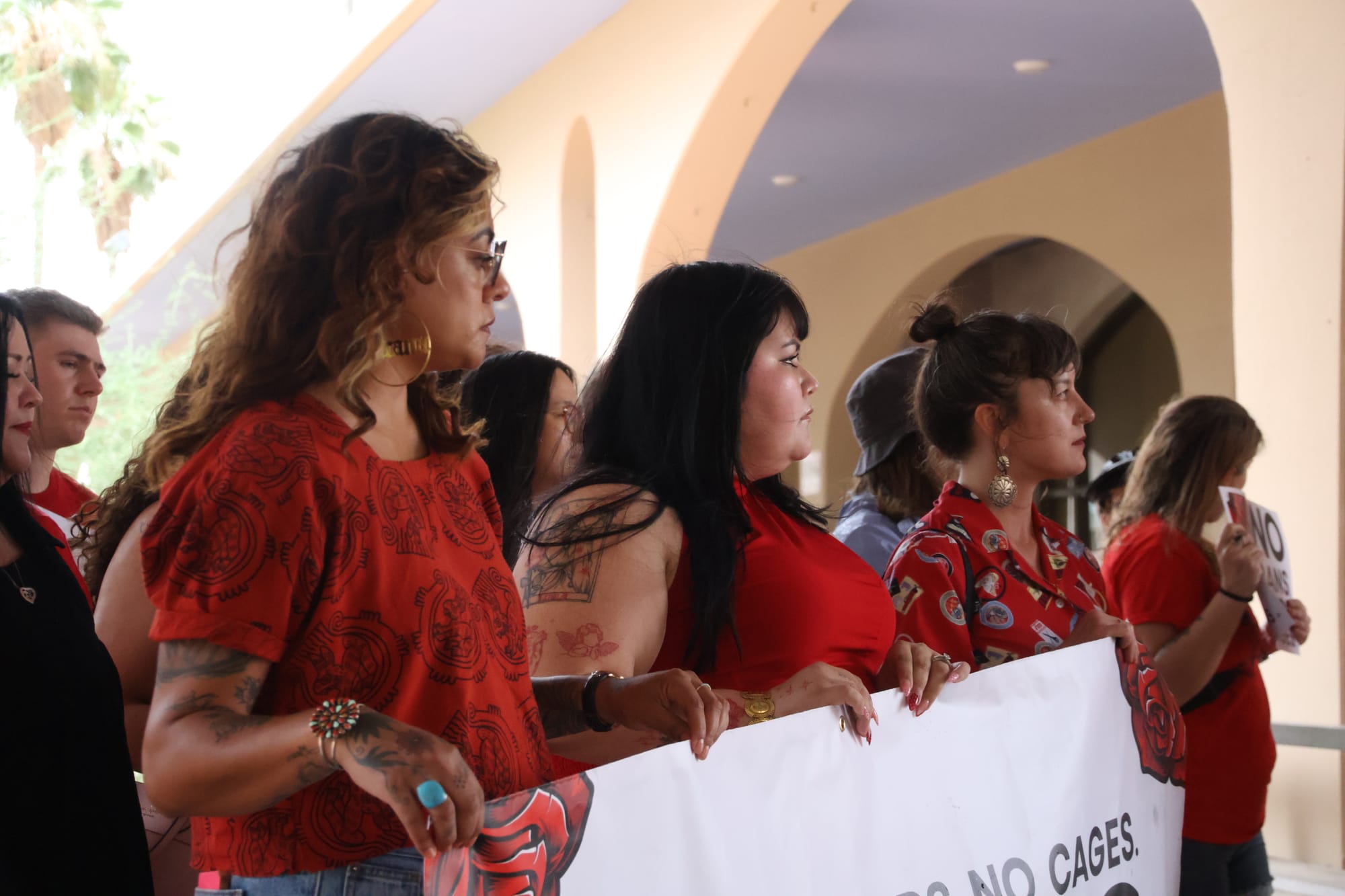
Last week, several organizations, teachers' unions and Tucson City Council members held a rally in solidarity with Toledo.
"Karla's detention sparked outrage across Tucson, because people saw a neighbor, a daughter, a community member, and a DACA recipient being pulled into a system that too often ignores people's humanity," said Melissa Cordero, an activist with the group Common Defense. "Today, we are here to stand with Karla to make clear that Tucson will not look away."
Other speakers pointed to Toledo's own record of community service.
"When the pandemic hit, Karla was organizing food distributions for our community, making sure that folks were getting cash assistance for our community. She has never backed down from a challenge," said Vice Mayor Lane Santa Cruz. "We're going to continue showing up with all the tools that we have, and our City of Tucson mayor and council, every time, has taken a stand in protecting all of our families, all of our communities … because we want our neighbors to know that we have their back and we got you, Karla."
Councilwoman Miranda Schubert said the council is listening to the community's concerns and continuing to push local law enforcement on what more it can do to protect people.
Last January, the Tucson City Council confirmed that the Tucson Police Department would not be enforcing immigration law, a policy that has been in place for the last 15 years.
Earlier this year, the City of Tucson published a "Know Your Rights" page to its website, providing information on immigrant rights, local resources and a link to the Arizona Attorney General's Office to report misconduct by federal agents.
In March, the Tucson City Council unanimously passed a ban on ICE using city-owned property to stage or carry out immigration enforcement. Pima County supervisors passed a similar ordinance in February.
"DACA recipients belong here, and they deserve the Dream Act," Toledo said. "That's something that we've shown by … living like law abiding citizens. We deserve a pathway to citizenship."
Toledo's immigration hearing is scheduled for Tuesday, July 7.
Topacio “Topaz” Servellon is a reporter with Tucson Spotlight. Contact them at topacioserve@gmail.com.
Tucson Spotlight is a community-based newsroom that provides paid opportunities for students and rising journalists in Southern Arizona. Please consider supporting our work with a tax-deductible donation.


