Volunteers keep desert water stations alive for migrants
As migrant crossings hit historic lows, Humane Borders volunteers continue maintaining water stations in the Sonoran Desert south of Tucson, where more than 100 people still died in 2025 alone.
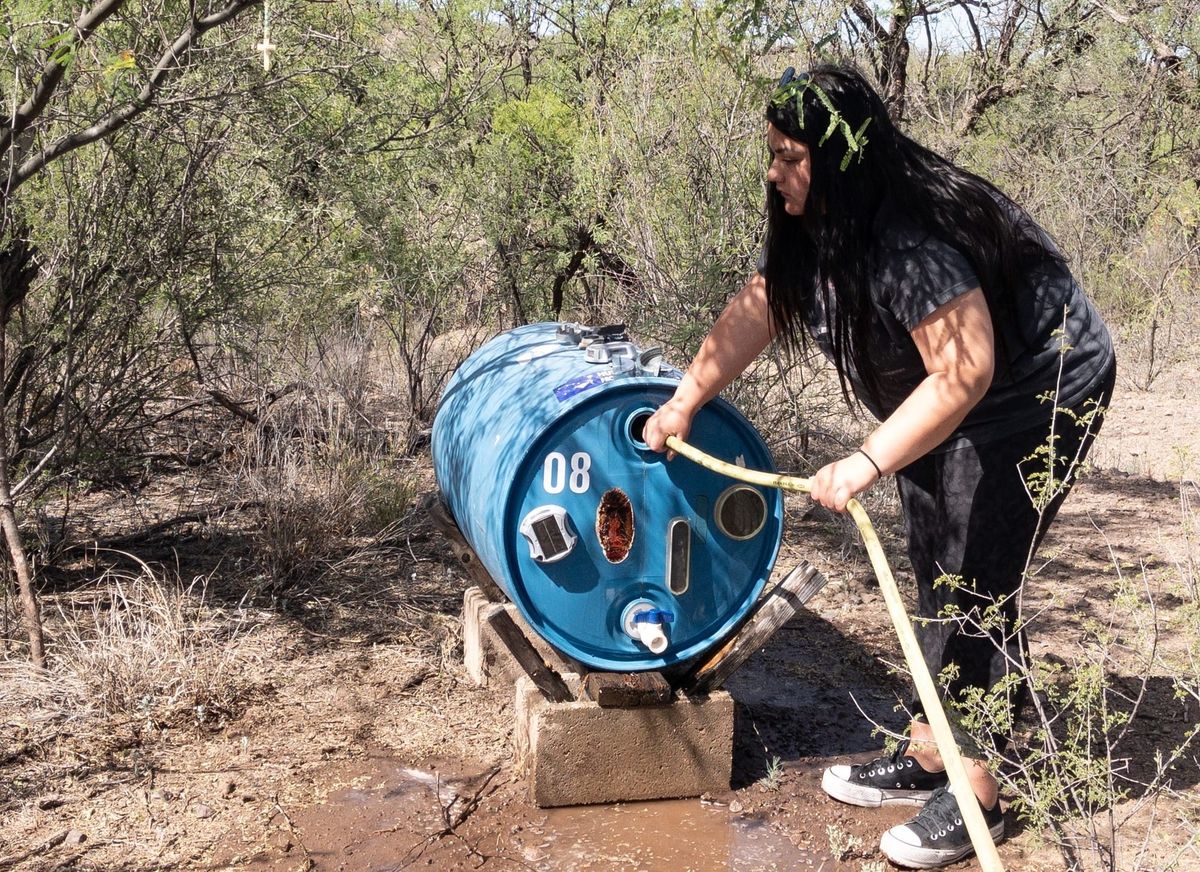
On a spring morning in Arizona's Sonoran Desert, Monroe Velazquez knelt beside a blue 55-gallon barrel, dipped a meter into a paper cup of water and checked for impurities, a small act in a years-long effort to keep migrants alive in one of the deadliest stretches of the U.S.-Mexico border.
Velazquez is a University of Arizona student from Phoenix who volunteers with Humane Borders, a nonprofit that maintains water stations in the desert south of Tucson, where migrant activity has historically been high.
"I was just looking at ways to get involved within the community here down in Tucson," she said.
Humane Borders was founded in 2000 by several Christian denominations, including Disciples of Christ, Roman Catholics, Presbyterians and the Society of Friends, in response to rising migrant deaths on the border.
It has maintained several resources over the years, including an online map of migrant deaths.
From 2010 to 2026, the number of migrants found dead in the desert annually ranged from 100 to more than 200, reaching a high of 229 in 2021.
Border activity has decreased dramatically in the past year — 108 sets of remains were discovered in 2025, the lowest number since 2010.
Tucson Spotlight is free for every reader because donors make it possible. Join them.
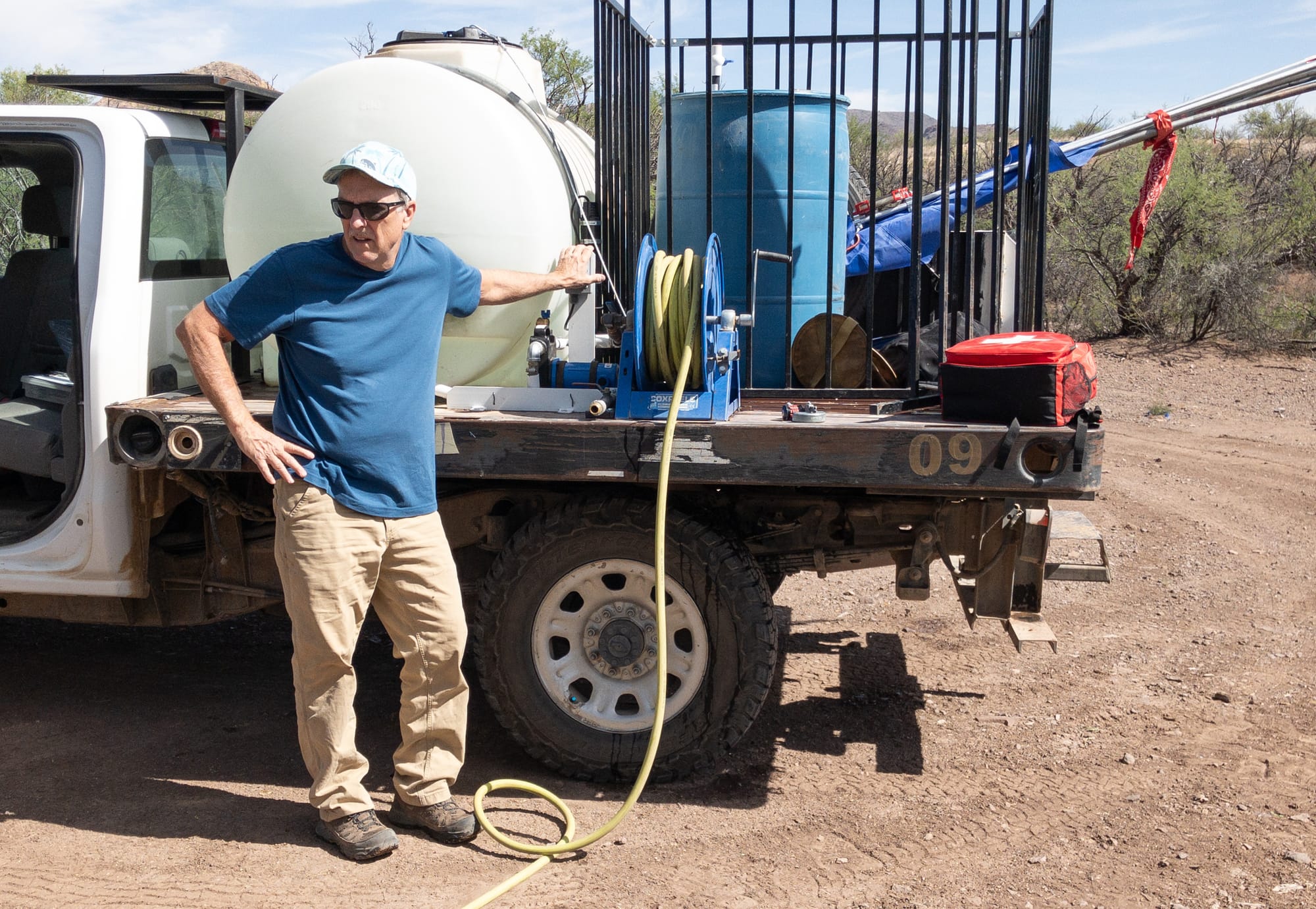
Border Patrol checkpoints that Humane Borders trucks regularly pass through have been abandoned in recent months, said Scott Smith, a volunteer driver.
"Routinely, there would probably be at least three or four Border Patrol agents checking vehicles," he said. "But over the last three or four months, those have disappeared, at least down here."
Since the start of the 2026 fiscal year in October, 42,757 migrants have been apprehended by Border Patrol, according to the Washington Office on Latin America, a non-governmental organization based in Washington, D.C.
If the rate remains similar in the second half of the year, 2026 will have the lowest number of migrant apprehensions since 1967.
Another 20,975 migrants were encountered at official ports of entry by Customs and Border Protection's Office of Field Operations, a pace on track to be the lowest recorded since 2012, the earliest year for which data is available.
According to WOLA, 443,671 migrants were apprehended by Border Patrol or encountered at points of entry in the 2025 fiscal year. That number was over 2 million in the 2024 fiscal year.
"It is the case that since the Trump administration's second term began, there's been a reduction in a number of interactions at the border," said Alex Braithwaite, professor and director of the UA's School of Government and Public Policy.
He said there are likely two factors at play: The Trump administration has increased the detention and deportation of migrants, which could be acting as a deterrent. And the administration has also allocated fewer agents to official ports of entry, which could result in fewer recorded interactions.
Still, Braithwaite said he could only speculate.
"I'm just not sure that we have enough data to be able to reach a definitive conclusion," he said.
Even as border activity decreases, Humane Borders remains dedicated to providing water for migrants. The organization continues to recruit new volunteers, including Velazquez.
While still early into her volunteer work, Velazquez said she felt her first experience went well.
"It's estimated, I believe, four to five hours for the specific route I took," she said. "I think we did it just in about three and a half, and the weather was really nice that week. It was during Easter."
For Velazquez's second run, which started at 7 a.m. to avoid the heat, she was joined by two experienced volunteers, Smith and Steve Wojciechowski. Both are retirees who got involved with Humane Borders a few years ago.
Smith navigated the truck down bumpy dirt roads to reach the water stations, which are marked with flags for easy visibility.
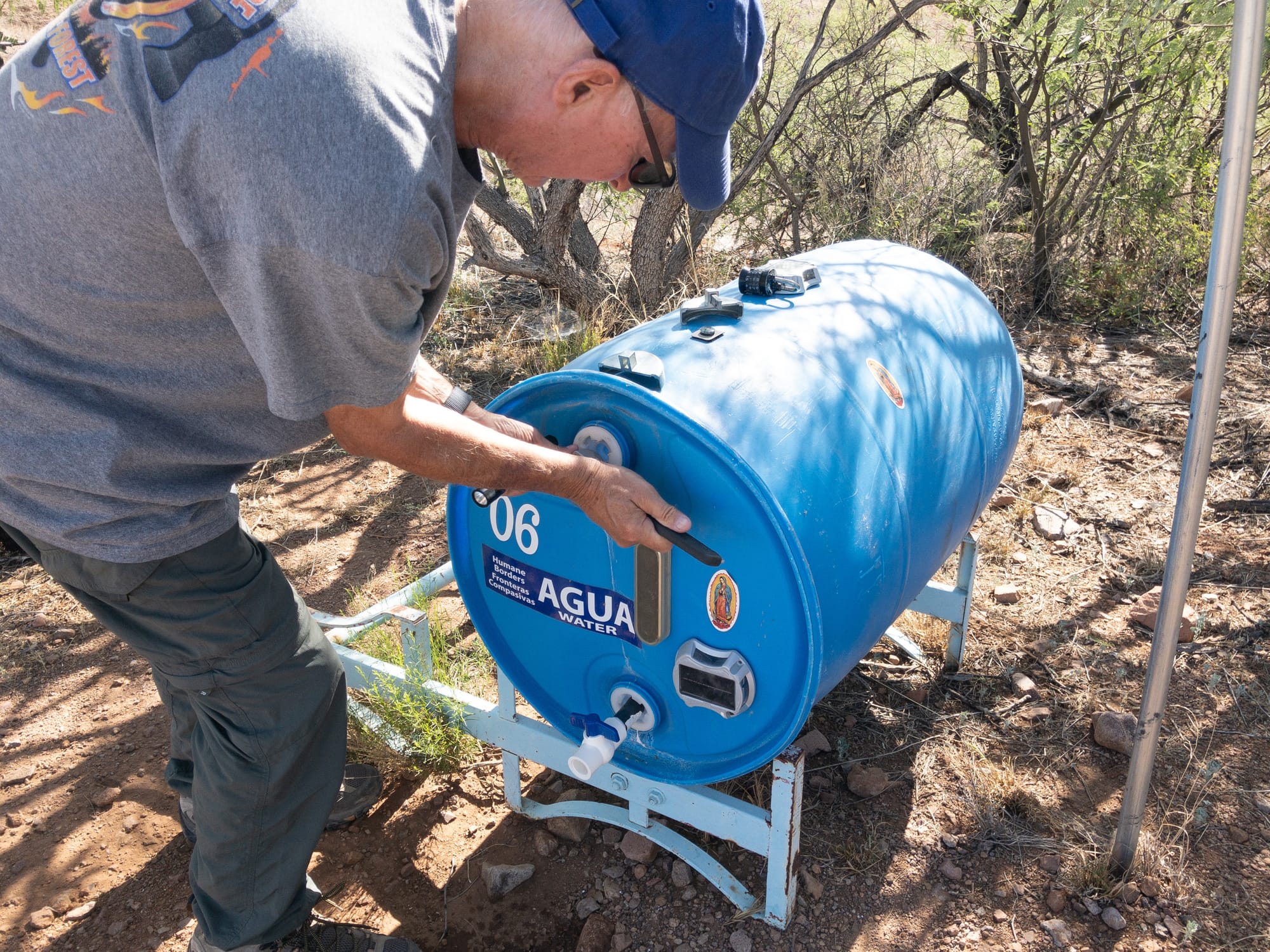
At each stop, the volunteers ensure the barrels haven't been damaged by vandals, then test the water for impurities. If everything looks good, they fill any emptied barrels and drive to the next station.
The barrel was scheduled for replacement at the third and final stop of the day, the trio taking off the spigot and letting the water pour out onto the sandy ground. They hauled the barrel to the truck and replaced it with an empty one, which Velazquez refilled with a hose connected to a tank on top of the truck holding hundreds of gallons of water.
The day's water run took about four hours, but some routes can take longer.
Work like this takes commitment, especially in the summer, when temperatures climb and many volunteers leave for cooler states. But some volunteers remain dedicated to the cause.
"I've been living on the border now for the ten most political years," Wojciechowski said. "I would periodically take a day or so and travel around the different places just to see for myself what was going on."
He eventually met a volunteer who told him about the interactive map Humane Borders maintains on its website.
"I was so shocked by that," Wojciechowski said. "Ever since then, about three years ago, I've been doing this."
Benjamin DePue is a University of Arizona student and Tucson Spotlight intern. Contact him at bdepue@arizona.edu.
Tucson Spotlight is a community-based newsroom that provides paid opportunities for students and rising journalists in Southern Arizona. Please consider supporting our work with a tax-deductible donation.