For Tucson bus riders, shade remains scarce in the heat
Tucson plans to add shelters to at least 80 bus stops using federal and RTA Next funding, as riders like 82-year-old Josefina Coke endure long, shadeless waits during scorching summer commutes.
On a Tucson morning already pushing past 90 degrees, 82-year-old Josefina Coke waits at a bus stop for the last of four buses that will carry her home from a doctor's appointment, an hourslong journey made harder on the stretches where there's no shade at all.
"Those of us here need the shade; it's very hot," Coke told Tucson Spotlight in Spanish.
Some of the stops where she waits don't have shade or a place to sit, which she said makes the already long trip exhausting.
"Just imagine, at my age? Embarking on these kinds of adventures is tough," Coke said. "Especially for someone who doesn't have a car and has to battle with that."
As Tucson continues to record higher temperatures, the need for shade at bus stops has become critical for riders enduring the scorching sun during their daily commutes.
With funding from the Federal Transit Administration and RTA Next, the city of Tucson plans to add shelters to at least 80 bus stops citywide to help riders cope with extreme heat.
The scale of the system shows how much ground is still left to cover.
The Sun Tran system, which serves Tucson, South Tucson, unincorporated Pima County, Marana, Oro Valley and the Pascua Yaqui Tribe area, has about 2,200 bus stops and averages more than 50,000 daily riders. About 43% of those stops are sheltered.
Share Tucson Spotlight with a friend. Every signup earns you a raffle entry to win a gift card to a local Tucson favorite. Four winners drawn August 1.
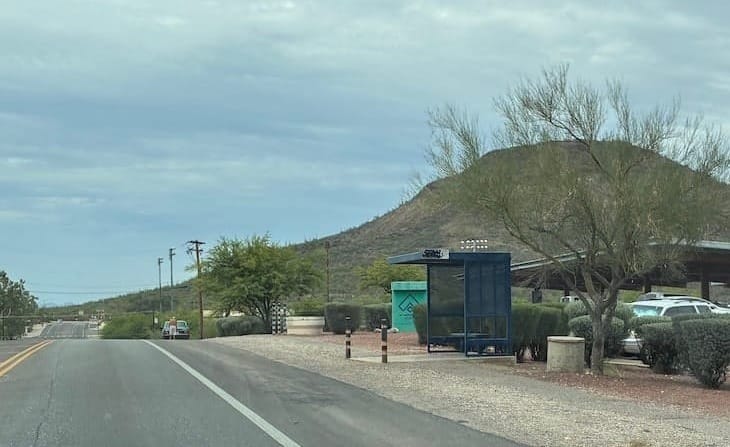
The Sonoran Desert is the hottest desert in the United States and Mexico, with summer temperatures regularly surpassing 100 degrees.
Yet not every bus stop is built to withstand that heat.
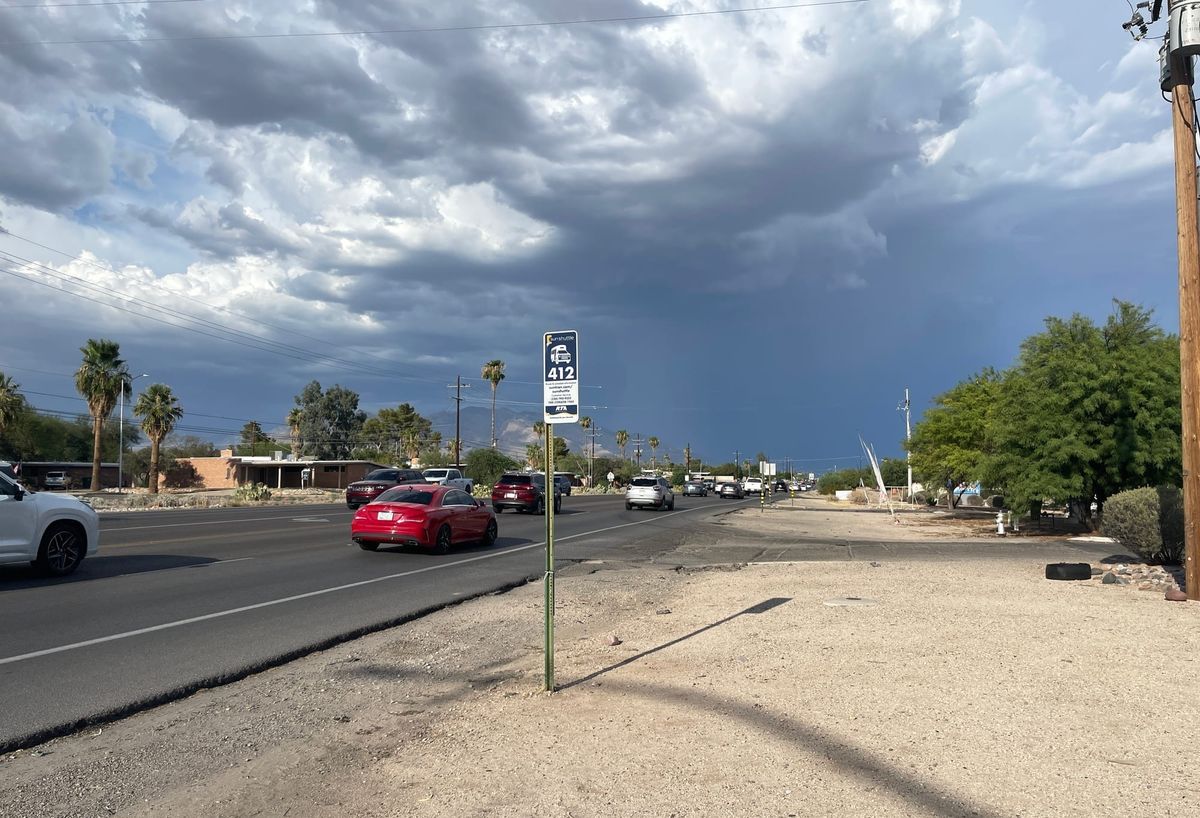
Some bus stops in Tucson are little more than a pole in the ground, forcing riders to seek refuge under nearby trees or slivers of shade, if any are available. Riders at unsheltered stops often spend their wait peering down the road, watching for the bus that will finally offer relief from the harsh sun.
The Pima County Office of the Medical Examiner recorded 117 heat-related deaths last year, a 9% increase from the prior year, at a rate of 10.7 per 100,000 residents.
Of 68 people who died outdoors, 39 were not experiencing homelessness at the time of death. The most common primary cause was heat exposure, which affected 38% of victims, with people in their 60s and 70s the most vulnerable population.
In 2023, the city of Tucson launched a Climate Action Plan committed to making the city heat resilient and reducing emissions to net zero by 2030. Part of the plan involves setting aside funding for climate-resilient bus stop improvements.
The RTA Next, approved by voters in March, will allow the city to implement its Transit Safety and Security Action Plan, adopted by the council in December. The plan budgets $221,580 for improvements including increased lighting, clearer sightlines, landscaping treatments, removal of obstructions, signage improvements, deterrent rocks, site-specific environmental modifications and deterrent sleeping benches, along with $200,000 for bus stop maintenance and cleaning and $128,000 for bus camera upgrades.
In 2024, the Federal Transit Administration awarded the city of Tucson $11.4 million to fund bus lifts for maintenance, bus stop improvements, and administration and training costs. The grant will fund improvements to 80 bus stops across all wards, with the grant only applying to bus stops within city limits.
There are 1,835 bus stops in the city of Tucson, 53% of which are sheltered.
The city is implementing a rigorous selection process "based on ridership, transfer activity, access to key destinations, and equity indicators," said Monica Landgrave Serrano, a city of Tucson urban planner, adding that all selected stops must be unsheltered and have sufficient right-of-way to accommodate improvements.
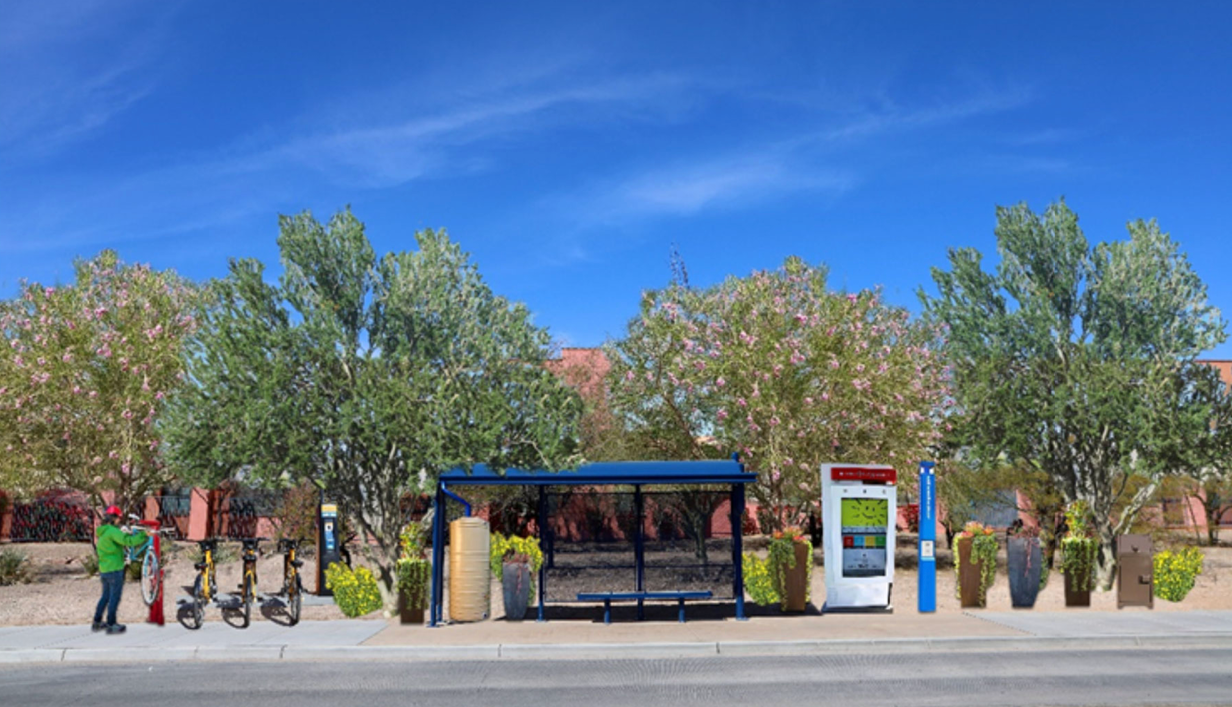
Enhancements will include benches, shelters, solar-powered compacting trash cans and light poles, and green stormwater infrastructure like basins, trees, cactus or bushes, all native plants.
"Green infrastructure reduces ambient temperatures around bus stops, lowers surface temperatures on sidewalks and waiting areas, and reduces heat exposure for riders waiting at bus stops," Landgrave Serrano said.
A 2023 Sun Tran study found that a bus stop in Tucson without shelter, vegetation or tree shade can have a ground temperature of about 124 degrees and an ambient temperature of 108 degrees during the hottest months of the year, while a bus stop with shelter and tree shade can have a ground temperature of about 108 degrees and 107 degrees for ambient temperature.
The study identified amenities that best mitigate heat. Bus stops that include shelter, vegetation and tree shade are the "ideal" when it comes to providing the most significant heat reduction.
"(Adding green infrastructure) depends a lot on the site itself, because some bus stop sites have a lot of right-of-way where we can add all kinds of elements, and other sites are so reduced, that we may be able to add a cacti, ocotillo or something like that. But not a tree," Landgrave Serrano said. "But we're going to do our best to add as much green infrastructure as possible."
Installing a bus stop shelter requires a minimum of 8 to 10 feet of public space to accommodate a concrete pad and accessible sidewalk, Landgrave Serrano said. However, the city is limited to working within the public right-of-way for any bus stop improvements.
As part of the grant, the city is not purchasing additional public right-of-way for bus stop enhancements due to the higher costs involved.
"Whenever possible we add trees within the constraints of the bus stop and infrastructure projects; however, we again are limited to public ROW," said Davita Mueller, Sun Tran director of service planning and development.
Given the limitations on public space and budget for bus stop improvements, Keith Ladd, an associate professor in the School of Landscape Architecture and Planning, said bus operations can also help reduce riders' heat exposure by cutting down wait times.
"If the bus is only picking folks up every couple of hours versus every 15 minutes, then kind of the frequency that it comes to pick you up, means that 10 folks may be waiting longer for it, so I think the operation matters a lot," Ladd said. "And then kind of the consistency, can you rely on the buses to come when they promise that they're going to come? Or are they always delayed or late?"
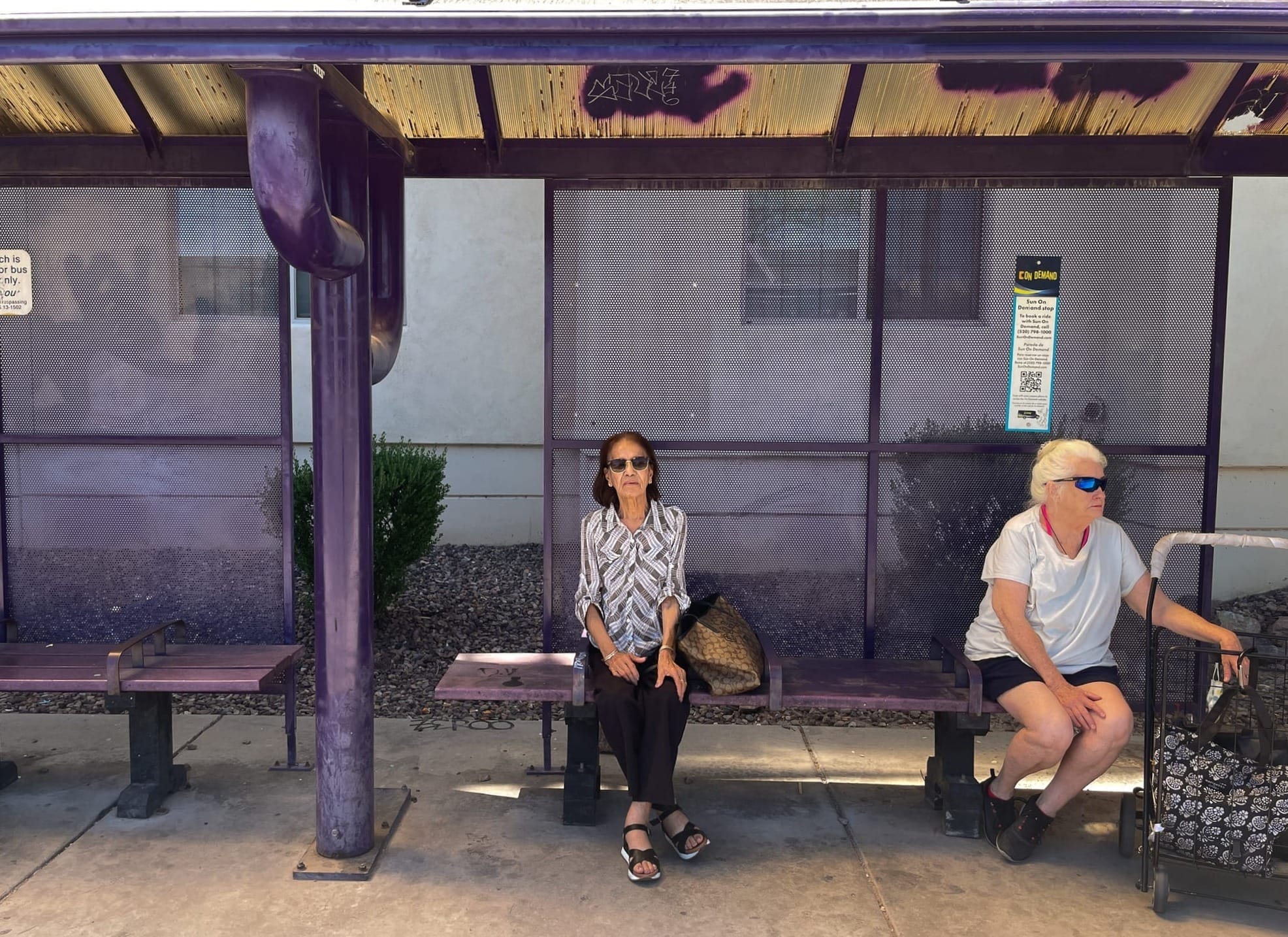
Ladd said the city is moving in the right direction on addressing extreme heat, adding that a lack of resources may explain why not all bus stops in Tucson are sheltered.
"I would say the city has done a pretty good job of prioritizing, sheltering the bus stops that get the most traffic," Ladd said. "About half the boardings take place at about over 100 stops in Tucson and those have all been sheltered already. So they're kind of solidly catching up with the rest of them."
The grant will also fund new signage with braille for all 2,200 bus stops across Sun Tran's system.
Sun Tran is dependent on the city of Tucson, Regional Transportation Authority projects and federal grant opportunities for funding. Routine bus stop maintenance is paid for by bus stop advertising revenue, which varies.
"The grant has funding for landscape establishment. So that means that for a certain amount of time, there will be people coming over to water the plants until they get established and they can grow just through the rain and groundwater," Landgrave Serrano said.
It will take about two years to complete improvements at all 80 bus stops, with the timeline dependent on completion of the federally required environmental review process currently underway, Landgrave Serrano said.
Coke believes more bus stops in Tucson need shade, and hopes the city continues providing funding for Sun Tran infrastructure and services.
"Of course, it's a good benefit that the bus is free," Coke said as she stepped forward and prepared to board her bus.
Diana Ramos is a University of Arizona alum and Tucson Spotlight reporter. Contact her at diana@tucsonspotlight.org.
Tucson Spotlight is a community-based newsroom that provides paid opportunities for students and rising journalists in Southern Arizona. Please consider supporting our work with a tax-deductible donation.