Border grant splits Pima County law enforcement
Oro Valley, Marana and Sahuarita continue accepting Operation Stonegarden border security funding even after Tucson and Pima County cut ties with the controversial federal program.
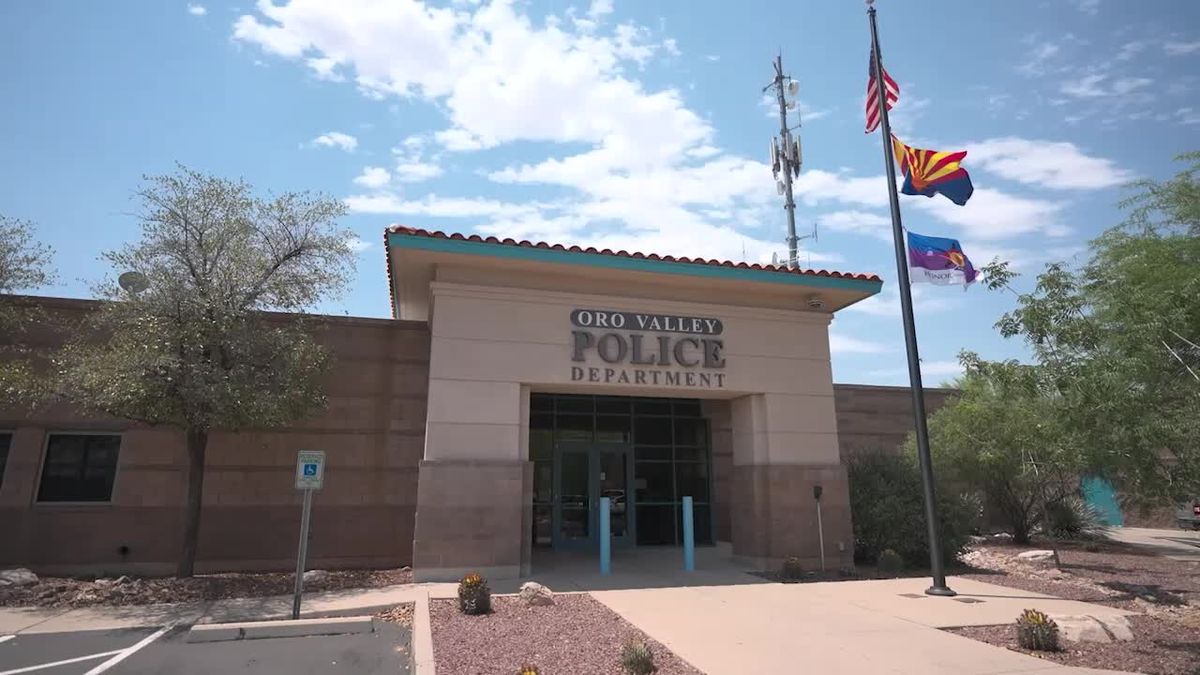
Oro Valley, Marana and Sahuarita are continuing to accept funding from the controversial Operation Stonegarden border security program, even as the Tucson Police Department and Pima County Sheriff's Department have cut ties with it.
Operation Stonegarden, part of the federal Homeland Security Grant Program, was expanded in 2006 to make it easier for local, state and federal officers to collaborate on border security enforcement. The Homeland Security Grant Program is funded through the Federal Emergency Management Agency.
Local law enforcement agencies apply for Stonegarden funds through the Arizona Department of Homeland Security, the only entity in the state that can submit applications to FEMA, which then distributes the money to those agencies as subawards.
The city of Tucson stopped accepting Stonegarden funding in 2020, with the Tucson Police Department announcing its withdrawal in a Dec. 30, 2019 email that cited the federal government's refusal to let any of the grant money go toward humanitarian aid for asylum seekers, according to the Arizona Daily Star.
Pima County followed shortly after, with supervisors voting 3-2 in February 2020 to reject future funds, citing the strain deputy overtime placed on the county budget and pension obligations, as well as concerns that the program pulled local deputies into federal immigration enforcement.
Santa Cruz County stopped accepting Stonegarden funding last year, with Sheriff David Hathaway telling KVOA the decision stemmed from his discomfort with the idea of his department being put under federal control.
Tucson Spotlight trains the next generation of Southern Arizona journalists and publishes their work free for everyone. No paywalls, no corporate backing — just readers who believe this community deserves better local news.
Sahuarita's town council most recently approved $160,242 in Stonegarden funds in May for equipment, including license plate readers and mobile data computers. It's unclear when Marana last accepted the funds, and Tucson Spotlight has requested that information.
Oro Valley's 2025-26 budget shows the town was awarded a $435,759 Operation Stonegarden grant during the 2024-25 fiscal year, which was used for equipment, overtime and mileage to combat illegal contraband, human smuggling and other transnational threats.
In June, the town council unanimously approved accepting $143,000 in supplemental Stonegarden funds, with town documents saying the money would fund "targeted deployments of officers to impact the flow of smugglers engaged in human trafficking and illegal contraband, as well as possible terrorists who intend to cause harm or commit crimes against this nation."
The grant agreement notes that certain federal provisions requiring cooperation with immigration officials are currently suspended under 2025 court orders, and would take effect only if those orders are lifted.
OVPD's continued acceptance of Operation Stonegarden funds has been a way for the town to expand the police department's reach without using taxpayer money, according to OVPD public information officer Darren Wright.
"It allows us to put more officers on the streets for criminal interdiction, to reduce crime and to make our community safer," Wright said.
Many law enforcement agencies have funding left over at the end of the year, with the excess awarded to other agencies as supplemental funding throughout the year.
"We receive some of those funds that another agency may not have completely used," Wright said.
Stonegarden money is mostly used to fund overtime for officers and reimburse gas mileage for police vehicles, Wright said. But in May, the town council approved supplemental Stonegarden funding for OVPD to purchase night vision goggles.
While Oro Valley is 70 miles from the U.S.-Mexico border, Wright stressed the importance of the town's strategic position.
"The border has a pipeline of criminal activity that comes directly through here into the rest of the country," Wright said. "That includes guns and drugs and other contraband and things like that, so those are the things that this grant is looking for to try to eliminate."
Tucson Spotlight has requested the amount of funding accepted over the past five years and the number of referrals made by Oro Valley and Marana police to Border Patrol during that same time, but the requests have not yet been filled.
Wright said OVPD had not received pushback from residents about its continued use of Operation Stonegarden funds, but residents expressed concern this spring when the town council authorized police to lease drones through Flock Safety. The program, Drone as First Responder, helps detain people charged with drug trafficking, human smuggling, illegal immigration and other border-related crimes.
The town used a state grant to fight border crime to pay for the drones' $146,000 lease and said they will not be used in immigration enforcement or to assist ICE. Still, many residents shared concerns about privacy and data use during council meetings leading up to and after the vote.
Oro Valley resident Sean Glaser said during the January meeting he was concerned about directing town tax dollars toward border operations, saying the decision would "fundamentally change the relationship between" the town and its residents.
"We've not received any significant negative feedback – or positive," Wright said about the department's continued use of Stonegarden funding. "We (don't) receive a lot of feedback at all."
Benjamin DePue is a University of Arizona student and Tucson Spotlight intern. Contact him at bdepue@arizona.edu.
Tucson Spotlight is a community-based newsroom that provides paid opportunities for students and rising journalists in Southern Arizona. Please consider supporting our work with a tax-deductible donation.