Erika Barnes has seen college sports. Now she wants to fix it.
Erika Barnes, a former Arizona softball national champion and athletic administrator, now consults universities navigating NIL, the transfer portal and the reshaping of college sports.
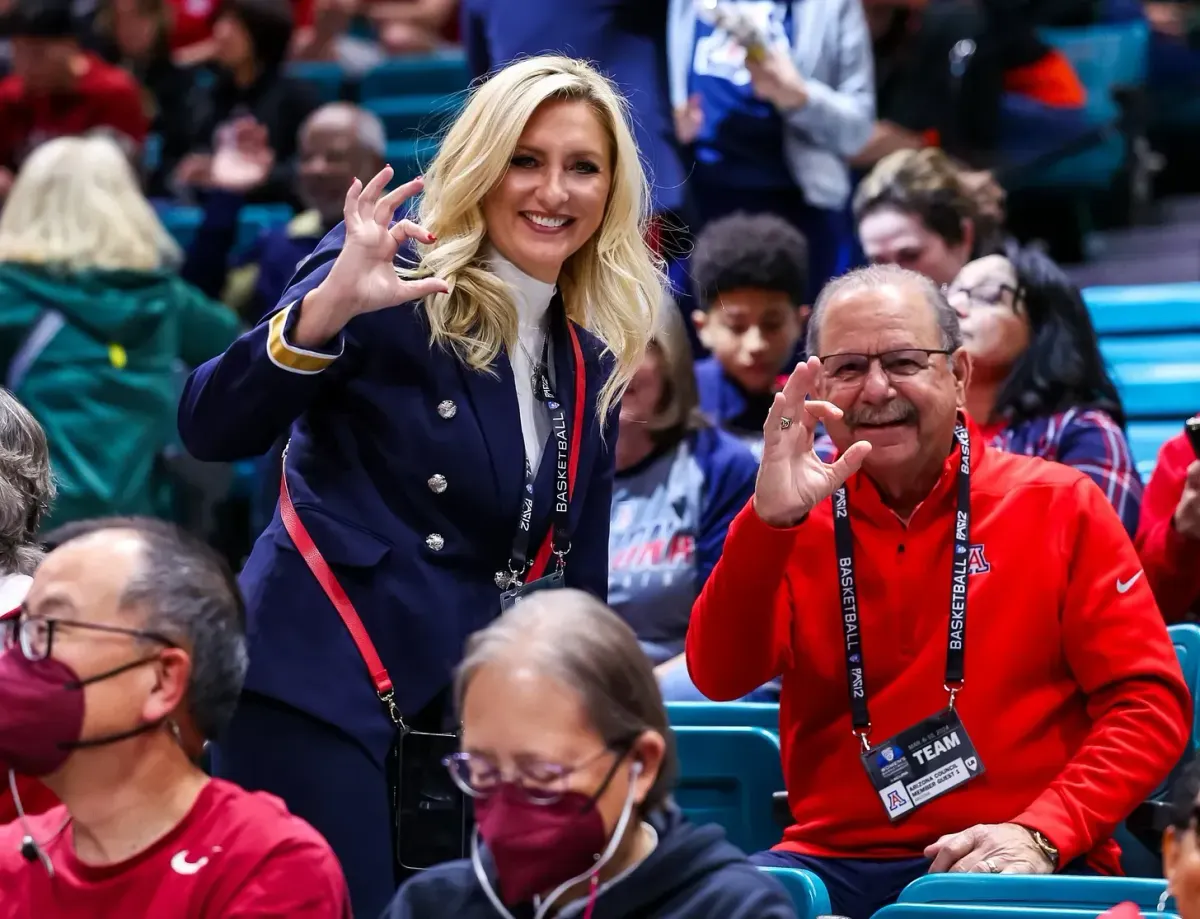
Erika Barnes has seen the landscape of college sports from nearly all sides.
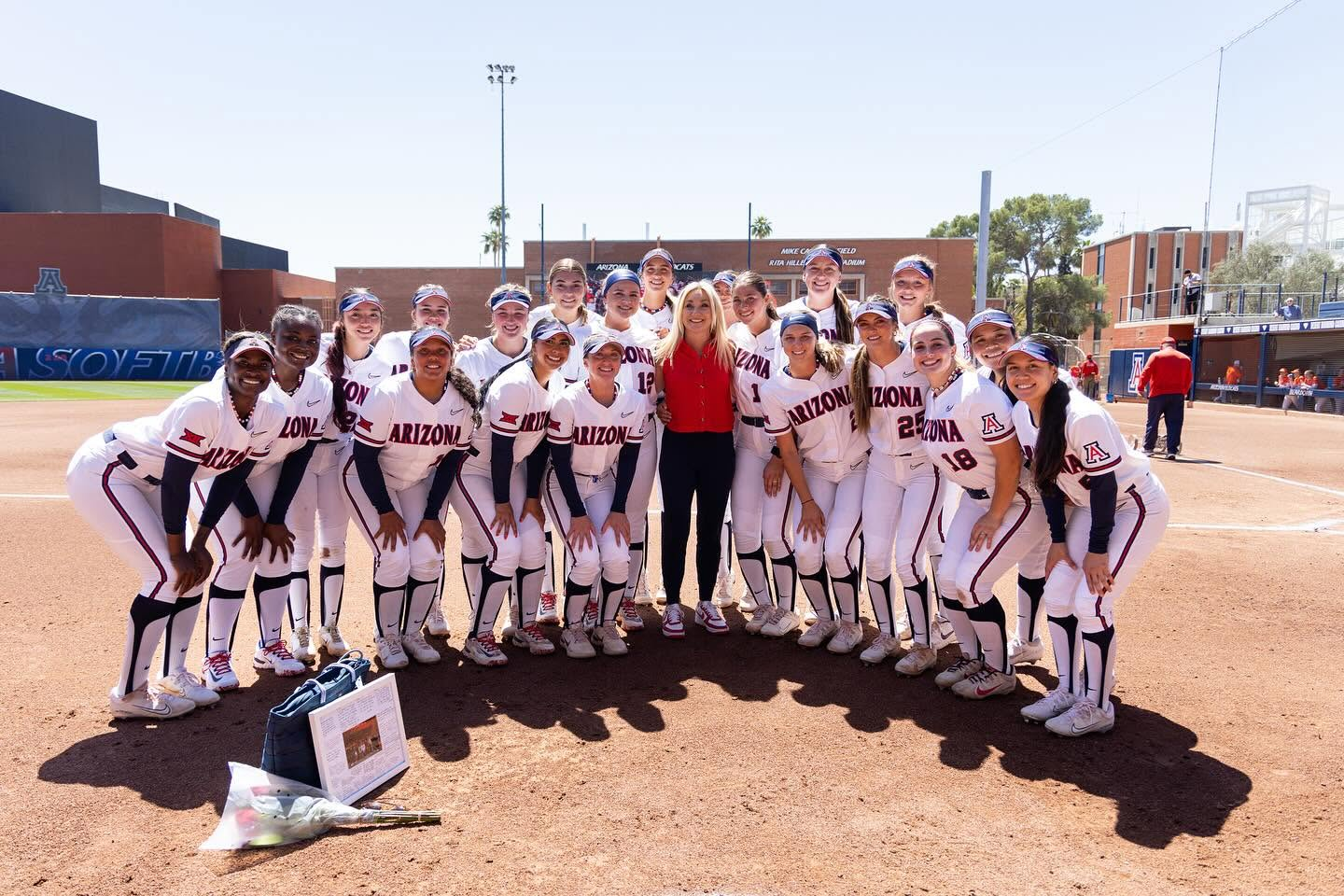
She was a student-athlete at the University of Arizona, who played first base as Wildcats softball won the 2001 national championship.
She worked her way up as an administrator at her alma mater, becoming the executive senior associate director of athletics. She was also the senior woman administrator at Arizona and served as interim athletic director. Along the way, she did marketing and fund raising, served on numerous Pac-12 task forces and was a member of the NCAA Softball Selection Committee.
And now, she is the founder of a consulting firm, EB7 Advisory Group, helping universities navigate the new landscape of college sports.
Barnes' perspective is one of a kind. Few people have seen college sports from as many vantage points: as a player on a national championship team, and as the leader of an entire athletic department. That range is what positions her to understand the complexities of college sports: where the system has been, where it stands now, and what it will take to fix what has gone sideways.
When everything started seemed to turn upside down and get “too chaotic” as Barnes put it, she decided she wanted to be part of a solution.
“I believe passionately in college athletic space,” Barnes said. “I love that sports still bring people together. It’s such a fabric of our country, and so if I can make an impact now in a broader way, it’s made me happy. But I do miss being on campus with student-athletes though, seeing them every day.”
To understand why she felt the need to step in, it helps to understand how she got here. All of the major and seemingly minor changes are linked. In the simplest explanation: it’s the freedom of movement and money.
The transfer portal now allows athletes to move freely between schools every year without sitting out a season, effectively creating free agency in college sports. Athletes transfer for many reasons, but the biggest is money. Under the 2025 House settlement, schools can now pay athletes directly, up to $20.5 million annually, a cap that will continue to rise in the years ahead.
On top of that, Congress has gotten involved this summer, working on a bill called the Protect College Sports Act, the latest attempt to bring order to a system that's been changing faster than anyone can keep up with.
Barnes said there are two things everyone seems to agree on: agent regulation and preemption of name, image and likeness (NIL) laws. While that won't fix everything, it's a step in the right direction.
The piece related to NIL is basically having a consistent federal law. When NIL went into place, the NCAA wasn’t prepared with guidelines and states passed their own laws, which has caused issues.
“I think what will help women’s sports and Olympic sports, beyond just the revenue sports, too, is having the agent regulation piece,” Barnes said. “You’re hearing stories that agents are charging up to 20-25% of a contact, where in pro sports it’s 3 to 5%. Having more transparency, I think can help slow down the transfer portal a little bit because they’re being less encouraged to go get a new contract every year. I think this is part of the problem. You think a student happy is happy and content where they are, and then they might be getting outside pressure. If we can at least limit that piece, this is going to slow the train down right now, because at some point some market is going to have to correct itself.”
Barnes looks back at the 2015 Deregulation as a pivotal point in college sports. This one doesn’t get talked about much, but it actually was the tip of the iceberg. This lifted restrictions for the then-Power 5 conferences and gave athletes unlimited meals, guaranteed four-year scholarships, moving away from year to year, and allowed schools to provide stipends to cover the gap between scholarships and the actual cost of living.
When Barnes was in college, if her team played a doubleheader, they would get one granola bar in between games. Now, it’s unlimited snacks from recovery shakes to fruit roll ups and everything in between that is on the sideline of practice and in the locker room at all times.
Without new revenue sources, this placed more financial pressure on athletic departments. Everything else that has happened since has just added to this.
Next, was conference realignment with Texas and Oklahoma moving from the Big 12 to the SEC, plus USC and UCLA going from the Pac-12 to the Big Ten. It started the migration of eight other teams leaving the Pac-12. This turned into losses in revenues for some leagues, as well as schools who took a smaller share to join their new conferences.
Those are all big hits, adding in the transfer portal and now paying athletes, in a seemingly short amount of time.
“I do think we are at a point where we need to look at the way we do business,” Barnes said.
And that is looking at everything including finding ways to be more efficient.
She is a proponent of customizing models for each school by utilizing their own resources. It would be a hybrid model, “taking advantage of technology and AI, and again, the social media platforms for the student athletes, and the TV exposure, and those things.”
“I think we need to think beyond just the traditional way that we’ve done it for a century, because we’re part of an institution,” Barnes said. “It doesn’t mean we have to do drastic measures, but are there some business solutions that we can rely on, or each school can rely on their alumni experience, or their school’s strengths of research and technology? Every school is going to have their own kind of space. Can we take advantage of that in commercializing some of the athletic department?
Barnes said the key is approaching college athletics more like a business, since generating additional revenue through creative solutions is what will ultimately sustain women's and Olympic sports.
The Bonus
Last month, as stipulations were added to and removed from the Protect College Sports Act, one proposal under consideration would have required athletic departments spending $80 million or more to freeze roster spots at 2024-25 levels.
Barnes was concerned with this addition as she said that schools are exploring ways to add opportunities and increase scholarships in women’s sports, but it all comes back to funding.
“If we put some baseline, like numbers to it right now, I’m afraid that that will stifle that look to expand in good faith,” Barnes said. “I think you just hear the headlines about, ‘Oh, they’re going to cut these sports,’ but really, they’re looking at opportunities for Olympic sports while we’re trying to figure out the funding model. "
Barnes is deeply familiar with adding an Olympic women’s sport. She was part of the team that added women’s Triathlon at Arizona in 2023. The squad has gone on to win back-to-back national championships in its second and third years in existence.
"Flag football is a great example. It’s going to explode. It’s going to be in the (Los Angeles) 2028 Olympics," Barnes said. "It’s really good for girls; lower injuries rates, and when you’re looking at Title IX and you want to look at being equitable, quality equipment, facilities, trainers (and) coaches, you’ll get that because you’ll have a shared space with football.”
PJ Brown is the founder of The Undercovered, a Substack newsletter covering untold stories in women's college, professional and Olympic sports. Find more of her work at theundercovered.substack.com.
Tucson Spotlight is a community-based newsroom that provides paid opportunities for students and rising journalists in Southern Arizona. Please consider supporting our work with a tax-deductible donation.