Indigenous veteran's hospital sketches became a career
Air Force veteran Seth Rush lost his career, home and mobility after a workplace injury, but the doodles he once made on surgical gloves have become a full-time art career in Sierra Vista.
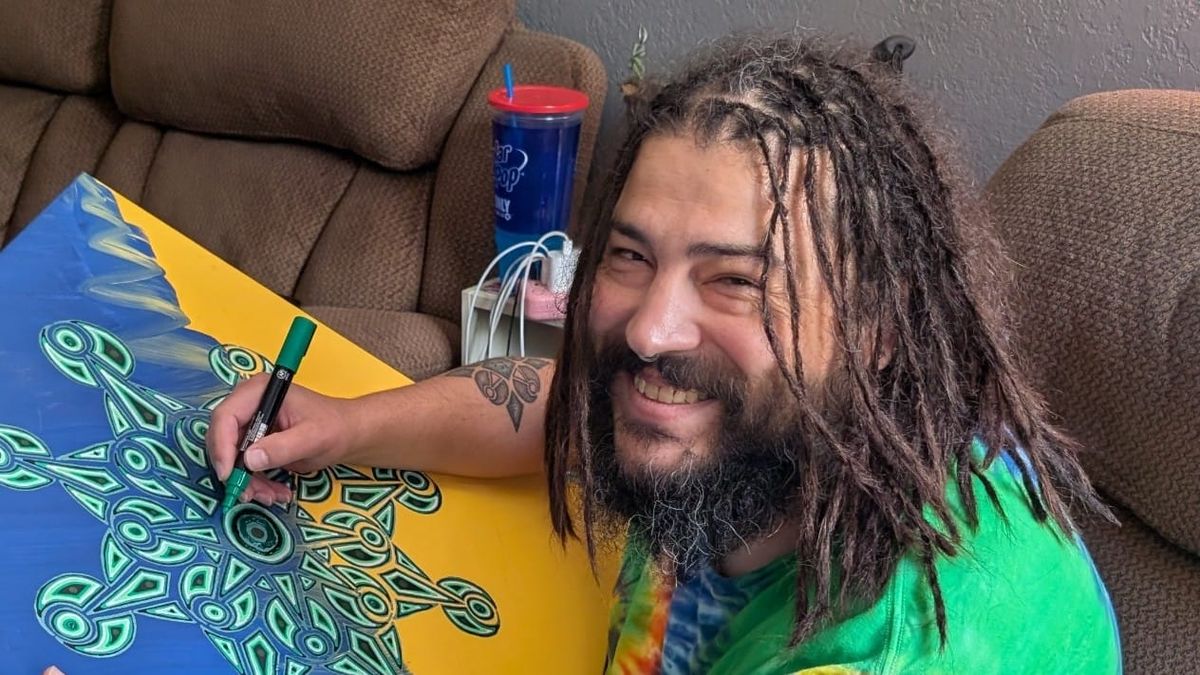
Seth Rush, an Indigenous Air Force veteran, spent years doodling on his surgical gloves to decompress from the operating room. After a workplace injury cost him his career, his home and nearly his health, that habit became his lifeline.
Last April, Rush was prepping an operating room at Canyon Vista Medical Center, as he'd done thousands of times. He was not at all prepared for what happened next or the chain of events that would follow.
"My world exploded in blinding pain," he told Tucson Spotlight.
Canyon Vista Medical Center took X-rays, and its ownership group, LifePoint, put Rush on temporary medical leave. Eventually, an adjuster from workers' compensation ruled his injury a sprain.
But a sprain can't be seen on an X-ray, which was the only diagnostic imaging performed by the hospital, so Rush sought a second opinion from a spinal surgeon, who ordered an MRI, used to view damage to soft tissue and ligaments.
The surgeon diagnosed him with a few partially compressed and bulging discs and extra spinal fluid, a condition that puts extra pressure on his nerve endings, resulting in excruciating pain.
Rush's symptoms include sciatica, muscle spasms and feet that "constantly feel like they are standing in campfire."
Six months after the injury, LifePoint reached out to say that an independent medical examiner had ruled his injury a "minor" back sprain and cleared him to return to work.
Your membership pays emerging journalists to cover Southern Arizona the way it deserves.
But Rush, who was still relying on a walker, was unable to return and ultimately lost his job. His temporary medical leave payments stopped just as he was set to begin physical therapy, leaving him in limbo.
"I was getting little to no information," Rush said of next steps.
That same month, his partner lost food stamp benefits due to the government shutdown, and in December, the two lost their apartment. Rush hadn't yet started receiving military benefits, so he found himself couch surfing alone.
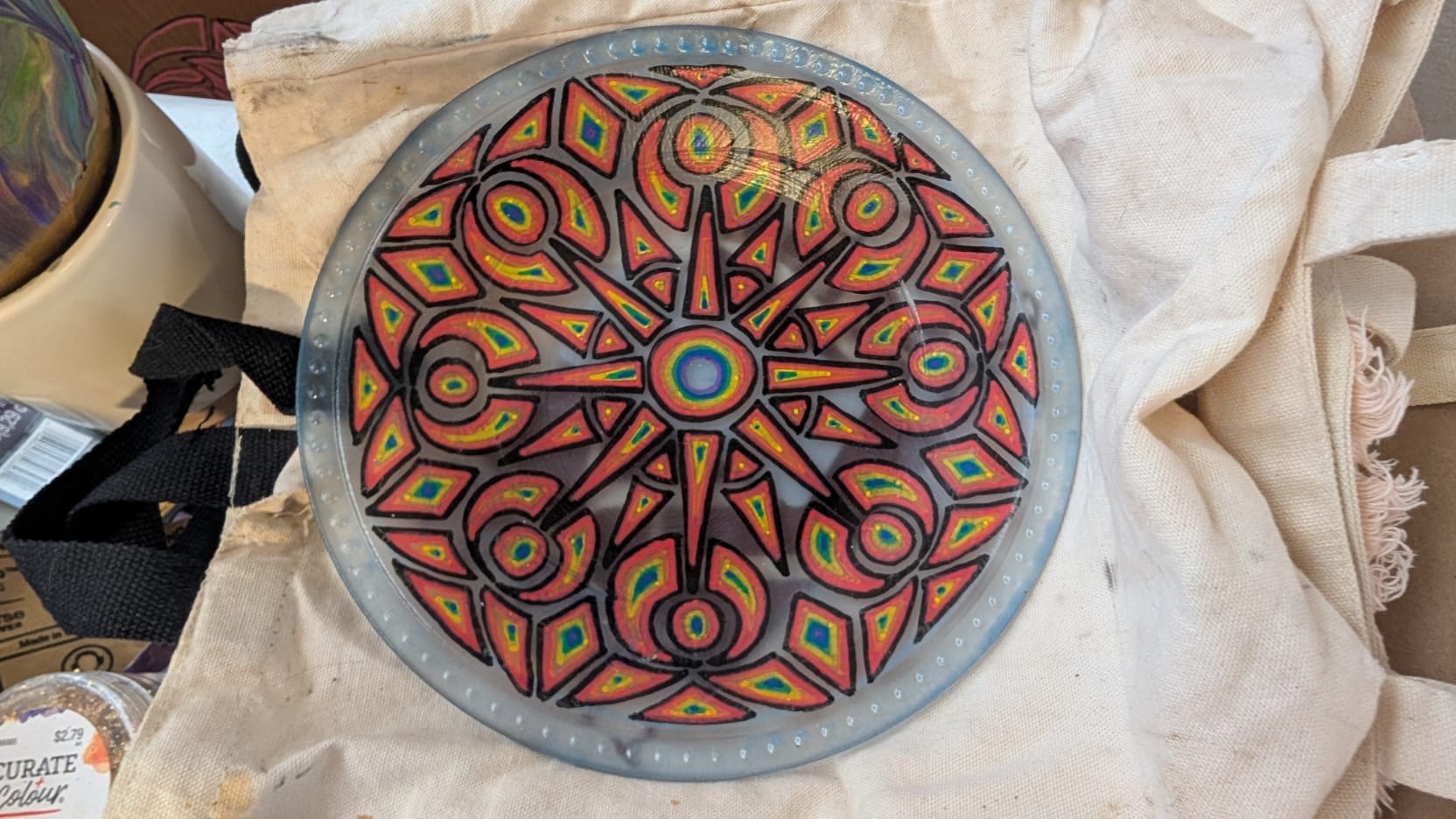
He returned to a familiar decompression tool to comfort himself, picking up a marker and a piece of canvas and unknowingly embarking on the start of his comeback story.
Rush had been creating art for years as a way to destress after work. When the pieces began to pile up in the corner of his home, he would throw them away.
"I am one of those people that didn't think I had any artistic talent," Rush said.
But a paint night boosted his confidence, and he started to casually sell his art. When he lost his job and his mobility became limited, Rush decided to dive into his artwork as a means to make ends meet. Occasional sales weren't enough to pay the bills, but eventually, he caught a break.
Rush checked himself into the Tucson VA in March and began attending counseling. His doctor also adjusted his mental health medications, allowing him to focus on getting back on his feet and trying to sell his artwork full time.
He contacted The Warrior Healing Center in Sierra Vista to see if the group could help, and staff put him in contact with Primavera's Project Action Veteran, which arranged an apartment for Rush and his partner.
Once he was back in stable housing, he inquired at The Mall at Sierra Vista about a space to sell his art and was given permission to set up a table.
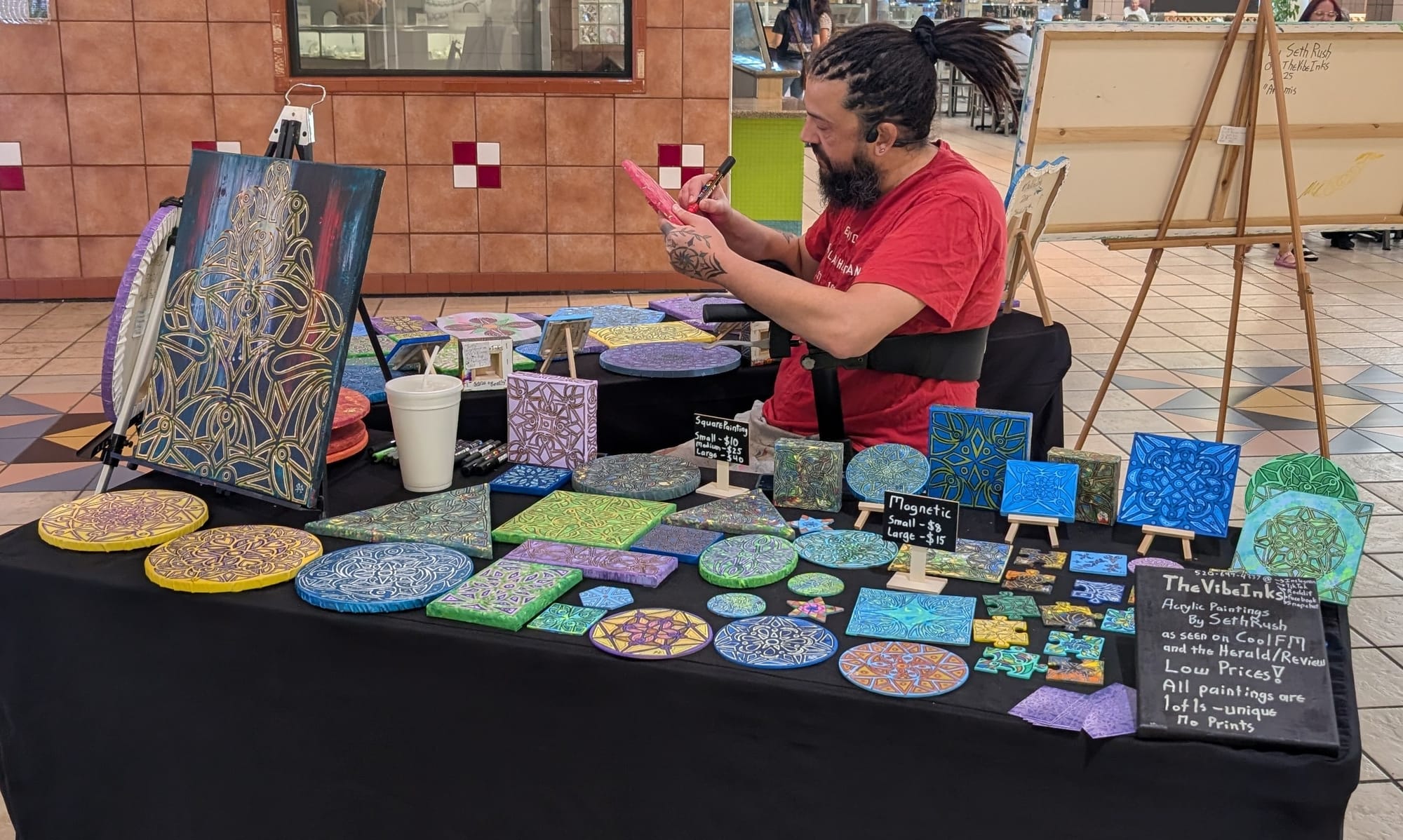
It didn't take long for him to find an audience.
"I saw his art and it just stopped me dead in my tracks," said shopper Adeline, who came across an unaccompanied table of Rush's work.
Normally, Adeline doesn't stop if no one is manning a display, but Rush's pieces were different, she said.
"This is a must," she said. "This is artistry at its best."
Rush's work draws on his mixed Indigenous heritage, which includes Purépecha, also known as Tarascan, Cherokee, Mohawk and Apache ancestry. His style was inspired by what he saw during a sweat lodge ceremony, a Native American method of healing and prayer.
Adeline ended up purchasing a piece for her husband's office on the Mescalero Apache Reservation.
Rush's partnership with the mall in Sierra Vista has evolved, and he's since been commissioned to create a new mural next to the food court.
Rush's accident may have ended his career as a surgical technologist, but it opened the door for him to make a living doing what he loves.
Today, he stays busy with gallery shows and teaching art classes at the Warrior Healing Center on the second and fourth Tuesdays of the month.
His pieces are available to view and purchase at the Endeavor Gallery in Benson, and they'll be on display at the Sierra Vista library during the month of August before moving to the Huachuca Heart Association Gallery in September.
Katherine Martinez is a a Kickapoo-Potawatomi Native majoring in journalism at the University of Arizona and Tucson Spotlight intern. Contact her at martinezk29@arizona.edu.
Tucson Spotlight is a community-based newsroom that provides paid opportunities for students and rising journalists in Southern Arizona. Please consider supporting our work with a tax-deductible donation.