Copper World mine proposal raises water, traffic fears
Residents packed a Sahuarita town hall to raise concerns about water use, traffic risks and environmental impacts tied to Hudbay’s proposed Copper World mine in the Santa Rita Mountains.
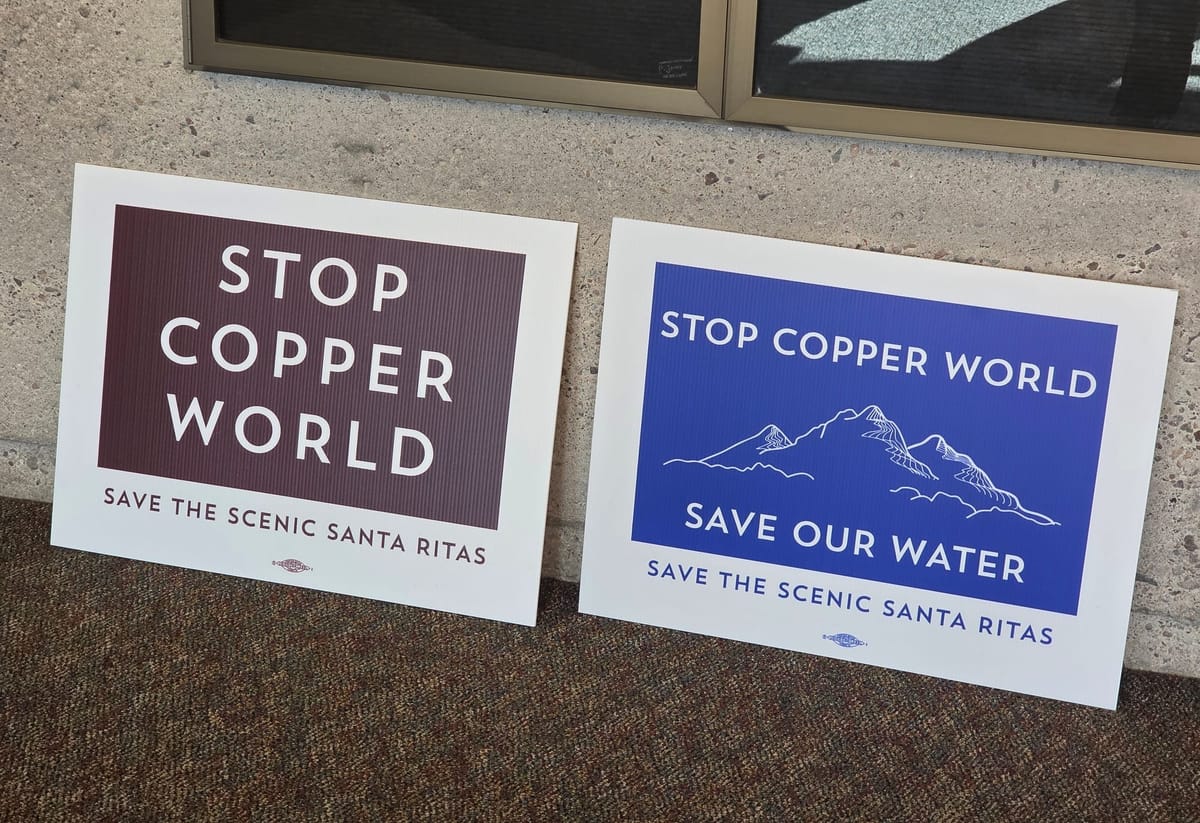
Facing a proposal that could transform the foothills of the Santa Rita Mountains into one of the nation’s largest open-pit mining operations, roughly 400 residents from Sahuarita and Green Valley packed a community meeting to voice concerns over water use, traffic risks and the long-term environmental toll of the planned Copper World project.
The Jan. 31 town hall was organized by Save the Scenic Santa Ritas Association, a grassroots organization established in 1996 with a mission to protect the scenic, environmental and wildlife aspects of the Santa Rita Mountains from industrial mining projects through community outreach.
The meeting, originally scheduled three weeks earlier, was rescheduled after the group sent a letter to the Sahuarita Town Council requesting an investigation into whether Hudbay Minerals is violating its agreement to replenish groundwater in the region.
The town hall focused on the potential effects Copper World would have on the local water supply and traffic logistics.
“What brings us together on a common ground is our passion and commitment for conserving the natural ecosystems, indigenous sacred sites, and serving as stewards of the land and advocates for clean air and clean water for citizens in Pima County.” said President and Board Member Thomas Nelson.
The Santa Rita Mountains are the fourth-highest Sky Island mountain range in southeastern Arizona and are home to Madera Canyon, the Fred Lawrence Whipple Observatory and the Santa Rita Experimental Range, an open space for ecological and rangeland research.
The Santa Ritas have also been the site of Indigenous history for numerous tribes for more than 10,000 years, including the Tohono O’odham, Pascua Yaqui and Hopi tribes.
The Santa Ritas also serve an important role in Arizona’s water cycle. Local mountain ranges replenish the aquifer by absorbing much of the water from snowpack, slowing the streamflow down the mountain and replenishing water in valleys, basins and eventually the groundwater.
The Canadian-owned Hudbay is seeking to develop Copper World in the Santa Ritas, about 28 miles southeast of Tucson. The proposal includes up to five open-pit mines, and the company estimates the first phase would bring $1.7 billion in investment to the county.
The project has faced bipartisan criticism for more than 20 years over concerns about environmental damage and public health. Most recently, the Pima County Board of Supervisors passed a resolution against it.
Local environmental advocates say the board’s action reflects longstanding community concerns.
“This mine is going to be operating all on private land,” said Save the Santa Ritas’ outreach coordinator Paige Humphrey. “Operating on private land and operating with state permits is a different beast, especially because Arizona's laws are pretty lax when it comes to mining.”
If established, Copper World would be the fourth-largest mine in the country, with the largest proposed pit measuring 1.5 miles in diameter and a half-mile deep.
In 2014, the town of Sahuarita made a deal with Hudbay’s predecessor, Rosemont Copper, for an underground water pipeline to be built on Santa Rita Road, with the promise that the company would replenish 105% of the water used for the mine. For every 100 gallons the mine would use, 105 gallons would be replenished in the local aquifer.
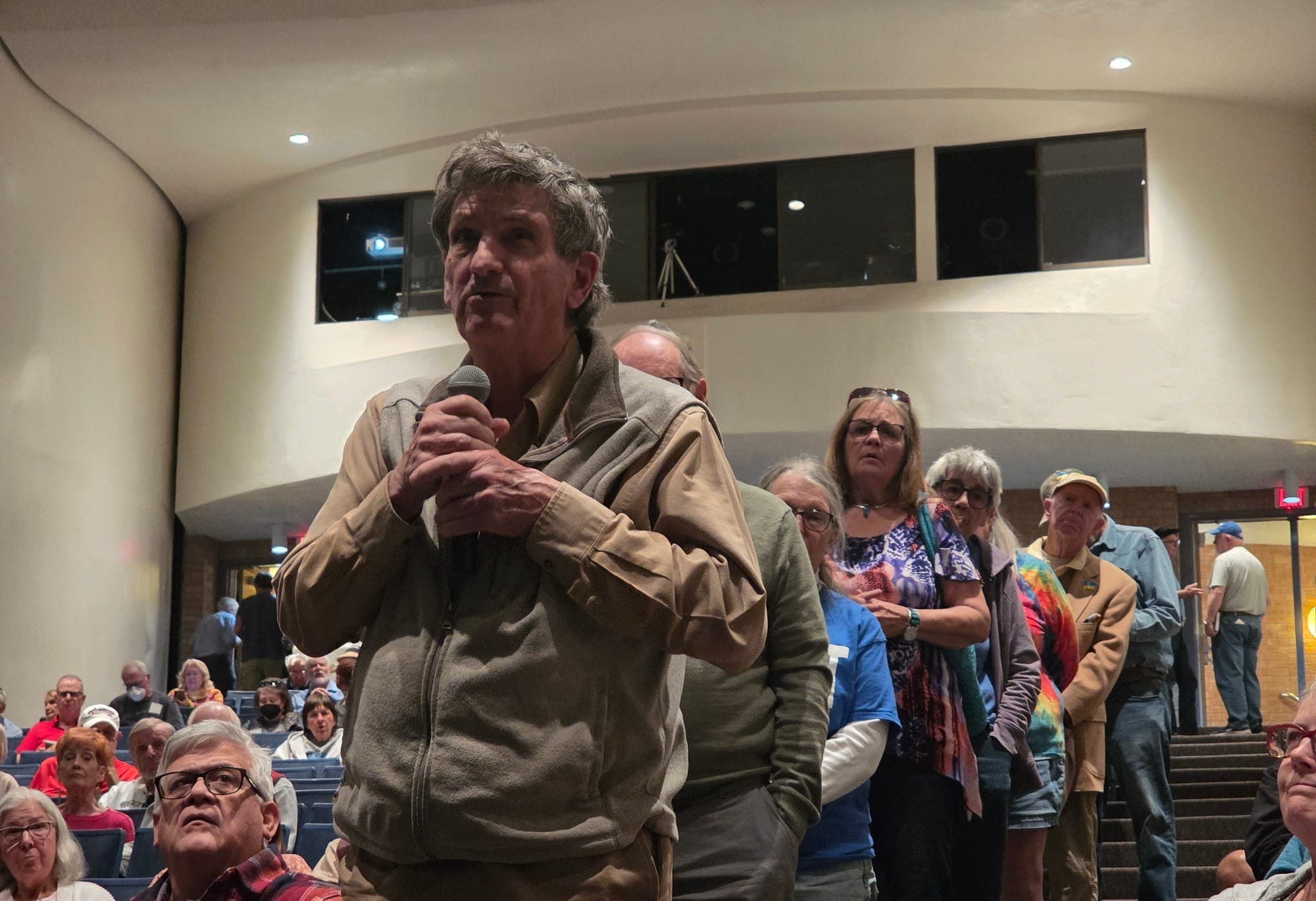
In 2022, Hudbay published a preliminary economic assessment that estimated Copper World would produce 60,000 tons of ore annually during its first 20 years of operation. The company also projected that mineral extraction would require about 140 gallons of water per ton of ore, totaling roughly 8.4 million gallons per day.
Save the Santa Ritas’ Executive Director John Dougherty says Copper World will use five times as much water as the proposed data center in Tucson.
Hudbay and its predecessor, Rosemont Copper, bought and stored more than 47,000 acre-feet of water from the Central Arizona Project over the past two decades, according to the Central Arizona Conservation District.
A majority of that water is stored at a recharge facility in Marana, 40 miles from Sahuarita, with only 1,600 acre-feet actively stored at the Pima Mine Road recharge facility.
Green Valley has been identified as a “subsidence zone,” according to the Arizona Department of Water Resources, meaning much of the groundwater has been pumped out and the land has begun to sink.
Environmental advocates argue that broader water supply concerns make the agreement even more troubling.
In 2020, Arizona’s residential water use exceeded the national average, with about 70% of the state’s supply coming from the Colorado River. With the river under increasing stress, the future of water allocations for the mine remains uncertain.
Because the mine does not have direct access to rail lines, it would rely on semitrucks to transport explosives, chemical waste and copper concentrate through downtown Sahuarita and across the Santa Rita Experimental Range to the base of the mountain, potentially affecting residential and environmentally sensitive areas.
Alan Ruiz Berman, a Save the Santa Ritas board member and avid hiker, said his opposition to Copper World is based on his background as a conservation professional.
“We've already seen heavy metals in conservation areas,” Berman said. “We did see these boom and bust industries come through here and create a mining district in the 70s, but the fallout of that is that you can't drink the water in Sahuarita, in Green Valley.”
In 2012, the EPA reviewed a draft Environmental Impact Statement from Rosemont Copper’s project at the time and found truck traffic from the mine would increase traffic on the state route, potentially increasing accidents and deaths.
“We had a sulfuric acid spill near Pima (in) October 2020,” Dougherty said. “A nitric acid truck spilled on I-10 in October 2023. It's inevitable there's going to be an accident. Sooner or later, something's going to go wrong, and if it does, it could be catastrophic.“
Save the Santa Ritas estimates the mine would generate about 40,000 truck trips per year — roughly one truck passing through downtown Sahuarita every 15 minutes.
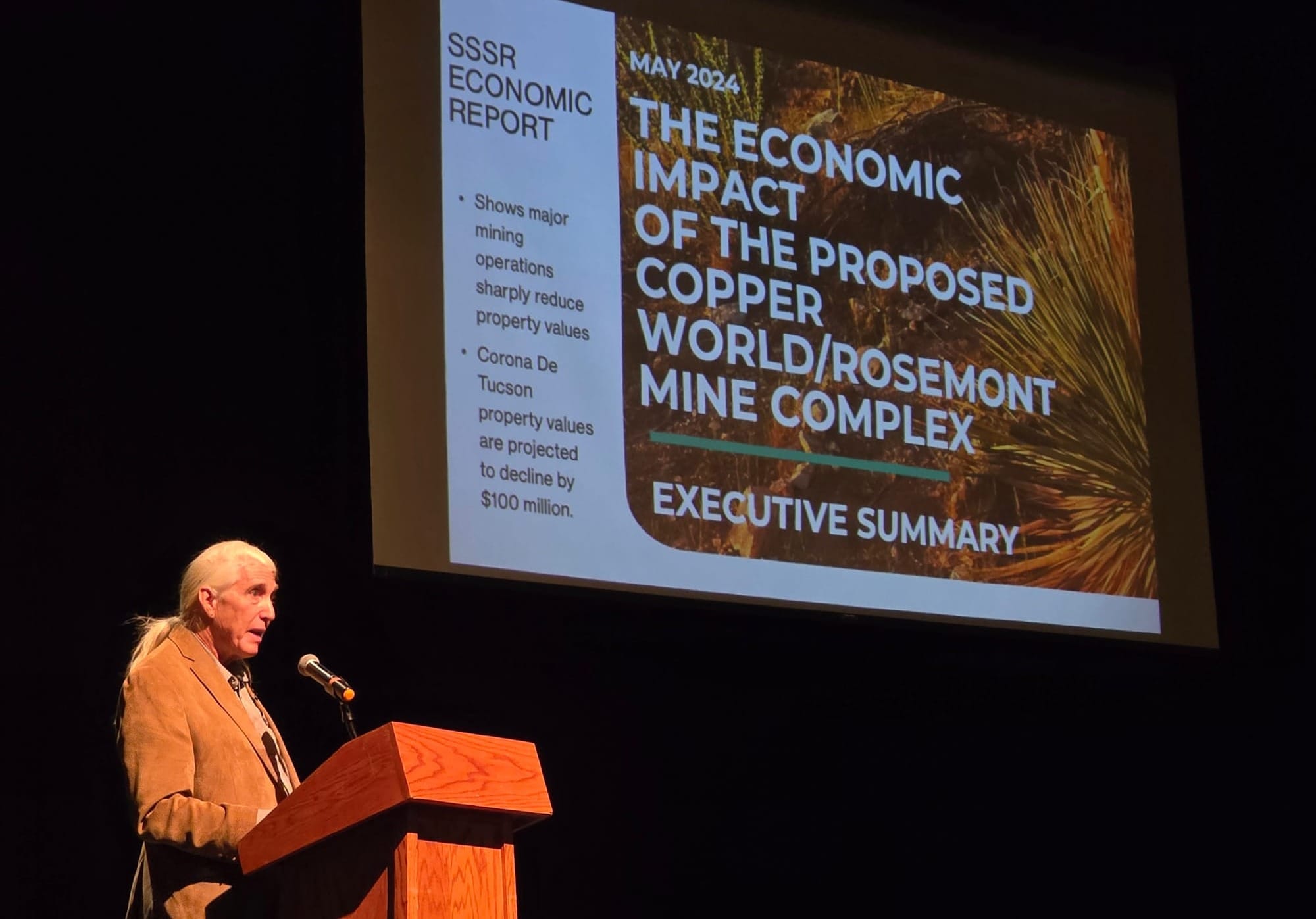
The group commissioned a consulting firm to determine the economic impacts of the project, publishing the findings in May 2024.
The executive summary said communities located near mines tend to have less economic vitality than those without mines, projecting a potential $100 million decline in housing values in Corona de Tucson, where it said Copper World’s tailings facility would be located.
Earlier this year, Hudbay announced Mitsubishi as a 30% investor in Copper World, raising questions about whether the copper will be used locally or exported abroad.
“The future of this region, of our economy is people who move here to have their houses, to retire, to enjoy our recreational opportunities, to build their family lives here,” Berman said. “We have to now look to the future.”
Topacio “Topaz” Servellon is a reporter with Tucson Spotlight. Contact them at topacioserve@gmail.com.
Tucson Spotlight is a community-based newsroom that provides paid opportunities for students and rising journalists in Southern Arizona. Please consider supporting our work with a tax-deductible donation.