
ABOR asks judge to toss UA manager's retaliation claim
The Arizona Board of Regents says a longtime University of Arizona employee was fired over a botched student payment, but her attorney says the board's account of that decision has changed more than once.
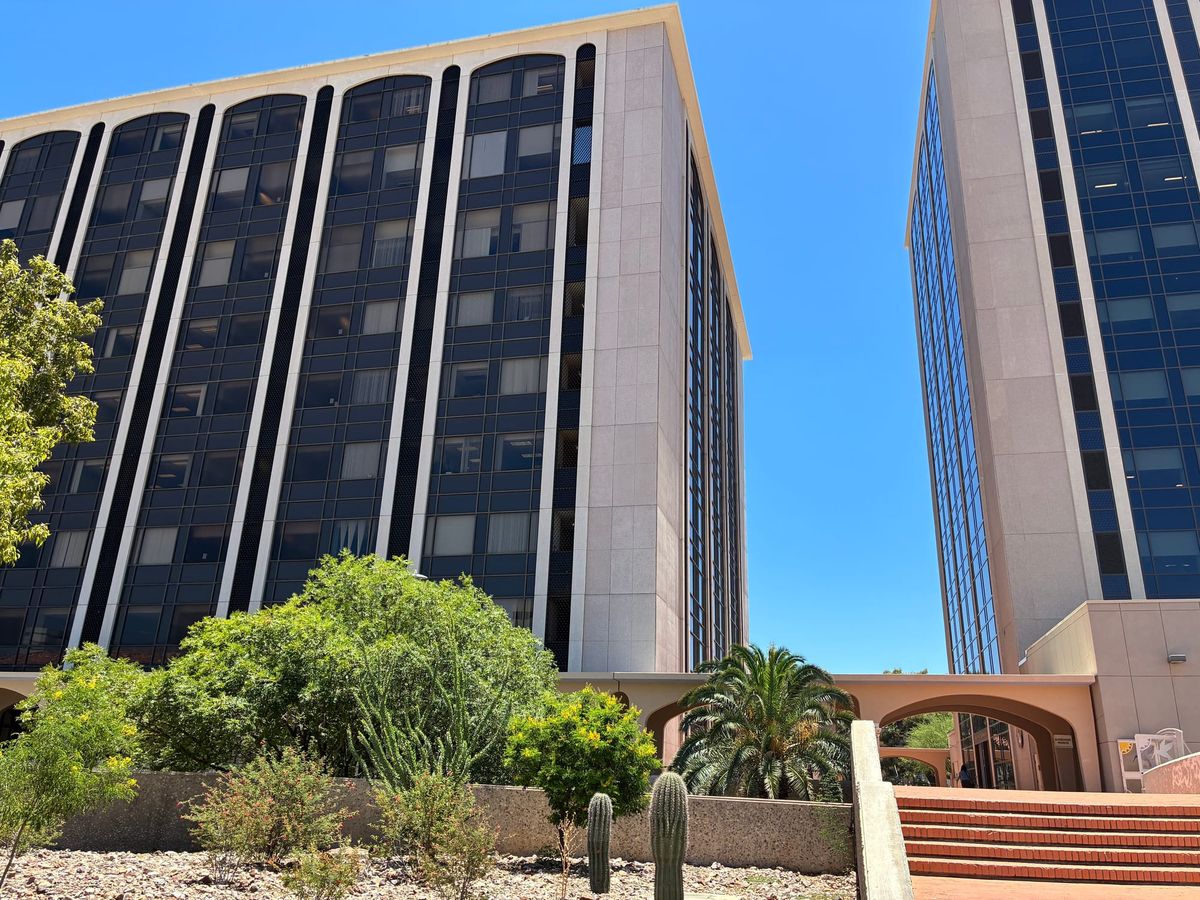
The Arizona Board of Regents says a longtime University of Arizona employee was fired over a botched student payment, but her attorney told a judge Monday the board's account of that decision has changed more than once.
A Pima County Superior Court judge heard arguments on whether to throw out the former employee's claim that she was fired in retaliation for raising concerns about understaffing and low pay in her department.
ABOR, the state agency that governs Arizona's public universities, asked Judge Kyle Bryson to grant summary judgment in its favor on Clarissa Siebern's appeal of her October 2023 termination from the College of Education's Department of Disability and Psychoeducational Studies. Siebern had worked at UA since 1997 and served as the department's business manager for about three years.
ABOR's attorney, Betsy Lamm, told the court Siebern has to prove not just that her complaints played some role in her firing, but that ABOR acted in direct, knowing retaliation because of them.
She read from ABOR's whistleblower policy, which says it cannot be used as a defense by an employee disciplined for legitimate reasons unrelated to any disclosure. It is not a violation, the policy states, "to take adverse personnel action against an employee whose conduct or performance warrants that action, separate and apart from that employee making a disclosure."
Robert Weeks, representing Siebern, argued the court should instead apply the standard test used in most workplace retaliation cases, which lets a plaintiff win by showing a complaint was a substantial reason for the firing, not necessarily the only one.
Siebern alleges she warned then-Dean Robert Berry beginning in early 2023 that staff in her department were overworked, underpaid and threatening to quit. In a May 2023 meeting, she handed him a document describing the department as in "crisis mode" over staff retention. In an Aug. 28 email to Berry and others, she wrote that pending resignations had left her "very concerned with department administrative support."
"They do not want to leave DPS," Siebern wrote of her staff. "They feel, however, they are not being paid for the level of work that they do, and this devalues their contributions. Our department and college cannot sustain these resignations."
Share Tucson Spotlight with a friend. Every signup earns you a raffle entry to win a gift card to a local Tucson favorite. Four winners drawn August 1.

Weeks told the court the legal bar for showing a complaint touches on a "matter of public concern," a requirement under the policy, is a low one.
"It's a low bar," Weeks said, arguing the standard covers nearly anything except an employee complaining about their own personal treatment.
Lamm pushed back, telling the court Siebern described that same email in her deposition as a recap of prior conversations about pay reviews, not advocacy for any outcome.
ABOR says Siebern was fired for an unrelated reason, a roughly four-month delay in processing payment to a student worker.
Lamm walked the court through the timeline, citing weeks of silence from Siebern despite repeated follow-ups from the student, a payroll error that caused further delay, and a final payment in October 2023, months after it was first approved. Lamm said Berry called the delay "egregious" repeatedly in his own testimony.
Weeks argued ABOR's explanation for the firing has shifted. He told the court Berry initially testified the deciding factor was a second, previously undisclosed student who'd also gone unpaid, an allegation Weeks said was false since Siebern had paid that student months earlier. After that was pointed out, he said, the explanation changed.
"Student B went from being the determinative fact to suddenly being irrelevant," Weeks said.
Clarissa Siebern addressed the University of Arizona Faculty Senate in April, describing the events behind her whistleblower and retaliation case against the Arizona Board of Regents.
Lamm disputed there was any real inconsistency.
"That's not accurate," she told the court, saying the discharge notice pointed to a pattern of late payments going back to the first student, and that every witness has consistently said that delay was the reason for the firing.
The two sides also disagreed over whether ABOR skipped its normal disciplinary steps before firing her. Weeks said Siebern had two decades of clean performance reviews and was fired without warning or a fair investigation. Lamm responded that Siebern's supervisor preferred handling concerns informally, and that ABOR policy didn't require an investigation or progressive discipline for an employee in her position.
The case had been on track for a possible trial by April, with the two sides disagreeing over how long it would take and whether it would be heard by a jury.
United Campus Workers of Arizona, a labor union that has taken up her case, wrote in a September post that was being treated for cancer and that losing her health insurance when she was terminated disrupted that treatment.
The union says she was partway through a master's degree in the same department that fired her and would have been eligible for full retirement in 2026. It also says she's now facing legal costs the union projects will exceed $150,000.
Bryson did not rule from the bench Monday, saying he would issue a written decision. That ruling could end the case outright or significantly narrow what eventually goes to trial.
 Caitlin Schmidt
Caitlin Schmidt is Editor and Publisher of Tucson Spotlight. Contact her at caitlin@tucsonspotlight.org.
Tucson Spotlight is a community-based newsroom that provides paid opportunities for students and rising journalists in Southern Arizona. Please consider supporting our work with a tax-deductible donation.