
Watch the moon with Tucson scientists Saturday
The Planetary Science Institute invites Tucson residents to view the moon through telescopes, meet scientists and explore science art at a free event Saturday.
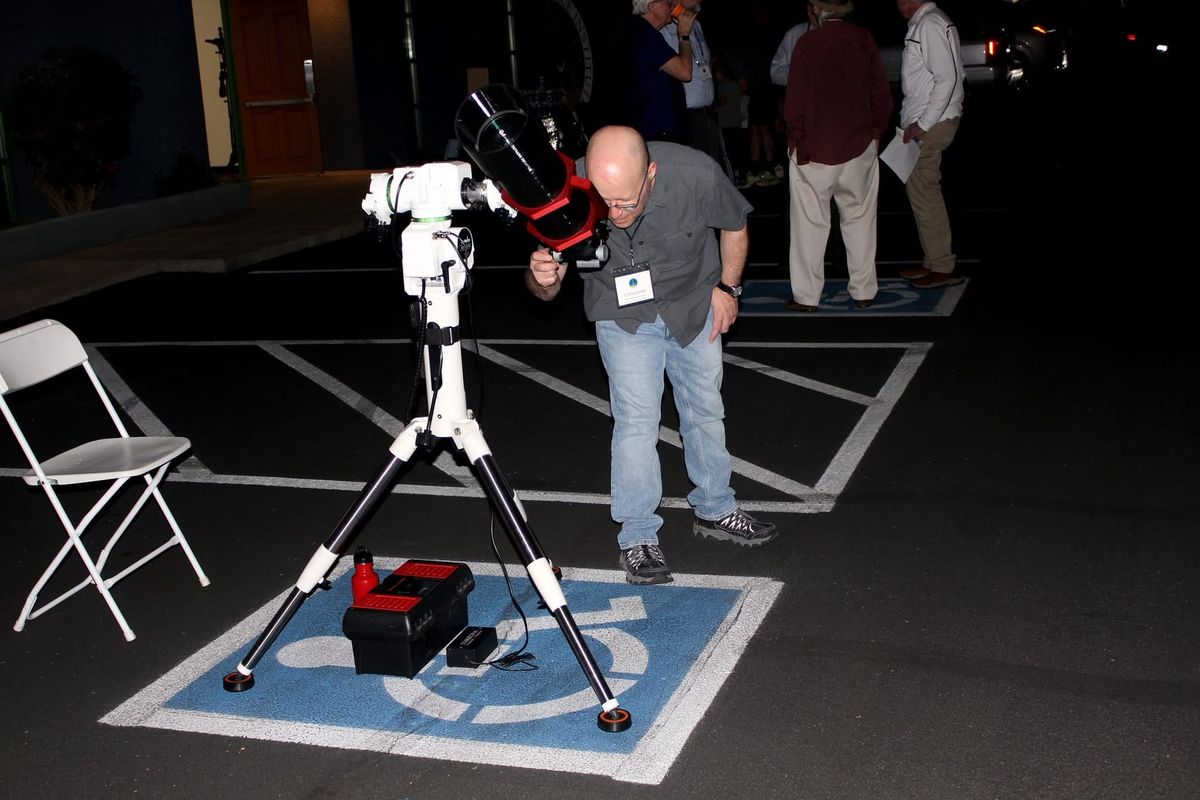
The Planetary Science Institute is inviting the Tucson community to look to the skies for International Observe the Moon Night on Saturday.
PSI, a Tucson-based nonprofit research organization, is the largest non-governmental employer of planetary scientists in the world. The institute was founded nearly 55 years ago by planetary scientists William Hartmann and Don Davis, who relocated the organization from Chicago to Tucson.
PSI researchers study planetary bodies across the solar system, from Mars and the Moon to asteroids and comets, and are involved in NASA missions and ongoing astronomy research.
"PSI is proud to have called Tucson home since 1972, and to be part of a community with such a deep connection to science, exploration, and discovery," said CEO and Director Amanda Hendrix. "Through school visits, community outreach, and events like our International Observe the Moon Night event, we are committed to bringing planetary science to southern Arizonans of all ages. We want our neighbors to know that science is something they can experience and participate in."
Saturday's free celebration marks the first year PSI has hosted a public Observe the Moon Night event at its offices. In past years, individual PSI scientists have hosted informal viewings for neighbors using personal telescopes.
The event will take place from 6 to 8 p.m., giving the public a chance to meet scientists, ask questions and view the moon through telescopes and binoculars.
"We'll have a handful of telescopes that will be able to observe the moon, as well as binoculars, because the moon is great. You can actually use binoculars to see quite a bit of things on the moon," said Samantha Riestenberg, PSI's science communications manager and public information officer.
The event will also feature STEM activities and goodie bags for kids, including an activity using Oreo cookies to model the phases of the Moon and a cratering demonstration using flour, cocoa powder and marbles to show how impacts scatter material.
We're a nationally recognized newsroom, but we're still a nonprofit that runs on community support. Help us keep telling Tucson's stories.
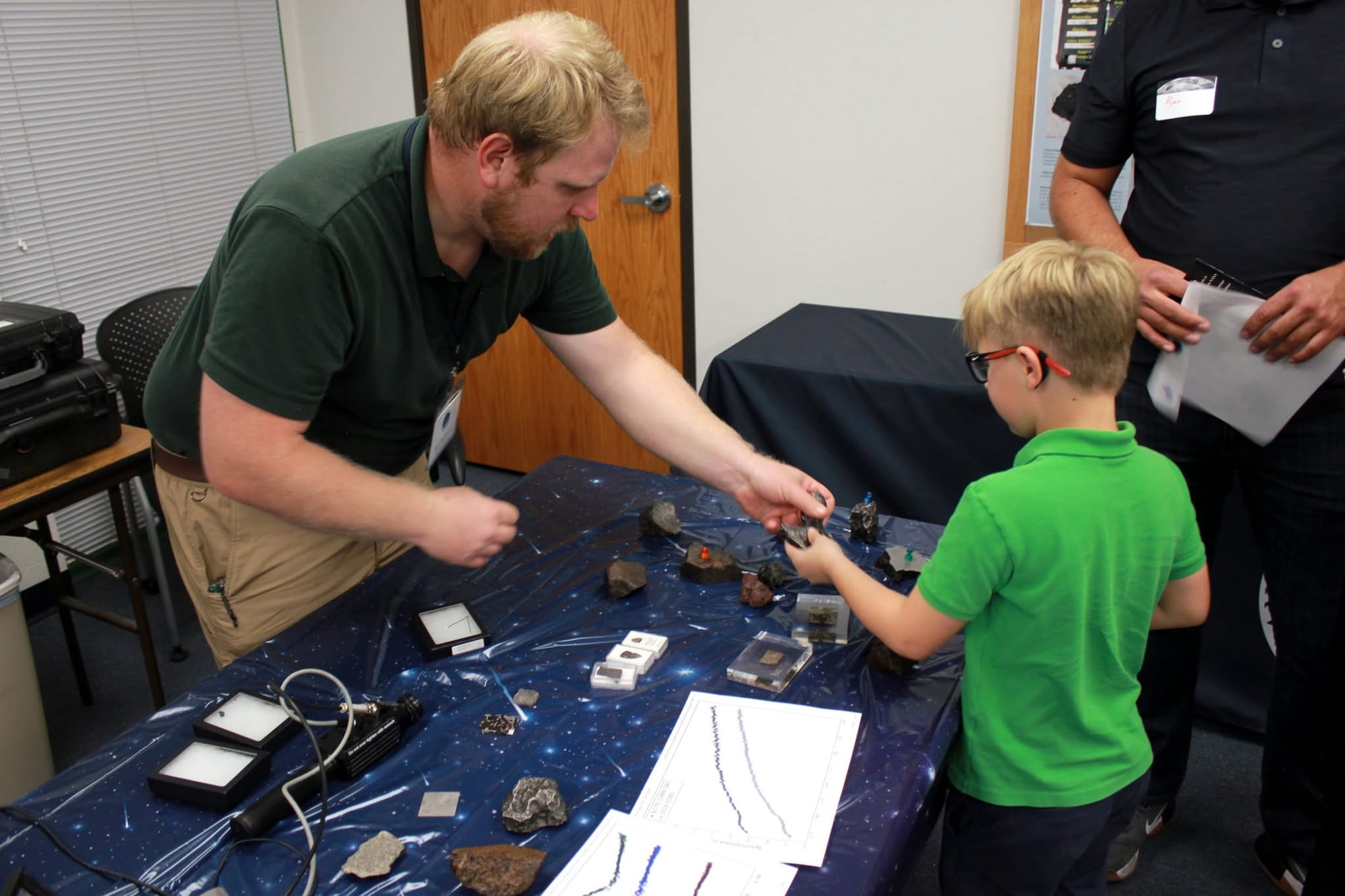
Also on view will be science art by PSI co-founder Hartmann, whose collection includes nearly 100 pieces displayed at the PSI offices. Hartmann's paintings, some dating back 50 years, are grounded in scientific understanding.
"He painted each painting scientifically accurate for what we knew at the time that he painted it," Riestenberg said, noting that some of Hartmann's paintings, created decades before robotic missions reached other planets, reflect the scientific understanding of their era.
That personal connection to the Moon is at the heart of Saturday's event, said Sanlyn Buxner, who leads education and public outreach at PSI and serves on the International Observe the Moon Night organizing committee.
"The Moon is something we all share, and almost everyone has some kind of connection to it - whether it's through science, culture, art, family traditions, or simply looking up at the night sky," Buxner said. "Our goal with International Observe the Moon Night is to support communities to come together and to give people a chance to make that connection more personal."
The institute runs school visits and public STEM events across Tucson, and organizers say the moon night event reflects a push to grow PSI's community presence and open its Tucson offices, including the Hartmann collection, to more visitors.
"We really want to highlight that we're here, we have these big offices, the art collection, we have things that people can experience on site, and we really want to promote that and invite people to stop by and see what we do," Riestenberg said.
PSI plans to launch regular weekend gallery hours for the art collection in the coming weeks, and is recruiting volunteer docents age 18 and older to help lead school science activities and staff the Hartmann art gallery.
"If someone is really passionate about planetary science or art and is looking for some way to get involved, that's a really great opportunity," Riestenberg said.
While PSI is headquartered in Tucson, the institute employs scientists working around the world, all focused on planetary science, from the Moon and Mars to asteroids and comets.
Four PSI scientists are participating scientists on NASA's Artemis program, working to identify potential lunar landing sites and locate water ice deposits ahead of the Artemis 4 mission, which aims to return astronauts to the lunar surface.
International Observe the Moon Night isn't limited to Tucson. Those outside the city can join a livestreamed event hosted by CosmoQuest, featuring telescope views courtesy of Starfront Observatories and lunar mapping, on Twitch and YouTube starting at 9 p.m. EDT.
When: Saturday, Sept. 19; 6 to 8 p.m.
Where: Planetary Science Institute, 1700 E. Fort Lowell Road.
The free event includes family-friendly STEM activities, a gallery exhibit and the chance to meet scientists, ask questions and view the moon through telescopes and binoculars.
For more information, visit psi.edu.
Caitlin Schmidt is editor and publisher of Tucson Spotlight.
Tucson Spotlight is a community-based newsroom that provides paid opportunities for students and rising journalists in Southern Arizona. Please consider supporting our work with a tax-deductible donation.