UA professor fights health gap through Hopi dry farming
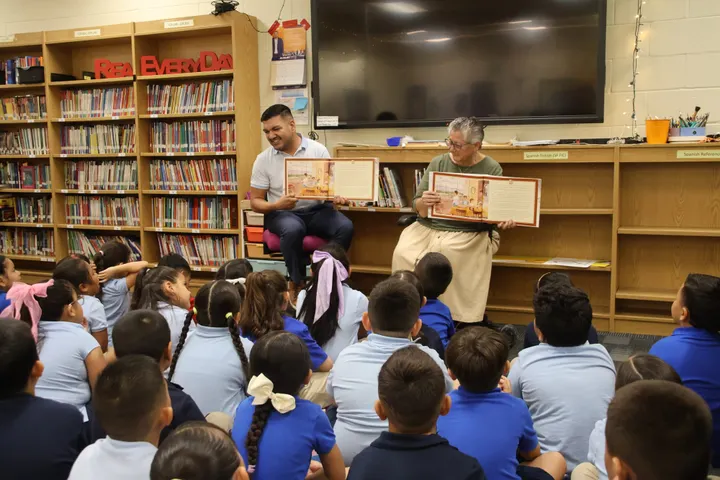
University of Arizona professor and Hopi dry farmer Michael Kotutwa Johnson is working to close health and economic gaps facing Arizona's tribal communities.
A University of Arizona professor and Hopi dry farmer is working to close a health and economic gap that leaves some Arizona tribes facing an 80% diabetes rate and a life expectancy 33 years shorter than communities just across the highway.
As a young man, Michael Kotutwa Johnson attended the Southwest Indian Bible Conference when his grandfather, Fred Aptvi Johnson, was president. Each time they went, his grandfather bought food for attendees, holding a core belief that no one should go hungry.
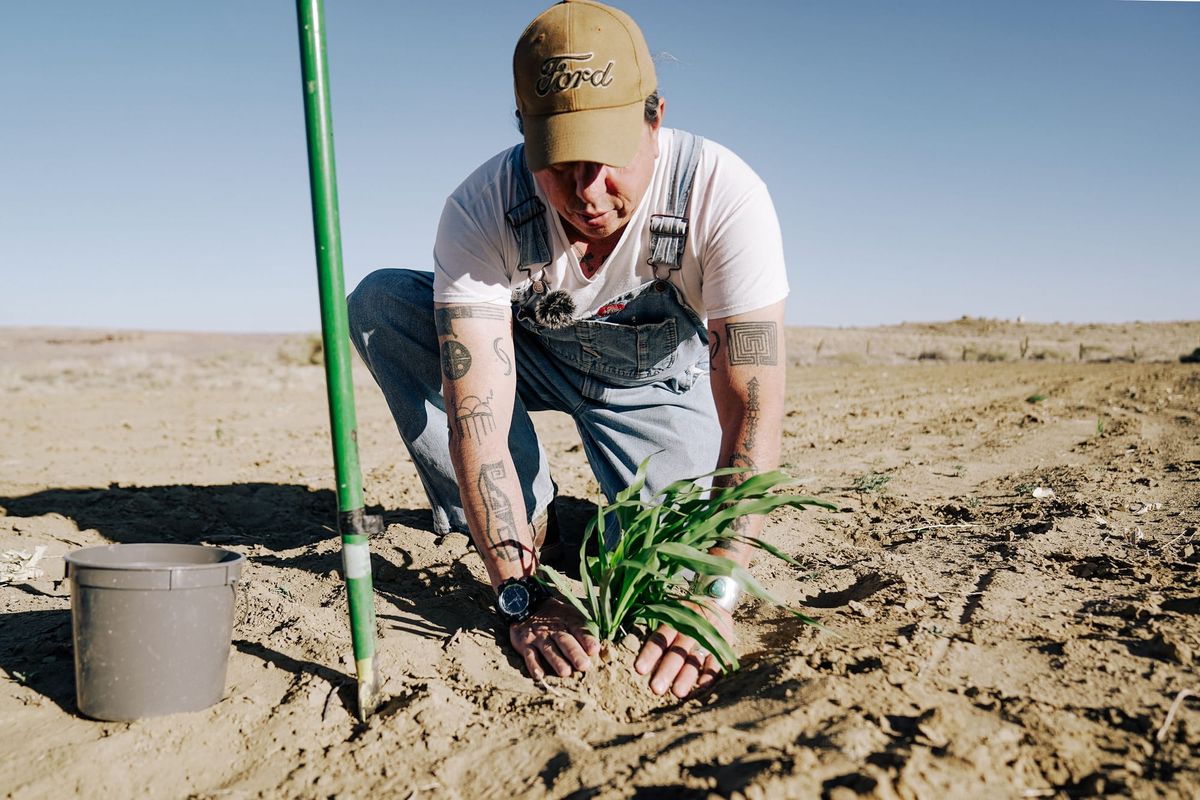
With that value instilled in him, Johnson has become a prominent activist for tribal health and agriculture. He teaches at UA's School of Natural Resources and the Environment, where he focuses on conservation, including dry farming, a traditional Hopi agricultural method.
Dry farming demands a great deal of labor and patience given Arizona's low rainfall, reinforcing Hopi resilience and spiritual beliefs. As one of the oldest tribes in the United States, the Hopi had other places to go, but they ultimately flourished in Arizona.
“We don't always have enough soil moisture and therefore sometimes don't even get a crop,” Johnson said. “But it's that process over 3,000 years living in this same place and not being relocated, like a lot of tribes, that's given us our character, identity and shaped our cultural landscape to actually farm in the semi-arid region that only receives 6 to 10 inches of rain a year.”
Dry farming “puts the culture back in agriculture,” Johnson said.
“I think one of the things that really amazes me is that the Hopi people chose to live there,” he said.
Johnson also works as an Indigenous resilience specialist at UA's Indigenous Resilience Center, which is dedicated to finding ways to give back to local tribes after massive land loss.
Tucson Spotlight just won a national award for local journalism collaboration. Get the stories that earned it delivered straight to your inbox.
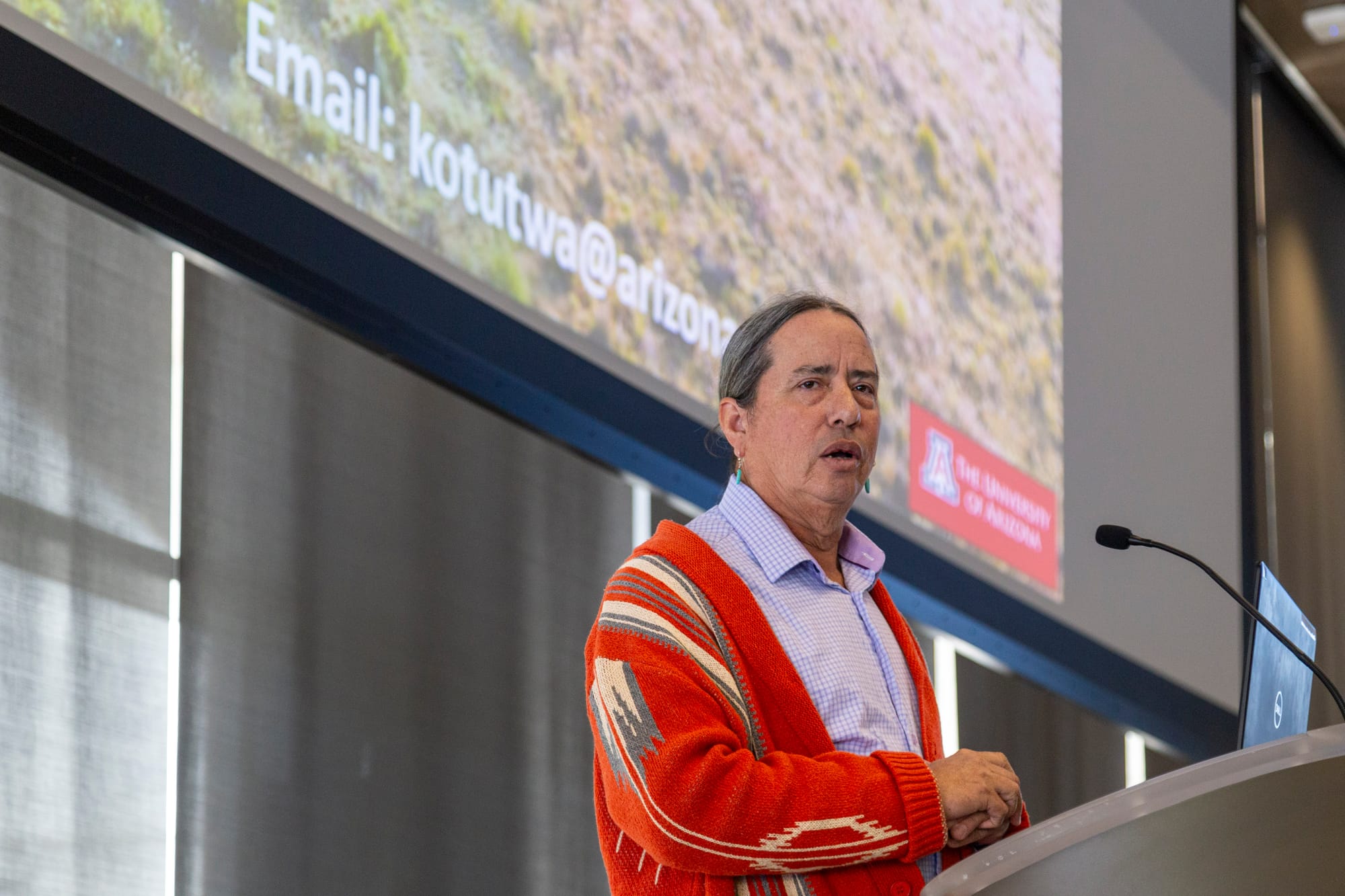
With deep ties to the 22 tribes in the state, Johnson uses his resources to create opportunities.
“I just recently was able to get a stakeholder to donate two greenhouses to put them on the lands of the Yaqui and the Salt River to help with their community, to improve the health of their community,” Johnson said.
Johnson's work with local tribes is one of the most important aspects of his career. He believes in upholding their right to identity and culture while ensuring the tribes' future health. He works with UA's Cooperative Extension program, which identifies agricultural needs in the community and proactively addresses them.
“I specifically work on issues that tribes face when it comes to agriculture,” Johnson said. “Whether it's more traditional agriculture, like Hopi, where I'm from … or whether it's kind of like the farms they have in Gila River and even the Colorado River Indian Tribes where they're producing big-time agriculture, where they grow a lot of cotton, alfalfa, and other vegetables.”
The Arizona Institute for Resilience recently published a study highlighting massive Indigenous agriculture production, co-authored by Johnson, that verified the disparity between land management and profit.
“A lot of people don't know that, you know, here in the state of Arizona that 66% of the agriculture producers are American Indian and of the 12 million acres that has actually farmed or has cattle production in Arizona, American Indians sit upon 80% of that,” Johnson said.
His research also focuses on the economic imbalance of non-native agricultural producers, who make around five times more than Indigenous producers, causing financial opportunities to leave the reservations.
Another key part of Johnson's work focuses on health disparities that affect various tribes. He also raises questions about food quality, including the difference between eating traditional versus processed food.
“One tribe here in Arizona … has an 80% diabetes rate, which is the highest in the globe,” Johnson said. “Then you have one tribe that has a 52 year old life expectancy rate when right across the highway, it's 85 years old, on a non-reservation.”
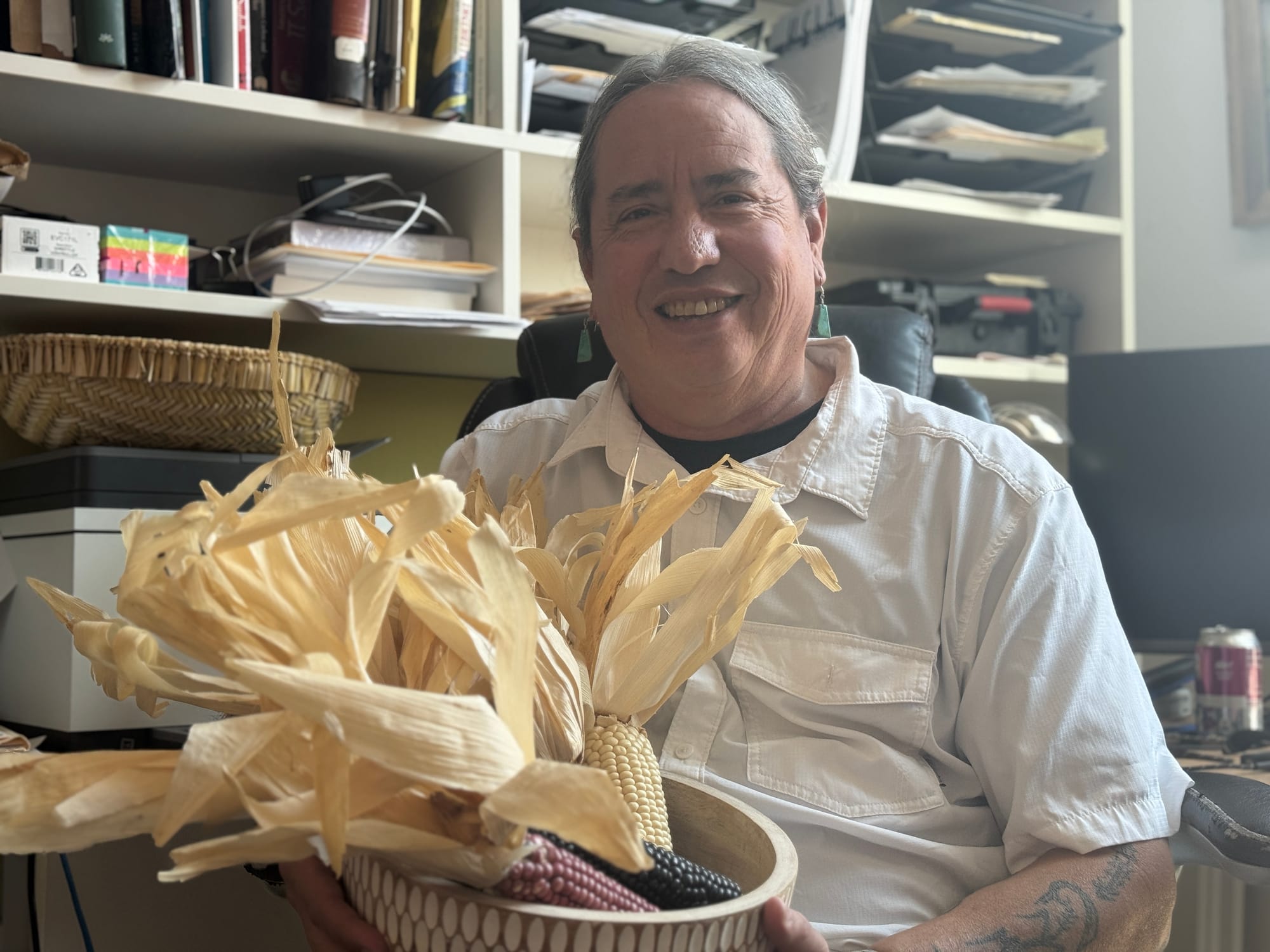
Johnson's work with Arizona's tribal nations has grown into community education and outreach efforts outside of tribes. The impact of his work resonated when he first spoke to a group of non-tribal members about the health and economic disparities within tribes, who quickly asked what they could do to help.
“The gift that I have for speaking and for getting people together, to work with and collaborate with all people across all races and politics, I realized I was having an impact then,” Johnson said.
His reach has grown exponentially over the past four years, during his time at UA and in the community. But he still faces an uphill battle due to his unfamiliar approaches, which many community members have not previously seen.
Johnson uses activism, rather than money, to accomplish his goals in agriculture. He believes UA should be serving the public instead of focusing on the economic aspect of development, and says most people view him as a farmer instead of an academic.
“It's more about me going out there and putting boots on the ground and becoming visible,” Johnson said. “Because once you leave your community, you have that responsibility to always come back or figure out ways to help them keep going.”
Even though Johnson is several hours away from his home on the Hopi Reservation, he takes people there on occasion to create learning experiences.
He said his mission in life is to create as many opportunities and choices as possible.
“Right now, a lot of times American Indians in this country do not have those opportunities nor do they have the access,” Johnson said. “I'm trying to open those doors. I cannot make you stop eating potato chips, but what I can do is give you an alternative, because at the end of the day, it's all about choice.”
Johnson is continuing his work locally while also spreading the word at conferences nationwide, visiting Dickinson College in Pennsylvania last April to lecture about his efforts to revitalize what he calls the American Indian food system.
The American Indian food system goes beyond agriculture to include hunting and gathering, and having access to the places where those practices once happened. Rebuilding that access, he said, requires relearning how to relate not just to the environment, but to oneself and to community members.
“That's my number one goal, in my lifetime just to try to do that,” Johnson said.
Katlyn Vargas is a University of Arizona student and Tucson Spotlight intern. Contact her at katlynvargas@arizona.edu.
Tucson Spotlight is a community-based newsroom that provides paid opportunities for students and rising journalists in Southern Arizona. Please consider supporting our work with a tax-deductible donation.