UA EMTs manage stress amid rising calls, summer heat
University of Arizona EMTs share how they cope with rising call volume and summer heat while relying on close bonds within their emergency medical team.
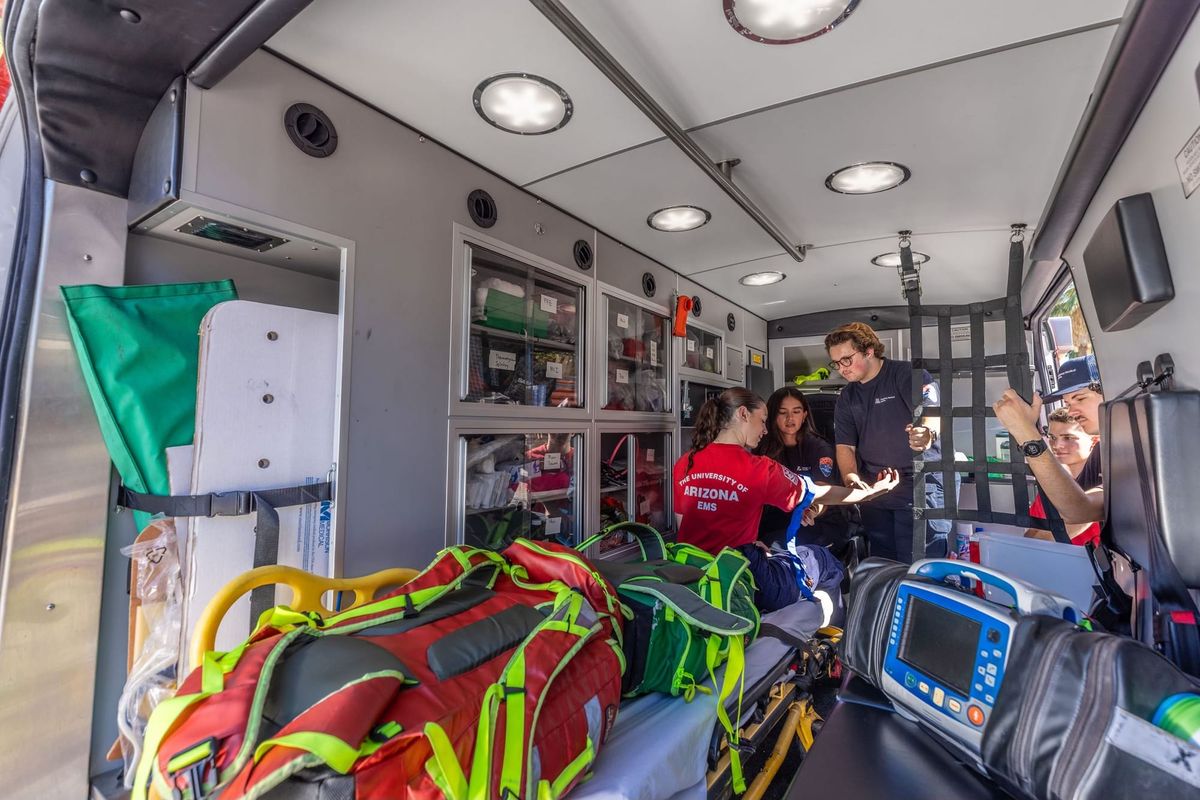
Between the summer heat and a rising call volume, University of Arizona Emergency Medical Services crews have learned that surviving the job means as much about managing stress off the clock as it does staying sharp on scene.
UAEMS handled 17 more calls in June and July compared to last summer, and while organizers acknowledge the increase isn't reflective of Tucson Fire Department or other agencies' summer call statistics or trends, it still marks a significant jump for the university's summer program.
Despite this summer being one of the hottest on record, UA's emergency medical technicians have found ways to manage both the physical strain of the heat and the stress that comes with the job.
"Just being in the heat in full uniform, carrying our equipment up outdoor stairs and staying outside is inherently harder than when it is cooler outside," said UA EMT Kera Medhi. "It's not that it affects my mentality, it's just another thing to remember to stay hydrated and pack a water bottle."
Working in emergency medicine isn't easy, and requires enhanced coping skills and support systems, said UA EMT Ella Blom.
"I used to be able to just clock out and leave my stress at work, but the things you encounter as a first responder can be hard to check at the door," Blom said.
UA EMT Matt Tran said the hectic workday is just part of the job, and since being a first responder will never get less chaotic, learning to manage that chaos is critical.
"I think learning how to be comfortable in chaos has been the biggest problem to overcome. It's not that I have less to worry about, I just know how to manage it better," Tran said. "There is so much that we cannot control or affect and it can drive us crazy. Knowing what we can do and what we can control helps manage that."
Your membership pays emerging journalists to cover Southern Arizona the way it deserves.
Some calls are never easy. Blom said she was still processing a cardiac arrest call while also juggling the stress of learning to be a shift supervisor, though she said UAEMS has always provided helpful resources.
"It's mandatory after a critical incident to call one of our chiefs, and they will meet us at station to debrief the call and offer a CAPS referral if we want," Blom said. "And it's not just the leadership structure and policies that foster this support, it's mostly the people."
Blom is not the only one who feels this way: Medhi said she also enjoys being a part of UAEMS and knows her fellow EMTs will always have her back.
"The friends I've made in the agency are some of my closest. We have similar experiences in terms of call types and different crews definitely bond over specific calls. If someone experiences a critical call, we all check in on them," Medhi said. "There's always at least one person around who understands."
Tran agrees, saying EMTs have experienced similar scenarios and know what their colleagues are going through.
"Whatever you experience or are struggling with, there is a good chance someone else is going through the same thing," Tran said. "Talking about it with others helps manage stress and creates bonds very strongly."
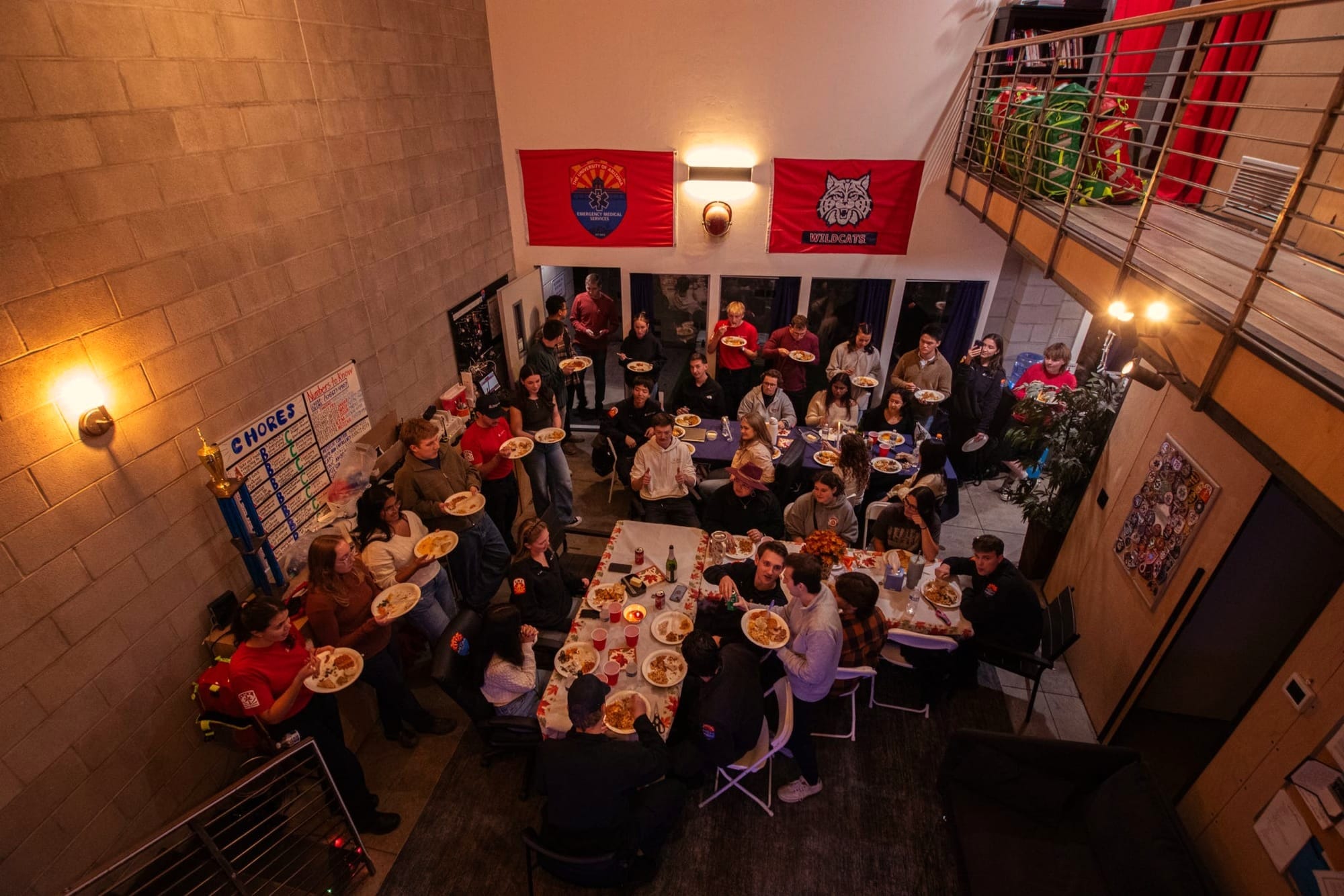
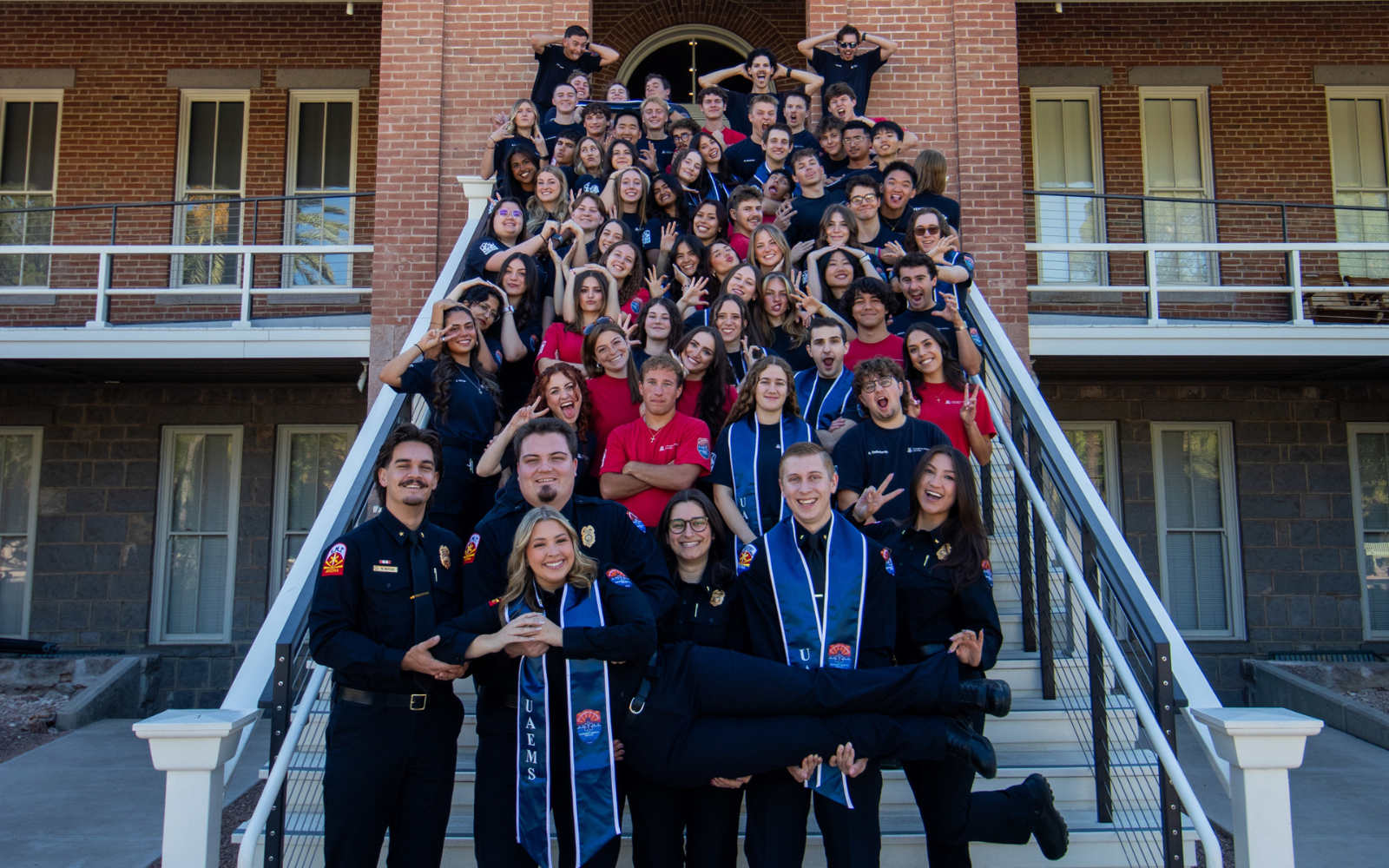
For many of the students, UAEMS feels less like a job that they clock into each day, and more like a close-knit community.
"My fellow EMTs at UAEMS are honestly like family. Everyone also has their own calls that stick with them, and they understand the busy lifestyle that comes with being in medicine. I'm very supported here," Blom said.
Outside of the agency, stress is managed in other ways. Blom said she enjoys working on crochet projects after a long or particularly hard day; Medhi enjoys spending time reading or trying out new, lower-intensity hobbies.
As summer winds down, EMTs are preparing for a much busier season. With students returning to campus, call frequency will pick up again. That, combined with classes and other extracurriculars, leaves less time for these student workers to focus on themselves.
"I think it's a higher stress level in the fall," Blom said. "At that time, I'm also in more classes, so I have more homework with less time to do it on shift. I am a paramedic student, so my schedule in the fall will look like classes from about 9 to 4 most days and several shifts a week, some being overnight."
Despite the busy schedule and added stress, students who work with UAEMS are there because it's a passion.
"You do what you can to the best of your ability. It's the only way to make it through," Tran said.
Gabrielle Cotnoir is a University of Arizona journalism student and Tucson Spotlight intern. Contact her at gabriellecnews@gmail.com.
Tucson Spotlight is a community-based newsroom that provides paid opportunities for students and rising journalists in Southern Arizona. Please consider supporting our work with a tax-deductible donation.