Tucson's Sosa-Carillo House reopens as heritage museum
The Sosa-Carillo House, a historic adobe home that survived urban renewal and a case of mistaken identity, has reopened in Tucson as a Mexican American heritage museum after a $2.3 million renovation.
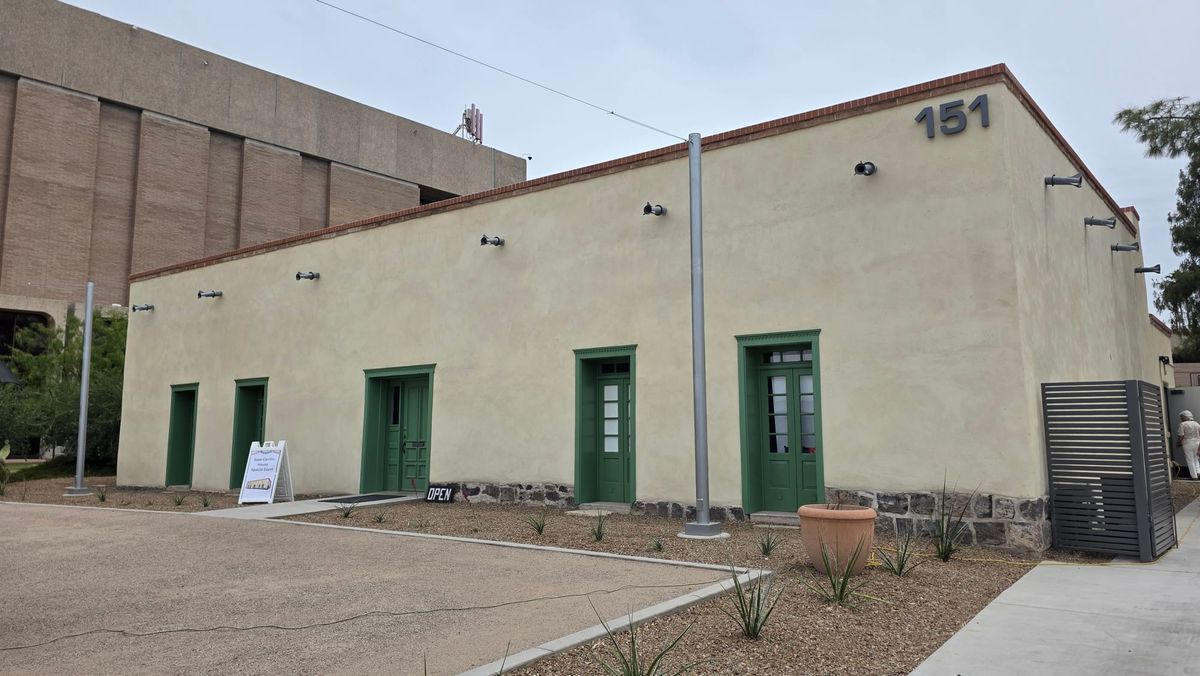
A Tucson home that survived urban renewal, a case of mistaken identity and a near-demolition has reopened as a Mexican American heritage museum, and the families whose history it holds were there to welcome it back.
The Sosa-Carillo House, named after the Sosa and Carillo families, reopened its doors to the Tucson community last month. The Sosa family history traces back to 1776 when Jose Maria Sosa arrived in Tucson and acquired the land where the house currently resides.
He gifted the house to his daughter, Manuela Mendoza Sosa, before selling the house to Jesus Suarez de Carrillo in 1878.
The Carillo family patriarch, Leopoldo Carillo, came from a prominent Sonoran ranching family and became a successful businessman and landowner, owning more than 100 homes in Tucson by 1881. His second wife, Elvira, was the one who completed the Sosa-Carillo house.
Elvira and her descendants lived in the house until the city seized it through eminent domain in 1968.
The National Register of Historic Places named the house the John Charles Frémont "Casa del Gobernador House" in 1971, believing that Frémont, the governor of Arizona Territory from 1878 to 1881, had once lived here.
While there is no credible evidence that Frémont stayed there, his daughter Lily did rent a room in the home for six months in 1879.
The house was saved from urban renewal due to the false association.
In 1993, a formal amendment to the register changed the name to the Sosa-Carillo-Fremont House, although it has been colloquially referred to as the Sosa-Carillo House.
The Arizona Historical Society owned the house from 1971 to 2022. Borderland Theatre used the space in 2017, followed by Los Descendientes de Tucson in 2018, a group made up of descendants of early Tucsonenses, who opened the Mexican American Heritage and History Museum in 2019.
In 2022, the historical society sold the house to Rio Nuevo for $200,000, with the tax increment financing district promising to invest an additional $1.1 million into renovations to maintain its historical integrity.
After a three-phase renovation plan costing $2.3 million, the Sosa-Carillo house reopened to the community, with local officials and members of Los Descendientes there to celebrate.
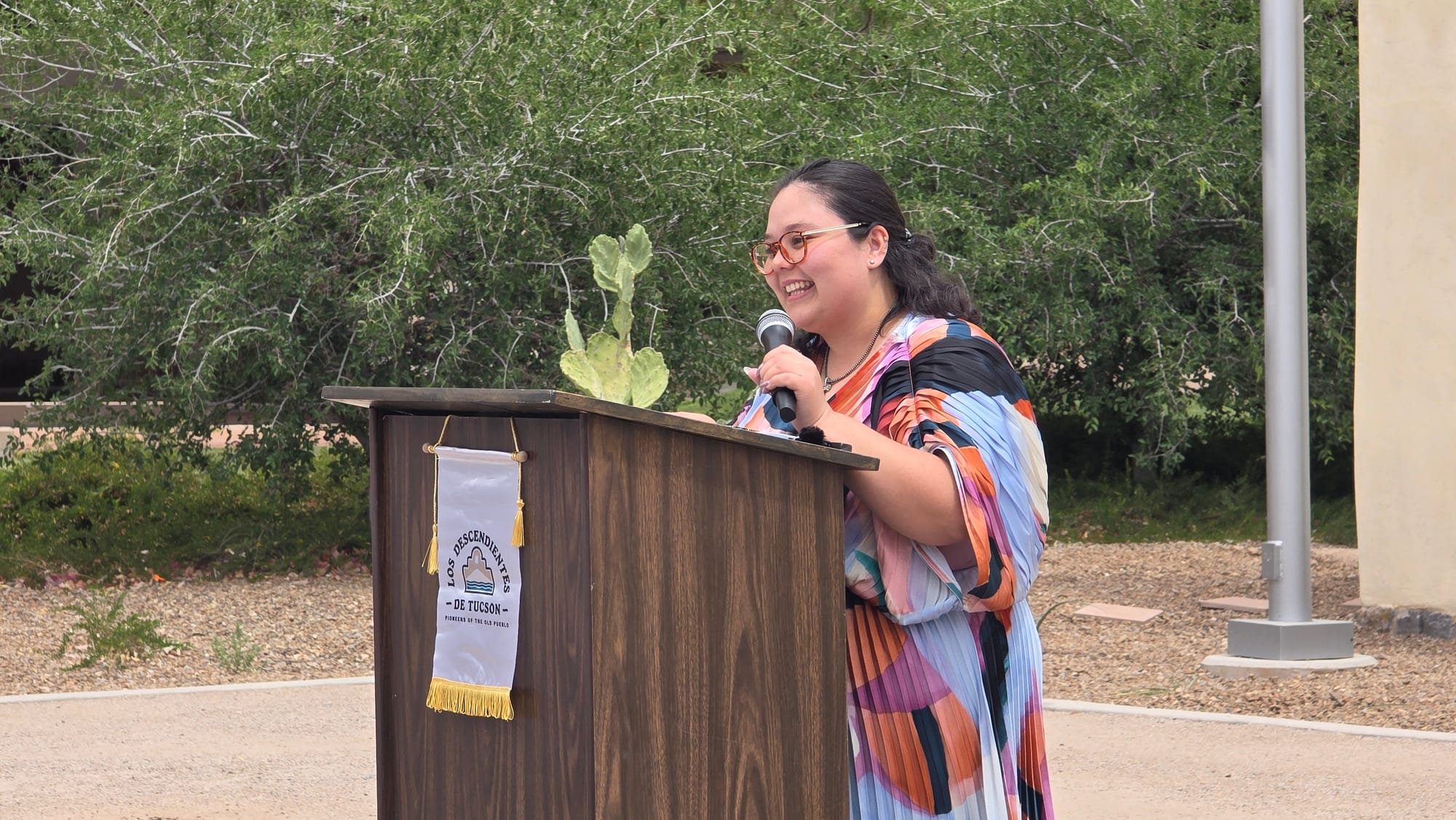
Maritza Valenzuela, Los Descendientes board president and a sixth-generation descendant of a soldier stationed at the Presidio San Augustín, opened the program by reading the museum's mission.
"The Mexican American Heritage and History Museum is a project of Los Descendientes that facilitates community programming and cultural exhibits like those you can see in the house today," Valenzuela said. "The board and members of Los Descendientes are thrilled to open it again for the community to enjoy."
Tucson Mayor Regina Romero spoke about the impact of previous urban renewal efforts where the Tucson Convention Center and Linda Ronstadt Music Hall currently stand.
"Our indigenous history and our Mexican American history in this city will no longer be ignored," Romero said. "Through this center plaza that is named the Alba Bustamante Torres Plaza … ran a street that was healthy and vibrant and full of history and commerce and stories of families that had been here for generations, and we want to make sure that we acknowledge that."
Romero pointed to the city's іSomos Uno! campaign, a cultural heritage strategy that acknowledges and preserves the heritage the city has while adopting culturally-centered solutions.
"That's why it was important to make sure that we had the funds available to make this Mexican American museum where we could celebrate not just our past and our history, but our present and our future," Romero said.
Rio Nuevo Board Chair Fletcher McCusker said the organization takes its stewardship of the home seriously.
"We will take care of it. Going forward, we will commit to you that we will invest whatever it takes to restore this building to its original condition," McCusker said. "To be in a position now to actually help restore it to the dignity that it deserves, has been a real labor of love for us and the Rio Nuevo board, and I can tell you, we're not done."
The Rio Nuevo board submitted letters to the State Historical Office, State Historical Preservation Office and the National Archive requesting a name change that more accurately reflects the history of the house.
"We would like to initiate the process to change the official name of the state owned and registered property from the Sosa-Carrillo-Fremont house to the Sosa-Carrillo House," McCusker said, reading from the letter. "Rio Nuevo, along with the Mellon Foundation, have invested millions of dollars to restore this home to its original condition, and would like now to set the record straight regarding its ownership."
Ricky Rioja, executive director of Los Descendientes, thanked co-director Alisha Vasquez for curating the space, along with long-time volunteers Rachel Pollock and Evelyn Jacobs.
"This is a huge first step on the path towards an inclusive community space that uplifts the stories of our collective history," Rioja said.
Jacobs, the great grandchild of Leopoldo Carillo, and the grandchild of his daughter Bea Amanda Carillo, shared her memories of the home.
"I was here a lot. I often played with my cousins Walter Jacobs Jr … and his sister, Vivian and other cousins … We often played hide and seek in that beautiful, and now 150-year-old historic fig tree," Jacobs said. "I pray that the people who have lived here and are now gone look down upon us with joy."
The first room to the right was curated by Brandon Varela, director of the Old Pascua Museum and Yaqui Cultural Center, who was asked to create a space highlighting the history, art and traditions of the Tohono O'odham and Pascua Yaqui nations.
"We got everything together, and I thought of what would be visually pleasing and what would be appropriate to have in the house," Varela said. "An introduction to items of regalia, traditional instruments, photos of the community of Old Pascua and several art pieces."
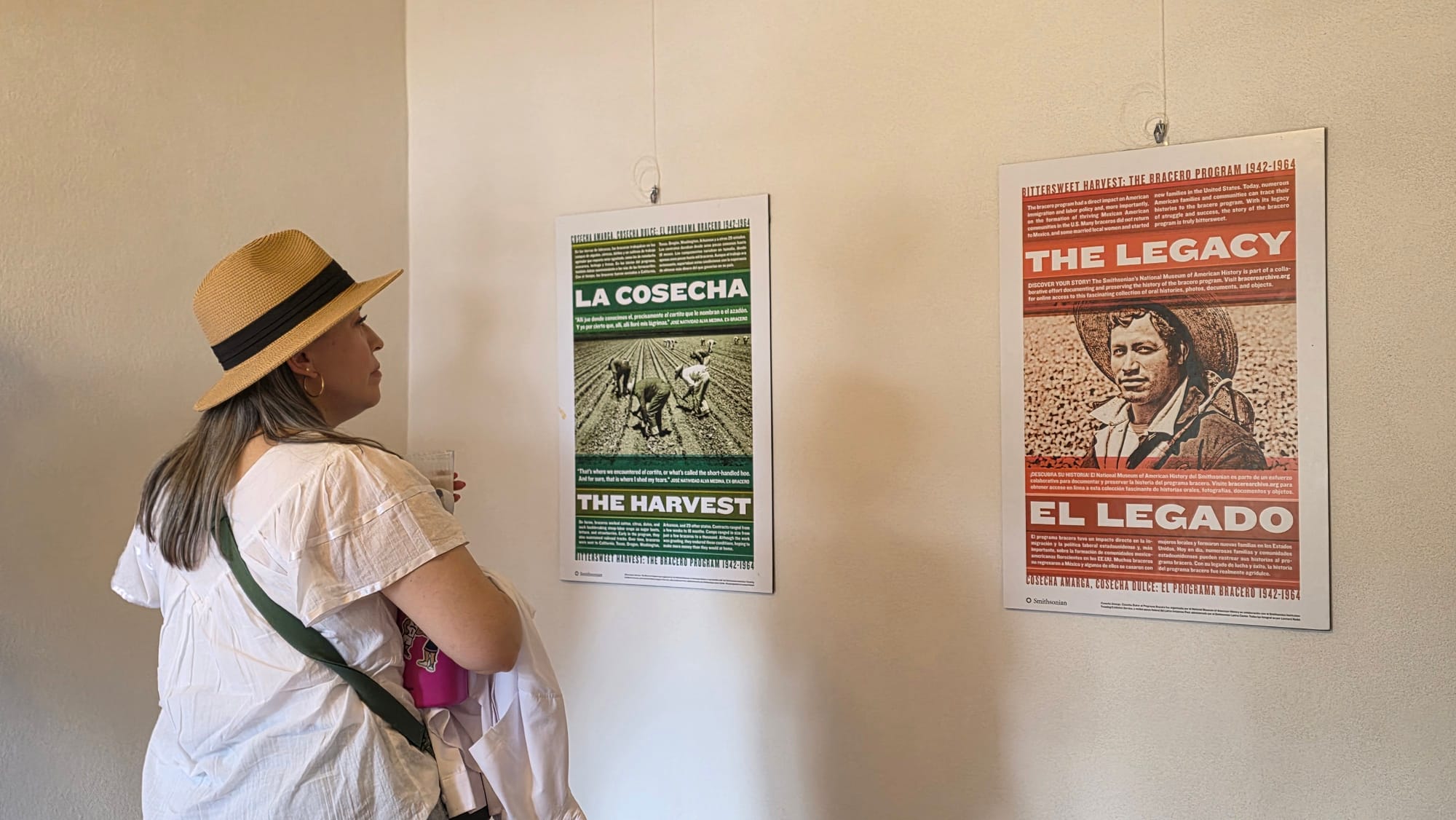
The first room to the left features the Smithsonian's "Bittersweet Harvest: The Bracero Program 1942-1964," with bilingual posters highlighting workers and families from the program, which brought Mexican laborers to fill agricultural and railroad shortages during World War II.
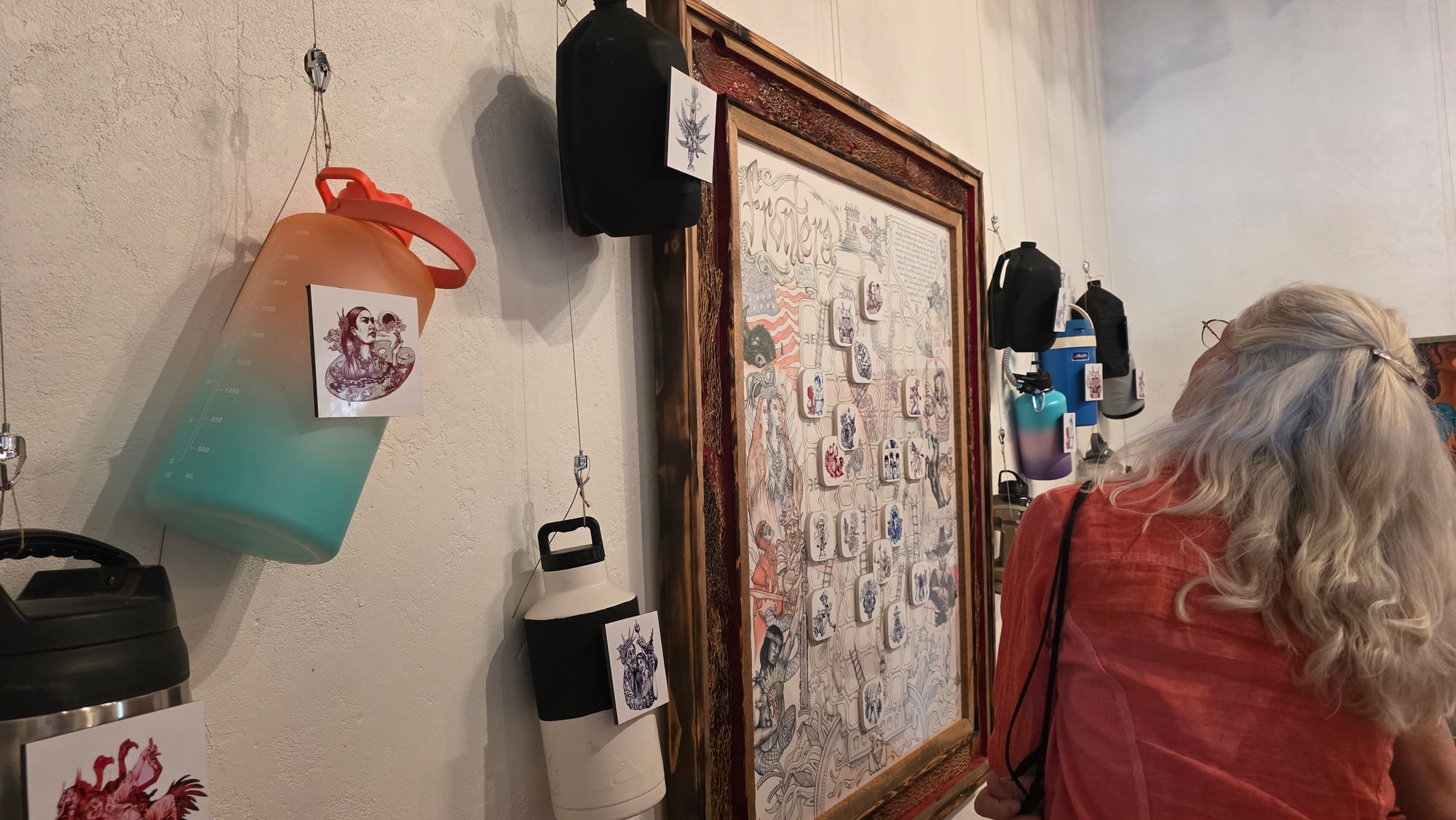
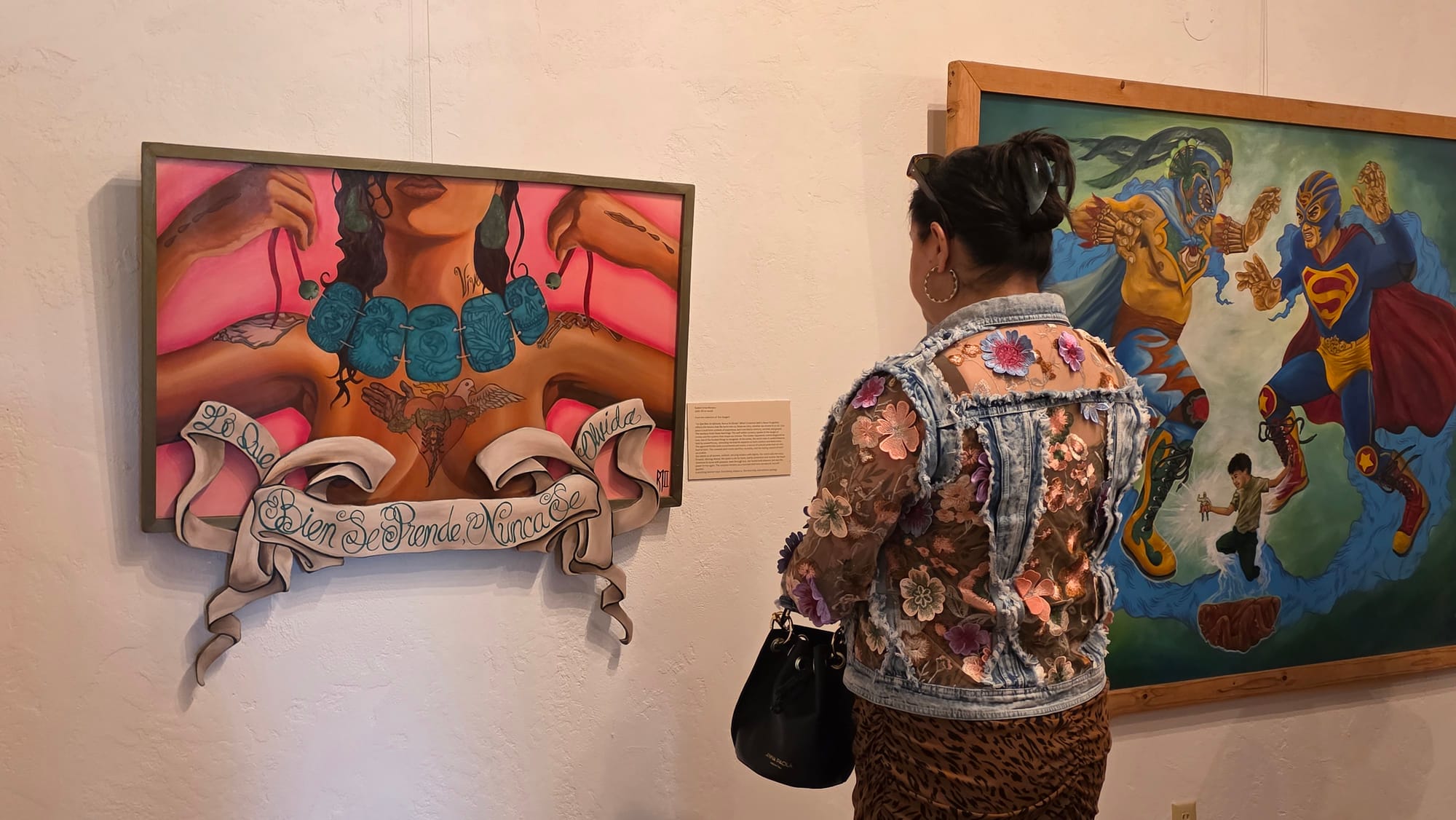
The back rooms feature art by Ruben Urrea Moreno in an exhibition titled "Lost But Unforgotten: Words out of Reach," drawn from responses to Urrea Moreno's Chicanidad.
In one corner of the larger gallery, the Leticia Carillo de Fuentes Jacobs' Sala, or living room, honors the last Carillo to own the home, loosely replicating her 1960s living room with books, red recliners, family photos and newspaper clippings, with the original ceiling painting left untouched.
Audio from interviews with South Tucson residents and business owners played in the background.
The home retains original architectural details, including a flower mural painted by a resident in 1915 and the original lime-based stucco mixed with prickly pear juice.
Nathaniel Miller has been an architect for more than 30 years, and was a part of the reconstruction of the Sosa-Carillo House.
"It's striking because it's an old historic adobe in the middle of this newer plaza campus that's the Tucson Convention Center," Miller said. "I feel like I'm in the community center now."
The house was updated to meet ADA accessibility standards while preserving its original design. A new kitchen addition was built using modern masonry methods designed to mimic the home's original mud adobe construction.
Miller echoed Rioja's words, saying the reconstruction was like magic.
"That word has been in my mind because, by all rights, this building should not be here, and the fact that it exists still, is magic," Miller said. "I've never been touched in the way I've been touched to be a part of this project."
Topacio “Topaz” Servellon is a reporter with Tucson Spotlight. Contact them at topacioserve@gmail.com.
Tucson Spotlight is a community-based newsroom that provides paid opportunities for students and rising journalists in Southern Arizona. Please consider supporting our work with a tax-deductible donation.