
Tucson Zine Fest founders warn of free speech crackdown
Tucson Zine Fest co-founders Elisa Mask and Zac Finger hosted a workshop on Daniel "Des" Estrada, a zine maker sentenced to 30 years for moving a box of political pamphlets.
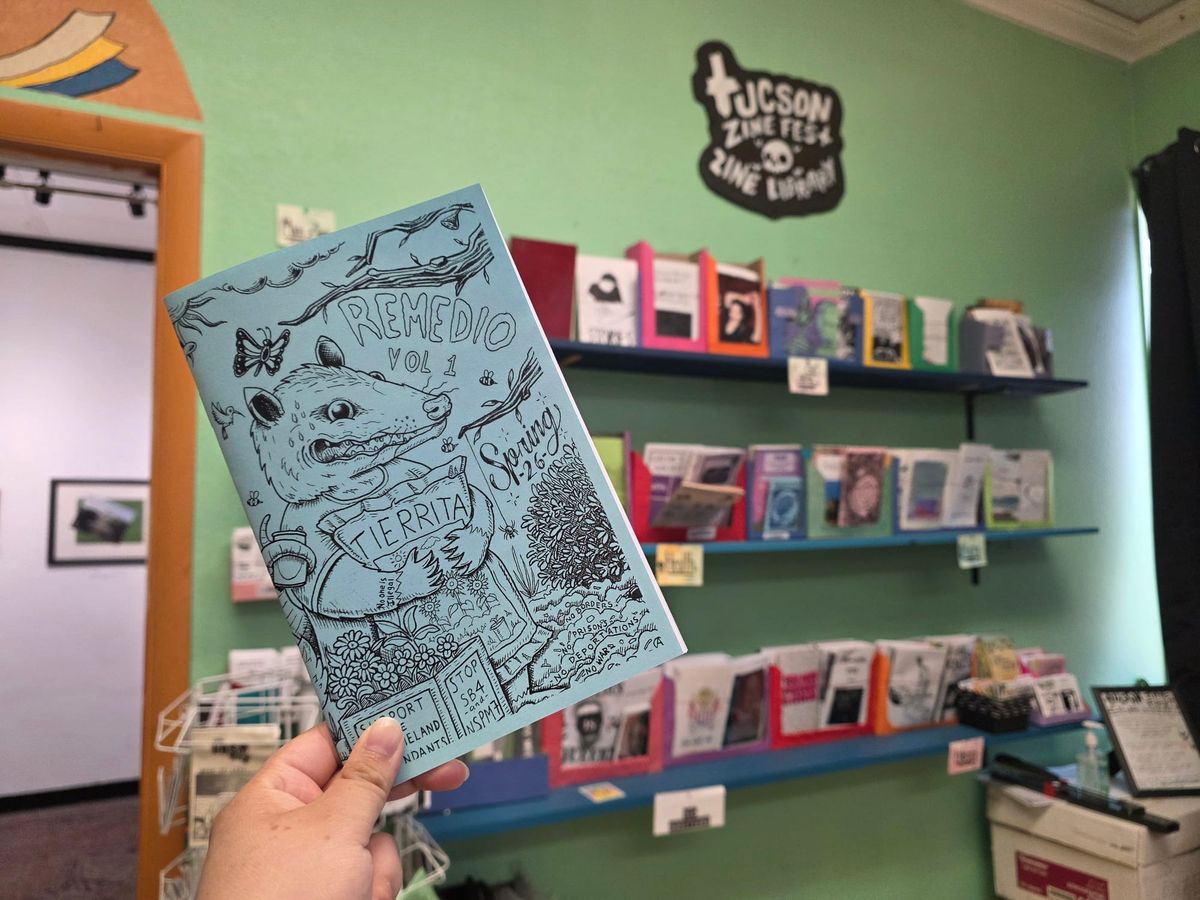
Since founding Tucson Zine Fest in 2019, Elisa Mask and Zac Finger have built a home for Southern Arizona's self-publishing scene, with their most recent workshop turning from teaching people how to make zines to warning them what can happen when the government decides possessing one is a crime.
Zines, short for magazine, allow artists, writers and creatives to self-publish their work without potential censorship that may come from publishing content traditionally. They cover topics including queerness, disability and how to organize locally.
(Zines are) "written, edited and often illustrated completely independent of the traditional publishing industry, and for that reason, it allows the artist or the writer to have more control over the content," Finger said.
Zines' history dates back to the amateur press movement of the 18th and 19th centuries, evolving through self-published literary magazines during the Harlem Renaissance and the rise of science-fiction fan culture in the 1930s.
"Anything could be a zine," Mask said. "It could be just pictures. It could be all walls of text. It could be poetry, and I love the fact that it's not regulated in (that) way. With traditional printing, there might be an issue about 'Oh, you can't talk about sexuality or queerness,' whereas with zines, you have all the control. You can do what you want, and I love that."
With the development of home printing technology, the 1990s punk subculture saw a boom in fan-created zines featuring interviews with punk bands and show reviews. The Riot Grrrl movement, coinciding with third-wave feminism, used zines to discuss women's experiences with gender and body image, and to reclaim femininity.
Although the rise of the internet caused a dip in self-publishing, zines have made a comeback amid renewed interest in analog content and conversations about sexuality and gender that increasingly include transgender voices.
Tucson Spotlight is free for every reader because donors make it possible. Join them.
After visiting several zine festivals on the West Coast, Mask and Finger were inspired to attempt to put on their own in Tucson, allowing for Southern Arizona zine creators, independent comic artists and handmade books to display and sell their art.
"We recognized that there was a scene for that here that wasn't really getting represented. We thought it would be great to provide the opportunity for artists and writers that self-publish their own stuff and independently print their stuff that don't have a platform yet," Finger said. "I attended a zine fest at (the Steinfeld Gallery) in 2018, and that's where I recognized that the space seemed to be kind of ideal for what we wanted to do. We got in touch with Subspace, which is an art collective at Steinfeld, and through them we were able to organize the Zine Fest at Steinfeld."
Mask said the reasoning was simple: if a smaller Oregon town could sustain a Zine Fest, Tucson certainly could too.
The inaugural Tucson Zine Fest was held in 2019 and has been held every April ever since, including a virtual one in 2020, during the pandemic.
The duo has also hosted workshops on how to develop zines at Groundworks, a youth-driven community arts space, but their most recent training deviated from zine development to zine activism and awareness.
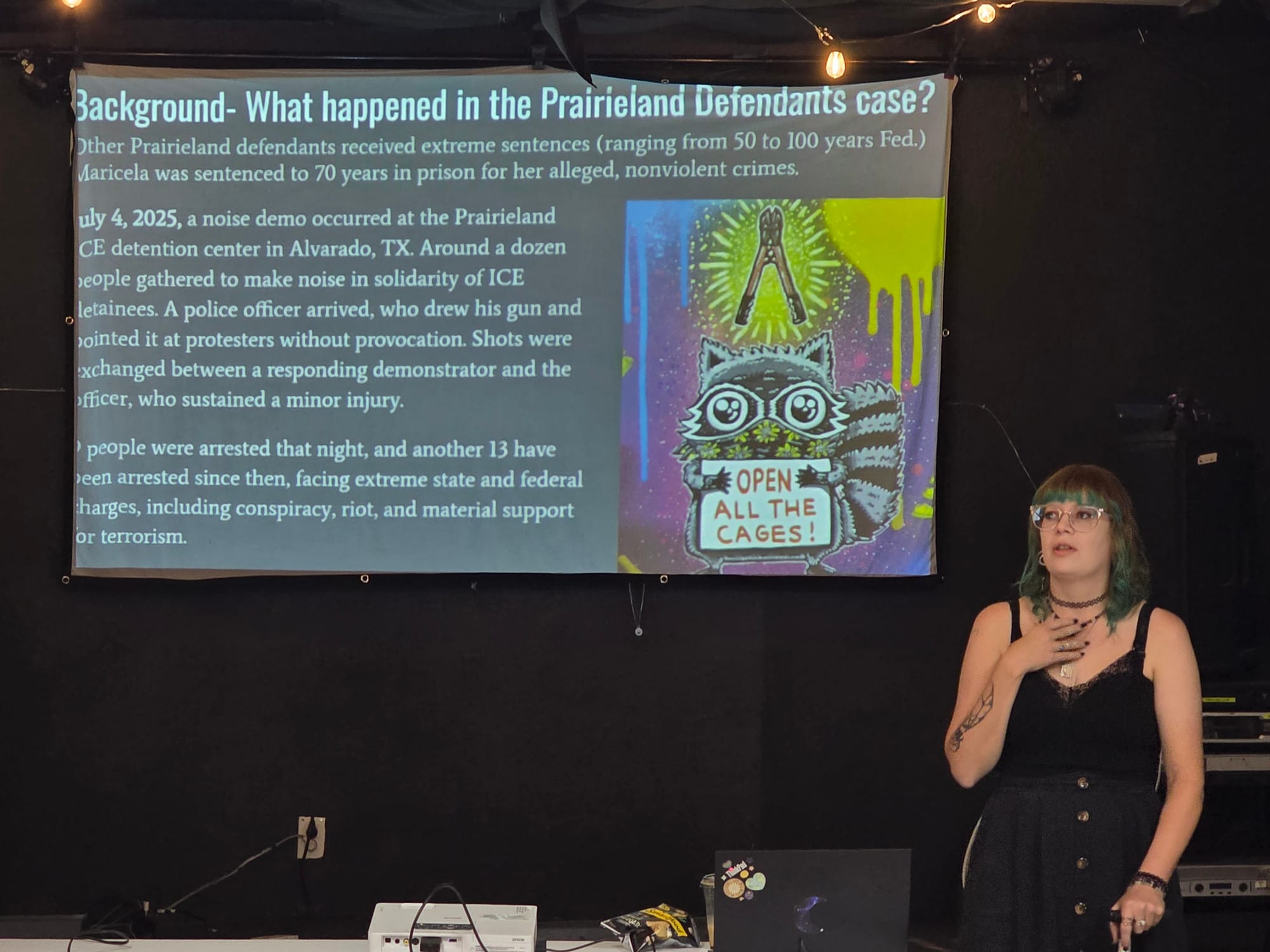
Mask moderated the one-day workshop titled "Zines are Not a Crime: Daniel 'Des Revol' Estrada and the Criminalization of Political Speech," where attendees learned about the tattoo artist, green card holder and teacher who was sentenced to 30 years in federal prison this past June.
His crime was moving a box of political pamphlets published by anarchists in 2010 from his partner's apartment.
On July 4, 2025, around a dozen people gathered outside the ICE Prairieland Detention Center in Alvarado, Texas, using fireworks and noisemakers to protest mass deportations and show solidarity with immigrants. The group became known as the "Prairieland Defendants."
Twenty-two people were ultimately arrested, including 11 who weren't at the scene, such as a driver who brought a protester to the demonstration but didn't participate himself. Benjamin Hamil Song was accused of firing a gun at a police officer who drew his pistol on protesters; the officer suffered a non-life-threatening neck injury and was released from the hospital hours later.
Song and others were initially charged with attempted murder. After Charlie Kirk's assassination, the Department of Justice added terrorism charges against two suspects, citing an executive order labeling the anti-fascist group ANTIFA a domestic terrorist organization; others were charged with "providing material support for terrorism."
Estrada's wife, Maricela Rueda, was one of the people arrested at the demonstration.
While Rueda was detained, Estrada, who wasn't at the protest, used his car to move a box of anarchist zines in her possession. Denton police then pulled him over at gunpoint; he alleges he was searched without a warrant and denied his Miranda rights.
Prosecutors cited the zines as evidence of Rueda's "ANTIFA cell" membership, though they weren't introduced at trial. Both were convicted of "conspiracy to conceal documents," with Estrada additionally convicted of "corruptly concealing a document or record." Other Prairieland Defendants received sentences ranging from 30 to 100 years.
Estrada is now held at a federal correctional facility in Adelanto, California, where his legal team is seeking an appeal.
"He's a poet and a teacher like me, and he also makes zines. I was like, 'Oh my gosh, this person thinks so much like me,'" Mask said. "When people get arrested, the natural reaction is to (ask), 'What did they do wrong? What are people saying they did wrong?' And in this case, there is nothing that is against the law at all. It's all protected by the freedom of speech."
The workshop included a statement from Estrada, published in July, following his sentencing.
"I was demonized, convicted, and sentenced to 30 years in federal prison for reading and possessing my books, zines, love letters, poetry, cute keepsakes, sketchbooks, and art," Estrada said.
The books and zines covered history, social movements, political philosophy, sexual trauma, antiracism, consent, overcoming addiction, ecology, and children's literature, Estrada said.
"It seems like we're entering a time when books and art are being considered a crime and a threat to democracy—enough of a threat to give an innocent person who did not commit any crime a 30-year sentence in federal prison," Estrada said.
In addition to providing background on the case, the workshop also covered previous attempts to censor speech, including book bans during the Nazi regime and the Red Scare. Organizers fear this case implies that printing, reading or possessing certain literature is evidence of a crime.
"It's a really important case to be aware of because in a free society, you should be able to publish criticisms of the authorities," Finger said. "If you cannot do that, you are not in a free society."
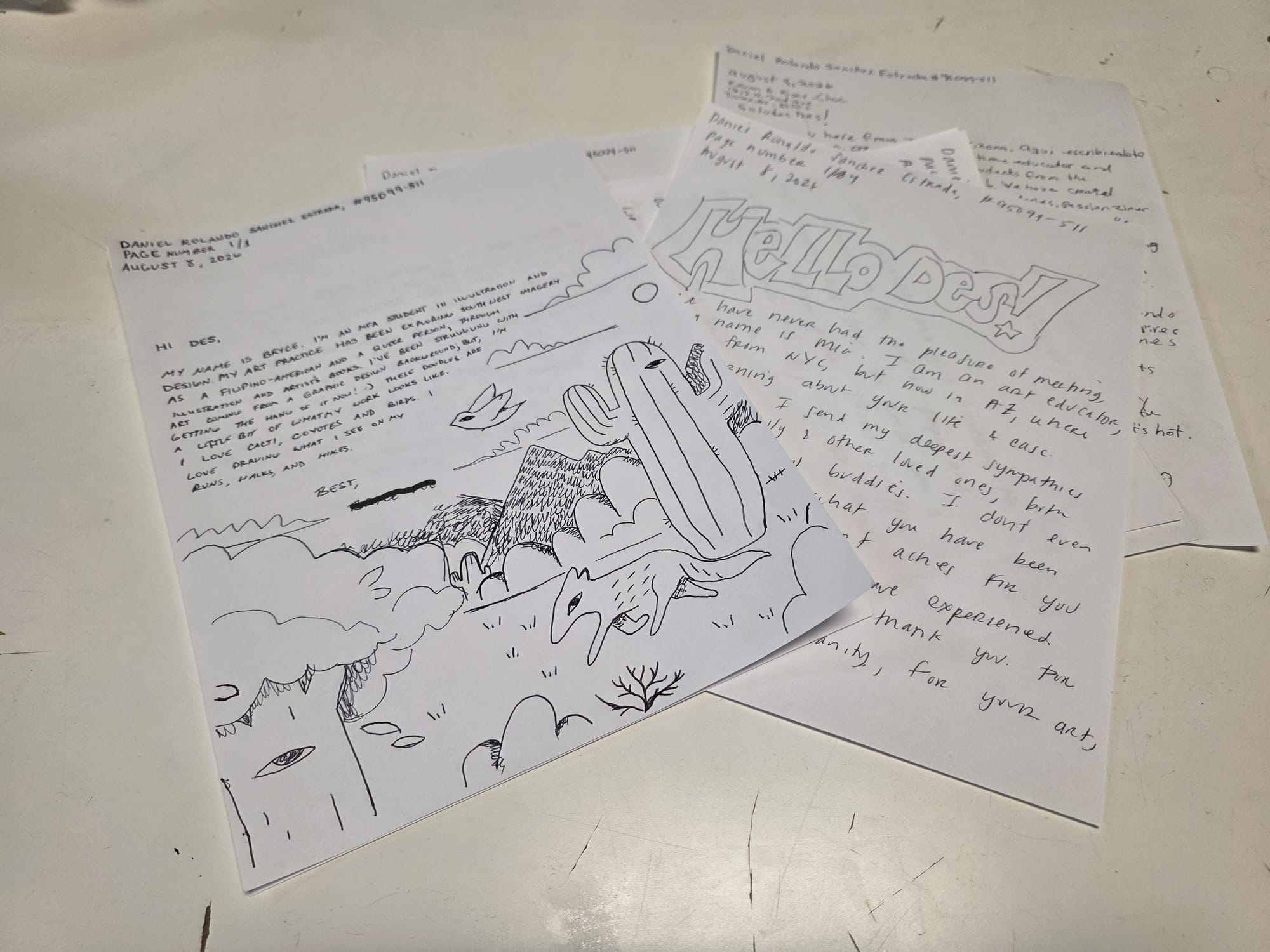
At the end of the workshop, attendees were encouraged to write a letter to Estrada about some of his interests, including vegan food, spirituality and nature.
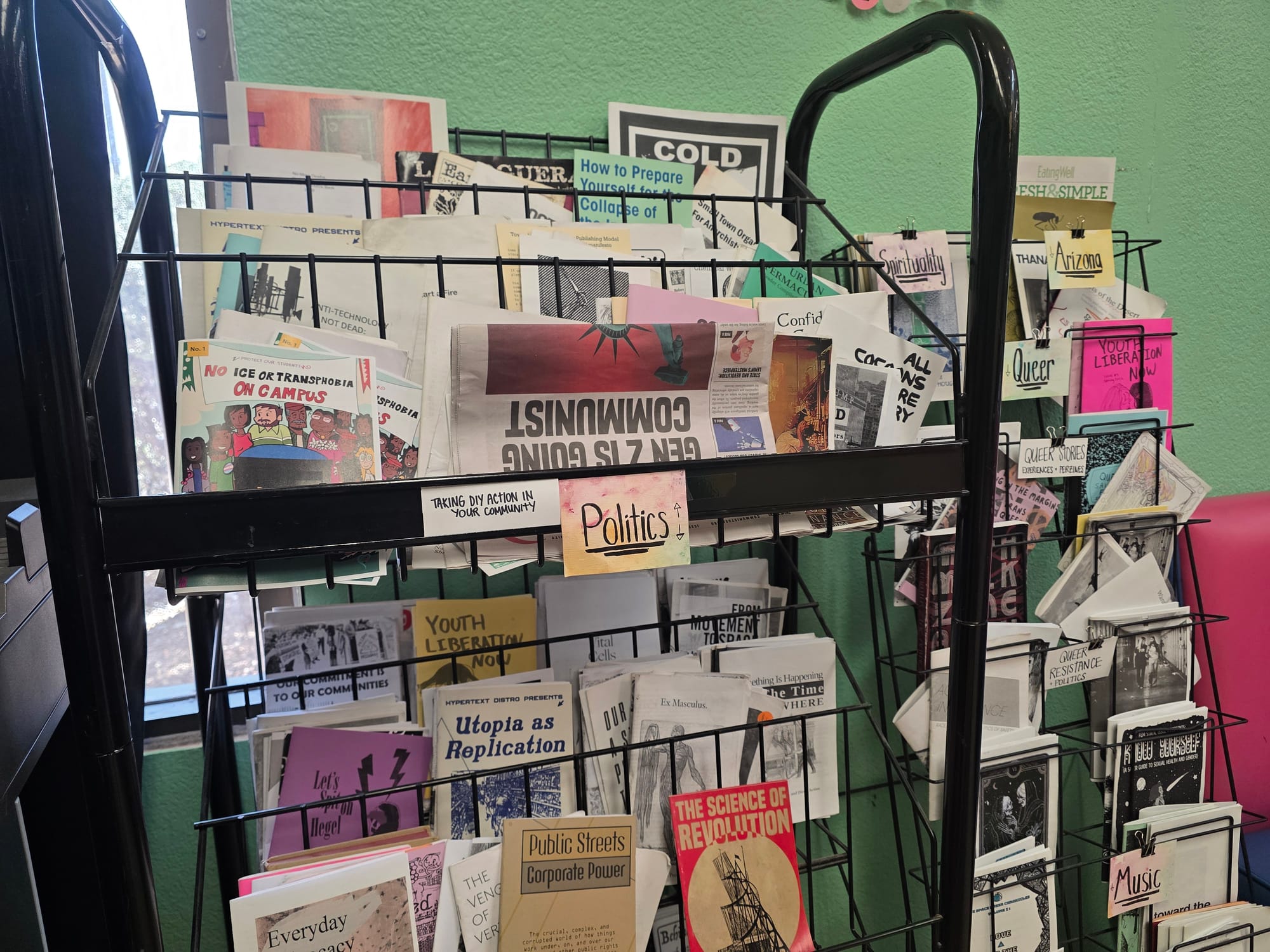
In an effort to expand the community's access to zines, Mask and Finger, alongside a volunteer delegation at Groundworks, have created a free Zine Library, where members of the community can borrow zines ranging in topics such as politics, the LGBTQIA+ community and subcultures.
"We were going to zine fests on the West Coast for many years, and we collected a ton of zines, I think around 300 to 400," Mask said. "In 2021, we donated them to Groundworks. It's also grown since then."
Mask and Finger are currently working on a Groundworks zine that will feature music, art and writing from volunteers and community members who visit Groundworks.
"It feels like we've come so far and built this like space where people feel accepted to say whatever thoughts they want," Mask said. "I love that."
Topacio “Topaz” Servellon is a reporter with Tucson Spotlight. Contact them at topacioserve@gmail.com.
Tucson Spotlight is a community-based newsroom that provides paid opportunities for students and rising journalists in Southern Arizona. Please consider supporting our work with a tax-deductible donation.


