Tucson volunteer seeks justice after ICE encounter
A Tucson rapid response volunteer was pepper-sprayed by an unidentified man at an April ICE traffic stop in South Tucson and spent weeks trying to file a police report before finally getting a case number.
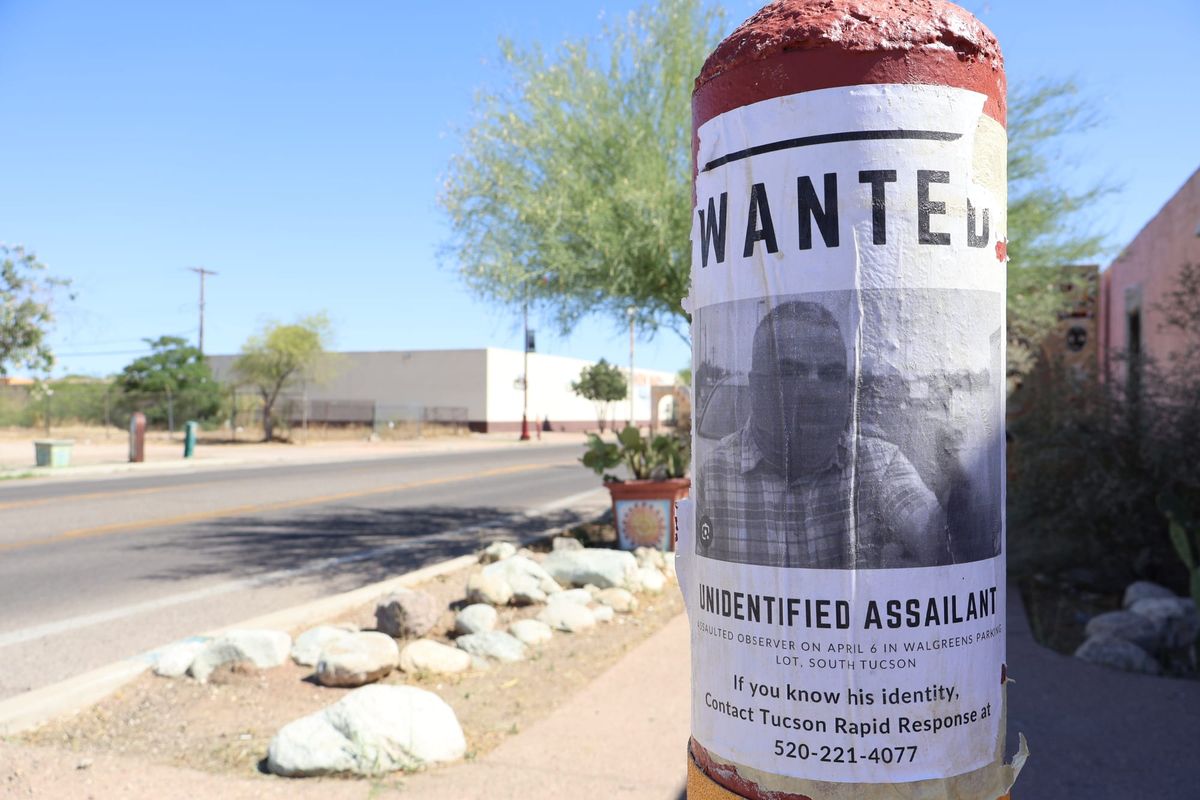
A Tucson rapid response volunteer pepper-sprayed by an unidentified agent during an April ICE traffic stop in South Tucson will address the city council today, after spending weeks trying to file a police report about the assault.
On April 6, at least three ICE vehicles were stationed outside the Walgreens on South Sixth Avenue and East 29th Street, conducting a traffic stop in the city of South Tucson.
Steven Davis, a volunteer who responds to local ICE activity to document vehicles, agents and actions during raids and traffic stops, arrived at the scene and began filming the encounter from a distance, according to a video of the incident.
"I was not obstructing agents or their vehicles," Davis said. "I heeded all commands. I was assured by other agents on the scene that I had the legal right to observe and document."
The video shows an unidentified man next to an ICE agent wearing a green face mask, a green plaid shirt and khakis. There were no identifying emblems on the man's clothes and he was holding pepper spray in his left hand. The individual does not identify himself at any point.
Another video of the incident shows the same unidentified man holding the spray aimed at a bystander standing against an ICE vehicle. He does not spray.
As Davis films from a short distance away, the unidentified man walks past Davis. The second time he walks past, the unidentified man sprays Davis in the eye, with Davis falling to his knees as a community member pulls him to the edge of the scene.
"The attack on me was vicious and it was unprovoked," Davis said. "My assailant shot it into my face from a range of about six inches. I crumpled to the ground in immense pain, unable to see, barely able to breathe. It was 30 minutes before I could open my eyes for more than a few seconds."
The same video shows the unidentified man spraying at another bystander then later walking up to Davis to check on him.
"You should be in shame!" one community member shouts in the video.
At least three South Tucson Police officers were on the scene during the incident. One video shows an officer pointing at Davis and speaking to South Tucson Police Chief Danny Denogean.
This is not Davis' first time observing ICE agents. In January, he recorded a video where five ICE agents stopped and surrounded a man in a truck outside of the Circle K on South Sixth Avenue and Interstate 10. Davis said the driver had just finished buying groceries at a local store.
"That was my fourth time (observing) and (documenting) ICE interactions with bystanders or with detainees," Davis said. "I've never had an agent approach me aggressively."
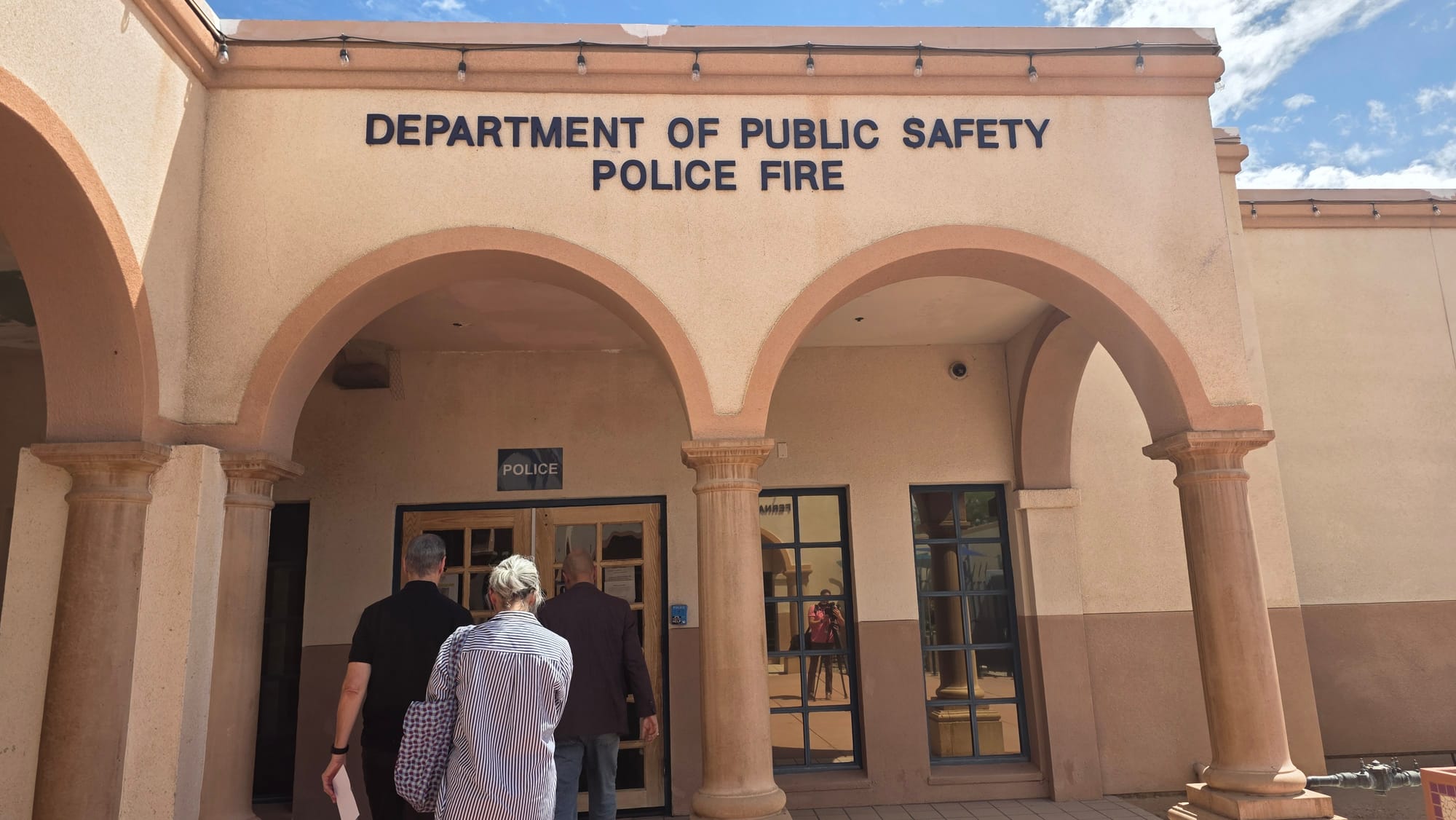
With video evidence of the situation, Davis first attempted to file a report of assault with the South Tucson Police Department on April 9. According to Davis, Denogean told Davis and his attorney that the South Tucson Police Department would not allow him to file a report, and that he must take it up with the Department of Homeland Security instead.
"If (the) South Tucson (Police Department) won't take a report for this violent and clearly illegal assault, I fear I have no recourse to obtain justice," Davis said in a news release.
Members of the media were invited to document Davis' second attempt to file a police report on April 30, alongside community members and Attorney Luis Campos.
"I felt horror," Campos said of the videos of Davis' encounter. "I felt horror because this is our community, and I would expect those kinds of things not to happen, and if they do happen, I would expect … law enforcement to actually investigate it."
The legal landscape, however, complicates what might otherwise seem like a straightforward case.
The Separation of Powers stated by the Constitution divides federal and local governments to their own jurisdictions, creating limits on state and local officials' ability to interfere with federal enforcement operations.
It does not prohibit state prosecution of federal agents for state law violations; an individual agent may be prosecuted for their conduct if there is evidence of breaking of state law.
"It was communicated to us that anything regarding federal agents has to go through the Department of Homeland Security through an internal complaint system," Campos said. "We would dispute that because if there is a violation of state law, which Mr. Davis believes there was …there is no absolute immunity. Federal agents can be held accountable, and that accountability starts in a police station with the filing of a report."
A key obstacle for both Davis and the police department is that the agent's identity remains unknown.
"It was emphasized this was a federal matter for DHS, but we don't even know if the assailant is actually a federal agent or not," Campos said. "That's why an investigation is imperative, so we can determine if this individual is a regular civilian."
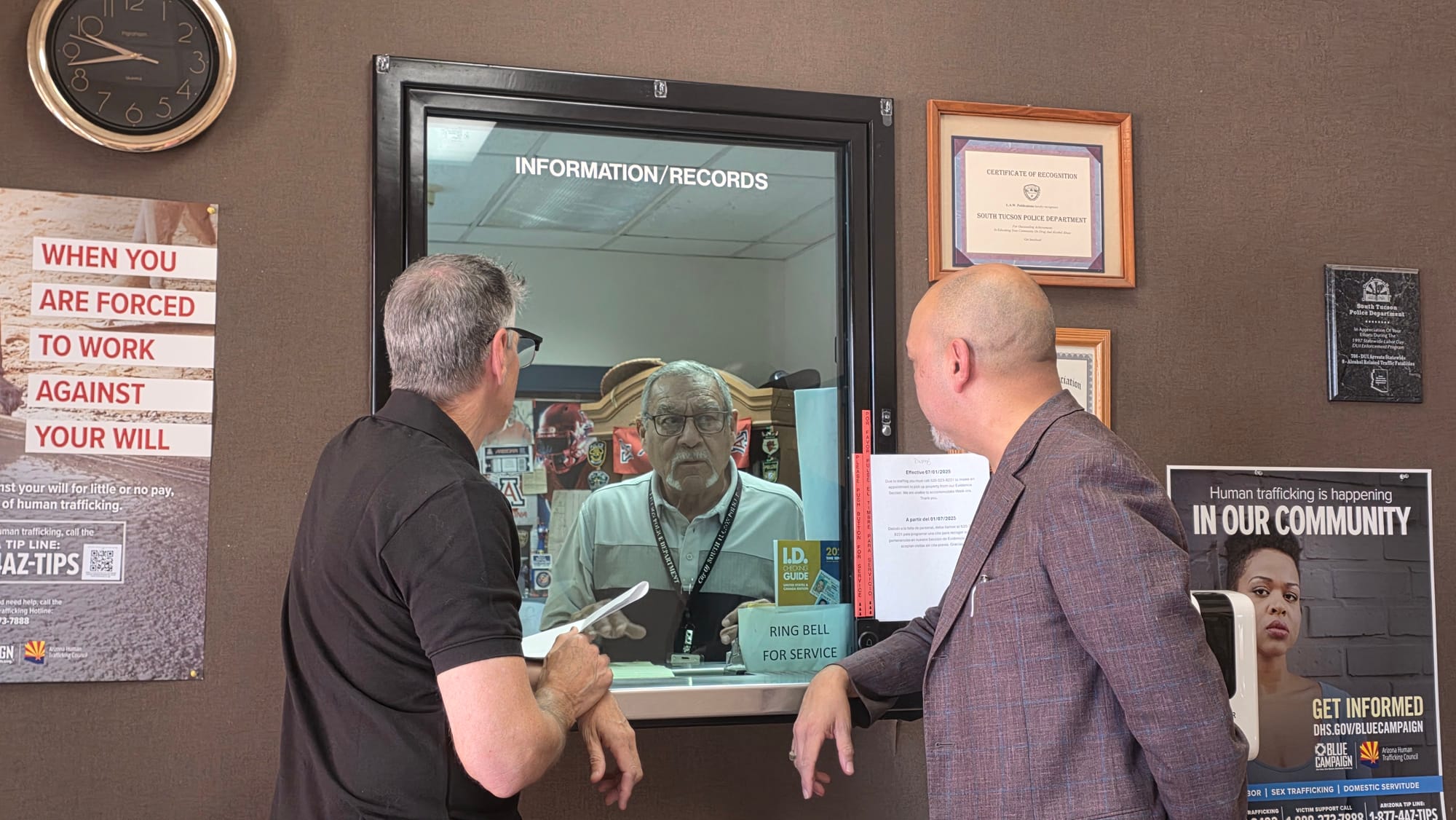
A clerk at the police department told Davis and Campos that only two officers were on duty and they'd need to wait for the next available officer to file a report. A few minutes later, a resident entered the office and was able to leave a report with a detective, who Davis and Campos were not told was at the station.
After an hour, two officers came to take Davis' report.
"Giving a police report should be the easy part. It shouldn't take two and a half weeks to get to talk to the department and (let) you give a police report," Davis said. "I have continued to observe (and) respond when our neighbors are being detained or questioned or seized in South Tucson, and in Tucson, and I will continue to do the job that I was trained to do for Tucson Rapid Response."
At the beginning of March, South Tucson's City Council unanimously passed two resolutions related to ICE. The first said that city property and resources cannot be used to help with federal civil immigration enforcement operations, but does not block court-ordered warrants, criminal law enforcement or cooperation with other agencies on criminal investigations.
The second establishes identification requirements for law enforcement operating within city limits. South Tucson Police must always identify themselves, display visible department markings on their uniforms, and are not permitted to wear face coverings during calls or routine enforcement.
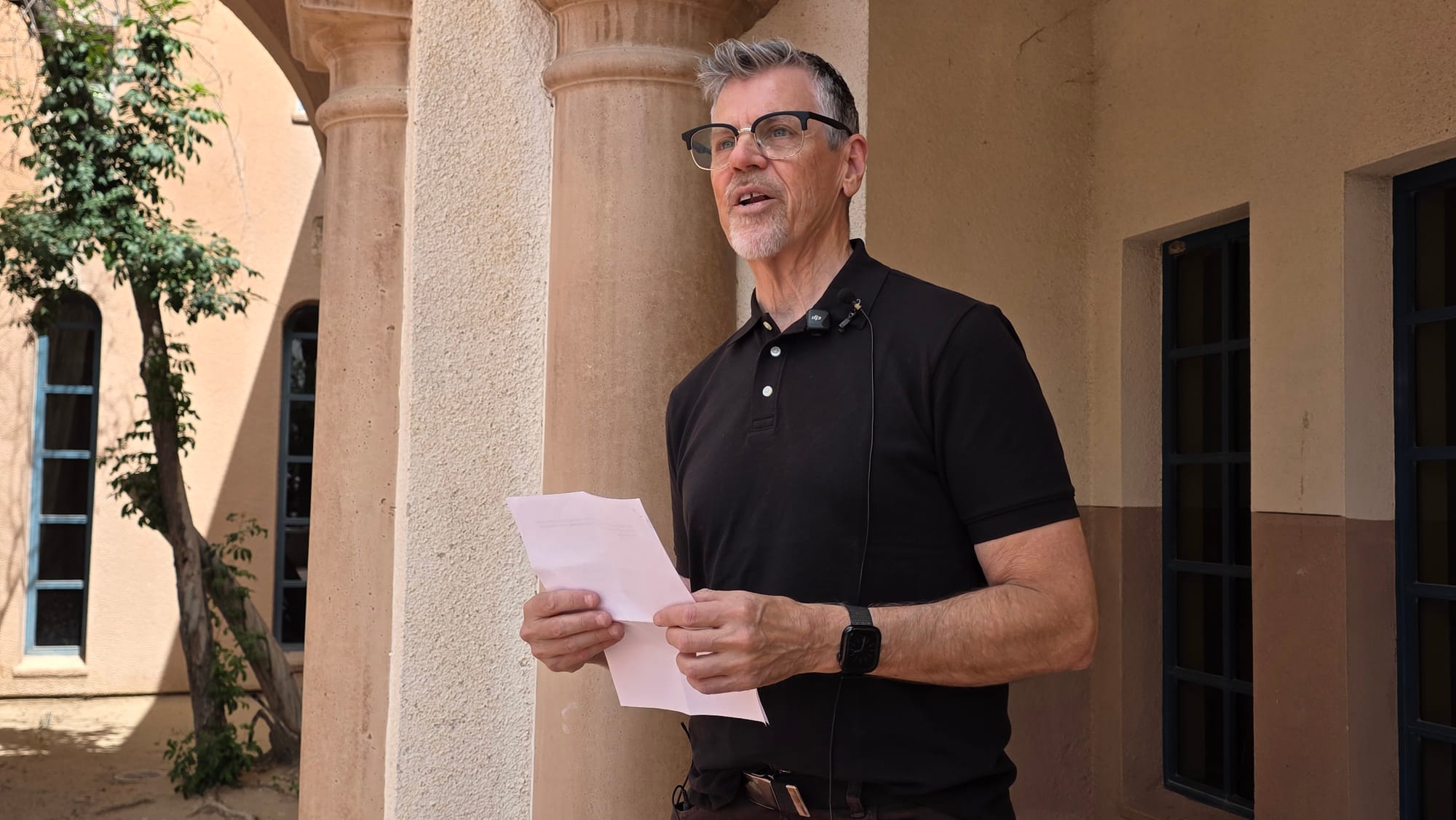
Davis spoke about his experience during the May 5 South Tucson City Council meeting.
"I want to know the name of the person who assaulted me," Davis said. "I want to sit across from him in a court of law. I want him to be held accountable for his lawless actions."
While Davis is determined to see his assailant face consequences, the path to accountability may be more complicated than a local courtroom.
"If (a person) believes they were harmed by a person in federal employment, the remedy is a civil lawsuit in federal court. If they want to press criminal charges, they would need to go to the US Attorney's Office," said South Tucson City Attorney Jon Paladini. "The Constitution provides … sovereign immunity for federal employees in state court … Even if the county attorney were to file some sort of criminal charge, it would automatically get moved to federal court and would be under the jurisdiction of the US Attorney for the State of Arizona."
Paladini said that from a practical standpoint, the local police department and county attorney lack the jurisdiction to pursue the case, even if some avenue for recourse exists.
"You could call over (the) Department of Homeland Security and try and get the identity of the person, but they aren't required to provide that," Paladini said. "Even if we were to get a search warrant from a state court, the federal government, because of the Supremacy Clause, isn't required to honor it."
Davis was undeterred.
"If there is still someone who believes that we do not have the right to redress when federal agents assault us, I have a simple message: It's time for you to move on," he said.
Topacio “Topaz” Servellon is a reporter with Tucson Spotlight. Contact them at topacioserve@gmail.com.
Tucson Spotlight is a community-based newsroom that provides paid opportunities for students and rising journalists in Southern Arizona. Please consider supporting our work with a tax-deductible donation.