Tucson to test car-free Halloween on Congress Street
Downtown Tucson will close four blocks of Congress Street to cars Saturday for Halloween, a pilot aimed at easing crowds and making streets safer.
Downtown Tucson’s Halloween crowd, an estimated 24,000 people last year, will get the street to itself this Saturday when Congress Street closes to cars for the first time.
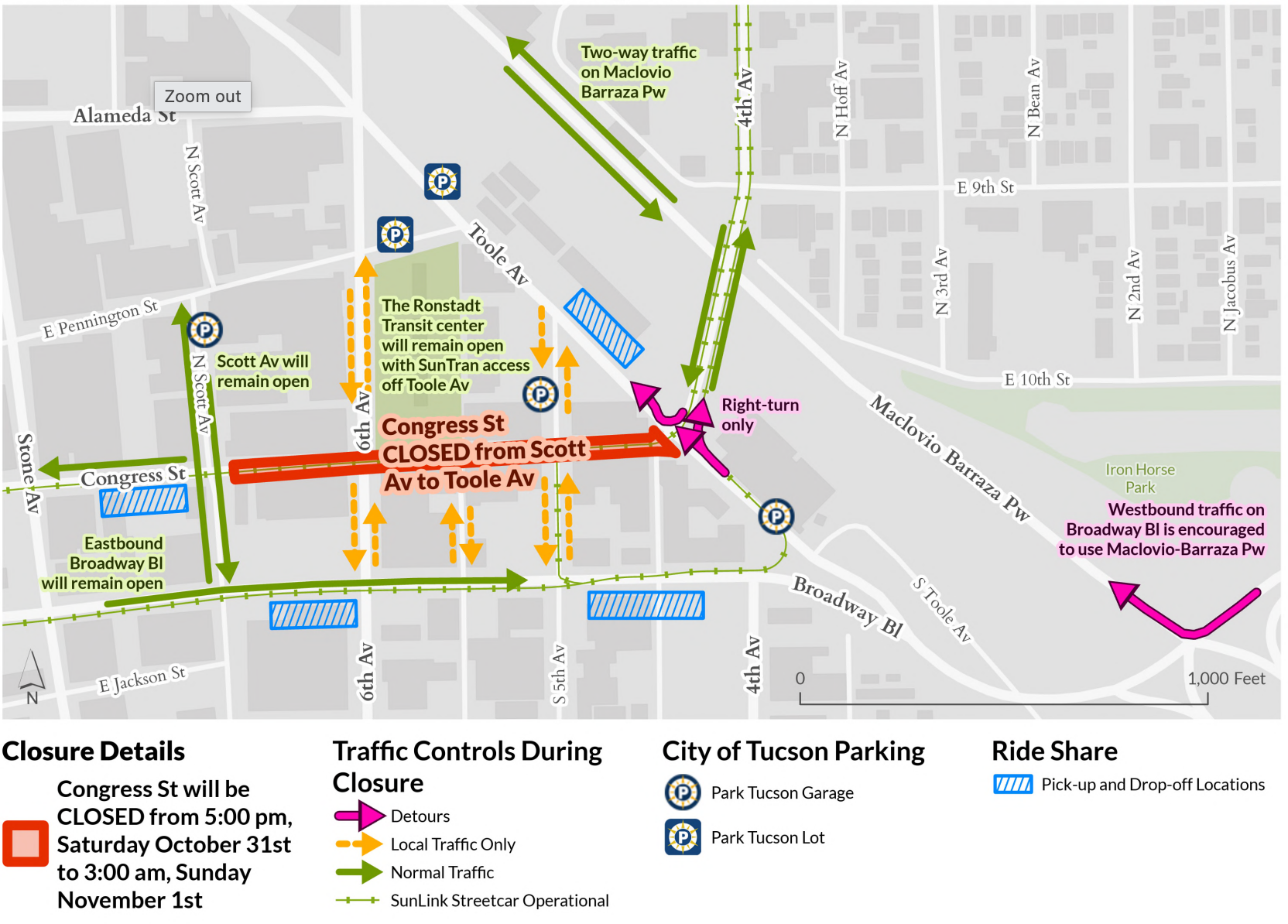
The effort was organized by the Downtown Tucson Partnership and the city, which announced earlier this month that Congress Street will be closed to vehicles from Toole Avenue to just west of Scott Avenue from 5 p.m. Saturday, Oct. 31, to 3 a.m. Sunday, Nov. 1.
“This pilot has been years in the making,” said Crystal Moore, president and CEO of the Downtown Tucson Partnership, in a news release. “With Downtown Links complete and our transportation and public safety partners aligned, we can finally put years of planning into practice. Our nighttime merchants have been instrumental in this effort, and their continued collaboration is helping us create a safer, more vibrant downtown for everyone.”
The move will allow the city and its partners to evaluate pedestrian movement and other transportation access along roughly four blocks of downtown’s entertainment district.
Restaurants, bars, venues and other cultural spaces in and around the pilot area will remain open, and the Sun Link Streetcar will operate on its regular schedule. The partnership plans to post more information in the days leading up to Halloween.
Moore attended the Oct. 20 Tucson City Council meeting, thanking the mayor and council for their support.
“As the evening progresses, downtown will transition into a full lineup of entertainment, including live music at 191 Toole, themed celebrations at the Rialto Theatre, Art Bar, Playground, Brandy Lion and Velvet Cowboy,” Moore said.
Join the people who keep Tucson Spotlight going.
The Treasury 1929, a one-of-a-kind venue built as a bank, will also be open to the public. The space has been renovated into a ballroom and bar inspired by the Roaring ’20s.
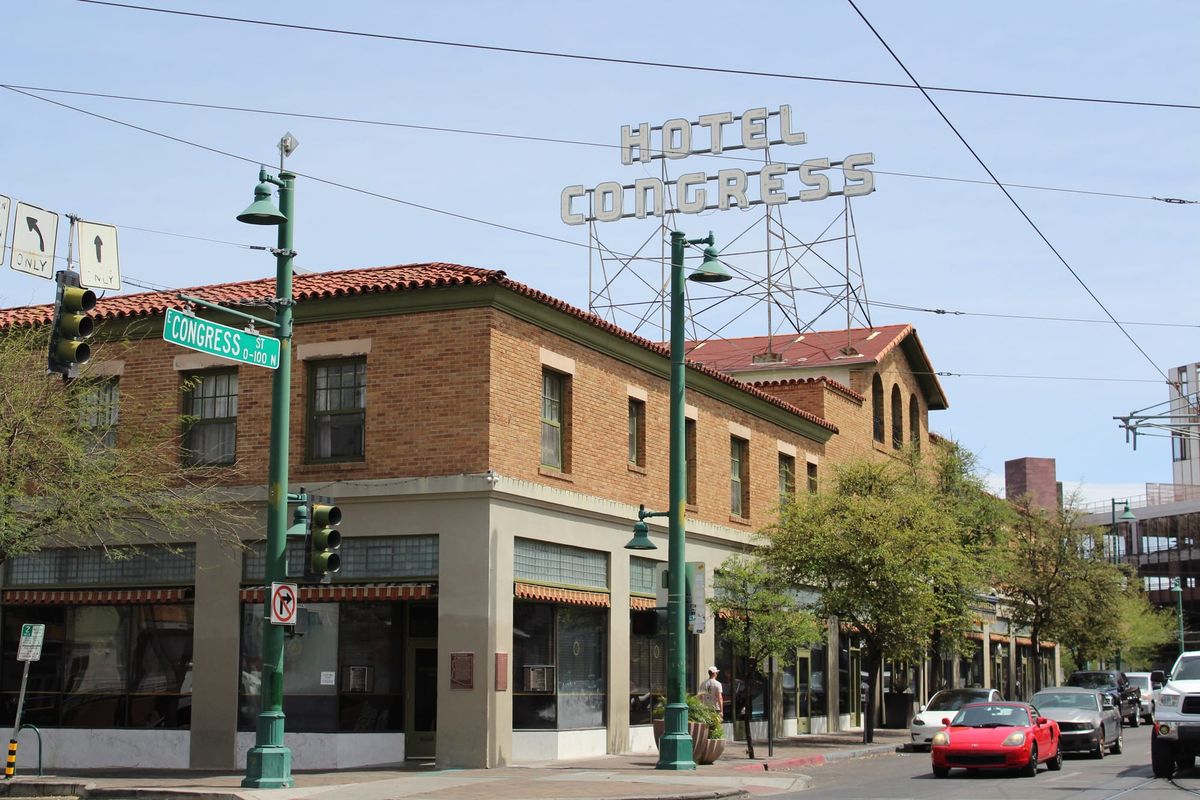
Hotel Congress is also getting in on the festivities by hosting Haunted Hotel tours during the day and celebrations in the evening.
The partnership has worked with the Tucson City Council to reroute traffic and ensure necessary safety measures are taken ahead of the pilot, with the partnership and the Tucson Police Department donating barricades and safety officials for the event.
Mayor Regina Romero said during the meeting that the pilot was the result of planning and investments made over many years by previous mayors and councils, from the streetcar to recent transportation safety initiatives.
“People are going to be like, ‘Well, we’re just talking about closing a street here, girl,’ but it really really is more than that,” Romero said.
The change was pushed after year-over-year evidence that foot traffic downtown reaches record levels every Halloween.
“We’ve seen it other Halloween nights before, where we get 40,000 visitors downtown, but have ten-foot sidewalks where people have to walk,” Romero said. “Where parents, children and individuals have to figure out how to keep themselves safe.”
During the meeting, the council unanimously passed Council Member Miranda Schubert’s motion directing the city manager to lay out a strategy for a phased approach to pedestrian-focused street closures downtown and elsewhere in Tucson, as appropriate.
“I want to make sure Halloween is the beginning of this conversation and not the end,” Schubert said. “Creating more pedestrian-friendly streets was a central priority of both of my campaigns for city council.”
She said she wants the city to think beyond one-night events.
“I don’t want us to limit our ambition to figuring out how to close Congress Street a few times a year. I want us to explore a progression,” she said.
The pilot is being billed as more than an entertainment event. It’s also considered a safety step in a city where pedestrian and bicyclist fatalities are a major concern. Smart Growth America’s “Dangerous by Design 2024” report ranked Tucson the third deadliest metro area in the nation for pedestrians, according to a Living Streets Alliance news release.
“I was hit by a car in a crosswalk on Congress. I know what it costs when our streets are designed for cars instead of people,” Vice Mayor Lane Santa Cruz said in the Living Streets Alliance release. “This pilot is a chance to show what downtown can feel like when we put safety first for the families who walk, bike and support our homegrown businesses.”
Local pedestrian advocates also welcomed the closure.
“I think this is an amazing step in the right direction,” said Matthew Boepple of Car-Free Tucson. “It’s a great reminder that people activate public spaces, not parked cars.”
Car-Free Tucson is a local action group pushing for more pedestrian-safe areas of Tucson.
“I’d love to see Fourth Avenue and Main Gate Square follow Downtown’s lead and explore how car-free streets can create a better experience for everyone,” Boepple said.
Pedestrian-friendly streets are good for business, according to Vanessa Cascio, executive director for the Living Streets Alliance.
“When we make it easier and more enjoyable for people to walk around, explore downtown, and discover local businesses, everyone benefits,” Cascio said. “Halloween on Congress is a great opportunity to see that in action here in Tucson.”
Quentin Agnello is a University of Arizona alum and freelance journalist in Tucson. Contact him at qsagnello@gmail.com.
Tucson Spotlight is a community-based newsroom that provides paid opportunities for students and rising journalists in Southern Arizona. Please consider supporting our work with a tax-deductible donation.