Tucson shop stitches together Indigenous fashion
Dot Pallane's Indigenous Fashions opened in January at Monterey Court, offering alterations and custom designs rooted in Yoeme and Southwestern culture.
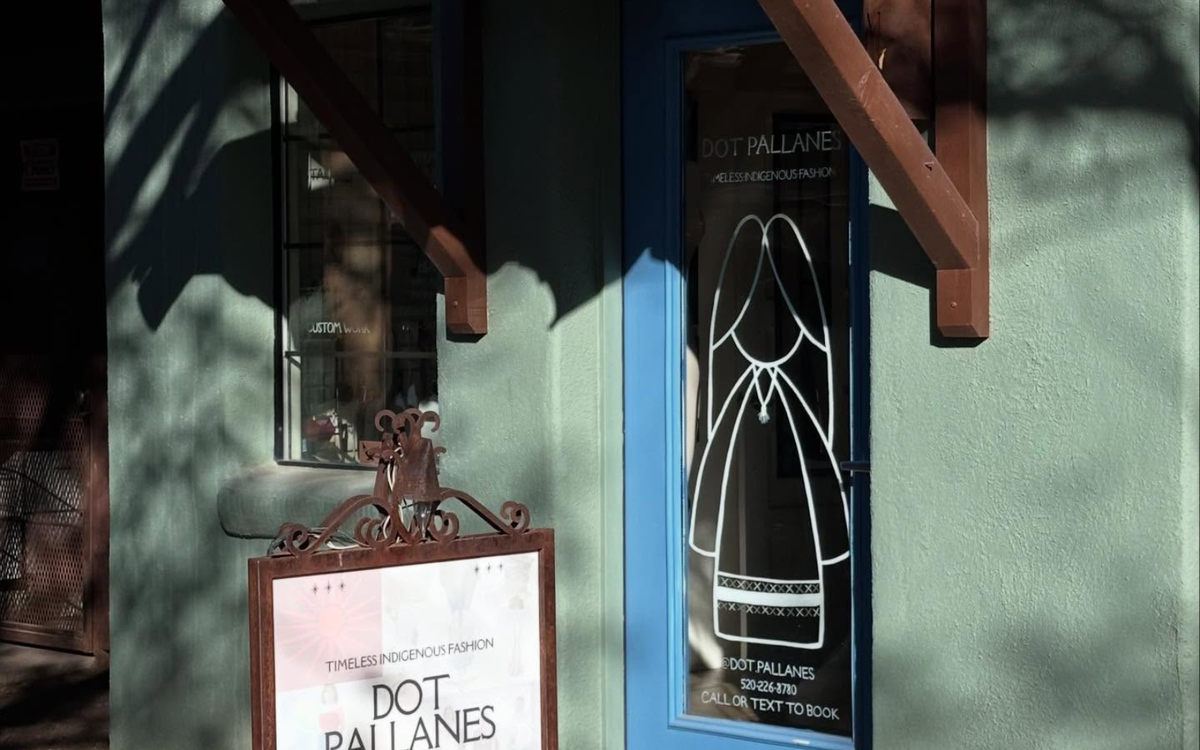
When Dorothy Pallanes returned to Tucson after a job fell through, they weren't planning to open a business; they just needed somewhere to sew.
That search led them to a casita at Monterey Court, and in January, Dot Pallanes' Indigenous Fashions opened its doors, offering the community everything from simple repairs to custom designs rooted in Southwestern and Yoeme culture.
"If you recreate that connection of caring for your clothes and with things that you spend money on, when you care about those things by doing tailoring alterations, you hold onto things a lot longer," Pallanes said.
After traveling the country for their education at Philadelphia's Drexel University, an internship in Houston, and work in Quebec, Canada, Pallanes moved back to Tucson when their position was eliminated.
"I drove my car out there," Pallanes said. "I gave all my belongings away and in the end, when that job was not long-term like I thought it was, it was a very big defeat. I (thought) okay, well, I'm just gonna go back home and relax. Go back to my home town. You know, figure out what I want to do next."
After returning to Tucson, Pallanes worked as a server to pay their bills and returned to sewing in their free time. But they quickly realized that their childhood bedroom wasn't the right environment for their ambitions.
"I never actually planned any of this to be what it is," Pallanes said. "I was just looking for a space to work."
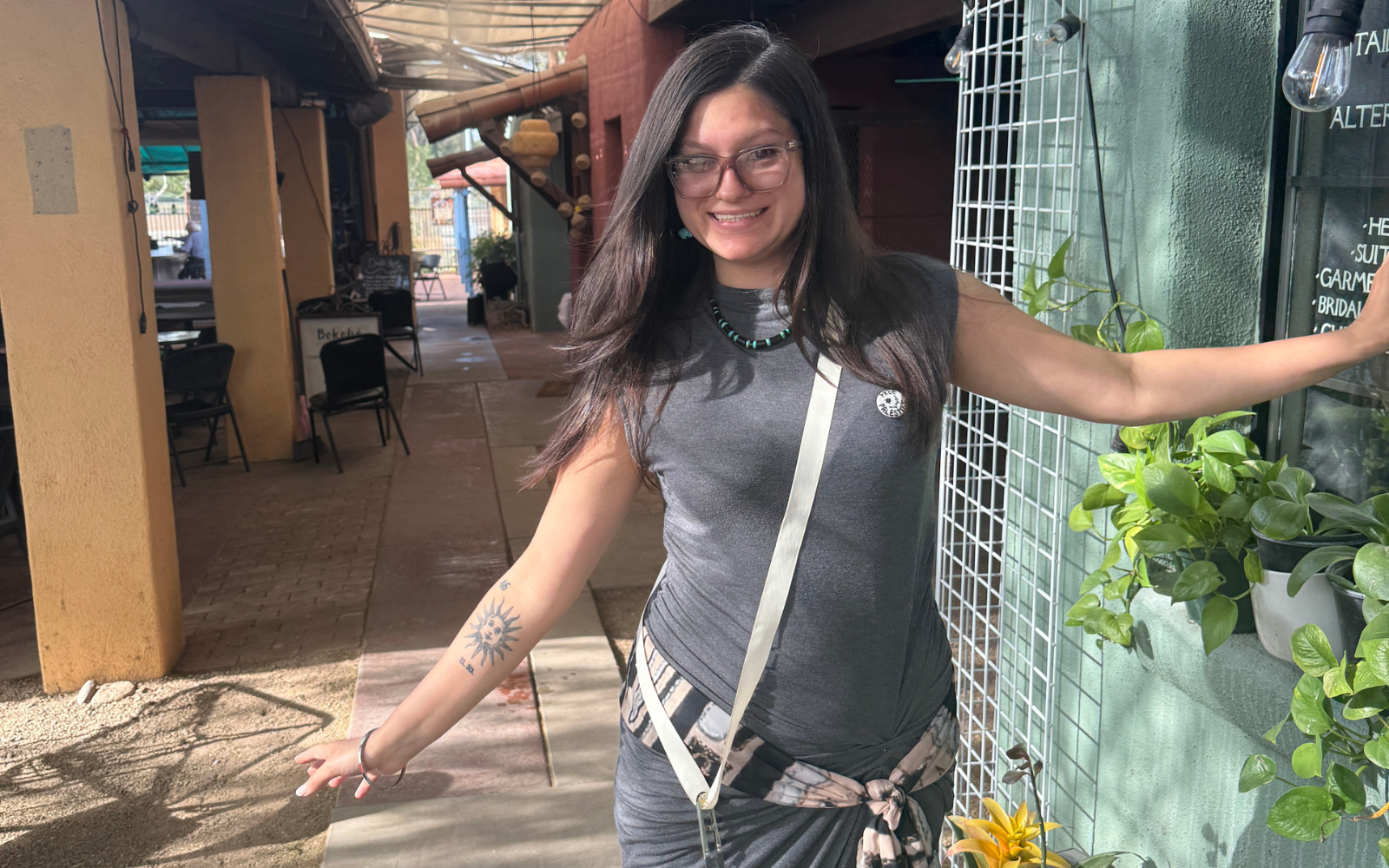
They were originally looking for a workspace and planned to attend markets to sell their clothing, but the tour of the casita marked the beginning of a fresh start.
"I saw my machine there," Pallanes said. "I saw people coming in for fittings and my brain mapped out what I wanted to do. And I was like, okay, well, now I'm just gonna have a store."
The store opened Jan. 9 and has received a positive response from the community. March and April booked up quickly with projects of varying degrees of difficulty.
"My hardest project was this leather biker vest," Pallanes said. "If you look at my machine, it's not meant to sew leather and denim together and patches on leather and denim, but I made it work. That machine is my workhorse, man."
Dot Pallanes' Indigenous Fashions centers the cultures of the Southwest, serving Indigenous people, those from multi-ethnic backgrounds, and communities shaped by migration and hardship.
"My customer, my store is Indigenous people, Southwestern people, people who come from multi ethnicity backgrounds, multi race backgrounds, who are either, experienced in hardships like migration and oppression, or they've witnessed it, and they've been community members to those people who have beared those hardships," Pallanes said.
Pallanes' family, members of the Yoeme tribe, has lived in the Sonoran Desert for many years, making the area a major influence on the store and Pallanes' designs. Their family includes a long line of jewelry makers, sculptors, designers, and artists.
"We use found items, recycled items. We upcycle, we source our own feathers and stuff. I don't like to make clothes that I don't feel connected to, that are not my identity or my family story. And I really am very careful about which indigenous understandings that I try to display on my clothes," Pallanes said.
Pallanes' designs feature specific colors or fabrics meant to express their pride and sense of place. Their store aims to be a space for expression and fashion as a way to connect.
One of Pallanes' collections was inspired by photographs of Yoeme migrants forced from their homes, who, even in displacement, wore exquisite linen blouses that spoke to their enduring cultural pride.
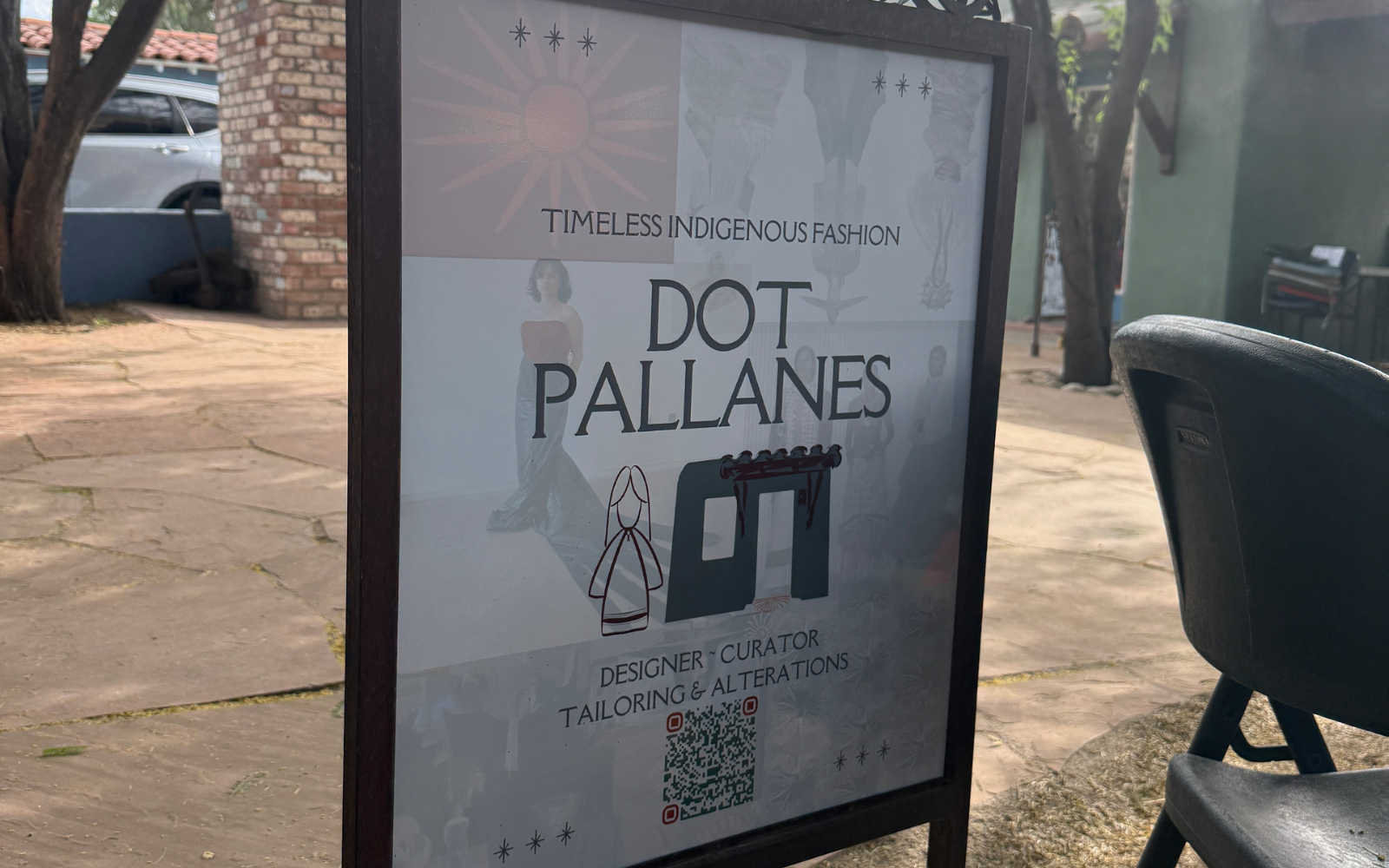
Given the early success of the shop, Pallanes has already begun planning an expansion.
"This year, I'm looking to really build a robust website where I can show my work better, sell stuff online, blog, campaign, those kinds of things," Pallanes said. "I would like to be more retail based. I would like to host fashion shows here."
Running the store solo has made it difficult for Pallanes to balance business demands with personal projects and community involvement.
"The only thing that I just wish I could do more is just make my own stuff more and do vending opportunities more and participate in mutual aid more," Pallanes said. "Mutual aid is really one of my core values. Providing the service lets me feel like I'm providing to the community, but I'd like to also provide that service for people who can't pay for it and can't come over here."
They're hoping to bring on an apprentice this year and provide hands-on training while helping to relieve some of Pallanes' workload. They also intend to start hosting classes at the store, including pattern-making and mending, in order to deliver a different type of fashion education, Pallanes said.
The intricate work requires dedicated hours, leaving less time for other opportunities, but Pallanes says the community's support has made it easier to bear.
"I want this to last. So, I just prepare every day I come in and say, 'I'm going to work as hard as I can, and then I'm going to go home and take care of myself,'" Pallanes said. "I'm really not solving cancer or something, but I think the grace that people have given me has really taken a big load off of me."
Pallanes hopes to achieve many milestones with their store while connecting with the community and adding value to Tucson's fashion scene.
"My dream is to bring back Tucson fashion, cause there's a history of that area," Pallanes said. "To provide a couture experience like custom made garments to people who aren't necessarily exposed to those kinds of things and bring indigenous fashion here, and make people love their clothes again."
Katlyn Vargas is a University of Arizona student and Tucson Spotlight intern. Contact her at katlynvargas@arizona.edu.
Tucson Spotlight is a community-based newsroom that provides paid opportunities for students and rising journalists in Southern Arizona. Please consider supporting our work with a tax-deductible donation.