Tucson selected for national violence prevention initiative
Tucson is one of five U.S. cities chosen for the Scaling Safety initiative, a national effort to reduce violence through partnerships between city leaders and community organizations.

The City of Tucson is expanding its community-based approach to violence prevention after being selected as one of five cities nationwide to participate in the Department of Justice-backed Scaling Safety initiative.
Scaling Safety is a national initiative between Just Safe and the Community-Based Public Safety Collective aimed at strengthening partnerships among community organizations and city leaders to interrupt violence and coordinate strategies and resources that complement police work.
Tucson was selected as a partner city in the Scaling Safety initiative in part because of programs such as the Safe City Initiative and the city’s focus on addressing the root causes of violence.
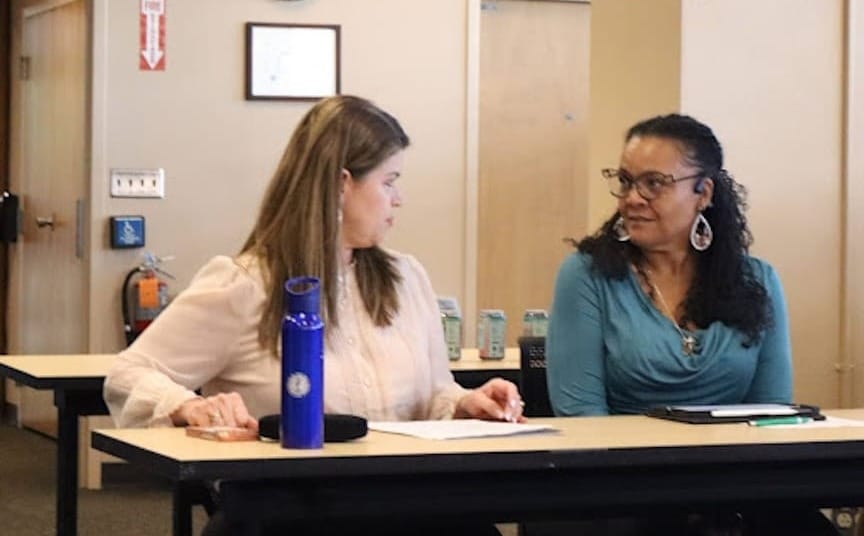
“Scaling Safety was created and is being implemented to expand and strengthen community-based safety strategies that are proven to prevent violence, support victim survivors and center those most at risk of experiencing harm,” Organizational Development Director Shundrea Trotty said during a March 5 news conference. “Our work begins with a simple understanding: Safety does not happen through one system alone. It happens when prevention, intervention and enforcement work together.”
Mayor Regina Romero highlighted the work done by the city’s Office of Violence Prevention and Intervention, the Violence Interruption and Vitalization Action program and the Safe City initiative, saying those efforts were key in the city’s selection.
Romero noted a sharp increase in violent crime from 2023 to 2024. That cycle of violence is one city officials say they are trying to interrupt.
“The biggest predictor of future violence is being a victim, a witness or involved in current violence," said Tucson Police Department Violence Prevention Coordinator Brittany Peterson. “And often, your risk of being a victim or perpetrator is interchangeable.”
Romero pointed to several local nonprofits that have joined the city in its efforts, including Flowers and Bullets, Boys to Men and Goodwill of Southern Arizona.
“Violence prevention is a shared responsibility, and Tucson is leading in the county with this collaborative effort with our community programs with law enforcement, local businesses and nonprofit organizations,” Romero said.
Flowers and Bullets Collective co-founder Jacob Robles spoke about his group’s work over the last 14 years. Flowers and Bullets works in communities by stewarding 9.5 acres of community farms and promoting traditional cultural practices, art and sustainability, which members say are tools in the fight against violence.
“We’ve noticed and we truly believe that these tools are essential in creating safety in our communities,” Robles said. “We’ve noticed that the connections we’ve built with our neighbors, the relationships that we’ve built have naturally added to public safety in general.”
Boys to Men Tucson CEO Erica Smith said her organization’s goal is to provide mentorship and build relationships for boys, men and masculine-identified individuals. Because men face some of the most severe outcomes related to violence, incarceration, school discipline and untreated mental health challenges, the organization works to equip them with tools to address those issues.
Boys to Men uses restorative mentoring circles to create environments where participants can build emotional skills and form relationships with trusted adults.
“We ground our work in the socio-ecological model because we recognize that prevention must happen across multiple levels,” Smith said. “Individual relationships, peer groups, schools, families and people in our community.”
The city’s collaboration with Goodwill of Southern Arizona was bolstered by two Department of Justice grants and two Tohono O’odham Nation grants.
Goodwill of Southern Arizona Vice President of Community Engagement Lance Meeks spoke about learning how the communities he works with have been impacted by violence over many years and the strategies police have used to address those issues.

He said the work has helped direct referrals to police when appropriate while also giving officers opportunities to build relationships within the community. Meeks added that the experience helped their team learn and grow while underscoring the importance of hiring people from the community with lived experience.
“We have lost a lot of young people in this community to gun violence,” Meeks said. “We felt this was an opportunity to continue to make an impact in our community.”
City of Tucson Community Enrichment Coordinator Isaac Durgin spoke about growing up in South Tucson, recalling a time when a friend of his, a 16-year-old father who lived in his neighborhood, died.
Durgin, who was young at the time, said he and his friends grabbed their guns with the intention of attacking another neighborhood they believed was responsible.
But when he spoke with the family of his deceased neighbor, he learned the man had died of a drug overdose. Durgin said that kind of assumption reflected a mentality in his neighborhood that helped fuel the cycle of violence.
“I’ve buried a lot of dudes, I’ve been doing prevention work for the last 20 years, and you know what’s crazy? All of the things I’ve seen and it’s still out there. It’s still happening,” Durgin said. “I know I’ve helped individuals and I’m grateful, but it’s still, to me, too much.”
Durgin said the institutional response to violence in his generation was to hand down decadeslong sentences as part of large drug sweeps, which he said happened to many of his friends before they turned 18.
“And you know what happened after that? The drugs continued, the violence continued,” Durgin said.
He said he carried deep-seated skepticism about the system into his current job but has been encouraged by seeing the organizations he’s worked with make a positive impact on the community rather than simply reacting to violence or drug dealing. He said he hopes sharing his own journey and how he changed from his youth will serve as an example for friends from that era.
“I am a true believer in investing in community-based violence interruption initiatives," Romero said. “I believe that prevention works, that investment in young people go to public education bases, and that nonprofit organizations that work with young people will help us create an even safer, more vibrant city for everyone.”
Ian Stash is a journalism major at the University of Arizona and Tucson Spotlight intern. Contact him at istash@arizona.edu.
Tucson Spotlight is a community-based newsroom that provides paid opportunities for students and rising journalists in Southern Arizona. Please consider supporting our work with a tax-deductible donation.