Tucson residents push for stricter data center rules
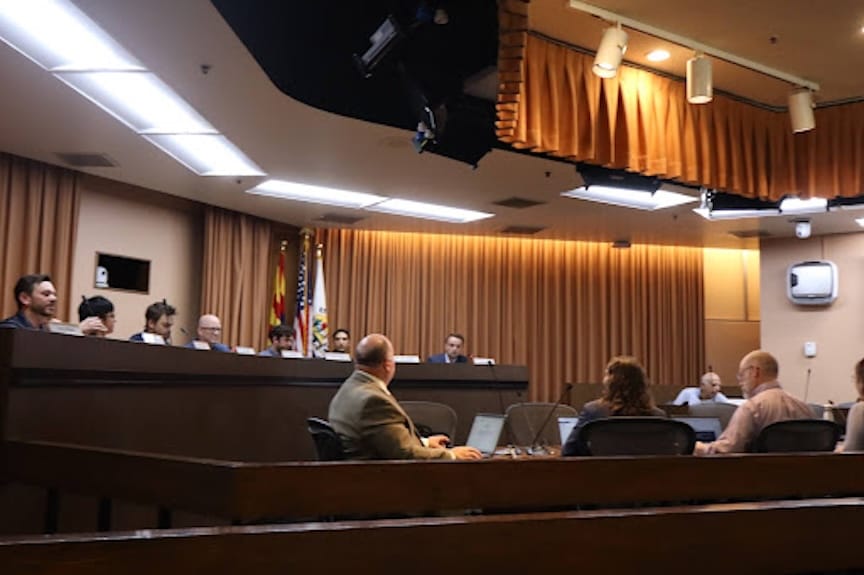
Tucson residents who spoke at a June 3 Planning Commission hearing on proposed data center regulations said the rules don't go far enough, as the city works to get ahead of large-scale data center development.
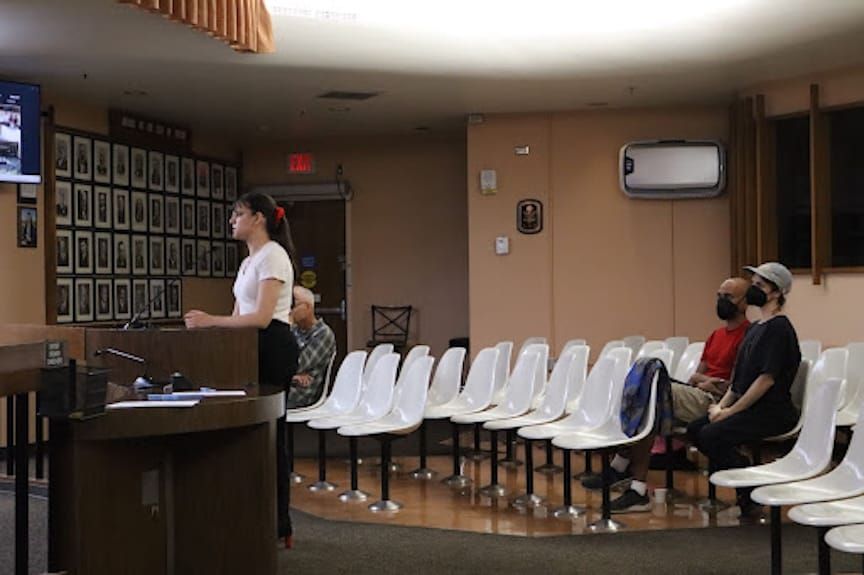
Tucson residents who spoke at a June 3 planning commission hearing on proposed data center regulations sent a clear message: the rules aren't strict enough.
The City of Tucson Planning Commission held a public hearing on a new set of regulations it is considering to address data centers within the city limits, with residents overwhelmingly saying more needs to be done.
The commission made no final decisions Tuesday, but voted unanimously to incorporate public comments and key energy updates into its next set of recommendations to the city council.
While there are currently no large-scale data centers in Tucson, they are technically permitted under city code. The city opted against an outright ban, saying such a prohibition would likely be overturned in court.
The commission instead opted to develop regulations addressing water and energy use, treating data centers as an inevitability and seeking to get ahead of any future development on the city's own terms.
Under the proposed regulations, data centers would require an extensive public review process rather than a standard land use permit, a requirement currently reserved only for power plants.
The proposed regulations address a range of concerns, including noise limits at the property line, battery backup requirements during power disruptions, proof of adequate water and power supply, disclosure of energy mix, a ban on potable water for cooling, and landscaping requirements including 40-foot enhanced buffers — doubled from 20 feet — with parking reduced to 40% lot coverage and the remainder replanted with native vegetation.
The city defines a large-scale data center as any facility or portion of a facility on one site under single ownership with a gross floor area of at least 25,000 square feet and energy usage exceeding 20 megawatts. The threshold was lowered from 50 megawatts after staff received feedback that the original figure was too high.
Tucson Spotlight trains the next generation of Southern Arizona journalists and publishes their work free for everyone. No paywalls, no corporate backing. Just readers who believe this community deserves better local news.
Under current zoning code, smaller data centers are treated as storage use, while larger ones face no regulations at all. The city council requested the code be amended to address that gap in August 2025.
Shortly after, the city passed a large quantity water users ordinance regulating water usage for high-volume consumers, including data centers. The ordinance currently identifies about six large water users, all of which are resorts and golf courses using reclaimed water.
The planning commission began studying possible regulations in September 2025, holding community meetings in February and March. Staff said residents consistently raised four concerns: whether Tucson has enough water to support data centers, the potential strain on the power grid, outright opposition to any data center in the city, and the belief that a proposed 400-foot buffer from residential areas was not sufficient to protect public health or limit noise.
Under the current planned recommendation, all property owners within half a mile of a proposed data center and all neighborhood associations within two miles would be notified, up from 400 feet and one mile respectively. The process would also include a neighborhood meeting and a city council decision.
Other recent changes include a 50-foot maximum height limit, a doubled separation requirement from residential areas to 2,640 feet, and an increased buffer from commercial and office zones from 600 to 1,000 feet.
Nick Maya, project manager of the Coalition for Sonoran Desert Protection, said his organization strongly supported the code amendments but wanted them to go further, including adding language governing decommissioning of data centers.
"It's really cool to have a nice seat on a dais where you get to make decisions and have power and say that you resisted the forces of evil, but other people have to put their bodies on the line and other people get jailed and other people are going to have to do a lot more in the future depending on your choices," resident April Putney told the commission. "So think, I hope, about the rest of the people and how it's going to impact them beyond your decisions, your very safe decisions here today."
Vivek Bharathan cited what he called "overwhelming" community opposition to large-scale data centers and said he supported changes including the reduction in the energy threshold for the large-scale definition.
Bharathan also took issue with the notification requirement, saying it should extend beyond property owners to include renters, who he said have an equal right to know about planned development near their homes.
"As we heard and as we continue to hear about the impacts, whether it's noise, air pollution, we keep seeing study after study, week after week the increase in the diameter and range of the impacts in terms of health and wellness of people who would live in the vicinity of these things," Bharathan said. "So we maintain that we don't want these things here."
Another resident, Dylan Jorgensen, said the roughly 50 jobs a data center would create amounted to a minute amount of job growth for a city the size of Tucson and was not worth the devastation that would come with its development.
Adria Brooks, who served on the Technical Advisory Committee to help develop data center land use code, raised several concerns about the current planned regulations, the first being the requirement permitting only natural gas generators.
Brooks said she feared the language would require a fossil fuel backup rather than allowing for low-emitting generation or storage alternatives.
Brooks also called the battery-first backup language "meaningless," saying data centers already operate that way and that batteries would not last long enough to matter. She also disputed the proposed prohibition on load shifting, arguing that the inability to shift loads is what drives up energy bills for ratepayers rather than reducing them.
Brooks proposed three changes: requiring backup generators to prefer low-emitting generation over high-emitting alternatives, mandating two hours of backup system use before switching to high-emitting generation, and requiring data centers to be able to disconnect from the grid at the request of the serving electric utility.
Commissioner Valerie Lane acknowledged the community opposition but questioned how much zoning alone could address the problem.
"One thing that's become really clear to me over the last couple of months getting familiar with what we're doing here is that the public has spoken pretty unequivocally with one viewpoint. I am surprised. Usually on this commission we get a pretty split difference in public opinion about a specific issue," Lane said. "This issue is unanimous. Our community does not want this."
Lane noted that some data center builders have entered into community development agreements in other cities, which she compared to a tax, and suggested such agreements in Tucson could be used to fund benefits like residential solar installation or graywater harvesting.
Ian Stash is University of Arizona alum and freelance journalist in Tucson. Contact him at ianjgs16@gmail.com.
Tucson Spotlight is a community-based newsroom that provides paid opportunities for students and rising journalists in Southern Arizona. Please consider supporting our work with a tax-deductible donation.