Tucson group maps 20 years of migrant deaths at border
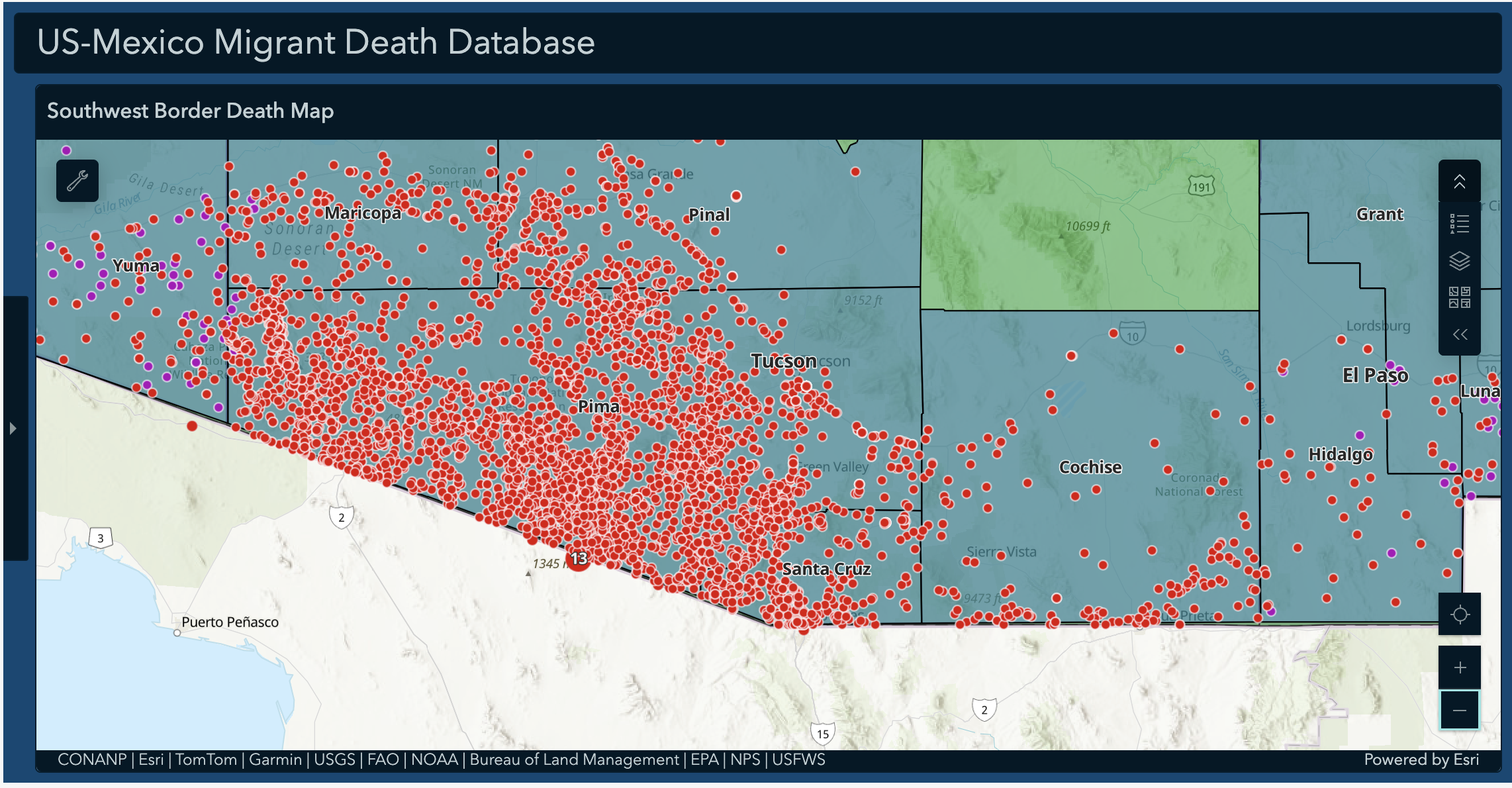
No More Deaths has released a database mapping migrant deaths along the Southern Arizona border from 2002 to 2025, even as new federal policies have quieted border activity and complicated data collection.
A Tucson-based humanitarian group has released a database mapping more than two decades of migrant deaths along the Southern Arizona border, even as new federal policies have made it harder to track what is happening on the ground.
No More Deaths' database of migrant deaths draws from public records from 2002 through April 2025. No More Deaths, like many community-driven aid groups in Tucson, was created in response to stricter border policies in the late 1990s.
The group started in the early 2000s, but the majority of its core values stemmed from the Sanctuary Movement of the 1980s. The group's mission is to end migrant death and suffering along the border primarily through civil initiatives, helping communities work together to ensure fundamental human rights.
Its on-the-ground aid involves leaving food and water at trail checkpoints, operating search and rescue missions and running hotlines to help families of missing loved ones.
"I don't want to live in a world where people die crossing borders," said Monica Ruiz-House, media coordinator and volunteer data organizer for No More Deaths.
Ruiz-House has been with the group for three years. She has hiked thousands of miles in the desert, is trail-certified and splits her time between Tucson and Chicago, where she works as a data fellow for an anti-deportation collective.
"There is something uniquely horrific and unfathomable about a border policy that hurts people in the ways that I've seen people hurt," she said. "I think when you recognize that every person on that database that we've collected is a person with a story and a name and a family. It does break your heart and I think it should break your heart."
The database shows a dip in reported deaths, she said, but volunteers are still searching and collecting data as new federal policies have quieted activity at the border.
Tucson Spotlight trains the next generation of Southern Arizona journalists and publishes their work free for everyone. No paywalls, no corporate backing — just readers who believe this community deserves better local news.
The mapping process begins with volunteers conducting on-ground searches and making public records requests.
When a call comes in, the caller typically provides a general location where their loved one was last seen or in contact, and volunteers grid search the area.
If volunteers recover the person's body, they call the appropriate sheriff's office to arrange for transport.
In mapping these recoveries, volunteers start by filing public records requests with county coroners, justices of peace and medical examiners. They read through the case notes, which contain information including age, gender and a narrative of the incident, or at least what the medical examiner believed caused the person's death. After cleaning the data, it is entered into a spreadsheet.
Ruiz-House and fellow volunteer Bryce Peterson built the most recent database, drawing on methodologies Peterson developed while working on the El Paso Sector Migrant Death Map and the Humane Borders Red Dot Map.
"I think it's really important that it's all volunteer-run and volunteer-based," he said.
No More Deaths' map includes variables including potential reasons for crossing borders, specific policies that could have led to each incident and the presence of Customs and Border Protection.
"No More Deaths is interested in researching how Border Patrol is directly involved in deaths," Ruiz-House said. "I think there's indirect involvement, when you consider structural violence, when you think about border militarization. But there's also direct involvement that I think a lot of official databases don't capture."
CBP did not respond to requests for comment about the data.
In 1998, U.S. Border Patrol implemented the Prevention Through Deterrence policy, which aimed to make border-crossing so dangerous that people would not want to make the journey. The government closed off popular and accessible crossing points, pushing migrants into more remote, environmentally hostile areas.
The policy was not successful in deterring border-crossers. Instead, it resulted in sharp spikes of dehydration and exposure-related deaths.
"I think that is possibly one of the most discouraging things about doing humanitarian aid work," Ruiz-House said. "In some ways, the band aid, it actually doesn't fix this awful system of prevention through deterrence, that is funneling folks through these really dangerous and rural areas."
The consequences of that policy were still playing out years later when Peterson joined the effort. Peterson began working with No More Deaths in Southern Arizona in the summer of 2022.
"That summer ended up actually being the most deadly summer in the area on record ever by a longshot," Peterson said, pointing to the more than 800 deaths documented along the U.S.-Mexico border.
Even so, the numbers tell only part of the story.
The data does not always accurately reflect what is happening on the ground, and their work is still not nearly comprehensive enough, according to Ruiz-House.
Underreporting and cases slipping through are not uncommon, and thousands of recovered bodies have yet to be identified.
"A lot of people are asking, what's going on at the border?" she said. "It's actually very quiet. We've seen, like an, almost an internalization of borders, if you consider the raids that are happening in Chicago, like the raids that have happened in LA. In some ways, like the border has been brought to them."
That shift is reflected in the data coming out of the county's forensic office.
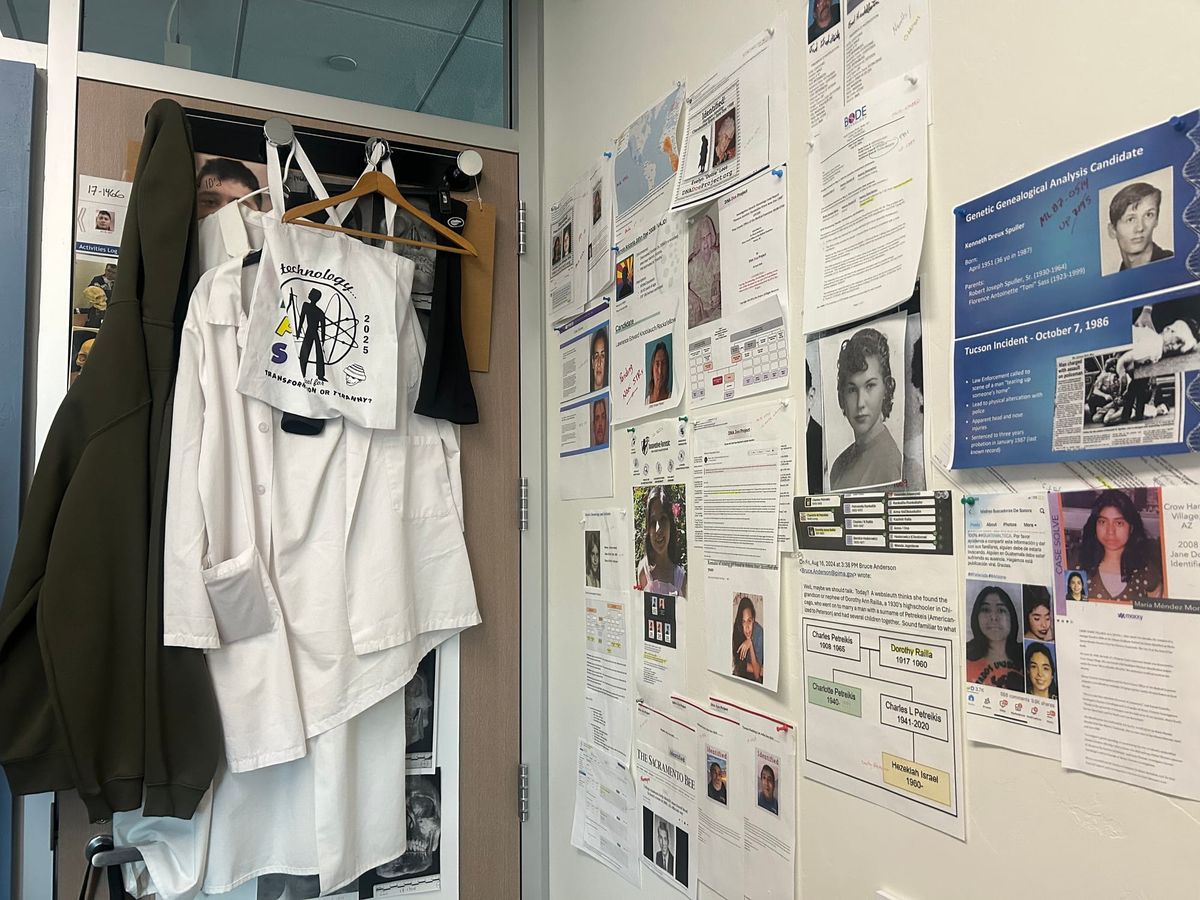
The Pima County Office of the Medical Examiner investigates, identifies and manages recovered remains at its office on Tucson's east side near Davis-Monthan Air Force Base.
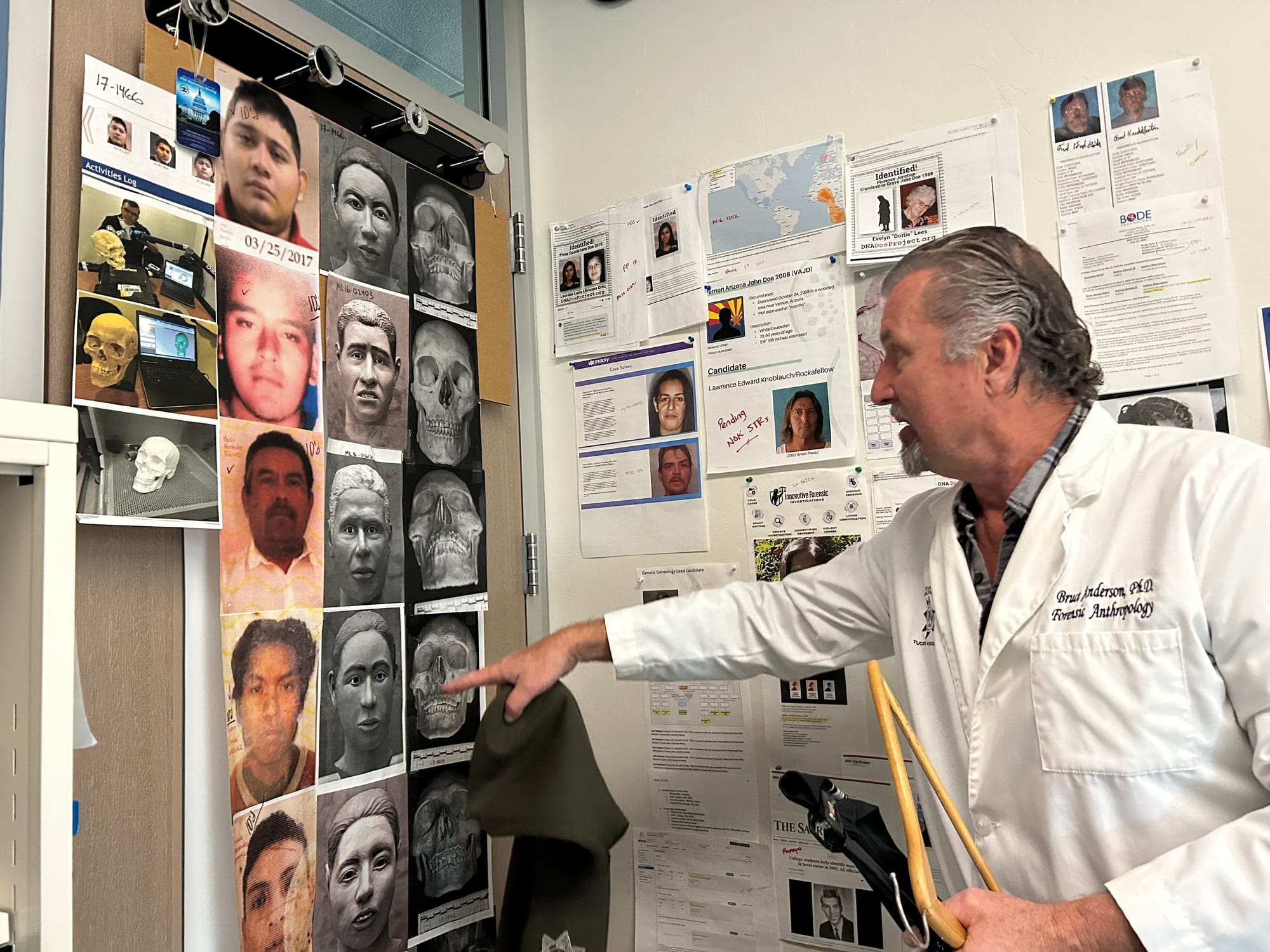
"My job was created because of the migrant issue," said forensic anthropologist Dr. Bruce Anderson.
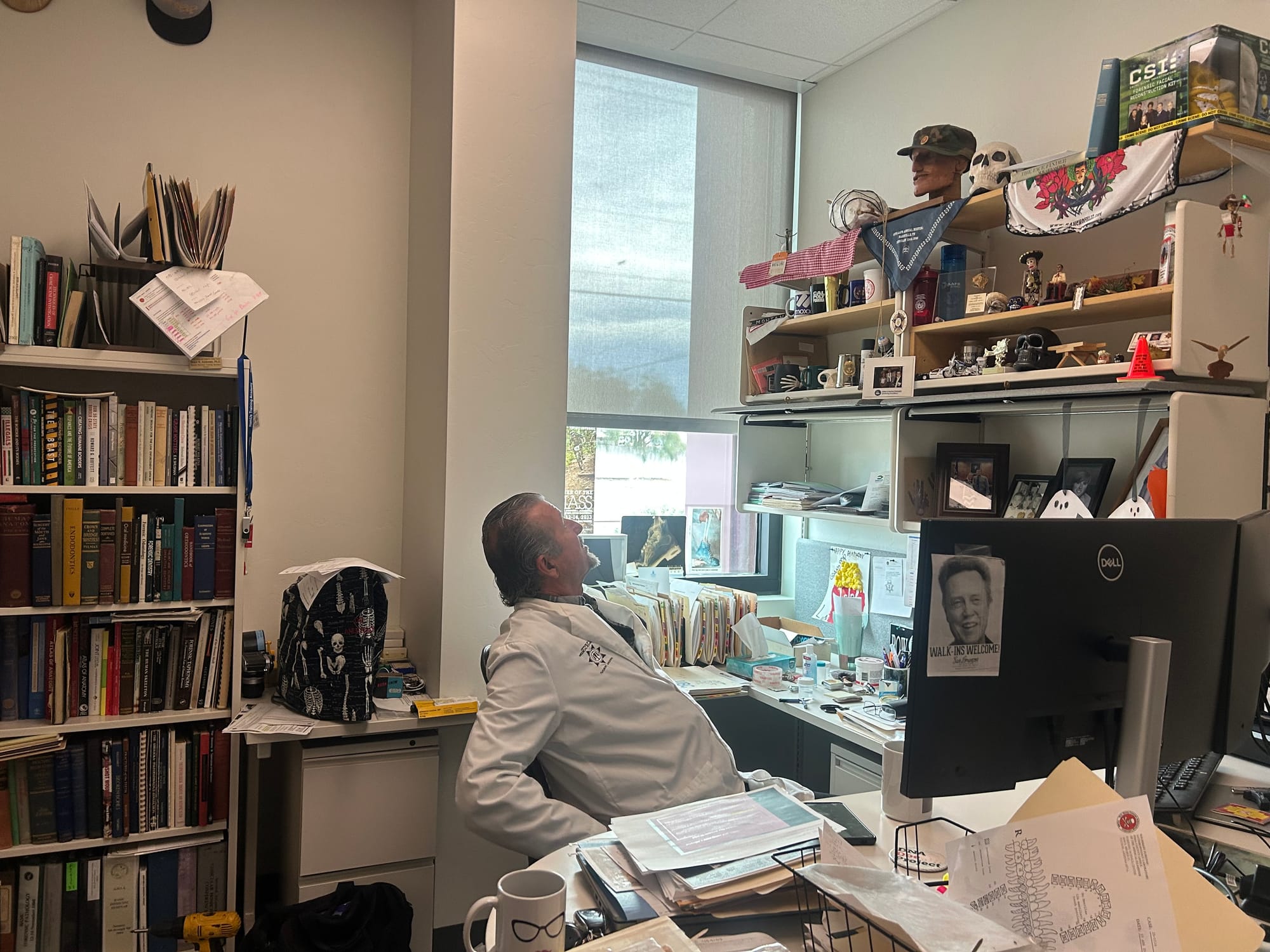
Anderson has worked in forensic anthropology for 41 years and has been with Pima County since 2000, when migrant deaths arose as a prominent issue in Southern Arizona.
"The people who work here, we're pretty good at checking our emotions and dealing with the dead and dealing with horrifically disfigured bodies and bones and stuff," Anderson said. "But we don't have a whole lot of training in dealing with grieving families and frantic families, not even grieving yet, they desperately want their loved one to be found alive."
The office tracks only recovered remains, not the total number of deaths.
"We'll see if there's a new president in two or three years, if things revert back to where they were, but this year there have been about 50% fewer cases," Anderson said. "I thought there might be more, but you think, because people might be scared about speaking up about their relatives or people are just afraid to cross in general that it could just lead to an overall drop."
Anderson also speculated that CBP's presence in major cities could be having an impact on the border.
"It could be that the climate in Washington and all these raids in Chicago and St. Louis and Portland and New York and Charlotte, they're scaring people," he said.
Regardless of the circumstances, No More Deaths and the Pima County Medical Examiner's Office plan to continue tracking and updating these changes.
While collection for the database is currently on pause, the hope is to continue the project as a living memorial for those who have lost their lives attempting to cross the border.
"I think it weighs on all of us," Ruiz-House said. "I think the hard part is contending that we're ultimately dealing with a structural issue, that at the end of the day, we can leave water in the desert, we can do all these search and recoveries… that's not getting to the root of why people are dying."
Ruby Wray is a journalism and creative writing major at the University of Arizona and Tucson Spotlight intern. Contact her at rubywray@arizona.edu.
Tucson Spotlight is a community-based newsroom that provides paid opportunities for students and rising journalists in Southern Arizona. Please consider supporting our work with a tax-deductible donation.