Tucson City Council reviews homelessness, heat efforts
The Tucson City Council reviewed regional homelessness data showing a 4% decrease in Pima County alongside a loss of 200 shelter beds, and heard updates on the city's heat response efforts.
Homelessness in Pima County dropped 4% this year, the first decrease since 2022, but officials say a loss of 200 shelter beds is putting the region's response system under growing strain.
The Tucson City Council discussed ongoing efforts to address homelessness during its April 21 meeting, including Housing First, the ongoing Safe City Initiative and STAR Village, a year-long pilot "safe sleeping site" operated by The Primavera Foundation with support from Old Pueblo Community Services.
Community Safety, Health and Wellness Program Director Brandi Champion said the city combines engagement, stabilization and shelter with enforcement when needed.
"These efforts also focus on connecting people to pathways to get off the street and into stability," Champion said, adding that the city is expanding collaboration with Pima County partners and nonprofits.
The Tucson Pima Collaborative to End Homelessness conducted its annual point-in-time count of shelter populations Jan. 27, with street and youth counts the following day. The data showed a 4% decrease in homelessness since last year, the first such result since 2022, with 861 individuals counted in shelters and 881 available beds.
"Since 2022, overall homelessness has remained relatively flat, and this continues into 2026," said Kat Davis, Continuum of Care lead manager.
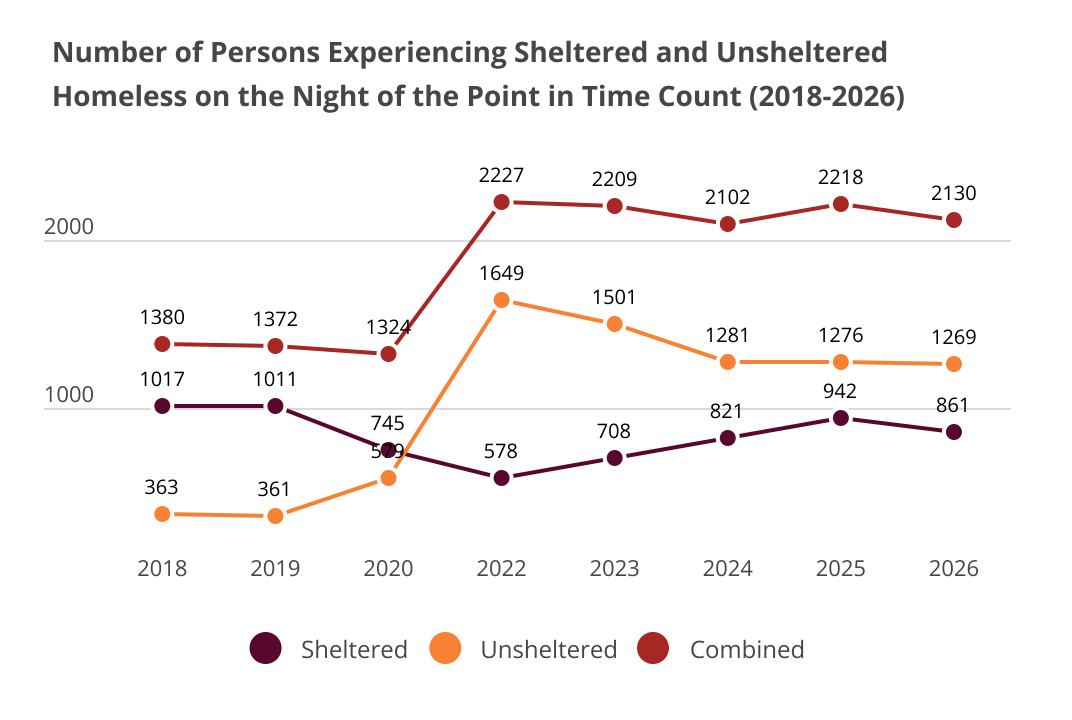
Davis said the count is an estimate rather than an official census and that year-to-year variations are expected. Future data will help determine whether the decrease is part of a larger trend.
The count was accompanied by an inventory of all beds in transitional and permanent housing and safe havens, which showed a decrease of 200 shelter beds.
Davis attributed the decrease to the loss of Arizona Department of Housing hotel vouchers that funded 117 beds and a shelter renovation expected to be complete within the year.
The Tucson Pima Collaborative to End Homelessness was awarded $185,000 by the Commission on Equitable Housing and Development to fund a rental assistance program. The funding was applied March 19 and exhausted by April 9, roughly $9,000 per day, reaching 97 households that each received an average of $1,877. Applicants reported an average income of $1,100 per month and said they were 4.4 weeks from losing housing without assistance.
"While this funding is potentially life-changing for those 97 families, the incredibly fast distribution of this funding reflects the deep need in our community for additional homelessness prevention funding," Davis said. "Our homeless response system is only able to serve 30% of people who request services each year. And so homeless prevention also provides relief to a system that is extremely overburdened."
Mayor Regina Romero praised the Safe City Initiative and the Tucson Police Department's deployments, saying the goal is connecting individuals with services and resources and that she admired the department's willingness to adapt as they learn.
Romero said the services acceptance rate has risen from 10% to over 58%.
"I do hear from many business owners, many residents that they can see tangible results with our safe city deployments and really appreciate the work being done," Romero said.
Ward 3 Councilmember Kevin Dahl praised the STAR Village program, saying neighborhood concerns that it would increase homelessness in the area have not materialized and that the city has received no complaints from neighbors.
Romero also noted that TPD said the area around the STAR Village has seen a 34% decrease in crime since its opening.
The council also heard its first quarterly environmental update since Tucson recorded its earliest-ever 100-degree day, with heat dominating the discussion alongside a possible energy collaboration agreement with Tucson Electric Power expected in November.
The city hosted the third annual Heat Summit this year, with attendance growing from 140 to 240, and launched a youth participation project in partnership with the Arizona Community Foundation.
Volunteers conducted Red Cross heat walks six times in partnership with the Pima County Health Department and Tucson Resilient Together, visiting 900 homes to provide bilingual heat safety education.
"Looking ahead as we move to the next quarter, we are fully focused on our heat response efforts on the ground," said Chief Resilience Officer Fatima Luna.
Ian Stash is a journalism major at the University of Arizona and Tucson Spotlight intern. Contact him at istash@arizona.edu.
Tucson Spotlight is a community-based newsroom that provides paid opportunities for students and rising journalists in Southern Arizona. Please consider supporting our work with a tax-deductible donation.