Tohono O’odham Nation braces for border wall saguaro removal
Border wall contractors are set to start removing saguaros on the Tohono O’odham Nation on Indigenous Peoples’ Day as the tribe waits on an appeals court.
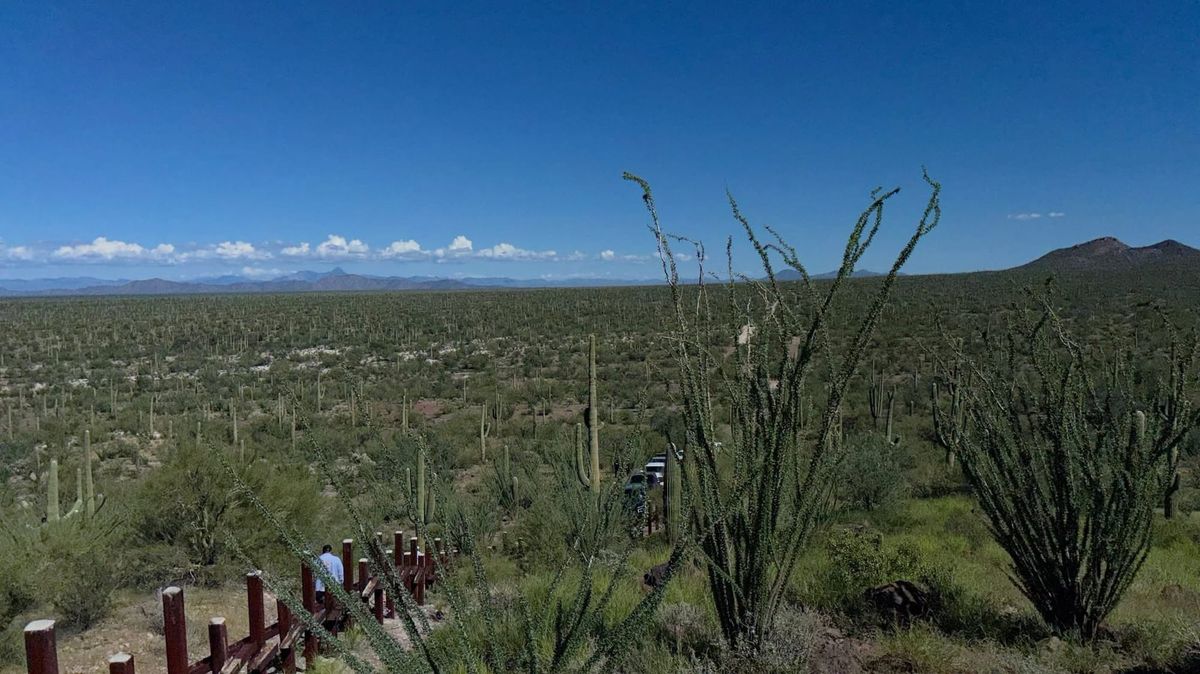
The Tohono O’odham Nation is waiting on a federal appeals court Monday as border wall contractors prepare to start removing saguaros on its land, on Indigenous Peoples’ Day.
A federal judge in Washington, D.C., declined last week to pause the work while the Nation appeals.
Nothing currently stops the government from starting pre-construction work Monday, said Riyaz Kanji, a founding partner of Kanji & Katzen, the firm representing the Nation.
“The government has said the first step will be ‘relocation’ of thousands of cacti, but we know from experience that the fatality rate will be high for the saguaro,” Kanji told Tucson Spotlight.
The Nation pointed to a 2019 relocation of more than 100 saguaros to make way for the border wall, saying more than half were later reported dead.
The Nation said Monday morning that it had received virtually no updates from the Department of Homeland Security and expects the removal to go forward as planned, without required consultation with the Nation.
DHS hired Marana-based KP Cactus and Tree to remove the saguaros, according to the Nation. The other contractors are Tucson-based Southlands Engineering, Hawaii-based Laukoa and the primary contractor, SLSCO of Texas, the Nation said.
“These companies must understand they are participating in an atrocity against our people,” Tohono O’odham Chairman Verlon Jose said in a statement Monday.
Your gift keeps local news free, bilingual and built for real life.
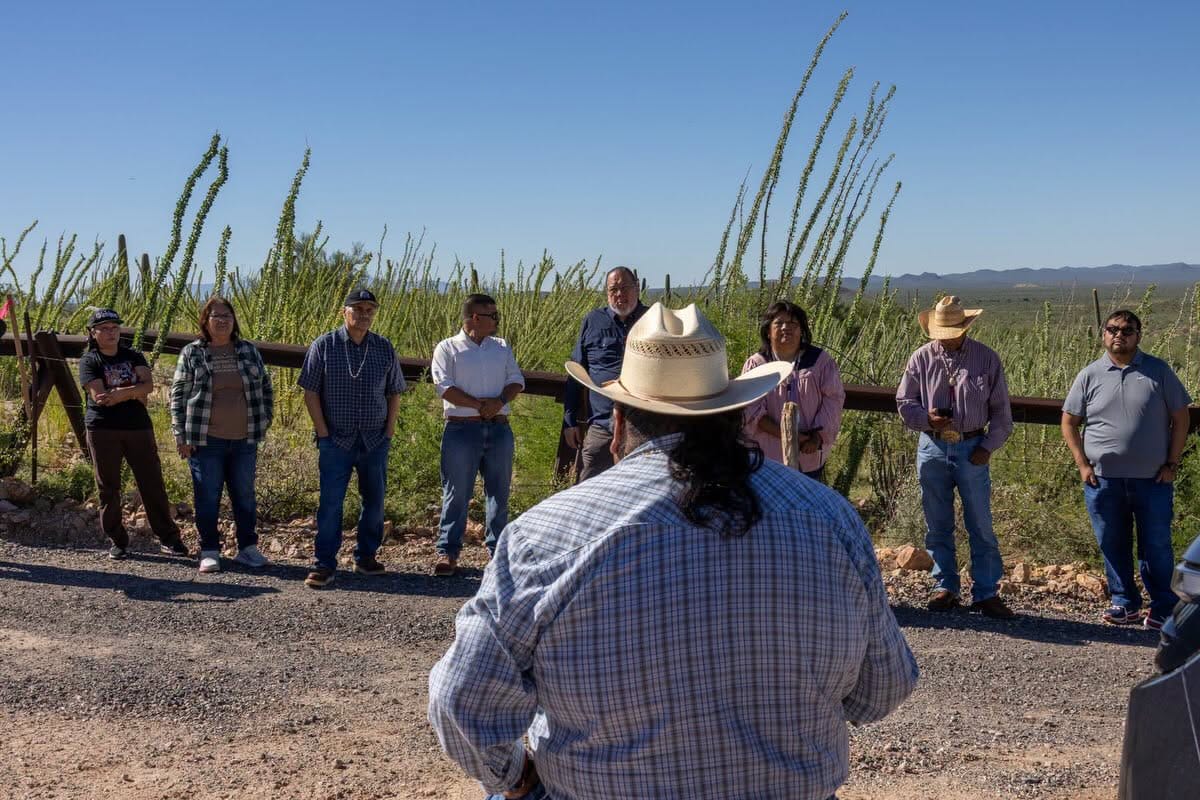
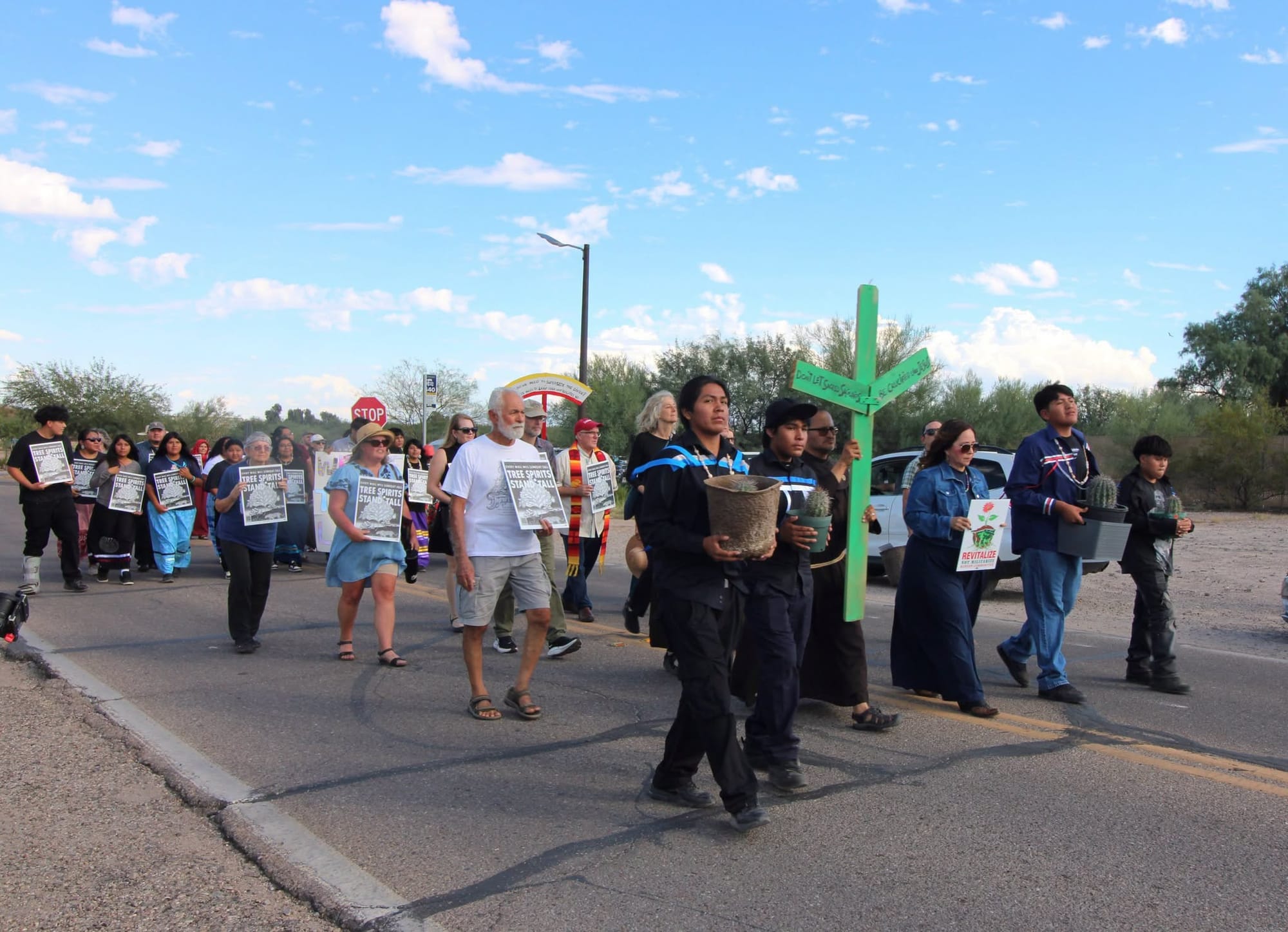
Members of the Tadai Me:i prayer camp, a group of tribal citizens camped near the San Miguel Gate along the border where the wall is planned, organized a 6 a.m. march Monday from the Bashas in Sells to protest the removal of the saguaros, which the Tohono O’odham consider people.
U.S. Customs and Border Protection told the Nation it plans to remove thousands of saguaros and other plants, the Nation said in an Oct. 9 statement. Saguaros are symbols of the Tohono O’odham’s shared faith, and removing any saguaro is an atrocity, the Nation said.
“The ha:ṣañ are our family, as much a part of us as any blood relative. To destroy them by the thousands carves a wound in our hearts that will not heal,” Jose said in the statement. “We call on all people for solidarity as we work to protect our culture and our land from this useless, destructive wall.”
The Nation called the timing of the removal disrespectful to all tribal nations. It also noted the saguaro’s role in the desert ecosystem, where it provides shelter and food.
“This is a violation of our sovereignty, of our religious liberty, and of our land,” Jose said in the Oct. 9 statement. “The Nation will continue to fight to prevent this senseless devastation from going forward and we are grateful for the overwhelming community support we have received.”
CBP did not respond to Tucson Spotlight’s request for comment.
U.S. District Judge Richard Leon ruled in August that the Nation was unlikely to win its case, writing that whether a tribe can bring a federal trespass claim against the federal government is “at best uncertain.”
In declining last week to pause construction during the appeal, he wrote that “the equities and public interest remain the same as they were when this Court found ‘that the Government’s interests in securing the border, enforcing immigration laws, and ensuring public safety outweigh any of Plaintiff’s interests.’”
Gov. Katie Hobbs and the Salt River Pima-Maricopa and Ak-Chin Indian communities have since filed briefs supporting the Nation’s appeal. So have the National Congress of American Indians, the Inter Tribal Association of Arizona, the Native American Rights Fund, the National Native American Law Students Association and its University of Arizona chapter, according to the Nation.
“The widespread support for the Nation helps us as we all seek an expedited appeal to stop the wall. We are grateful for these distinguished individuals and organizations’ decision to stand with us in favor of tribal sovereignty and common sense border policy,” Jose said in a statement announcing the briefs.
Leaders from the Ak-Chin, Gila River and Salt River Pima-Maricopa Indian communities toured the Nation’s border on Sept. 25 to see the damage already done and the thousands of saguaros tagged for removal, the Nation said.
Since Aug. 25, CBP has set up a vehicle blockade to keep the Tohono O’odham Police Department from interfering with pre-construction work, according to the Nation. The Nation said Bureau of Indian Affairs officers and the Border Patrol Tactical Unit have been deployed to protect contractors, and federal authorities are using a tethered balloon to monitor the area.
The Nation said CBP’s actions show disregard for its laws and sovereignty and undermine decades of cooperation, which it credits with cutting cross-border interactions by more than 95% over the last two years.
Nation leaders have urged tribal members on both sides of the border to put their safety first and stay vigilant.
“We support tribal members who choose to exercise their first amendment rights of free speech and the right to peaceful protest,” Jose said in an Aug. 25 statement after federal agents and contractors entered Nation land, adding that all laws and policies must be followed.
Tadai Me:i has called on supporters to come to the border and stand with the Tohono O’odham to protect O’odham jewed, or land. The group posted Sunday that Jose visited its camp after heated community meetings to remind members that the Nation’s no-trespassing ordinance is still in effect and that the camp has no authority to invite non-O’odham onto tribal land.
“We are disheartened that the Nation continues to view Tadai Me:i as protesters rather than concerned tribal citizens taking action in prayer when the Nation is unable,” the post said.
The group noted the visit came days after the Nation hosted non-O’odham at a faith rally in Wa:k, about 86 miles from the planned construction. Tadai Me:i said it would respect the Nation’s wish to avoid crowds, but still called on Indigenous people to join them.
Iliana Amador is a University of Arizona journalism alum and freelance journalist in Tucson.
Tucson Spotlight is a community-based newsroom that provides paid opportunities for students and rising journalists in Southern Arizona. Please consider supporting our work with a tax-deductible donation.