Satellites disrupt Tucson’s dark-sky research
Thousands of new low-Earth-orbit satellites are streaking across Tucson’s dark skies, disrupting astronomy research and raising environmental concerns.
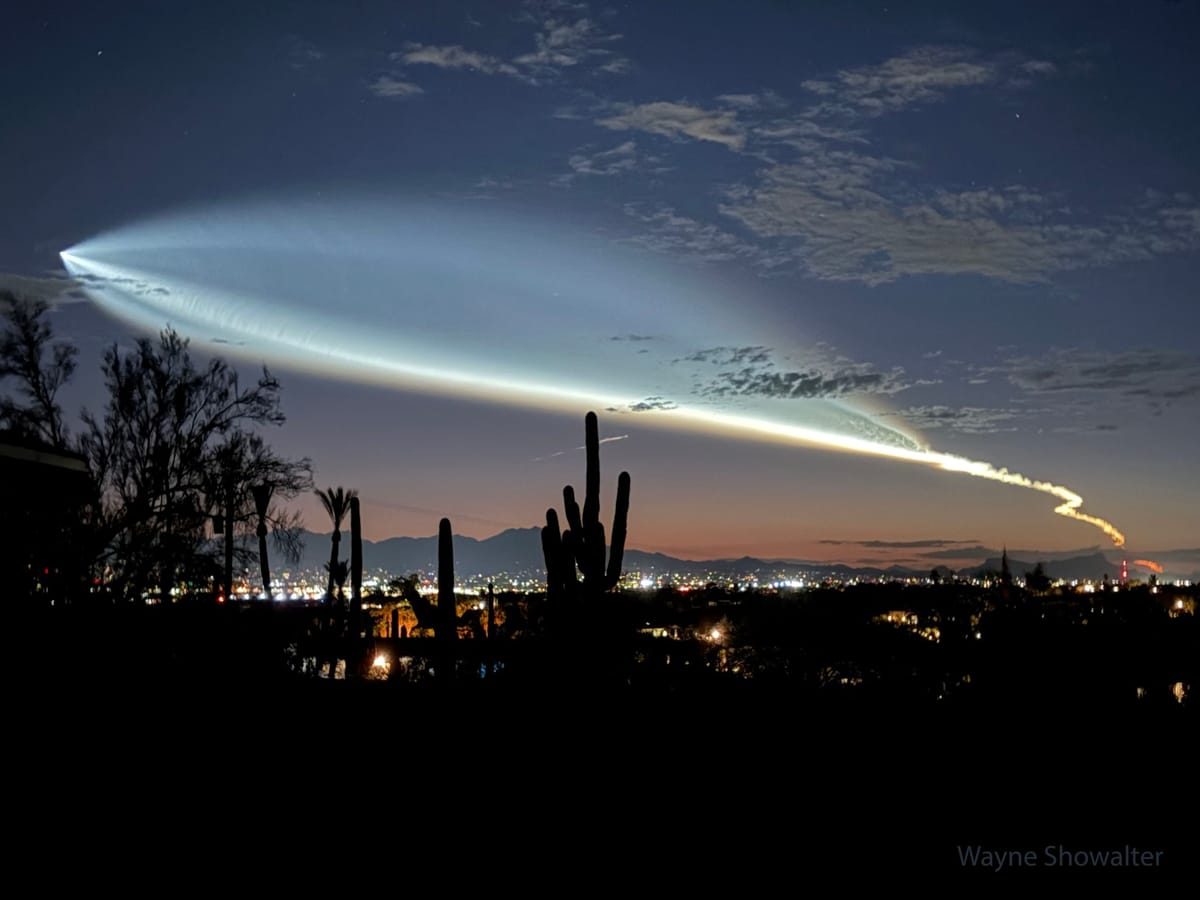
Thousands of new low-Earth-orbit satellites are streaking across Tucson’s famously dark skies, complicating research in one of the nation’s premier astronomy hubs.
For decades, strict lighting ordinances have protected Southern Arizona’s skies for professional and amateur astronomers alike. Now, scientists say the threat is no longer coming from the ground but from orbit, where thousands of new satellites are transforming one of the nation’s most carefully preserved dark-sky regions.
Local experts say the surge of commercial “mega-constellations” from companies such as SpaceX and Amazon is leaving bright streaks across long-exposure telescope images, disrupting radio observations and raising environmental and regulatory concerns as activity in orbit accelerates.
Tucson’s Dark Sky initiative, a decadeslong effort to reduce light pollution through strict outdoor lighting codes, has made the region one of the premier locations in the United States for astronomical observation. After midnight, when commercial lighting drops to its lowest levels, the desert sky sharpens, revealing stars often invisible in other metropolitan areas.
Even under those carefully protected conditions, moving points of light glide across the sky. These are low-Earth-orbit satellites, compact spacecraft launched to provide broadband internet, communications and imaging services. Companies including SpaceX’s Starlink network and Amazon’s Project Kuiper are deploying thousands of satellites. Financial analysts at Goldman Sachs project that as many as 70,000 could be launched globally over the next five years.
These satellites orbit at the edge of Earth’s atmosphere and typically operate for only a few years before a planned re-entry. They are used for broadband communications, surface imaging and scientific research.
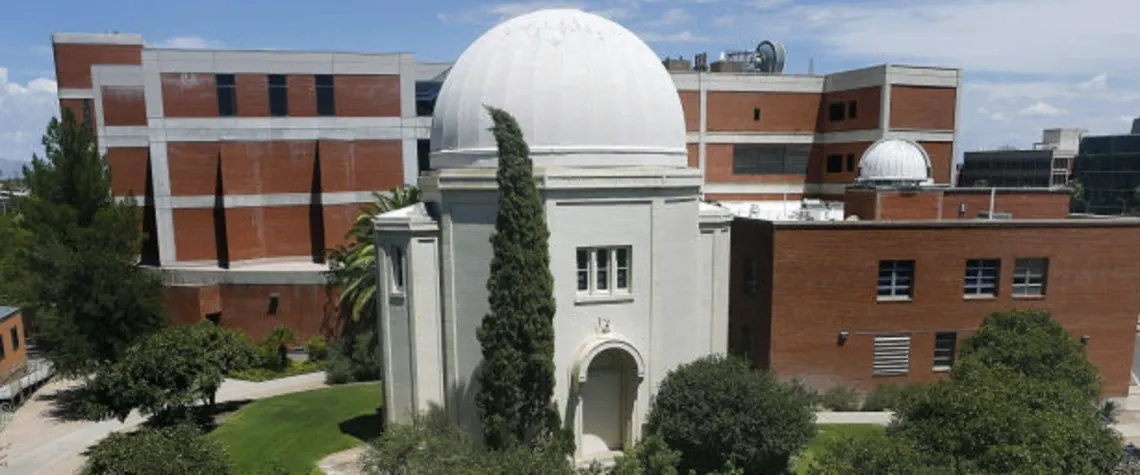
The rapid growth in their numbers is largely invisible to the public. But astronomers say the effects range from a “more-than-zero” risk of collision to mounting complications for research, along with emerging environmental concerns.
Richard Green, a professor at the University of Arizona’s Steward Observatory, said satellites appear to twinkle or flicker because sunlight reflects off their uneven, multilayered surfaces. While small fragments of asteroid debris and spent rocket material can also be visible, the brighter and more frequent streaks now seen in Southern Arizona skies are low-Earth-orbit satellites.
For amateur astronomers using mirror lenses, the satellites can be a nuisance. For professionals conducting long-exposure research, they present a more serious obstacle.
Most long-exposure telescopes must focus on a single uninterrupted portion of the sky to collect faint light from distant objects. When a satellite crosses that field of view, it leaves streaks or smears, similar to someone sprinting through a still photograph just before the shutter clicks.
“If satellites were perfect mirrors, you would get a very uniform streak,” Green said. “You could remove the worst part of it, model the rest and salvage much of the data. But real satellites have multilayer insulation and complex surfaces.”
Those irregular surfaces create brightness patterns that are far more difficult to filter out.
“Dealing with the variability of the satellite streaks is the hard issue for scientists,” Green said.
The impact extends beyond optical telescopes. Radio observatories, once shielded by federally protected “radio quiet” zones, now face interference from orbiting satellites.
“Before this age of filling space, telescopes were protected by local regulations,” Green said. “They were in radio quiet zones.”
Even satellites that are not actively broadcasting can emit unintended signals from onboard electronics. Others briefly block distant radio sources as they pass between Earth and deep-space targets.
According to the Union of Concerned Scientists, there were 6,718 active satellites in orbit at the end of 2022, an increase of roughly 2,000 in a single year.
Despite that growth, catastrophic collisions in orbit remain rare. Satellite operators typically coordinate with one another to avoid conflicts, Green said, and spacecraft are designed with tracking and maneuvering systems to prevent accidents.
Oversight in the United States falls in part to the Office of Space Commerce within the U.S. Department of Commerce. The office maintains satellite registries, tracks re-entry plans and reviews launch approvals. However, recent federal staffing cuts and policy shifts have raised questions about the government’s capacity to manage the rapidly expanding orbital environment.
Tanner Campbell, a software engineer who has worked on government and university space research projects, said safety remains a core principle in the industry.
“The general attitude in spacefaring technology is that failure is not really acceptable, so systems are heavily over-engineered,” Campbell said. While accidents can occur, he said most commercial operators prioritize reliability over risk.
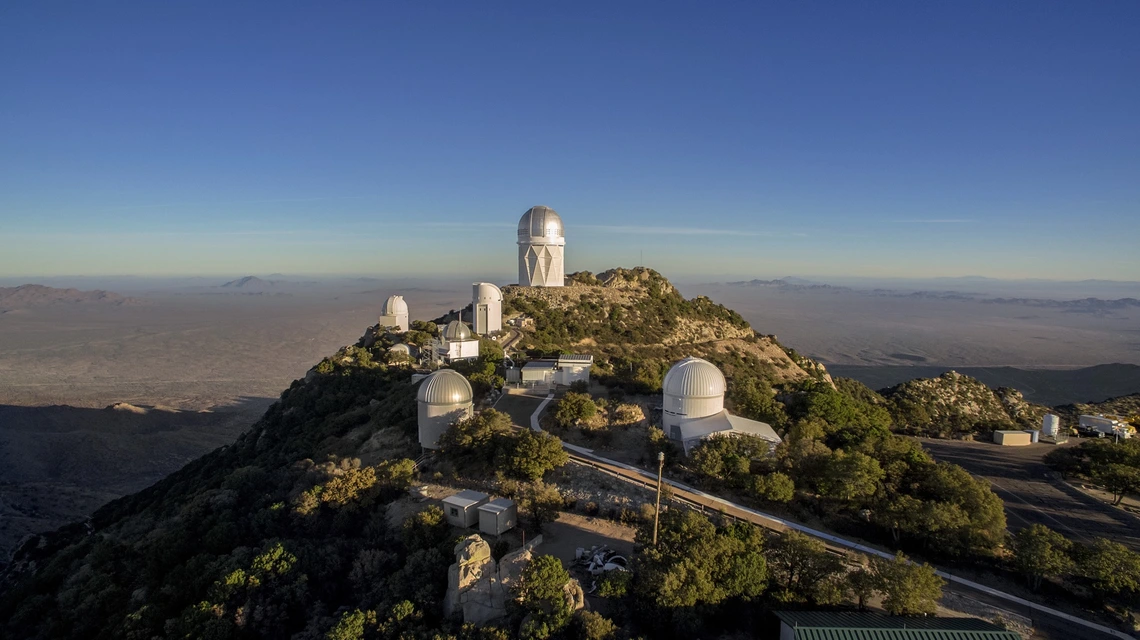
Still, Campbell noted that re-entry is not perfectly predictable. Some materials — particularly advanced alloys used in spacecraft — may not fully disintegrate as expected. The European Space Agency reports that 166 pieces of debris have been recovered over the past 55 years.
Researchers are also studying atmospheric effects.
Owen Miller, an undergraduate research assistant at the University of Arizona who studies satellite constellations and space commerce, said the environmental footprint extends beyond the satellites themselves.
“It’s not just the satellites that have impacts,” Miller said. Rocket launches deposit exhaust particles into the upper atmosphere, and satellites burn additional fuel to maintain orbit before ultimately re-entering and disintegrating.
Material from solid rocket motors can remain suspended at high altitudes, where it does not wash out quickly through rainfall. Some researchers have raised concerns that these particles may contribute to atmospheric warming. Campbell said soot from rocket thrusters can be significantly more heat-trapping than typical ground-level carbon emissions.
For astronomers in Southern Arizona, the changing night sky represents both a technical challenge and a defining moment. Tucson’s dark-sky protections were designed to shield research from light on the ground, not traffic in orbit.
As satellite launches continue to accelerate, scientists say preserving the region’s legacy as a world-class astronomy hub may increasingly depend on decisions made far beyond the desert.
Quentin Agnello is a University of Arizona alum and freelance journalist in Tucson. Contact him at qsagnello@gmail.com.
Tucson Spotlight is a community-based newsroom that provides paid opportunities for students and rising journalists in Southern Arizona. Please consider supporting our work with a tax-deductible donation.