San Pedro River beaver survey enters sixth year
Volunteers can still join the Dec. 12 San Pedro River beaver survey, which helps scientists track a beaver population estimated at 33 to 46 animals.
Beavers once thrived along Arizona’s San Pedro River until a century of trapping wiped them out, and volunteers are now helping count the ones that came back.
The sixth annual Binational San Pedro River Beaver Survey, part of Watershed Management Group’s “Release the Beavers” campaign, will take place Nov. 14 and Dec. 12. Volunteer spots for the November survey are full, but people can still sign up for December.
Beavers are a keystone species, often called “ecosystem engineers,” because their dams create wetlands, regulate stream flows, repair eroded stream channels and stabilize the local water table.
That matters in a state that has lost more than one-third of its original wetlands since the late 1800s. Wetlands now cover less than 1% of Arizona’s landscape, according to the U.S. Fish and Wildlife Service.
In response, the Bureau of Land Management and the Arizona Game and Fish Department reintroduced at least 20 beavers into the San Pedro Riparian National Conservation Area in 1999 and 2000 to restore native wetlands. The local beaver population is estimated to have grown to 100 by 2010 before it began to decline.
The survey grew out of research that Mike Foster and Steve Merkley, an instructor and researcher at Cochise College, started in 2015.
In 2021, Watershed Management Group began working with Foster and Merkley to formalize their research and build partnerships with groups in Sonora, Mexico, and citizen scientist volunteers who can help survey the San Pedro River from its headwaters across the border to its lower reaches.
“We work with private landowners who do have property along the river. We seek permission from them to you know be able to do these surveys … talking with Arizona Game and Fish Department, Bureau of Reclamation, Salt River Project, other private landowners, big and small, … making sure that their needs are being met in terms of data and making sure we are respectful in this process,” said Nadira Mitchell, the group’s restoration ecology coordinator.
Your membership pays emerging journalists to cover Southern Arizona the way it deserves.
The group also works with Cochise College researchers, including Merkley, who does acoustic tracking research on birdsong variation at a beaver dam analog, a man-made dam built by Game and Fish with materials from the surrounding area, and at two areas without beavers. The idea is that more bird diversity and birdsong would be a result of beavers reshaping the landscape in ways that support local biodiversity.
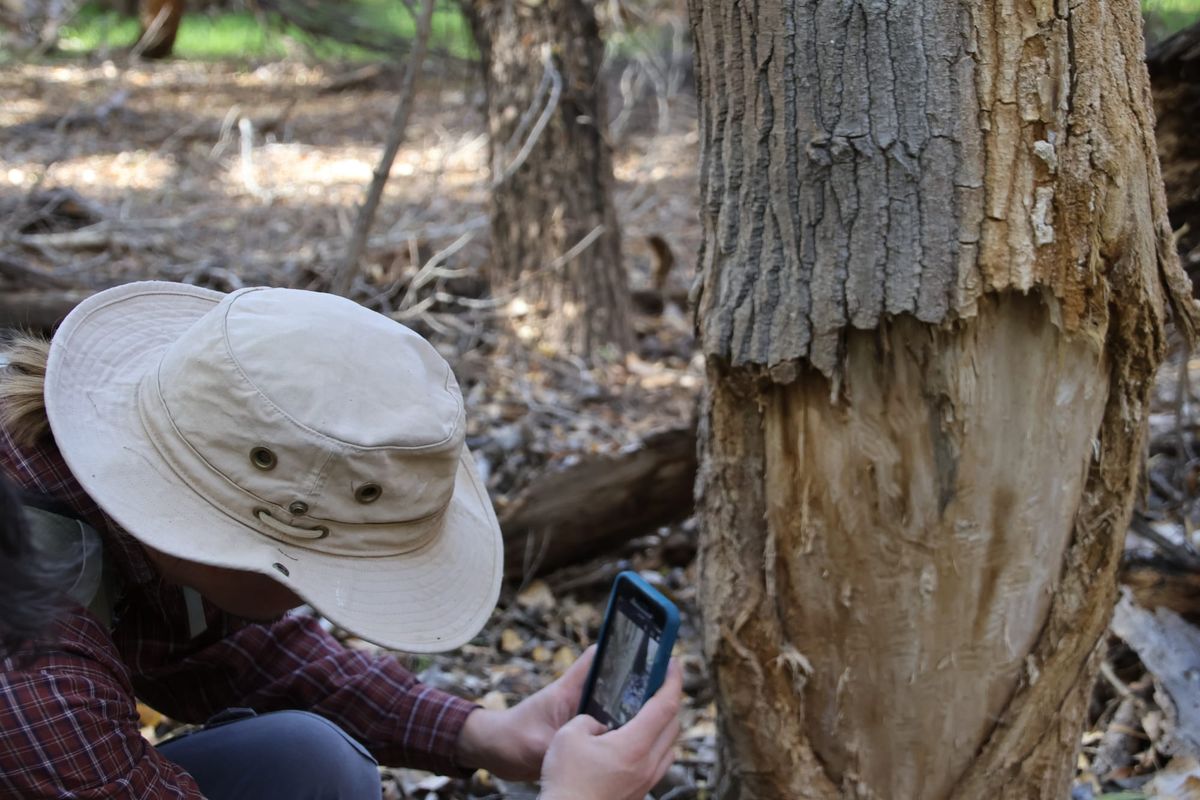
Frank Emanuele, another biology instructor from Cochise College, conducts genetics testing on beaver chews, or gnawed branches, found during the survey to see how beavers alongside the river are related to one another.
The “Release the Beavers” campaign advocates for reintroducing beavers, continuously monitoring the health and distribution of beaver populations, and using beavers as a cost-effective way to restore wetlands, improve habitat and recharge local aquifers through their dams.
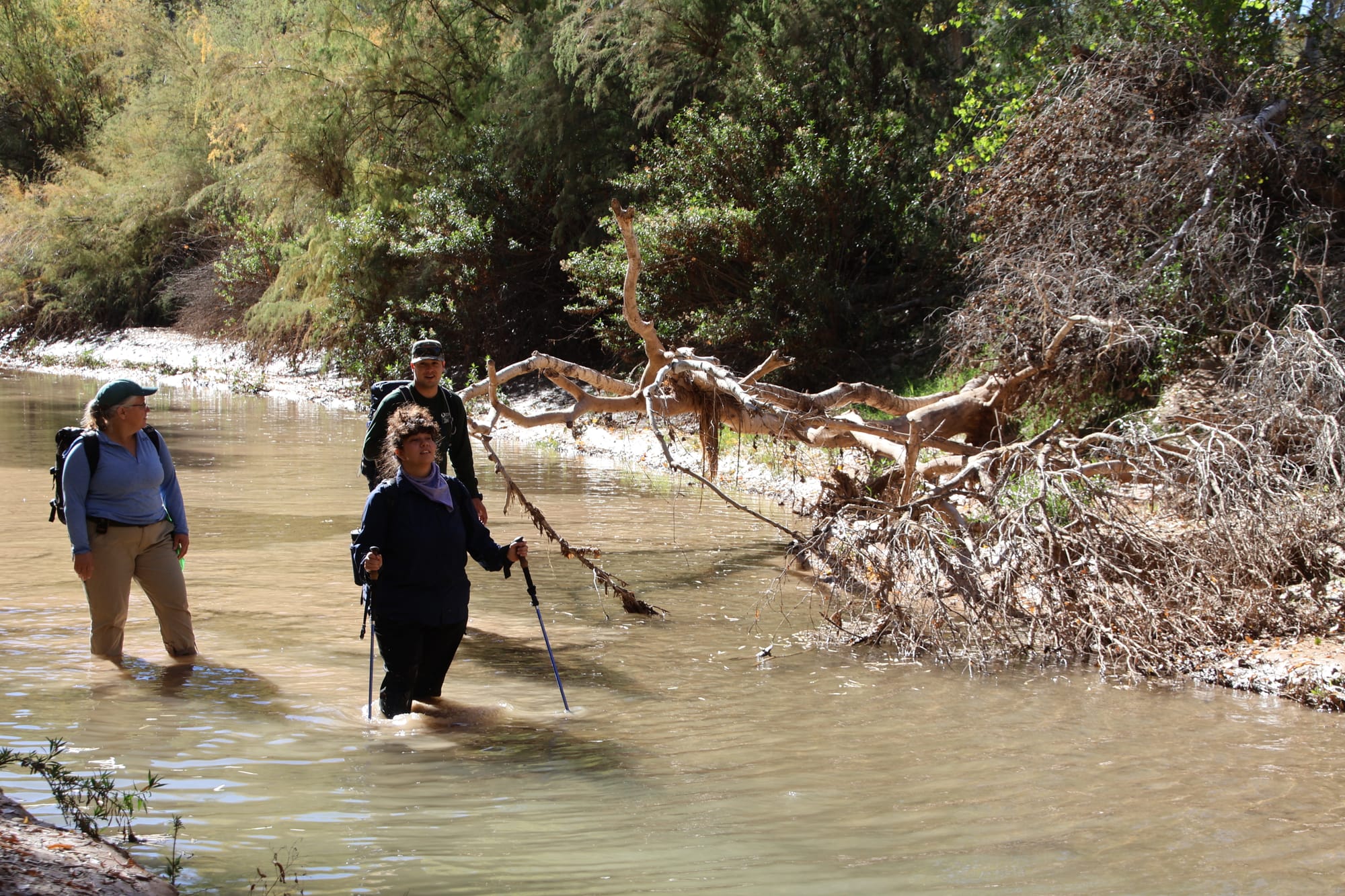
About 120 volunteers surveyed 23 sites across 63.5 miles of the San Pedro River last year, looking for evidence of beavers, such as dams, tracks and chews, and measuring river flow levels. The data helps scientists better understand how the beaver population and its distribution change along the river.
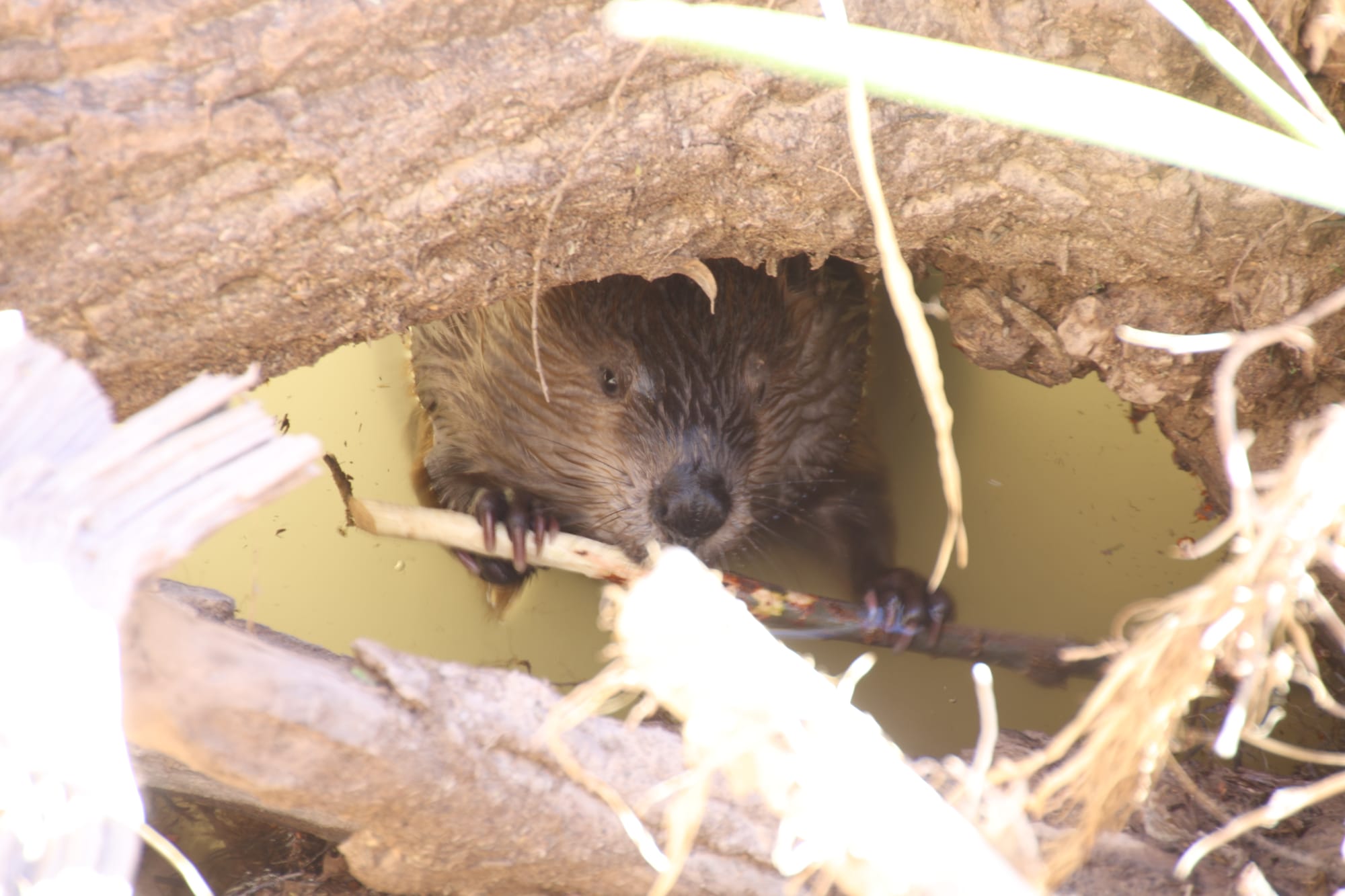
Volunteers surveying the lower San Pedro River last year spotted a live beaver, the only confirmed sighting that year.
Mitchell co-published the 2025 survey findings with Catlow Shipek, the group’s senior program director, in April.
The survey indicates the presence of 33 to 46 beavers along the San Pedro River, a slight increase in population compared to 2024. That increase is attributed to Arizona Game and Fish moving a male and female beaver into the area, and the population remains lower than the estimated 100 beavers in 2010. Increased predation by mountain lions could be a factor, but that has not been confirmed.
“Increased activity and detections may not be an actual increase in population,” Mitchell said. “It could just be an increase in detections.”
The increase in beaver activity could also reflect changes in the beavers’ behavior or surroundings, such as larger foraging ranges as resources shrink, juveniles leaving their family groups and shifting water levels from monsoons and droughts.
“This is why I think continuing to monitor is important, because we don’t know if this is a long-term trend, we don’t know if this is a short-term thing, and it’ll be important to see year to year how that changes,” Mitchell said.
Game and Fish relocated the male and female beavers to a beaver dam analog in the hope that the beavers will build on it over time.
“These structures are supposed to help slow the flow of water and keep it in the system,” Mitchell said. “The idea is that if you’re implementing this in a degraded river system that isn’t flowing how it should be flowing, we’re hopefully slowing the flow and improving the amount of vegetation in the area because there’s more water available.”
The November survey will cover the upper San Pedro River in the San Pedro Riparian National Conservation Area near Sierra Vista, and the December survey will cover the lower San Pedro River near Mammoth.
“Another important aspect of the survey is to get people out there, to have them be on the river and to interact with the river, to know what a riparian habitat looks like,” Mitchell said. “They may be interacting with the ecosystem they might not have interacted with otherwise, and that’s a very important aspect of the survey, not just the data collection, but also knowing the habitats that beaver you know exist and thrive in, and connecting with that.”
Topacio “Topaz” Servellon is a reporter with Tucson Spotlight. Contact them at topacioserve@gmail.com.
Tucson Spotlight is a community-based newsroom that provides paid opportunities for students and rising journalists in Southern Arizona. Please consider supporting our work with a tax-deductible donation.