Saguaro fruit harvest sustains Tohono O’odham traditions
Each summer, the Tohono O’odham harvest saguaro fruit, or bahidaj, a tradition rooted in culture, renewal and resilience in the Sonoran Desert.
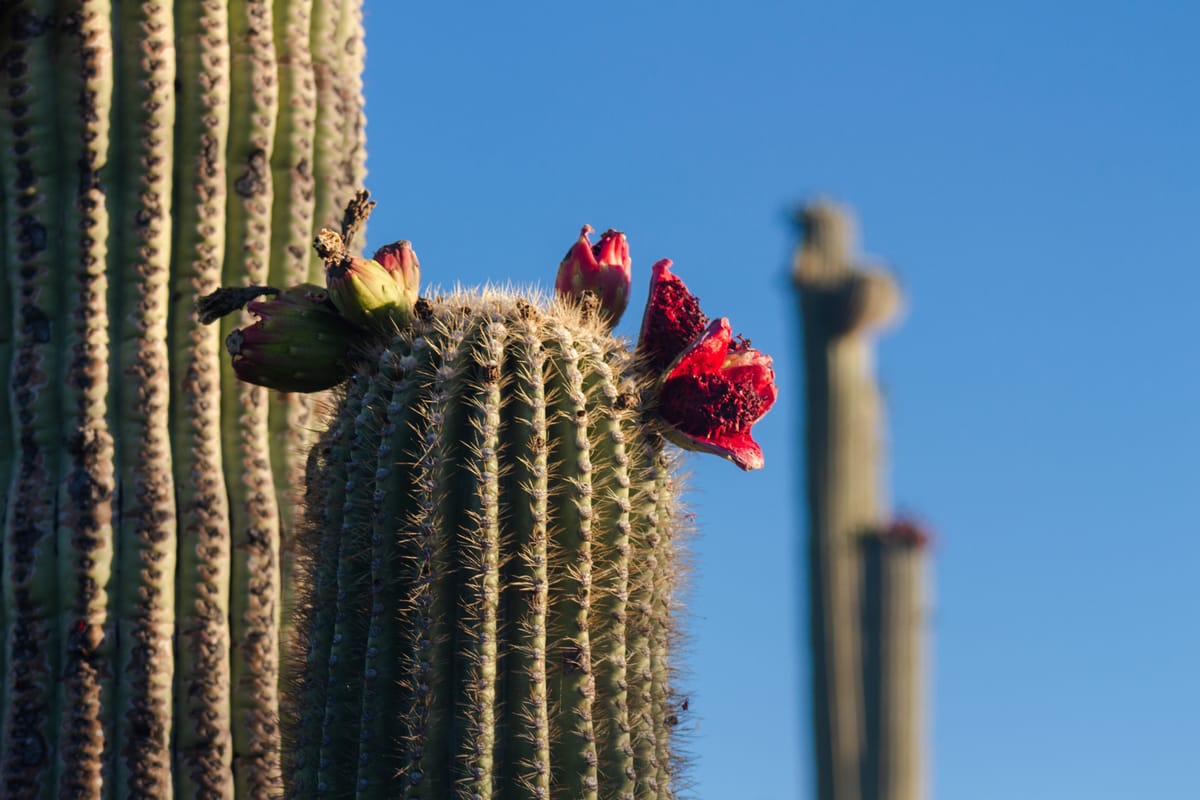
Before the summer monsoon washes across the Sonoran Desert, the Tohono O’odham mark a sacred turning point of the year, when the deep red fruit of the towering saguaro cactus ripens.
In a brief and demanding harvest season, families rise before dawn to gather bahidaj, a tradition that signals renewal, sustains community and reaffirms an ancient relationship between the O’odham people and the desert they have called home for generations.
For the Tohono O’odham, also known as the Desert People, harvesting bahidaj is a deeply rooted cultural practice passed down through generations. The work is guided by close observation of the saguaro, or Ha:sañ, and the desert itself, as the fruit must be gathered during a narrow period each summer—after the cactus blooms and before monsoon rains arrive.
The Tohono O’odham have lived in the Sonoran Desert for thousands of years, long before the establishment of the U.S.-Mexico border. The origins of the O’odham are deeply connected to the land, where they have thrived for generations.
The O’odham originally settled along the Salt, Gila and Santa Cruz rivers. Their ancestors, the Hohokam, were known as “master dwellers of the desert” and “scientists of their environment.” They engineered sophisticated canal systems to irrigate crops such as cotton, tobacco, corn, beans and squash, advancing agricultural knowledge in one of the world’s harshest climates and laying the foundation for sustainable practices still seen today.
Today, the O’odham continue to apply traditional meteorological principles to guide planting and harvesting and to determine how water is stored and managed. Their resilience and understanding of the surrounding ecosystem allow them to sustain their communities and preserve cultural traditions.
Build a stronger year for local journalism with a matched gift
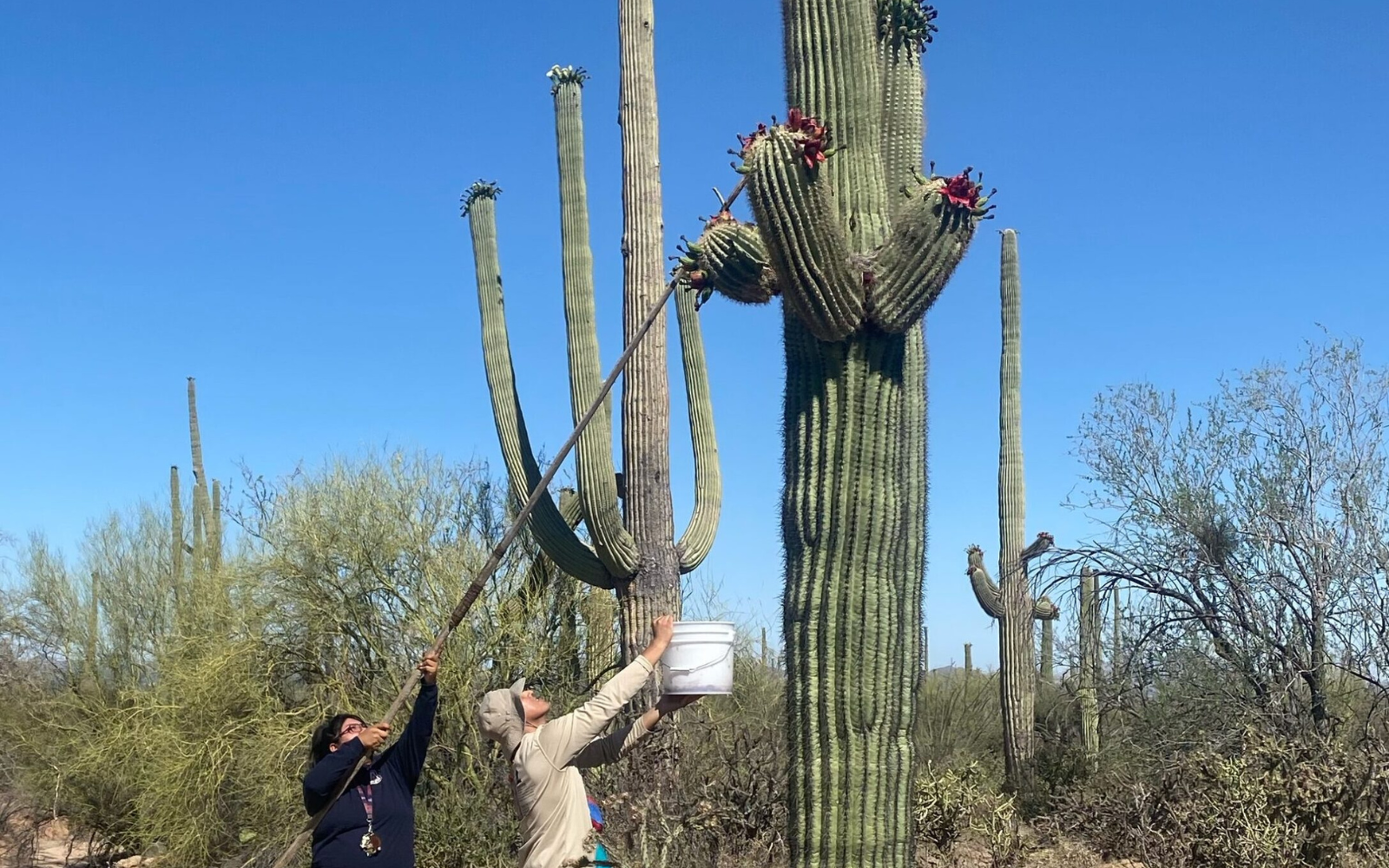
In the past and today, the Tohono O’odham travel into the open desert to harvest bahidaj. Gathering typically takes place in the early mornings and evenings, when summer temperatures are more bearable, often exceeding 100 degrees during the day.
The harvest usually occurs in mid-July, just before the monsoon season arrives, and is significant because it marks the beginning of the O’odham New Year. Tools used to gather the fruit are traditionally prepared in advance.
Traditionally, the O’odham used a tool called a kui’pud, constructed from two to three ribs of a dead saguaro cactus and shaped into a long, T-shaped pole measuring 15 to 30 feet. The tool is used to gently dislodge the fruit from the Ha:sañ, allowing it to be collected from the ground or in buckets.
Raeshaun Ramon, a member of the Tohono O’odham Nation, said his deeper involvement with bahidaj harvesting began later in life, shaped by community and mentorship.
“It wasn’t until I got a little bit older that I started learning more about the community practice of gathering the fruit,” Ramon said. “I was invited by the late Arthur Wilson, who took me out to my first harvest. I got the full experience: spending the night, waking up around five in the morning, picking the fruit until it got really warm, and then seeing the whole community come together, putting all the fruit into one bucket to begin the cooking process.”
Once the fruit is harvested, the pulp is carefully scraped from the pods, placed into buckets and taken home. The bahidaj is then transformed into a variety of goods, including syrups, jams, jellies and wines. These foods are a significant part of O’odham culture, highlighting the fruit’s versatility and reflecting long-standing practices of self-sustainability and resourcefulness.
 Tucson Spotlight
The timing of the harvesting season can vary from year to year, depending on when the fruit blooms—an increasingly important factor as weather patterns continue to change. Ramon said climate change has already begun to affect the season.
“Sometimes the Saguaros tend to produce more than one particular season, and then the following season, they don’t produce as much,” Ramon said. “I feel like sometimes the Saguaros, they put their energy into one season and then the next season, they kind of just take a break, and then they come back again and produce more. We’re noticing those differences.”
Ramon said he believes the saguaros are responding to environmental stress.
“They probably have more stress from the environment or from the climate, or the different weather patterns, and so they’re trying to balance out that particular season,” he said. “I feel like they’re trying to adapt as well. Saguaros are very resilient, and it’s because they live in one of the most harsh environments in the world.”
The harvesting season ends with the first monsoon rain. After that, the O’odham wait for the cycle to begin again the following summer.
Maintaining a deep connection to and understanding of the saguaro is central to O’odham culture. Through stories passed down across generations, the cactus is honored for its significance and importance, reinforcing the belief that it should always be treated with respect and never intentionally harmed.
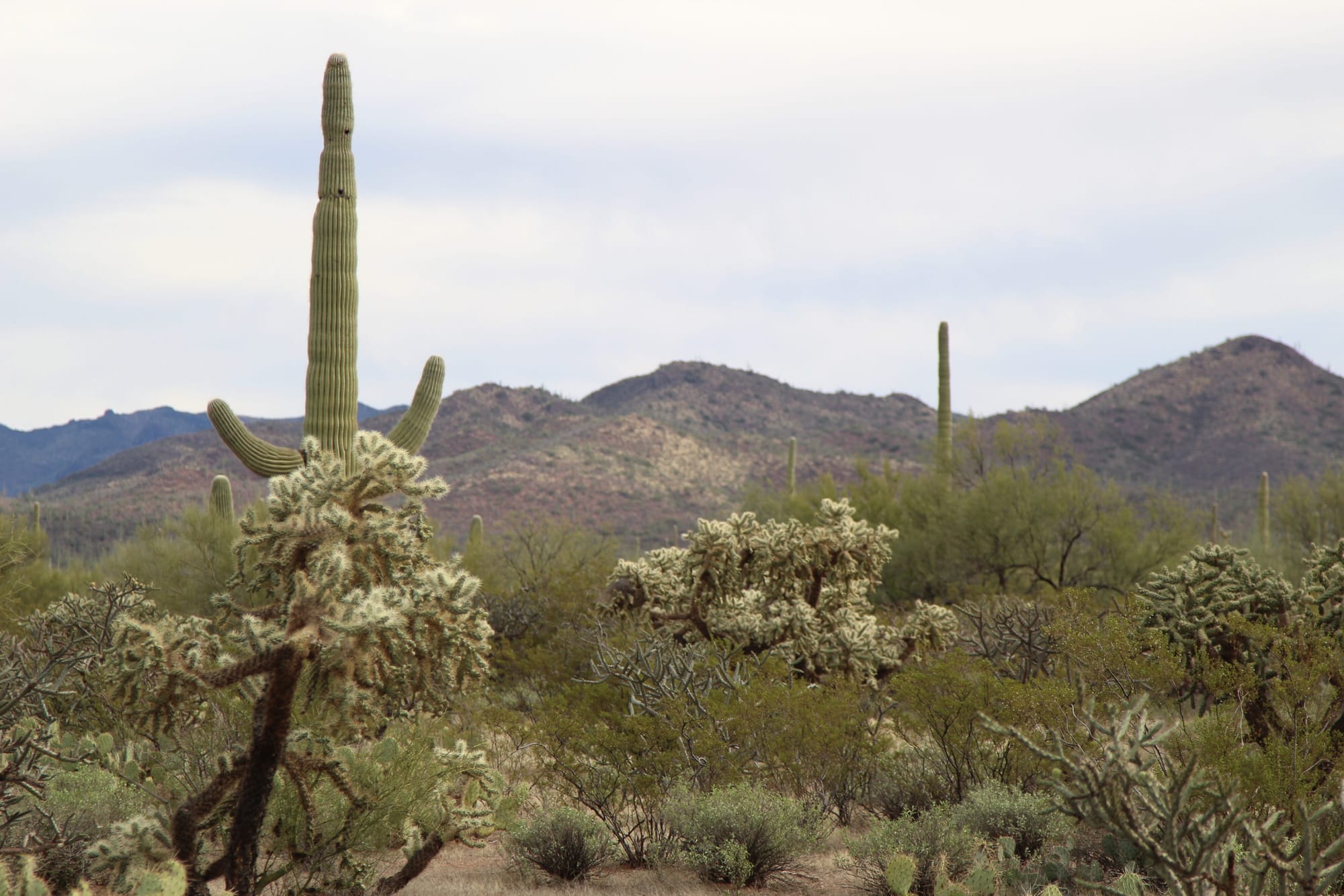
Saguaros can live up to 200 years and may develop more than 20 arms, typically growing them between 75 and 100 years of age. More than towering figures in the desert, the Ha:sañ holds deep cultural significance for the O’odham, connecting land, people and tradition through generations.
The Sonoran Desert itself is relatively young, with a history stretching back more than a million years. The O’odham, however, have lived in the Southwest alongside the saguaros since the first light touched the land, carrying forward the stories they hold. Depending on the community, storytellers may describe the Ha:sañ as either a boy or a girl.
Ramon described the deep relationship the O’odham have with saguaros, saying the Ha:sañ has always held an important role in O’odham culture.
“I’ve heard that, at one point in our old tradition, the first Saguaro was considered a boy. This individual was liked by the community, but they were also bullied. In the end, they transformed into a Saguaro, emerging from the ground into the desert,” Ramon said. “I like to think that our people witnessed the first Saguaro ever to appear. This aligns with our traditional stories of the first world.”
Betsy Norris, a Tohono O’odham elder, has been harvesting bahidaj since the 1950s.
“A lot of the times we didn’t really want to go. We were young, but we went early in the morning and we’d go out and my grandma would go and pick with the Kui’pud, the stick that pulls them off,” Norris said. “We would be also picking fruit off the bottom, because we used everything, even if it’s raw and dried.”
 Trinity Norris
The harvest is more than a seasonal tradition; it reflects the enduring relationship between the Tohono O’odham and the land they have called home for generations. Through harvesting, cooking and sharing the fruit of the Ha:sañ, O’odham communities honor their ancestors, celebrate renewal and pass down vital cultural knowledge.
As climate patterns shift and modern challenges emerge, the resilience of both the O’odham people and the Ha:sañ remains a powerful symbol of adaptation and survival.
Each season, with the first rains of the monsoon, the cycle begins anew, a reminder that the end of one chapter is always the beginning of another.
That connection is not only ecological but deeply personal, reflected in the way the Ha:sañ is seen, remembered and understood by those who live alongside it.
“I see it especially during sunset: the silhouettes of the Saguaros resemble people. Each one is unique, with different heights, different numbers of arms, and different shapes,” Ramon said. “I often compare that to people. Everyone looks different, just like each Saguaro. They truly do resemble humans in many ways.”
This story was originally published by Planet Forward. Trinity Norris is the founder of O’odham Media and has a master's degree from the University of Arizona in Global Media Studies.
Tucson Spotlight is a community-based newsroom that provides paid opportunities for students and rising journalists in Southern Arizona. Please consider supporting our work with a tax-deductible donation.