Rare crested saguaro Gumby dies at Tohono Chul
A rare crested saguaro named Gumby has died at Tohono Chul Gardens after nearly three decades, felled by a common cactus bacteria.
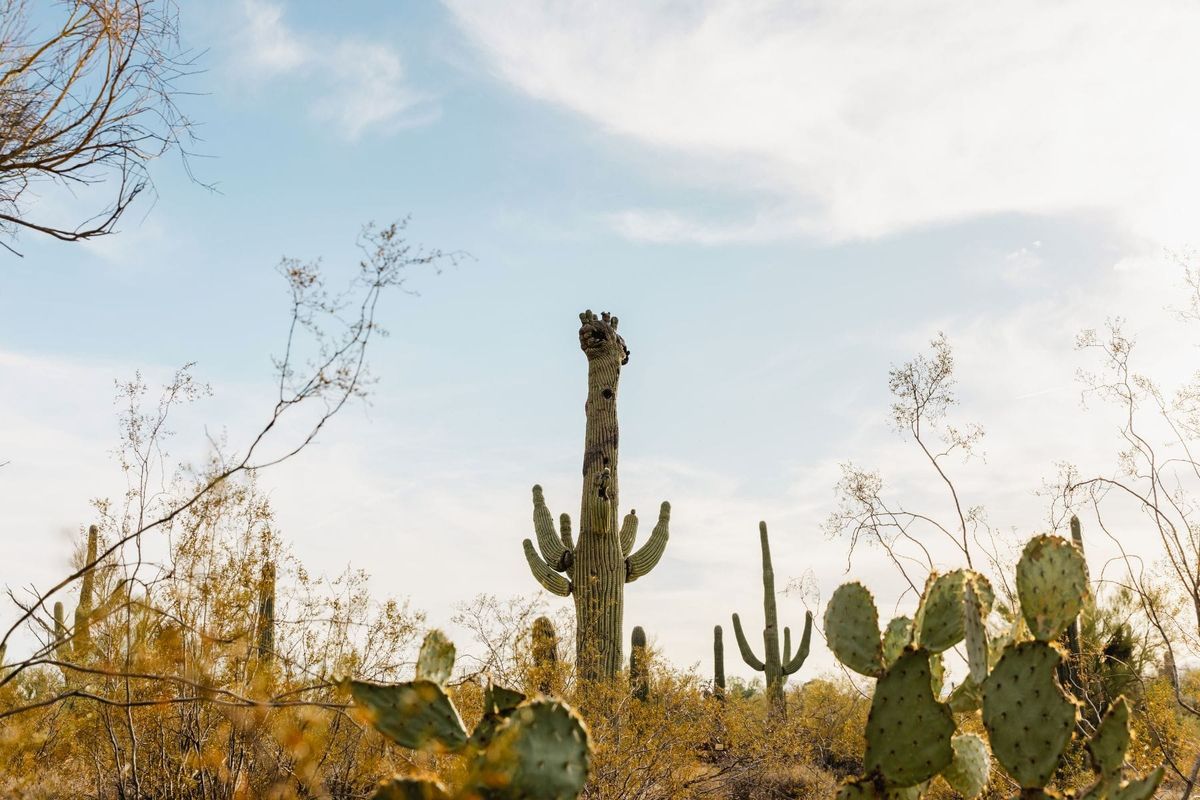
Gumby, a crested saguaro that had stood at Tohono Chul Gardens since it was transplanted there in 1997, has died, according to garden staff.
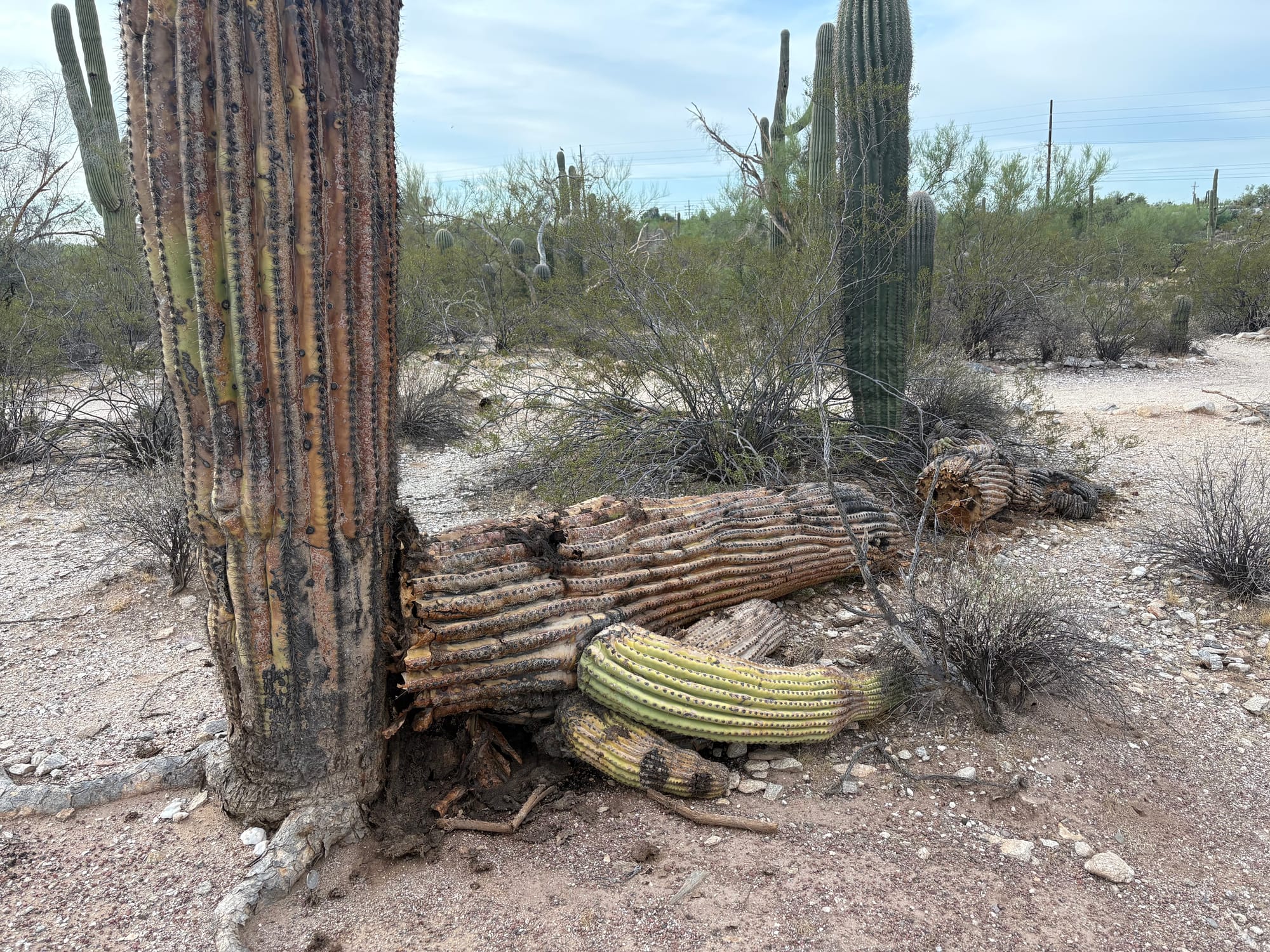
The plant's remains now lie half-collapsed in a bed of loose gravel, its decay marked by the smell of rotting cactus flesh.
Despite Gumby's passing, Tohono Chul staff said the cactus will continue to provide value to the garden as it slowly breaks down.
The saguaro's death was caused by Erwinia, a bacteria common to the species. Jack Dash, gardens and facilities manager at Tohono Chul, said Americans once feared the bacteria could wipe out saguaros entirely.
"Erwinia is a bacteria that has impacted saguaro since time immemorial," Dash told Tucson Spotlight. "Back in the early 1900s, there was huge concern that there was an outbreak in Saguaro National Park East. They were actually bulldozing and burying saguaros to try and prevent the spread."
That was until scientists learned it was not as virulent or fatal as they feared.
Erwinia infections occur when birds and other animals climb saguaros' limbs or carve out nesting holes in the cactus, though most saguaros are strong enough to survive and fight off an infection. However, if a saguaro is stressed or already weakened, Erwinia can be what finishes it off.
Your membership pays emerging journalists to cover Southern Arizona the way it deserves.
The average lifespan of a saguaro is 175 years, and despite their age, they can be some of the most abundant plants in their preferred climate.
According to Dash, Tohono Chul is currently conducting a census of its garden plants, and even without a complete count, staff have already tallied more than 1,500 cacti across its 49-acre plot, close to 31 cacti per acre.
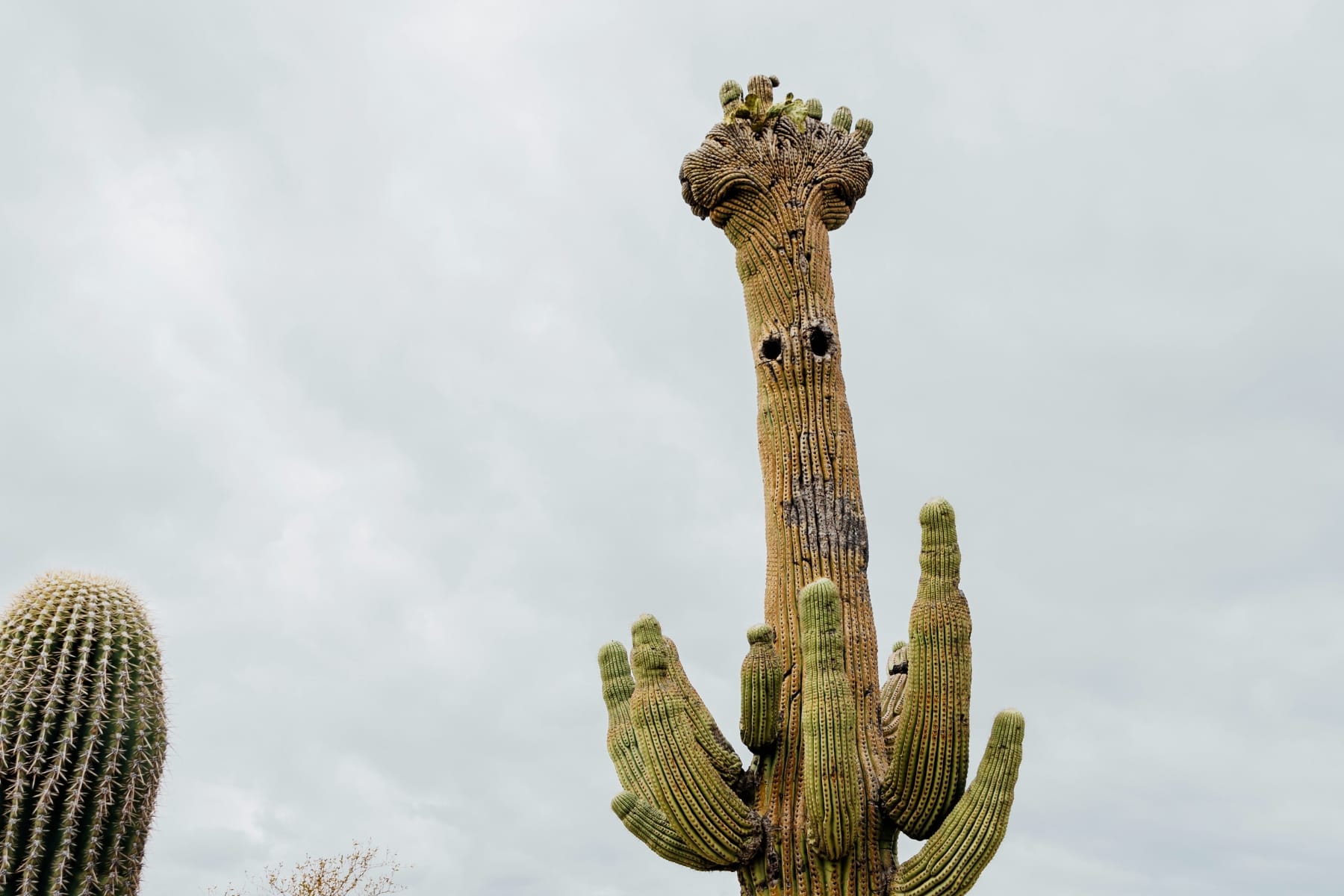
The name, crested saguaro, comes from an abnormal trait among the plant where the top of the cactus begins to splay and fan out, resembling the crests of a coral bloom. There is on average one crested saguaro for every 200,000 saguaro. Scientists are uncertain as to the cause of the mutation.
In Tohono O'odham legend, the saguaro was once a child of the tribe, transformed to seed the land with generations of new saguaros. With its arms outstretched toward the sky, a crested saguaro, topped with a large, curling plume, resembles that figure more than any other.
Tohono Chul staff said Gumby had a "crown" of prickly pear cacti around its head while it was still alive. The variety of paddle cactus is so hardy it can grow in the smallest amount of dirt that collects in the folds of the cactus from dust storms or animal feet.
"What has been more or less determined is that saguaros have been in this region for, in the neighborhood of 10,000 years," Dash said.
That means humans living in the Southern Arizona region witnessed the saguaro slowly make its way northward from the Sonoran Desert.
With their fruit, shade and ribs used for construction materials, saguaros have long been invaluable to local communities. But the saguaro is a biological hub for more than just humans. From the time it first flowers to the moment its last water-filled cells dry up, countless living things live in, around or off of it.
Reverence for the saguaro extends from the past into the present. The Tohono O'odham still route paths around the plant rather than through it, and under Arizona law, it's illegal to move or destroy a saguaro without a state-issued permit.
"That being said, there is a lot of evidence to suggest that there are some major threats to saguaros," Dash said. "Increased heat and drought seems to be impacting the oldest age class of saguaros."
That's similar to humans, since advanced age or concurrent problems can cause a minor infection or disease to become fatal.
Dash said there's also been a measurable decrease in "recruitment," or the number of new saguaros making it to adulthood, a trend that, paired with the stress on older cacti, points to a troubling future for the species.
Saguaros are hardy, and Gumby's death is not catastrophic on its own, but as temperatures continue to rise and droughts grow longer, that hardiness is being put to the test.
Quentin Agnello is a University of Arizona alum and freelance journalist in Tucson. Contact him at qsagnello@gmail.com.
Tucson Spotlight is a community-based newsroom that provides paid opportunities for students and rising journalists in Southern Arizona. Please consider supporting our work with a tax-deductible donation.