Pima County tightens NDA rules after Project Blue backlash
Pima County supervisors tightened rules on non-disclosure agreements tied to economic development, a move sparked partly by secrecy surrounding the Project Blue data center proposal.
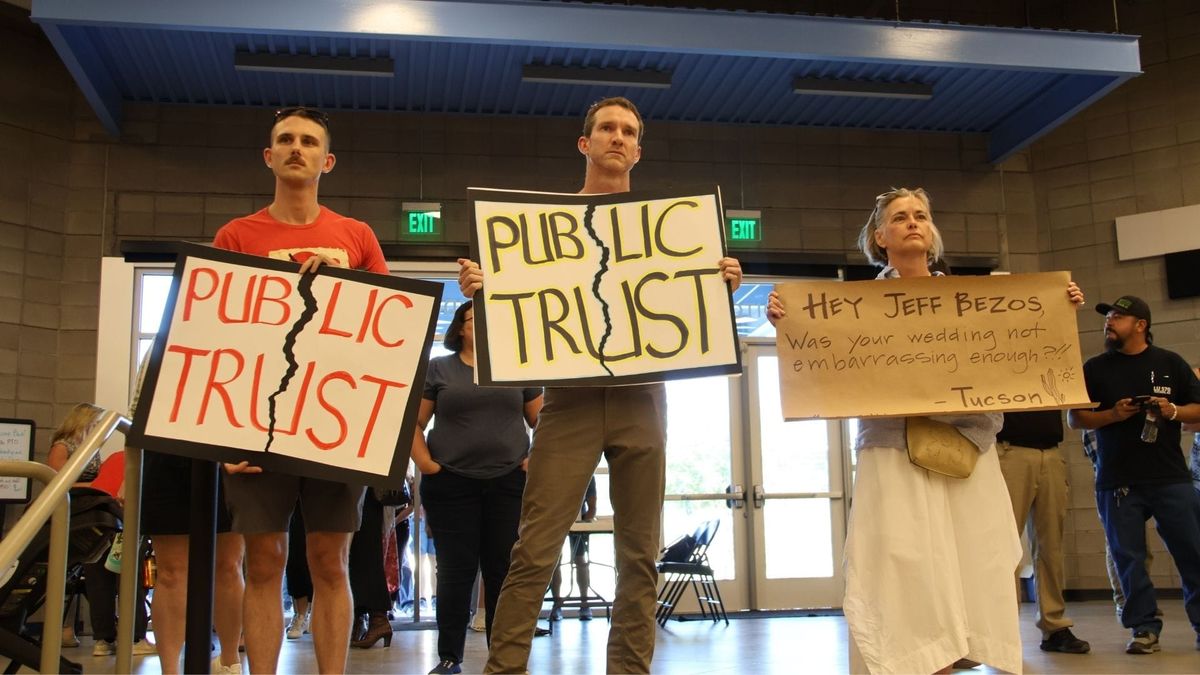
Pima County supervisors tightened rules on non-disclosure agreements tied to economic development, requiring public disclosure of NDA materials 90 days before any board action, in a move sparked partly by secrecy surrounding the Project Blue data center proposal.
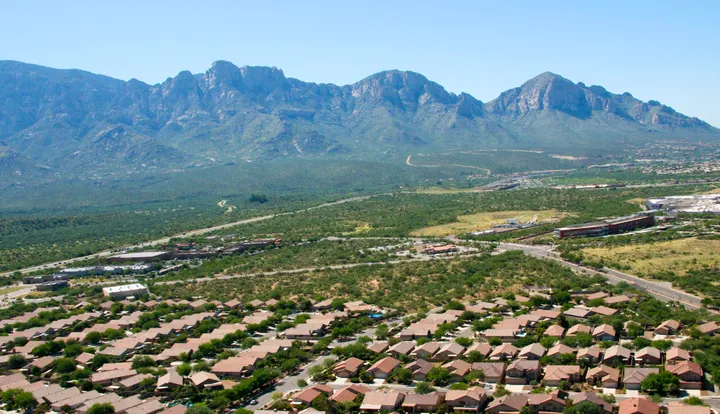
The county's NDA with Amazon for Project Blue, a proposed 290-acre data center near the Pima County Fairgrounds, drew sharp criticism after its terms were largely kept from the public, and the Tucson City Council later voted to reject the project outright.
Supervisors also voted during their Sept. 8 meeting to expand the economic development due diligence process to include large-scale water and power users. Both changes were approved 4-1, with District 4 Supervisor Steve Christy opposing.
The NDA policy change means the county will send letters to each party it's engaged with in a non-disclosure agreement, detailing the changes, including timeframe limits for the agreements. It will also require public disclosure of materials in the county's possession related to the topic covered in the NDA, released 90 days before any action requested by the Board of Supervisors or other county bodies like the Planning and Zoning Commission.
The letters will also ask NDA holders to confirm they want the agreement to remain in place, with no response within 30 days terminating it.
Supervisors receive quarterly reports on the county's NDAs during their meetings, but those discussions happen in executive session, closed to the public.
The county does not enter into unilateral NDAs, and any changes to agreements must be discussed with the county administrator and county attorney's office.
County policy also requires the county administrator to report to supervisors on the scale of a project and its NDA once the agreement's timeframe expires, which defaults to 180 days, if the other party requests a one-year renewal for board approval. The change also clarifies the administrator's role in that process.
Tucson Spotlight trains the next generation of Southern Arizona journalists and publishes their work free for everyone. No paywalls, no corporate backing — just readers who believe this community deserves better local news.
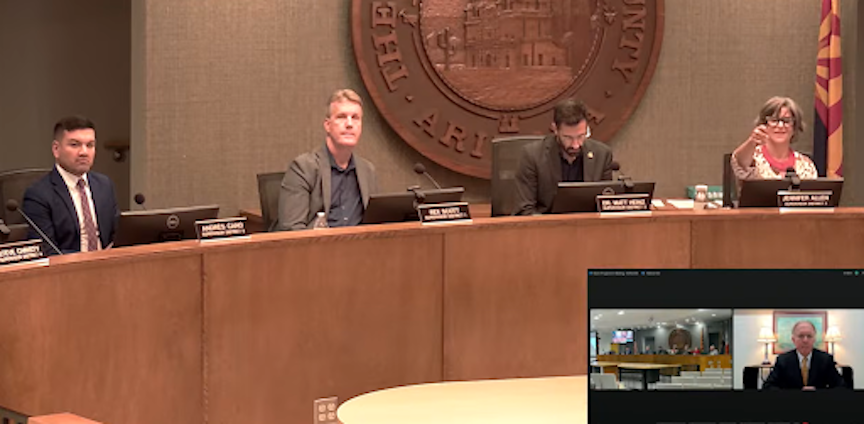
District 3 Supervisor Jennifer Allen said she does not support the use of non-disclosure agreements in government. While she said they make sense for negotiating purchase agreements, she called obscuring information from the public and reducing transparency "problematic."
“I think this policy is a great step towards putting in place transparency and creating some process by which we get a little bit of the NDA can be retained, but setting some clear communication about what that process is and when it ends and what can and cannot be obscured,” Allen said.
The board also expanded due diligence requirements for economic development projects, requiring a comprehensive project profile report with detailed information from proposers. The changes extend the process to anyone who uses more than 7.48 million gallons of water per month, the threshold for a large-scale water user, or who upgrades or builds a substation with an input voltage of 115 kilovolts or greater.
The board held a hearing and unanimously approved a request by Tucson Electric Power for a 138-kilovolt substation that falls under that criteria. Despite several questions from residents, officials said the substation is unrelated to Project Blue.
Allen suggested the due diligence policy borrow from the Pima County Health Department's data center framework, which calls for analyzing a project's pre-construction, construction and operations phases, not just within the project's bounds but also its cumulative impact on the region.
County Administrator Jan Lesher called the health department's framework the county's "gold standard" template for other departments working with large projects.
District 5 Supervisor Andrés Cano said he learned that several county staff members were "encouraged to refrain" from providing technical expertise on Project Blue. Lesher responded that unifying county information into one response template would help address that, along with potentially putting together a "minority report" if possible.
Allen said data centers are drawn to Arizona because of light regulation and called for the county to step up and handle that analysis in the absence of stronger rules.
“This policy is a step towards ensuring that we are doing that analysis. I think it creates the space for departments to know that that analysis is encouraged and it is now structured and codified in policy and we want to know their analysis for what is in the four corners of the project,” Allen said. “I think it's a really important policy to make sure that we are doing the due diligence to understand the information that we don't get from the absence of a larger regulatory environment so that we get impacts on land, air, water, public health, culture, history and the things that we need to protect and the things that make us the community that we love.”
Supervisors also approved a proposed 2027 fiscal year budget of more than $33 million for the Regional Affordable Housing Commission program. The budget passed 3-1, with Christy opposing and District 2 Supervisor Matt Heinz abstaining.
That's an increase from fiscal year 2026, when the county directed $21 million toward building more affordable housing and an additional $3.5 million toward keeping others in affordable housing.
That funding brought a total increase of 618 housing units, including 23 for transitional housing for the homeless, with 1,239 more units in development and 910 households able to remain in housing.
The additional funds will include $5 million to construct more housing and $3.7 million to help keep people housed.
Tom Litwicki, chair of the county's regional affordable housing commission, praised the county for "historic" investments in affordable housing, urging consideration of an additional $1 million from the general fund that the commission unanimously recommended.
Litwicki said rising interest rates are driving up construction costs, while a shrinking number of vouchers assigned to such projects is reducing rental support statewide, along with the state's low-income housing tax credits going unrenewed. The board took no action on the additional $1 million.
Ian Stash is University of Arizona alum and freelance journalist in Tucson. Contact him at ianjgs16@gmail.com.
Tucson Spotlight is a community-based newsroom that provides paid opportunities for students and rising journalists in Southern Arizona. Please consider supporting our work with a tax-deductible donation.