
Pima County rejects $45M Axon contract over AI concerns
The Pima County Board of Supervisors voted unanimously to reject a $45 million Axon contract, citing concerns over AI expansion, data privacy, oversight and costs.
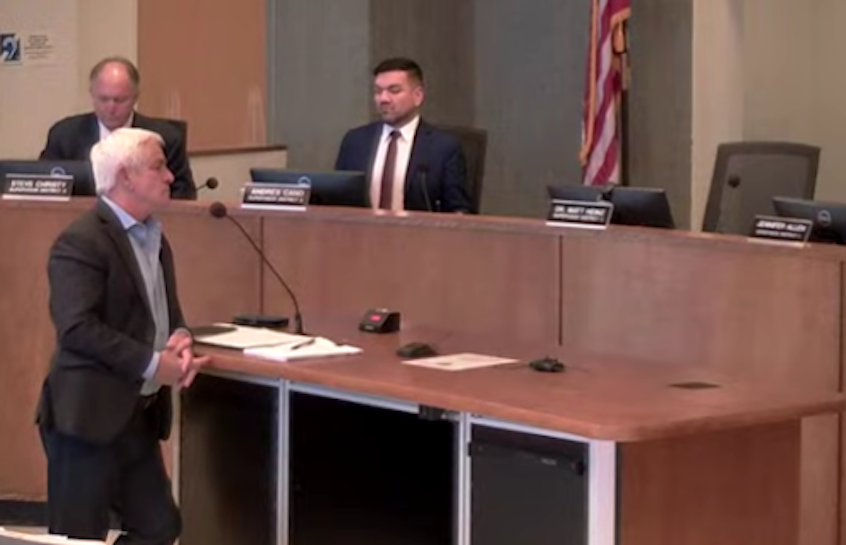
The Pima County Board of Supervisors unanimously voted against a proposed 10-year, $45 million contract extension with Axon Enterprise for tasers, body cameras and AI-related data services.
The board also directed county staff during the Jan. 6 meeting to review existing contracts between Pima County and Axon Enterprise and to adopt measures to strengthen oversight and mitigate risks. Those measures include conducting quarterly audits of Axon Enterprise’s access logs and security reports, assessing the company’s AI capabilities, and requiring explicit approval for any cross-agency data sharing.
The proposed contract would have extended the timeline for the existing Officer Safety Plans and drone hardware agreement through 2036 and established a new contract for AI technology such as Draft One, a program that uses camera footage to generate police reports.
The county’s Data Guidance Council had previously met to address concerns raised during the board’s Dec. 16 meeting, including issues related to civil liberties, privacy and the potential sharing of data with the federal government.
Axon Enterprise, formerly known as TASER International, is based in Scottsdale and produces law enforcement equipment such as electroshock weapons and body cameras. In recent years, the company has expanded into the AI market, including the 2025 acquisition of Prepared, which operates AI-powered 911 technology.
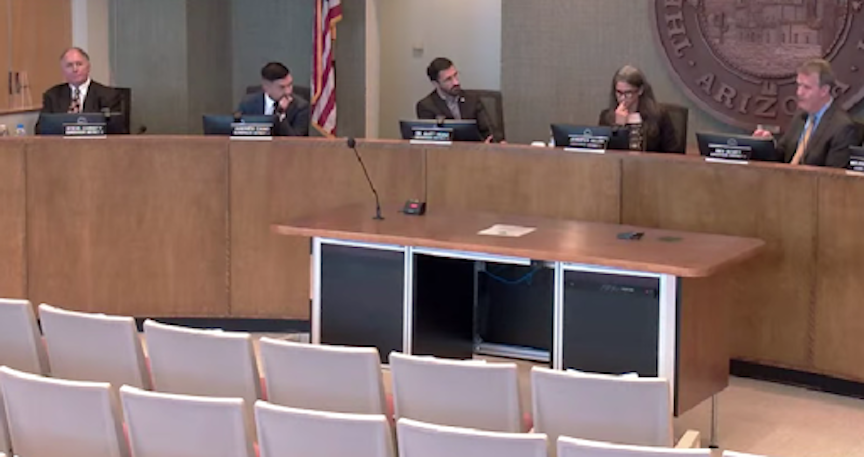
District 3 Supervisor Jennifer Allen said she felt Axon was attempting to confuse the county by layering expansions and seeking to extend a contract that still has five years remaining by an additional 10 years.
“I am also concerned about the content of this contract, layering on expansions of AI,” Allen said. “That is fairly unprecedented when we have a federal administration that is actively and aggressively seeking access to local governments’ and state governments’ data and opening up access to data within areas that have previously been protected. IRS data has now been made accessible to ICE. There was an effort to get into Social Security data, Medicaid data.”
District 4 Supervisor Steve Christy echoed Allen’s sentiment, expressing concern about the potential job losses that could accompany AI expansion in the Sheriff’s Department, especially in light of other budgetary problems within the office.
“We’re being asked to come up with another $45 million for AI and 0% for the deputies,” Christy said. “I think that really needs to be looked at.”
District 2 Supervisor Matt Heinz expressed support for aligning all of Axon’s contracts across Pima County departments to standardize language and term lengths, and for avoiding extensions longer than one year so they do not outlast the terms of the board members who approve them. Heinz said those steps could save the county tens of millions of dollars over the next decade.
Pima County Sheriff’s Office Sgt. Aaron Cross, who is also president of the Pima County Deputy’s Organization, wrote a letter to the board urging members to reject the proposal. He said he believes the Sheriff’s Department has excessive senior command staffing and that the funding would be better spent on deputy pay, particularly as the department struggles with retention.
“Axon body cameras already capture our citizens in the worst moments of their lives — often from the inside of their homes,” Cross wrote. “Axon gathers and stores our evidence. Axon programs are on our county phones. Axon supplies our less lethal equipment. Now Sheriff Nanos wants Axon to write our reports. Our public agency is rapidly becoming ensnared by a private corporation. Soon we will be so entangled with Axon that the consequences of breaking free will be too high.”
Dave Smith, a former police officer and law enforcement writer and video producer, said he has long advocated for new law enforcement technologies, including Axon’s Taser. However, he said the Sheriff’s Department is on a “spending spree” tied to new technology and urged the board to rein it in.
Another resident who spoke at the meeting, Lawrence Johnson, said she was concerned about sending Pima County dollars to the Scottsdale-based Axon. She also urged the board to put large contracts like this out to bid to encourage competition and lower costs, calling it fiscally irresponsible not to do so.
After concluding discussion on the Axon contract, the board turned to internal leadership matters. Supervisors elected Allen as the 2026 board chair and Heinz as vice chair. They will assume their new roles at the board’s next meeting Jan. 20.
District 5 Supervisor Andrés Cano, who nominated Allen for the chair position, praised her steady tone, lifelong pursuit of environmental and social justice, and attention to community values. He also noted that District 3 is largely rural.
“District 3 includes communities that often have to fight harder to be seen and heard in county government, families living far from services most of us take for granted, residents facing long drives for health care and basic needs, and communities that feel the pressure of growth, drought and infrastructure gaps in real time,” Cano said. “That vantage point matters in a board chair because it forces us to govern for the whole county — urban and rural, incorporated and unincorporated — and to do it with urgency and fairness.”
Ian Stash is a journalism major at the University of Arizona and Tucson Spotlight intern. Contact him at istash@arizona.edu.
Tucson Spotlight is a community-based newsroom that provides paid opportunities for students and rising journalists in Southern Arizona. Please consider supporting our work with a tax-deductible donation.