Glowing folklorico dancers mark Día de los Muertos in Tucson
Folklorico dancers, mariachi and an ofrenda for a late dance company creator opened the Cathedral Concert Series season at St. Augustine Cathedral in Tucson.
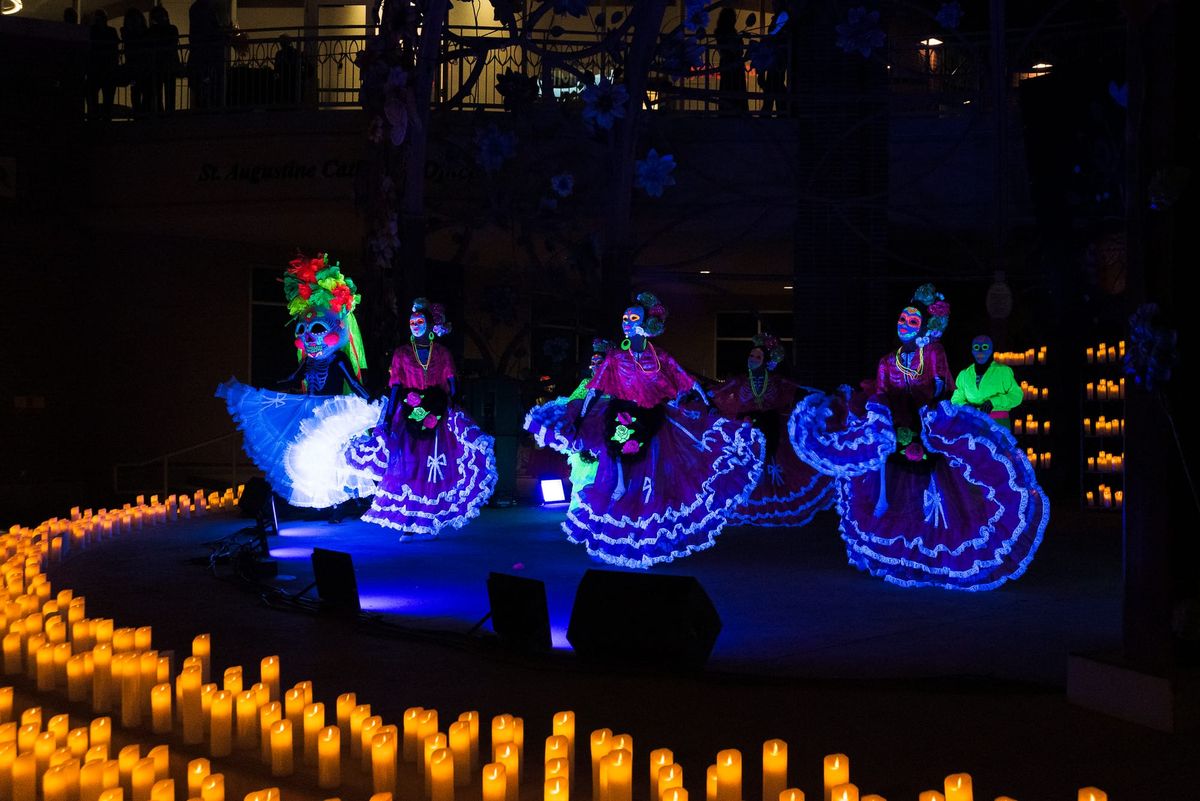
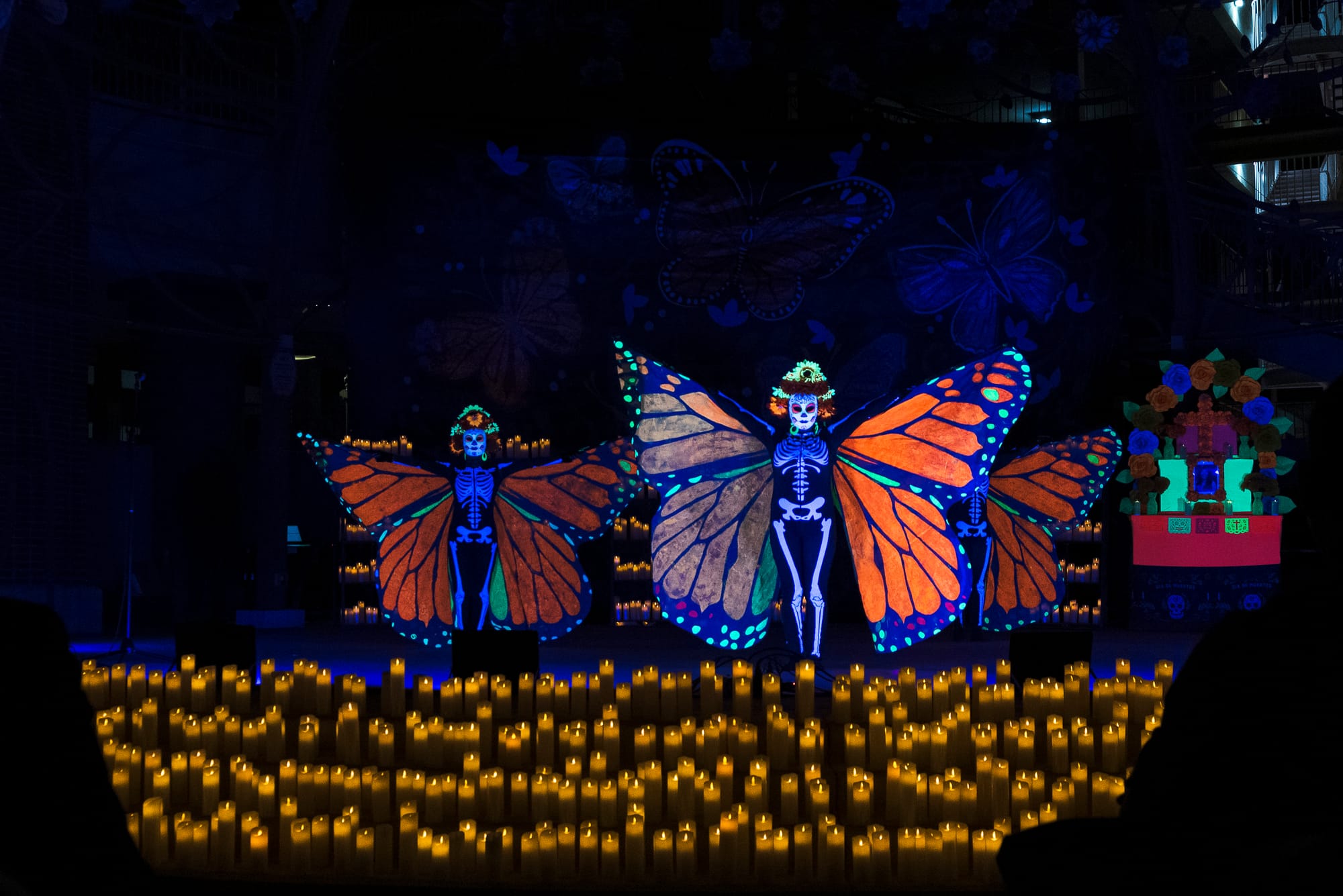
Folklorico dancers in glow-in-the-dark costumes lit up the placita at St. Augustine Cathedral last month as the Cathedral Concert Series opened its season with a Día de los Muertos celebration.
The Oct. 28 celebration honored Mexican traditions and loved ones who have died, with the sound of mariachi music and colorful costumes filling the placita next to the cathedral.
Carlos Zapién, the Cathedral Concert Series’ artistic director, organized the event in collaboration with Viva Performing Arts and Mariachi Sonido de México.
“It’s a joy to work with other local groups and to have that synergy as all these efforts come together and to be able to present a nice show for people,” Zapién said.
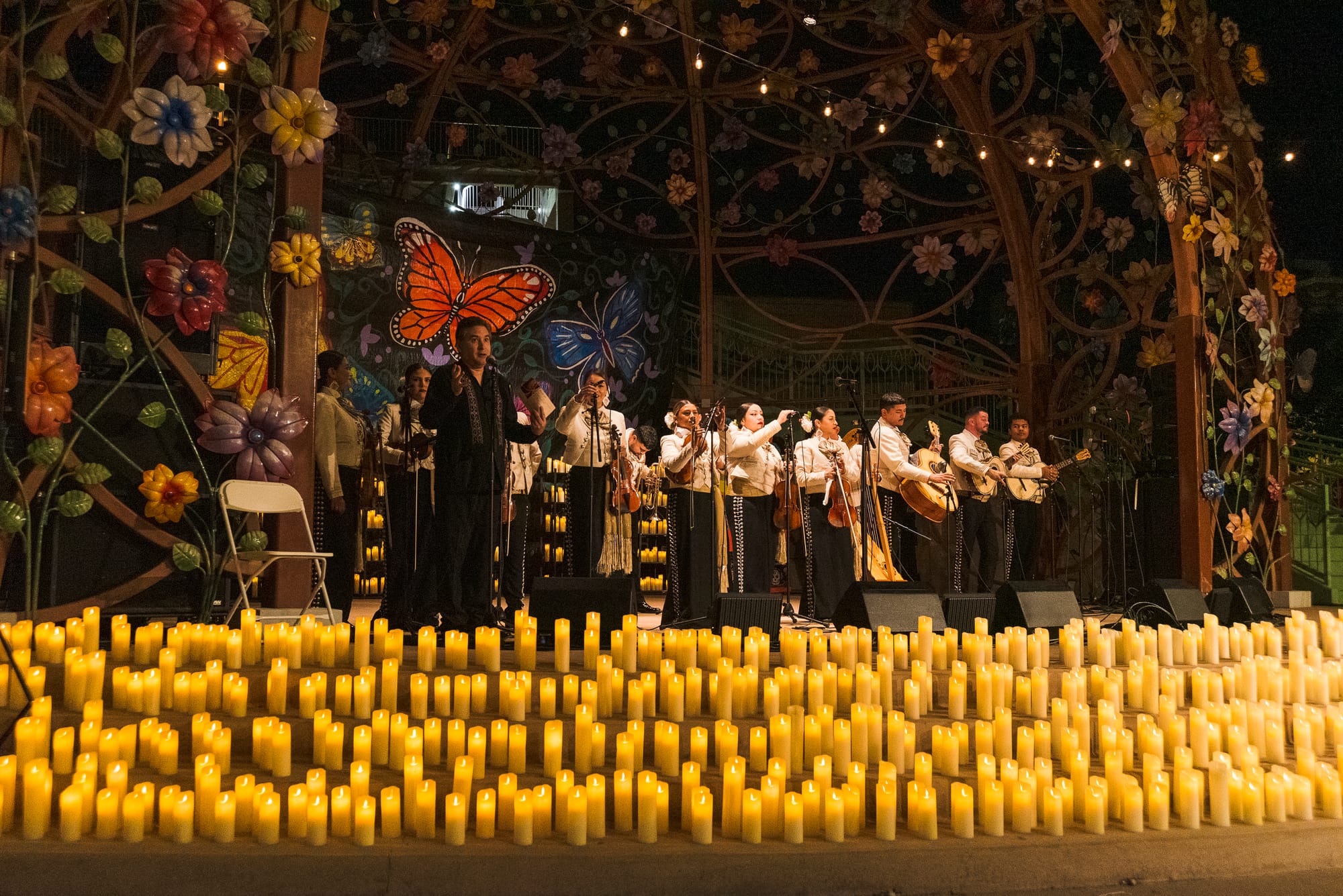
A beige, shell-shaped dome covers the main stage at La Placita, wrapped in green vines and decorated with metalwork flowers and butterflies. Guadalupe de la Torre created the backdrop for the celebration, with illustrations of colorful butterflies that matched the candlelit stage.
The night began with a performance by Mariachi Sonido de México, including “Jarabe Tapatío,” “Recuérdame” and “Noa Noa.” An ofrenda stood on the right side of the stage, with a framed photo of Viva Performing Arts creator Julie Gallego, who died in June.
“This collaboration was also a way to pay tribute to her,” Zapién said. “Her legacy lives on through the dance company.”
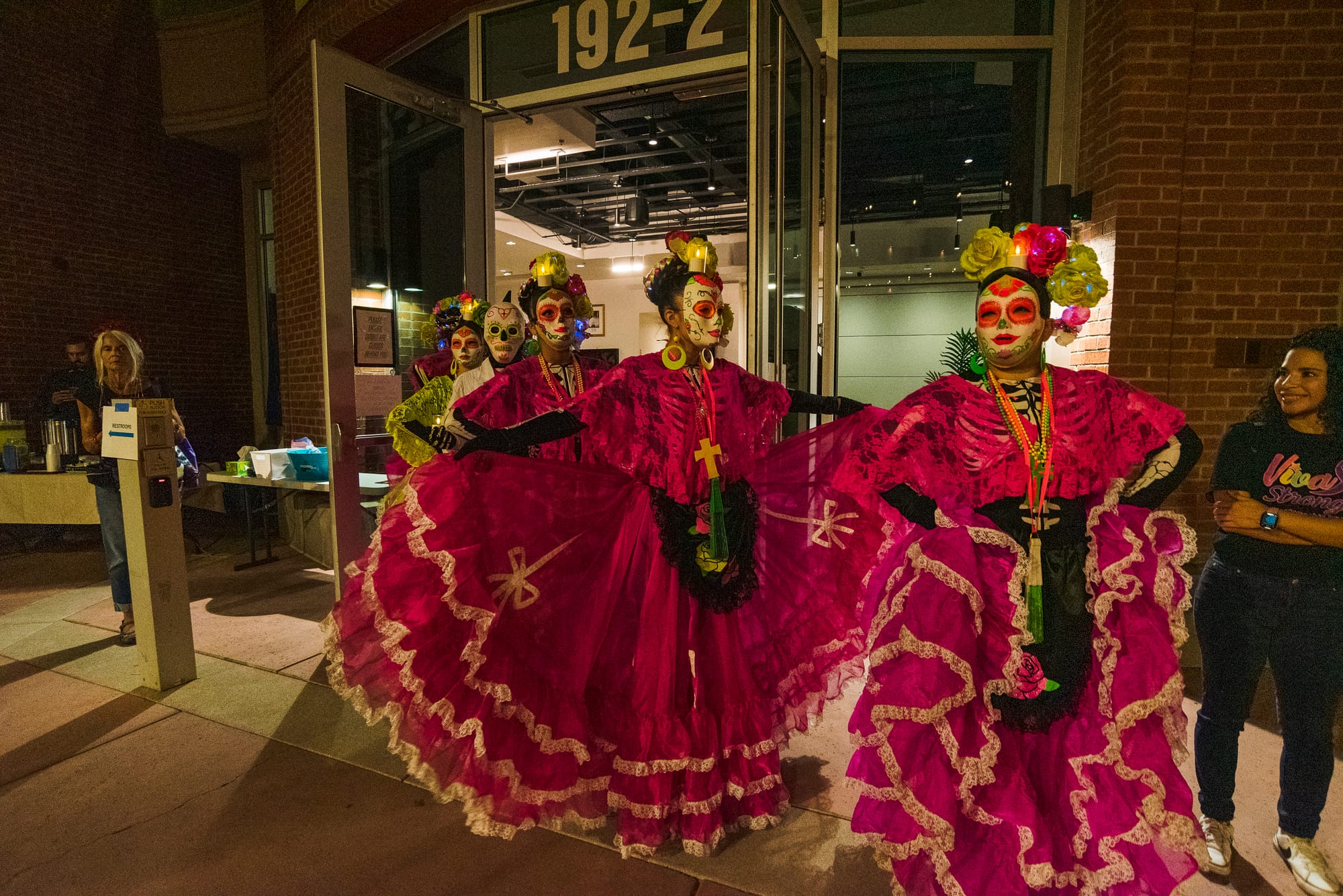
Performers wore fluorescent neon colors that glowed under the stage’s black lights. Their painted masks, jewelry and dresses shimmered as they cheered one another on.
Each set featured a variety of folklorico styles, from regions like Jalisco to Veracruz, where dancers stood out in white embroidered dresses and lace. Narrations between most of the dances explained the significance of each one and the history of Día de los Muertos.
“Each narration tried to explain something particular about the region,” Zapién said. “I remember that Julie mentioned to me we should put some narration in between each set so people will have an idea of why we’re having this set of the butterflies dancing, or the Danza de los Viejitos … from the Michoacán region.”
These styles represent Day of the Dead celebrations, which take place at the beginning of November across Mexico, with different traditions and practices honoring generations of loved ones who have died.
“I lived in Michoacán for a year or two, so I’m well aware of the customs and traditions of places like Janitzio and Pátzcuaro, and what it means to place an altar with candles and a photo of a loved one that is no longer with us,” Zapién said. “It’s a beautiful tribute to the ones that shaped us people, who were influential and formed us the way we are.”
The Cathedral Concert Series stages performances like the Día de los Muertos celebration in open spaces such as La Placita and in the cathedral’s chapel, which seats about 100 people. Zapién was inspired to create the series in a cathedral to draw the community together to celebrate music in a sacred place. He said the Diocese of Tucson is a strong supporter of the concerts, especially since the Catholic Church has long been a major patron of the arts.
“The Cathedral campus is beautiful, and I think that it’s a good space for promoting the arts, for promoting culture and the community needs more offerings of such performances that are free,” Zapién said.
After studying in Germany, Zapién came to Tucson and has seen a great change in the community in the past 14 years. He has watched the city and businesses come together to invest in making downtown a center for the arts, and he sees how the concert series contributes to that revitalization.
“I think that there is more appreciation for the arts in many forms, and there are quite a few cultural and artist groups,” Zapién said. “The biggest, of course, are the Tucson Symphony, the Arizona Opera, and the Tucson Ballet, and we are only a small part of the entire map of cultural programmers in Tucson.”
Each season has six to seven performances from October through March or April, depending on the weather. The theme of the 2026-27 season is “Confluences,” meant to showcase different genres of music coming together, including early music, a medieval ensemble and contemporary music. Zapién said each genre conveys something emotional to listeners, and together they create a single line of music and art.
Upcoming events include Christmas at the Cathedral on Dec. 16, which will welcome close to 1,000 people into the cathedral and feature performances by the Tucson Girls Chorus and the Tucson Arizona Boys Chorus. In February, Paraguayan artists Takuá Guitar Dúo will perform classical guitar with a fusion of Latin American folk music.
Kenia Licea is a University of Arizona journalism student and Tucson Spotlight intern. Contact her at klicea2004@arizona.edu.
Tucson Spotlight is a community-based newsroom that provides paid opportunities for students and rising journalists in Southern Arizona. Please consider supporting our work with a tax-deductible donation.