Ex-UA professor alleges retaliatory welfare checks
A former UA professor says the university requested two involuntary mental health evaluations after removing him from his tenured position.
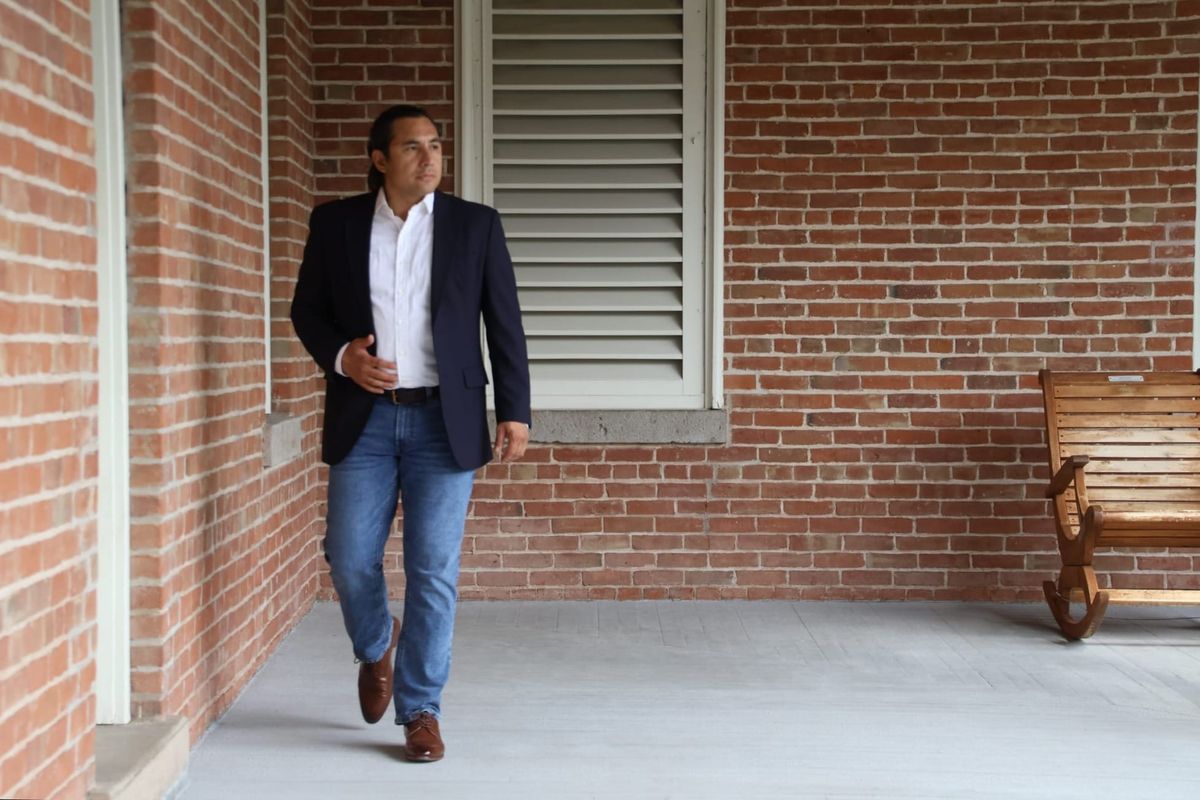
A former tenured University of Arizona professor told the Faculty Senate Monday that the university requested two involuntary commitment evaluations in the days after it removed him from his position.
Dr. Jose Soto, a former associate professor in the School of Natural Resources and the Environment, said the Pima County Mobile Crisis Unit came to his home twice last year to assess whether he should be involuntarily committed under Title 36 for a mental health evaluation.
Soto addressed the Senate during open session at its Aug. 31 meeting, asking for a formal investigation into the incidents.
"I told them I have nothing to hide," Soto told Tucson Spotlight of the March 25, 2025 visit.
He said it was after hours when he answered the door the second time, the next day.
"I'll go right here barefooted with you. Let's go," he said he told the crisis workers, saying they stepped away, made a phone call, and returned. "They came back and told me, 'We don't need to take you. You're okay.'"
Both evaluations found no basis for action, according to Soto and documentation from Community Bridges Inc.
Soto said the visits occurred the day after the university separated him from his tenured position, an action he said the university has characterized as a voluntary resignation.
"I did not resign," he told the Senate Monday.
Tucson Spotlight is free for every reader because donors make it possible. Join them.
The UA sees it differently.
"The employee resigned from the university on March 25, 2025," said UA spokesman Nick Prevenas. "It is the university's practice to not comment publicly on individual personnel matters."
By UA's own framing, at the time of the crisis unit visits, he was a former employee and a private citizen.
"It opens up more uncomfortable questions," he told Tucson Spotlight. "Because if from their point of view I was no longer affiliated with the university, that means that they called (for a mental health evaluation) on a citizen."
Soto said he learned who requested the visits after contacting the crisis unit directly, with the document from Community Bridges Inc. identifying the requestor as "employer Catherine."
Soto and Faculty Chair Leila Hudson believe this refers to Kathryn Stoner, the School of Natural Resources and the Environment director, reasoning that a dispatcher may have misheard or misspelled her name. UA declined to say if she was involved.
"What they were alleging in the report was ludicrous," Soto told Tucson Spotlight.
The requester said Soto had grown withdrawn over the prior year and had once mentioned buying a firearm and taking classes on how to use it.
"The period that she cites for which I'm not communicating with other faculty, I went on sabbatical. Anybody would tell you, 'Well, it is a sabbatical,'" he said. "And I don't recall a conversation with anybody about guns, but even if I did, I have the Second Amendment. That's not a crime."
Soto grew up in Ambos Nogales, born in Nogales, Sonora, and raised on the Arizona side, and holds dual U.S. and Mexico citizenship.
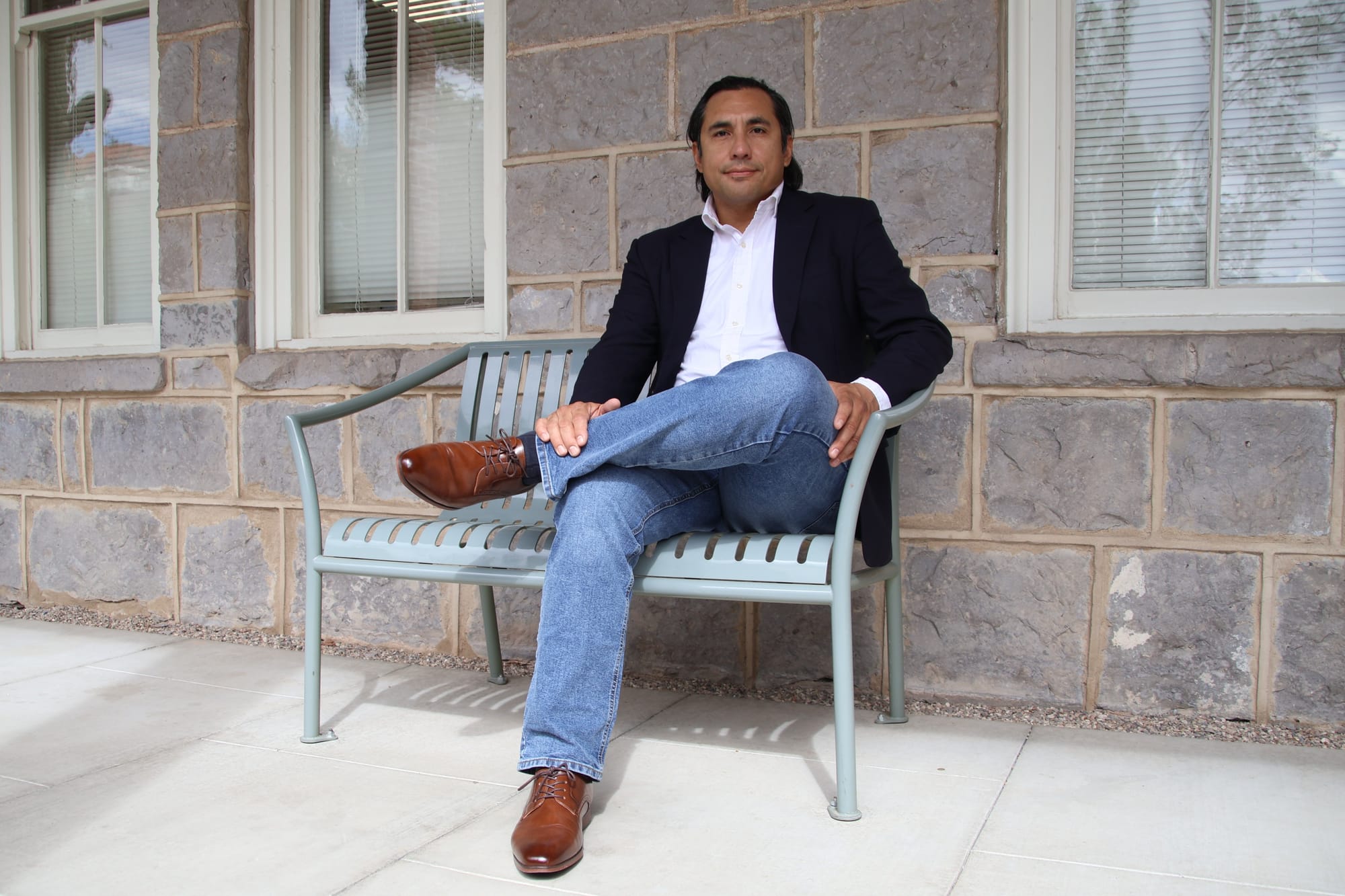
A first-generation college student, he trained as a certified nursing assistant through the Fred G. Acosta Job Corps Center before enrolling at Pima Community College and later the University of Arizona, where he earned his bachelor's and master's degrees.
He returned to UA in 2017 as an assistant professor in the School of Natural Resources and the Environment after earning his doctorate in food and resource economics from the University of Florida.
"In academia there's something called the 'unicorn job,'" Soto said. "For some people it's Oxford, Cambridge, or Harvard. For me, it was UA because all my family is here."
He was given tenure in the summer of 2023 and appointed soon after to UA's Strategic Budget and Planning Advisory Committee by then-President Robert C. Robbins on Hudson's recommendation, during the university's financial crisis that year.
Soto said he isn't asserting any connection between that role and his later separation.
Documents show a rumor had circulated as early as late 2023 or early 2024, months after Soto received tenure and more than a year before the crisis visits, describing Soto as appearing to be under the influence of methamphetamine when someone spotted him at a store.
Soto said the stereotype didn't stay just an insult. He said once it took hold, it recast him as someone dangerous, the same framing behind the push for his Title 36 evaluation.
"If I was not from the border, if I was the son of, I don't know, Bill Gates or something like that, would that rumor speak?" Soto asked. "If I was the son of a Nobel laureate, would that rumor speak, that I was a meth-head? My guess is that it only took root because I am a working-class person from Nogales."
That rumor was not the only thing circulating about Soto within his department.
A School of Natural Resources and the Environment faculty member and a former associate professor of practice separately described a department-wide email Stoner sent after Soto's separation, instructing staff to call 911 if they saw him on campus, while noting "no threat has been made."
Stoner also locked the School of Natural Resources and the Environment floors of the building for two weeks afterward, according to the two faculty members. She later held a meeting framed as a review of best practices that instead focused on Soto by name and raised the possibility of involving police, before backing off after university threat assessment staff said it wasn't necessary.
He said the situation and its aftermath left him without income.
"I've been for more than a year and a half without a salary. I'm being supported by my working-class family," he said. "If we think that (Stoner is) being honest with her view of the world, it is a view that is coded by this vulgar rumor that I'm somehow a meth-head running around campus with a gun."
Soto's separation triggered a hearing before UA's Committee on Academic Freedom and Tenure, the faculty body that reviews dismissals and forwards a recommendation to the president for a final decision.
Three of the panel's four CAFT members found that Soto had not resigned, and recommended he be reinstated. At issue was a note he'd posted to his office door on March 23, a typed reflection on fear and uncertainty tied to the online course he'd been assigned, with handwritten annotations referencing resignation. The university cited the note as his resignation, but the panel found it was not addressed to any administrator and could not reasonably be read that way.
Treating the note as a resignation, the panel wrote, "would render tenure status worthless."

UA's Office of General Counsel argued that the hearing itself was "improper and unauthorized" and made only a brief appearance to restate that position, and UA President Suresh Garimella did not follow the panel's recommendation.
"The implications of my case go beyond my case," Soto said. "It touches the very concept of tenure itself."
Soto and Hudson have said that during summer 2025 conversations, Provost Patricia Prelock and Vice Provost for Faculty Affairs Andrea Romero indicated they did not believe Soto had resigned; by late August, according to Hudson, the university had reverted to the position that he had.
He said what he wants now is straightforward.
"I want them to give me back pay and I want them to give me my tenure job back," Soto said.
Soto said he wants the university to publicly retract what it has said about him and clear his name with his colleagues, students, staff and the funding agencies that support his research.
"I also want them to do an investigation, an internal review of protocols," he said.
He's asked the Senate to open a formal inquiry, citing an Aug. 18, 2026, letter from Hudson to Garimella and Prelock, in which she wrote that Stoner identified herself to the crisis unit as Soto's employer roughly 12 hours after his termination was processed, and asked the administration to investigate or she would ask ABOR to intervene.
Soto's account is not the first allegation of retaliation against UA to reach formal review or litigation, though the cases have had different outcomes. Tucson Spotlight reported on a federal lawsuit by tenured College of Education professor Keiron Bailey, who alleges a yearslong pattern of retaliation after reporting workplace harassment, saying he was fired without cause in 2023 before the university reversed the decision; he has since accused an attorney representing the university of witness tampering, and his claims remain active.
Tucson Spotlight has also reported on former UA business manager Clarissa Siebern, who says she was fired in October 2023 after raising concerns about understaffing and reporting violations of labor laws in her department; ABOR said she was fired over a delayed student payment. A judge granted summary judgment for ABOR in August, finding Siebern hadn't shown her complaints met the legal standard for whistleblower protection.
On Tuesday, she filed an appeal.
Hudson said Soto's experience isn't isolated.
"His case is part of a larger pattern," Hudson said.
She said the university's $1.1 million in outside counsel spending previously reported by Tucson Spotlight is "just a fraction of what's actually being spent," and that Soto's case reflects "the other side of the coin," where the university simply declines to participate in hearings rather than litigate them.
Hudson said she has seen the university encourage faculty facing contested dismissals to resign voluntarily rather than go through a hearing.
"Voluntary resignation on the part of the faculty member involves the waiving of all their rights," she said. "It's a really relentless strategy to purge the institution by means of hardball legal tactics."
Unlike Bailey and Siebern, Soto's case remains within the university's internal process for now.
"Hopefully I'm the last to go through it," Soto said of his experience. "And we can get some corrective mechanisms here."
Hudson said the stakes go beyond any one case.
"The (UA) is a public institution that has rules, procedures, and needs to respect the rights of faculty, especially faculty who are tenured as public employees, and cannot simply engage in these kinds of campaigns of opportunistic destruction," Hudson said.
Caitlin Schmidt is editor and publisher of Tucson Spotlight. Contact her at caitlin@tucsonspotlight.org.
Tucson Spotlight is a community-based newsroom that provides paid opportunities for students and rising journalists in Southern Arizona. Please consider supporting our work with a tax-deductible donation.