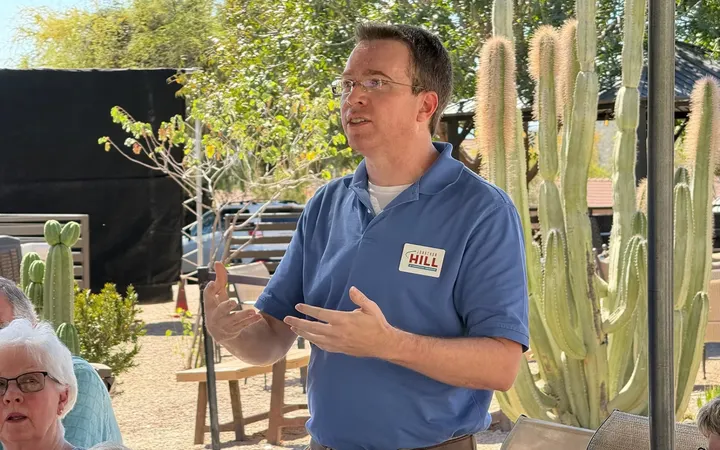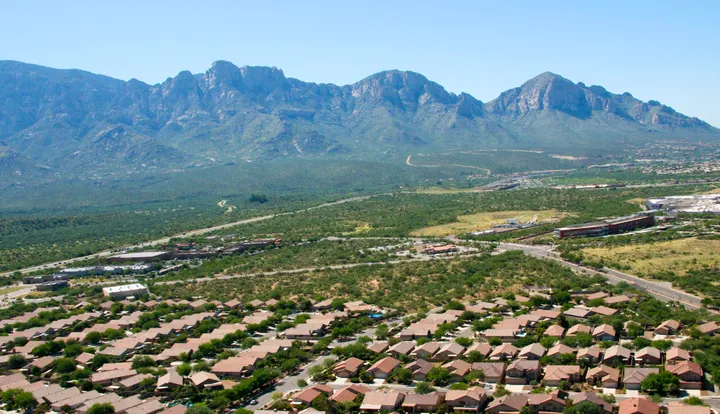
AZ Corporation Commission’s Thompson defends TEP rate hikes
Corporation Commission incumbent Kevin Thompson defends the 14% TEP and APS rate hikes and his record on water and data centers ahead of the Nov. 3 election.
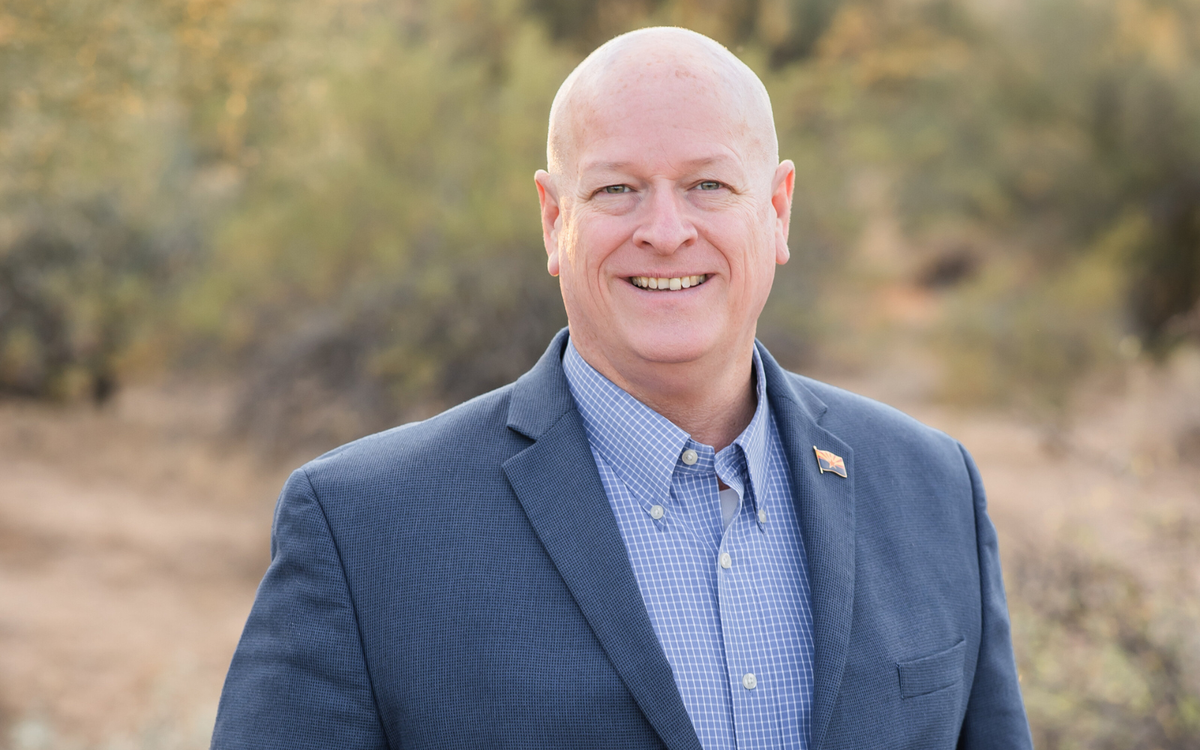
Kevin Thompson says the Arizona Corporation Commission has protected ratepayers during his first term, and he wants another to keep trimming the fat from utility budgets.
Thompson, a Republican and former Mesa city councilman, is campaigning on shielding ratepayers from utility waste and special interest handouts while keeping the energy grid and water systems affordable and reliable.
He is defending a record that includes the commission’s 14% rate hikes for customers of Arizona Public Service and Tucson Electric Power. Attorney General Kris Mayes has said the increases could have been cut to 3% for APS and 4% for TEP, a claim Thompson dismissed as election-year politics.
The five-member Arizona Corporation Commission regulates the state’s private utility companies, setting rates for electricity, gas, water and wastewater service. It also oversees business incorporation, securities and railroad and pipeline safety.
Commissioners serve staggered four-year terms, are elected statewide and are capped at two consecutive terms. Two seats are on the Nov. 3 ballot, both currently held by Republicans: Thompson, who won his primary, and Chairman Nick Myers, who lost his primary to state Rep. Ralph Heap.
Thompson and Heap face Democrats Jonathon Hill and Clara Pratte, who are campaigning as a joint ticket, and Green Party write-in Mike Cease in the general election.
Thompson’s campaign website describes him as a conservative who gained experience dealing with utility companies as an elected Mesa city councilman and says he has used his seat to speak for ratepayers.
Your membership pays emerging journalists to cover Southern Arizona the way it deserves.
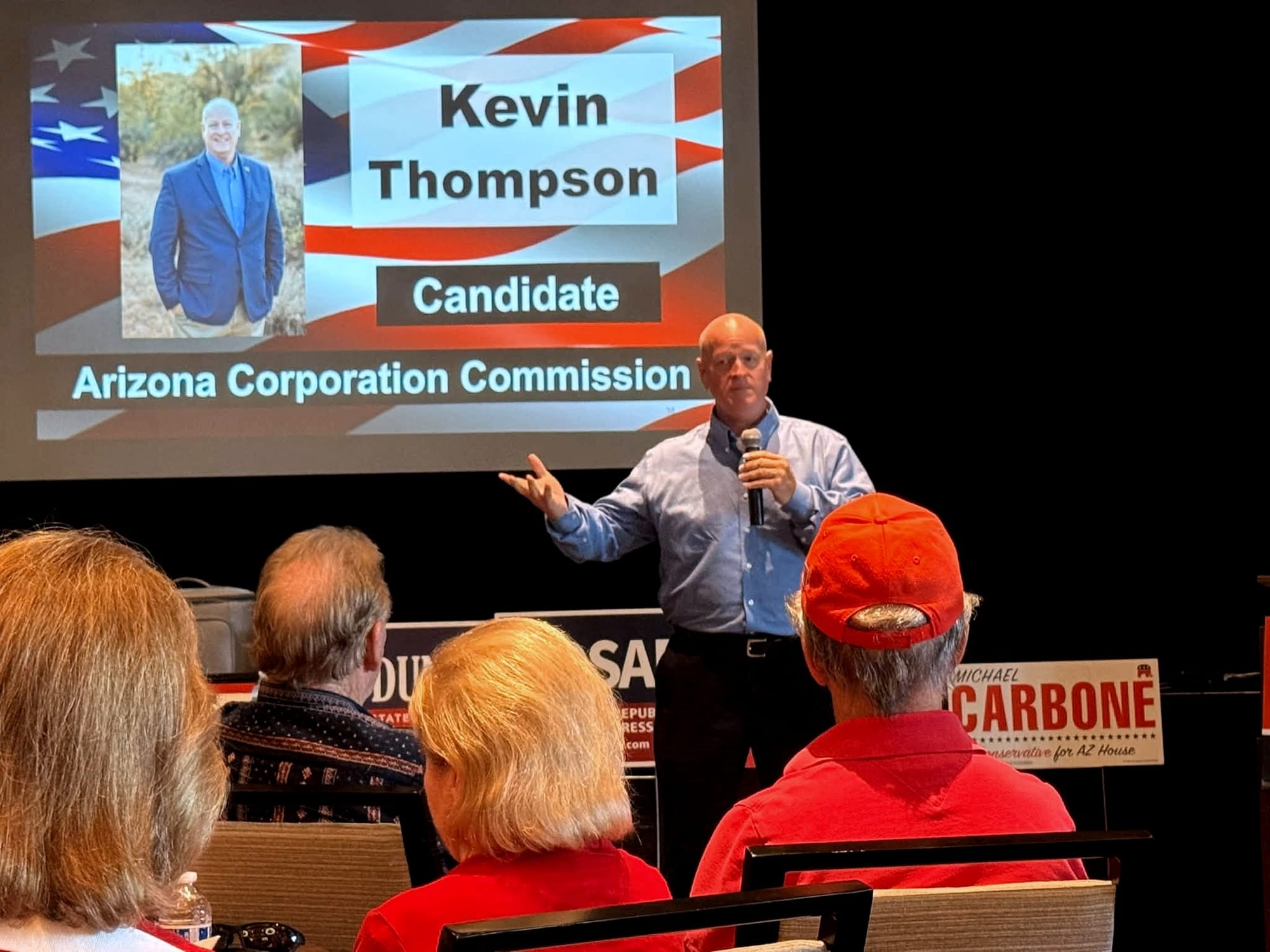
Thompson defended the process behind the rate hikes.
“Every rate case is fully litigated by a judge and involves multiple intervening parties, the public, and the utility,” Thompson said. “I’m a ratepayer too. No one likes a rate increase. So, my primary focus is to trim the fat from utility budgets and focus on costs that are necessary to improve or serve our grid.”
Thompson suggested that Arizona’s rapid economic and population growth and its desert climate contributed to the rate increases. He also said Arizona has one of the top 10 most reliable utility grids in the nation.
“Utilities are well-regulated monopolies,” said Thompson. “Our job is to look out for ratepayers, make sure utilities are staying in their lane, and reject special interest attempts to inflate your bills.”
Thompson said ex parte rules apply to both rate cases, so he can’t explain his or the other commissioners’ reasons for approving the increases.
“Paying your bills in the summer can be painful, but it’s important to remember that Arizona’s average cost per kilowatt-hour is far below the national average,” Thompson said.
Power isn’t the only thing on Arizonans’ minds. With regional watershed cuts and record-breaking heat, residents are more concerned than ever about their water use and rates.
“As ratepayers, we have to recognize water is a precious commodity in this state and we have been underpaying for the true cost of water for many decades,” Thompson said.
During Thompson’s four years on the commission, nearly 300 water providers have been consolidated into 200, he said, and some of the remaining ones have neglected to perform much-needed maintenance.
“As regulators, our job is to create an environment that fosters repairs, improvements and updates to systems while protecting ratepayers from unfair profits and subsidizing large water users,” Thompson said.

Data centers are a major concern linking water and power, with many Tucson and Marana residents worried about future utility costs.
“The commission has done its job of shielding ratepayers from costs associated with servicing data centers and other large load users,” Thompson said.
The data center in Pima County will have to meet several conditions, including paying for its full power allotment whether or not it uses it, covering the cost of grid construction and following strict water-use rules, Thompson said.
“The commission cannot tell a utility or a developer ‘No’ when it comes to building and servicing a data center or other large load users. That is the role of local zoning boards, the legislature or the governor,” Thompson said.
Commissioners are required to treat data centers the same as any other customer looking to hook up to the grid, he said.
“What we can do is make sure that all large load users pay their fair share, aren’t jeopardizing the integrity of our grid, and that ratepayers aren’t stuck holding the bill,” Thompson said.
His campaign has taken in $176,766 and spent all but $1, according to state campaign finance records.
KJZZ reported that the Arizona Citizens Clean Elections Commission found “reason to believe” Sept. 24 that Thompson and Myers broke rules on reusing signs from past campaigns, though no penalties have been imposed and their attorney said they did not knowingly violate the rules.
Quentin Agnello is a University of Arizona alum and freelance journalist in Tucson. Contact him at qsagnello@gmail.com.
Tucson Spotlight is a community-based newsroom that provides paid opportunities for students and rising journalists in Southern Arizona. Please consider supporting our work with a tax-deductible donation.