
Author John Birdsall brings queer food history to Tucson
Food writer John Birdsall discusses his new book "What Is Queer Food?" and his decade-long quest to trace queer history through food.
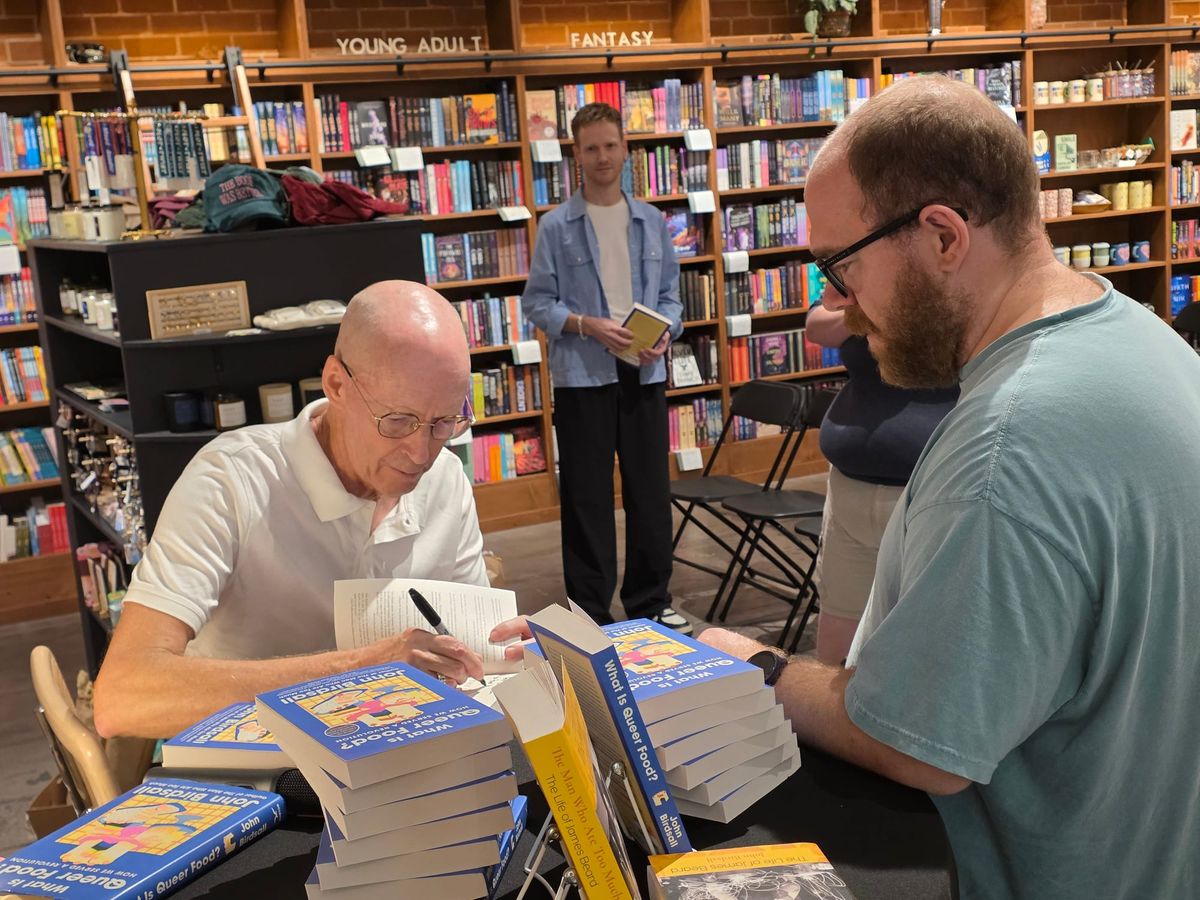
For John Birdsall, food writing has never just been about what's on the plate. For over a decade, he's pursued a single question: What is queer food?
Birdsall is a celebrated food writer, former restaurant chef and author of two books, whose quest to answer this question has changed the understanding of American food culture through centering queer voices and experiences.
His latest book, "What Is Queer Food? How We Served a Revolution," seeks to answer that question, tracing how queer people used food to build community and express identity throughout the 20th century.
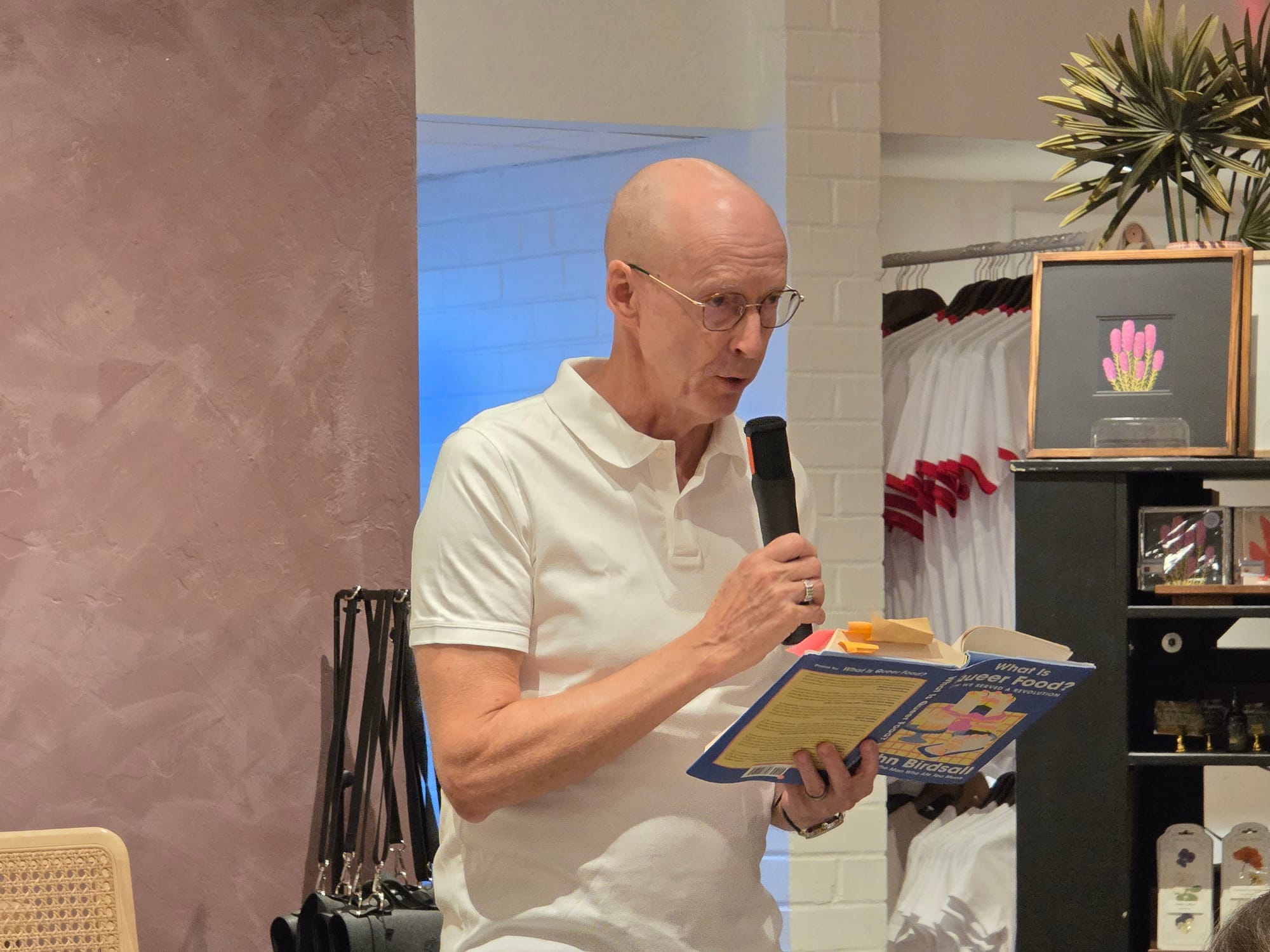
He discussed the book Sunday evening at Stacks Book Club as part of a National Book Lovers Day event.
"I have a chapter in my book about Richard Leonie, who was the great expat French food writer. Because he was gay and couldn't deal with the U.S, (he) moved to the south of France," Birdsall told Tucson Spotlight. "Richard has this recipe, it was published in the early 1970s, a composed salad. This ad hoc expression of what's around you, what's growing in your garden, what you find in the farmers' market, what your neighbors have brought you from the garden, which is I think, is one of the queerest truths I know."
Birdsall, who was born 10 miles south of San Francisco, didn't expect to fall into food writing after pursuing his English degree.
"I had never thought about food really growing up. My family had this really particular love of food, and my mom is a very good cook," Birdsall said. "After I got my bachelor's degree, I got a job writing at a trade magazine in San Francisco, literally, a mom and pop owned trade magazine company as an editor writing press releases for pens."
While working for the magazine, he dated a young man who worked as a waiter at a restaurant called Greens. The restaurant, a practice business for the San Francisco Zen Center, ran on a farm-to-table concept, with a daily menu that changed based on what farmers and growers had available locally each season.
"He took me to lunch there on a Saturday afternoon, where I had this salad. The lettuce had been grown at the restaurant's farm in Marin, so I could sort of imagine a farm where these lettuce were picked and trucked over the bridge …. it all just piqued my curiosity so much, and it was delicious," he said. "(The salad) had apples and walnuts, sherry shallots and bread, stilton, and all of those elements were new to me, and coming together in the way that they did in this incredible room just felt life changing."
Southern Arizona news written by journalists who live it. Free in your inbox.
As the Zen Center struggled to staff its businesses with students, Birdsall was brought on as a volunteer, and was eventually hired at the restaurant.
"That was incredibly meaningful work, and I never found a restaurant that was as intentional, special, as meaningful and means well," Birdsall said.
He expected to quit his restaurant job after a year to pursue writing, but ended up working as a professional cook for 17 years, eventually leaving due to burnout.
"I kind of harbored this dream to write since high school kind of began, but I had so little self-confidence that it just felt like an impossible kind of ambition," Birdsall said. "Writing while I was still cooking felt kind of safe, because it was like this is a hobby in a way, I took a few writing classes while I was cooking."
Birdsall went on to work as a restaurant critic and features writer for The Contra Costa Times, East Bay Express and SF Weekly, eventually finding himself at the San Francisco Sentinel, a newspaper serving the Bay Area's LGBTQ+ community.
"I think there were at least four LGBT weekly papers in San Francisco at the time, but the Sentinel, with Eric (Hellman) and with its writers and other editors, really wanted to, in a sense, step out," he said. "Instead of doing food coverage just about a casserole, he sort of gave me my mission, which was to write about food anywhere in the city, but try to have a gay point of view."
But he always circled back to what he calls his lifetime mission as a writer: to try to answer the question of what queer food is.
"I approached queer chefs and wanted to ask them how they felt about what they did, how queerness was reflected in their food, and these were chefs … like Elizabeth Faulkner, there was so much pushback," Birdsall said.
Birdsall recalled Faulkner pushing back hard, questioning why he was calling to ask such a question, how he planned to use the information, and insisting he had the wrong impression of her restaurant, which she said served everyone, not just a gay or lesbian clientele.
"(I) talked to additional chefs, and everybody I quoted and talked to in that story was telling me, 'Oh, this is a terrible idea.' Queer chefs, like Dominique Crenn were like, 'How dare you ask this question? What am I supposed to do? Put pride flags on the plates as garnishes?'" Birdsall recalled.
He eventually wrote an essay in 2013 for the quarterly food journal Lucky Peach, titled "America, Your Food Is So Gay," about how 20th-century male food writers such as James Beard, Richard Olney and Craig Claiborne were gay and shaped the food scene of the 1970s, challenging the straight, macho personalities that tended to dominate kitchens and asserting the validity of queer contributions to American gastronomy.
In the essay, Birdsall also wrote about growing up next to "Uncles" Pat and Lou, two openly gay men who were his neighbors, drawing on that experience alongside his time in the culinary industry to argue,
"It's food that takes pleasure seriously, as an end in itself, an assertion of politics or a human birthright, the product of culture — this is the legacy of gay food writers," he said.
His parents immediately welcomed Pat and Lou, despite pushback from other neighbors who felt they shouldn't be socializing with the couple or letting their sons visit. Even as a boy of seven or eight, Birdsall said he caught glimpses of the joyful life the two men led, centered around food and community.
That world ended abruptly in May 1969, a month before Stonewall, when Pat died of a heart attack at 39, Birdsall said. He said the loss of that joy and community stayed with him, resurfacing as an unconscious memory once he came out and began cooking himself, along with a recognition of how completely that world had been erased.
Birdsall said he later grew frustrated watching chefs he knew win James Beard Awards while having worked in homophobic kitchens himself, feeling the weight of an industry that marginalized queer people. That sense of injustice, he said, drove him to write a piece confronting that unspoken history, one he hoped the chefs themselves would read.
The piece went on to earn Birdsall a James Beard Foundation Award for Food and Culture.
"When it found an audience, when it became clear to me that people were reaching out to me, queer people in hospitality, or other food writers, kind of reaching out to me and saying, 'I've been waiting for someone to write this piece. Thank you for writing this piece,'" Birdsall said.
In 2016, he won another James Beard award for his piece "Straight-Up Passing: The State of Queer Chefs in America" that ran in Jarry, a biannual print magazine that explores the intersectionality of food and queer culture.
The essay explored the ongoing pressure queer chefs face to remain closeted or "pass" as straight in order to advance in an industry still dominated by heteronormative values.
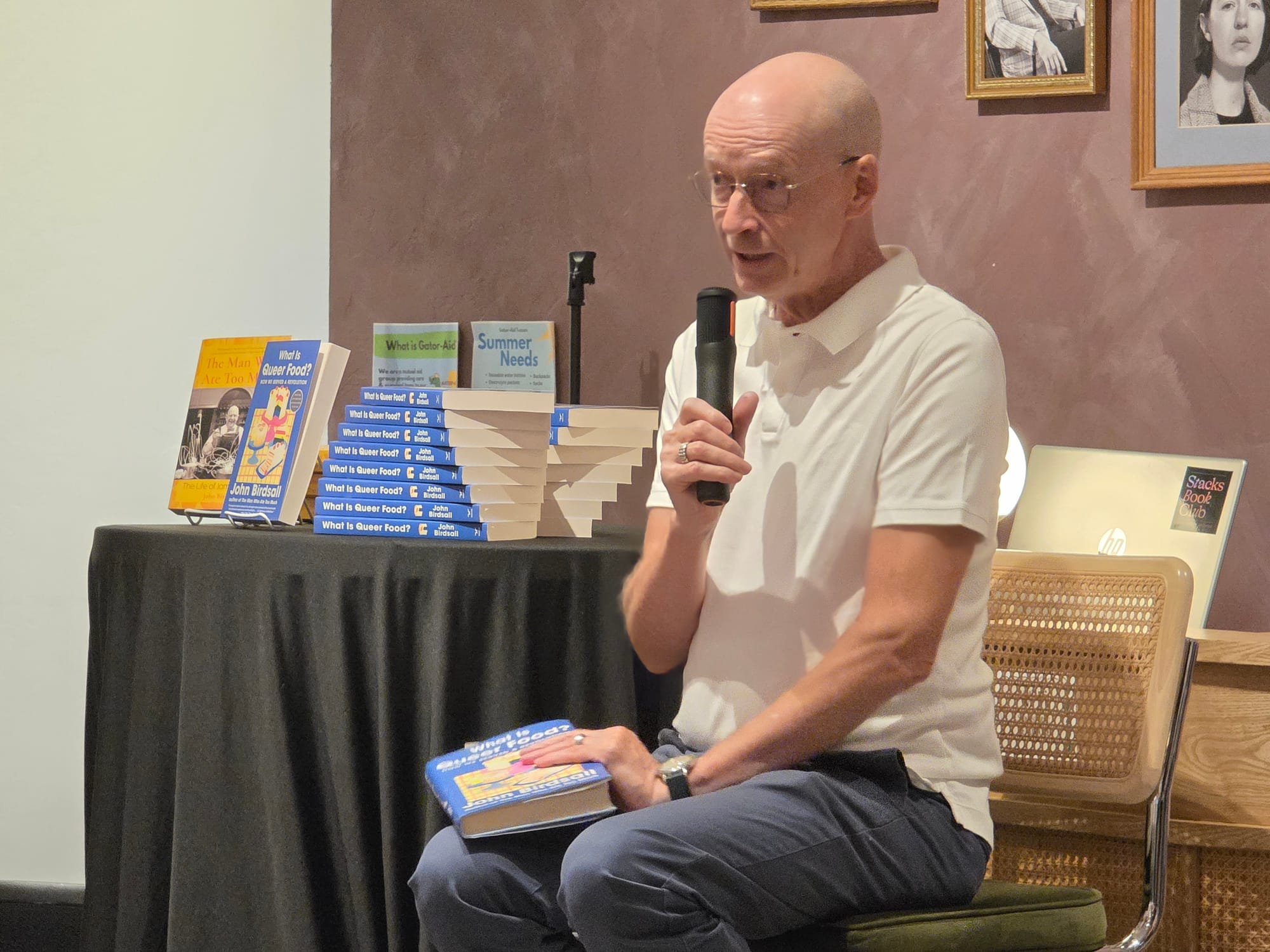
After co-authoring a book in 2018, Birdsall released his solo debut, "The Man Who Ate Too Much: The Life of James Beard," which profiles how Beard's queerness, though never publicly acknowledged, shaped his revolutionary approach to American food. The book argues that Beard's food vision was one of pleasure, community and resistance.
"It just seemed like the right moment. (A chefs') highest career goal is to win a James Beard Award, and the sense of injustice," he said. "Do you know anything about this person (and) the kind of homophobia that you express in your kitchen?"
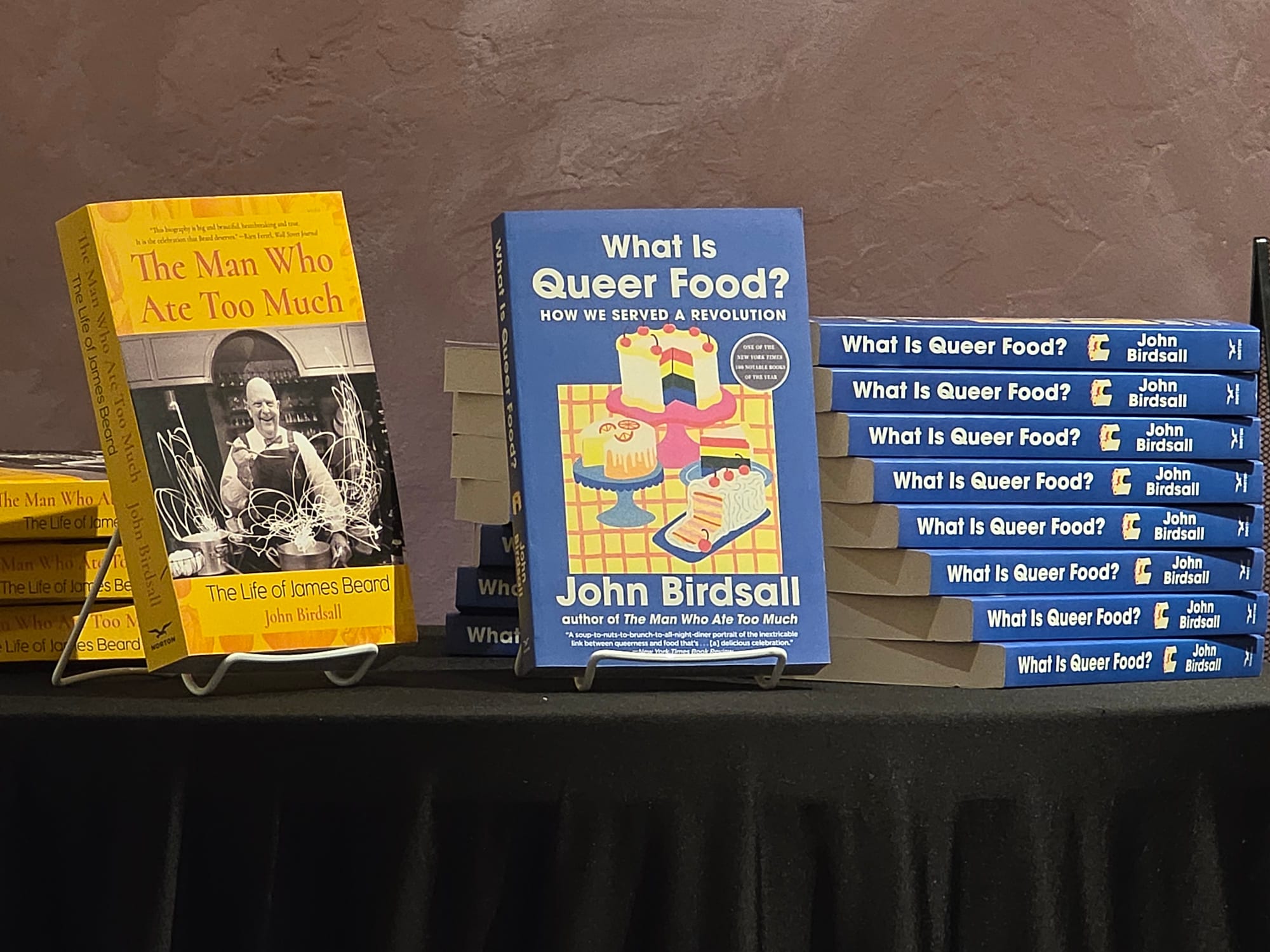
That question of legacy and injustice became the foundation for his next project. "What Is Queer Food?" examines queer history in the 19th and 20th centuries and how food played a major role in creating community and expressing identity at a time when queerness wasn't socially accepted.
From lesbians finding community over dinner in their homes to avoid Cold War-era homophobic purges, to the story of Harry Baker, who sold General Mills his recipe for chiffon cake in the 1940s, to the "gender-rebel divas" of San Francisco's opera and their paper chicken, Birdsall's book highlights the deep intersection of queer history and food.
"So much of my wanting to be rooted in the world as a gay person, queer (cooking) was part of this archeology. Finding these voices, finding these buried artifacts, and saying, 'Oh, yes, this is part of a bigger culture that had to stay quiet about itself, it couldn't come out' … it's something (that) was bequeathed to us, bequeathed to me," Birdsall said.
He considers this book a gift to the next generation of queer individuals, who have taken interest in queer food, establishing the first International Queer Food Conference.
"I talk to younger people, and it just feels like there's a hunger for knowing where current queer food, where it came from, what are the roots, and so I felt like my contribution could be something like teasing out some of the roots for people, and hopefully they take that information and do amazing things in the present and the future," he said.
Queerness, in modern times, is still intertwined with foods across all cultures and used as a tool for not only resistance, but joy at the table.
Birdsall shared the story of a young gay man who couldn't come out to his family but found an outlet in baking, with his mother buying him cake mixes. His father never spoke of it, but Birdsall said the man noticed his father quietly eating a slice each morning, an unspoken acknowledgment that became its own kind of coming out.
As he reflects on his career, Birdsall feels pride for having provided a path for people young and old to discover the importance food has on queer culture.
"I'm proud and honored to feel like I've been some part of it. It amazes me and makes me feel in awe," Birdsall said.
Topacio “Topaz” Servellon is a reporter with Tucson Spotlight. Contact them at topacioserve@gmail.com.
Tucson Spotlight is a community-based newsroom that provides paid opportunities for students and rising journalists in Southern Arizona. Please consider supporting our work with a tax-deductible donation.


