‘You didn’t listen’: Marana data center vote met with outrage
The Marana Planning Commission has recommended rezoning 600 acres for a proposed data center amid continued debate over environmental impacts and economic benefits.
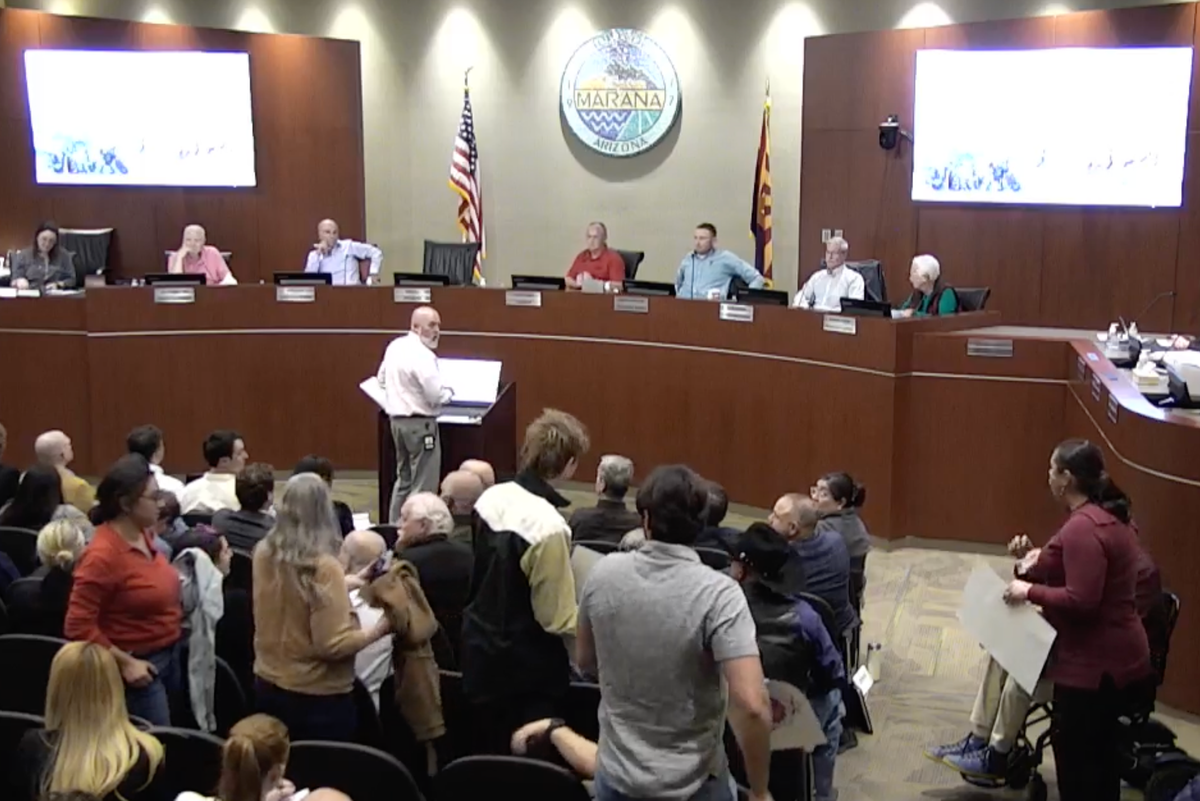
Despite vocal pushback from residents and local advocacy groups, the Marana Planning Commission unanimously voted last Monday to recommend rezoning land for a massive data center proposed north of Luckett Road.
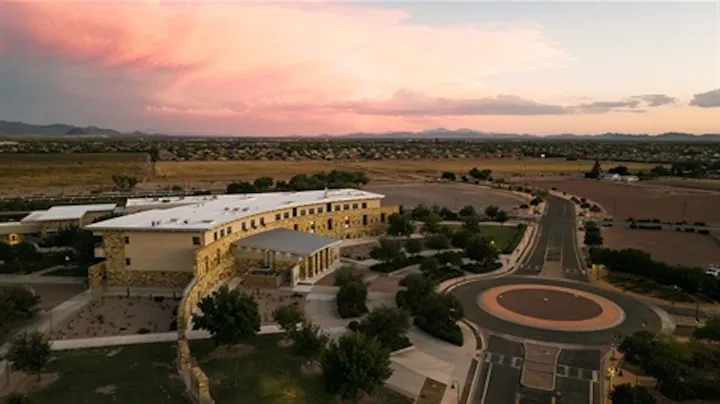
The commission reviewed two applications filed by the law firm Lazarus & Silvyn P.C. to rezone around 600 acres north of Luckett Road and west of Hardin Road for the construction of a data center. The firm has been representing Beale Infrastructure, the developer behind the proposed Project Blue data center in southeast Pima County.
“We look forward to moving the project forward for the council’s review and hope they are aligned with the commission’s recommendation,” Beale Infrastructure said in a statement following the vote.
The area around the proposed rezoning site includes a mix of land uses, including a solar energy field, active farmland and nearby homes.
Additional infrastructure improvements that would be required if the project is approved include a roadway expansion from North Luckett Road to Airpark Road, a three-mile potable water line, an estimated two-mile new force main and lift station, and a regional drainage channel design.
Beale Infrastructure said it will start construction on the project next year. The center would open by early 2029, said Keri Silvyn, a partner at Lazarus & Silvyn.
Help us fund student reporters across Tucson
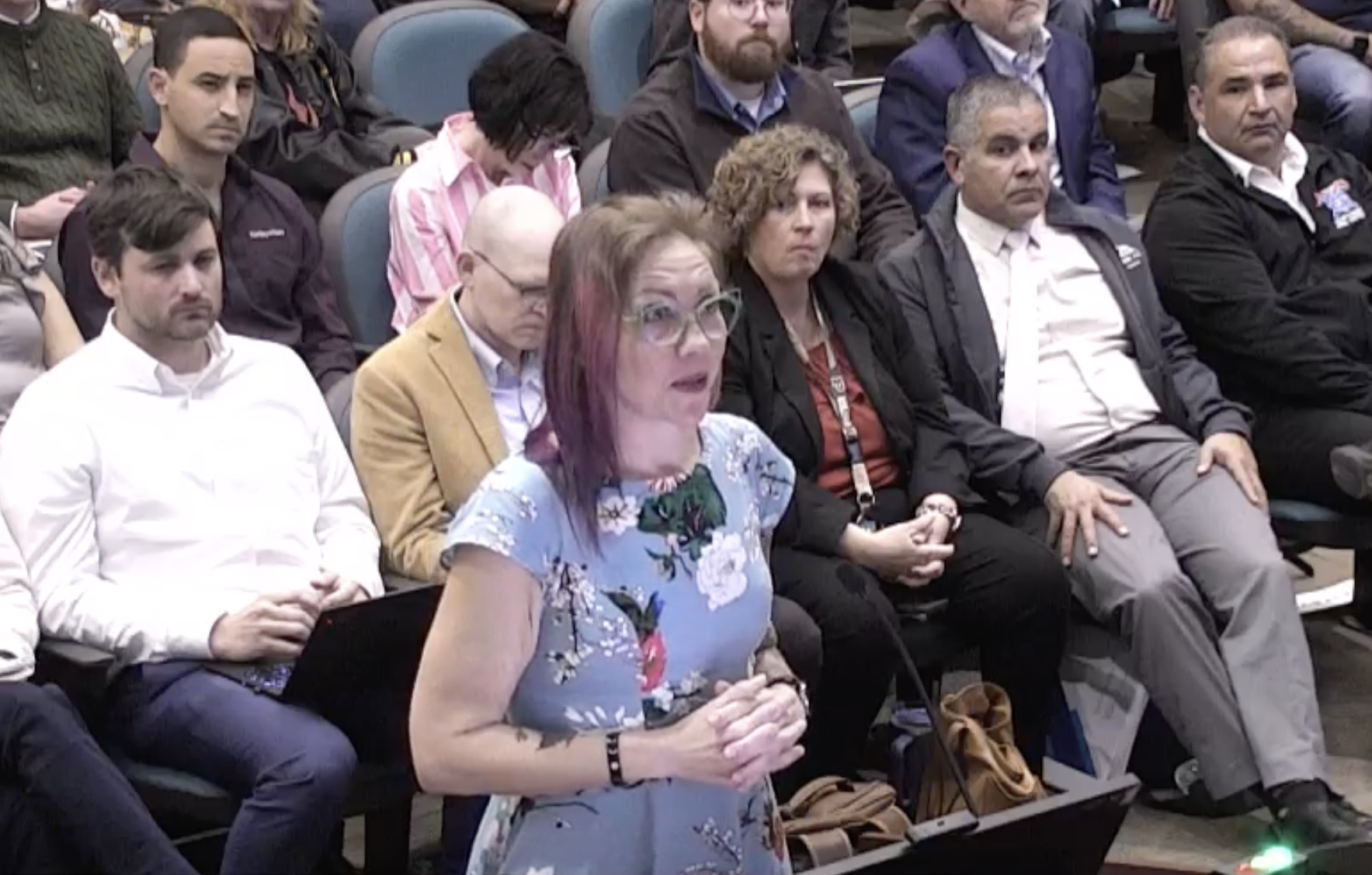
Representatives from the Town of Marana, Beale Infrastructure, the No Desert Data Center Coalition and several Marana-based utility companies were all in attendance for the vote, with the commission hearing from more than 20 community members.
The data center will use air-based cooling technology, which uses ambient air to cool the center’s servers. With air cooling technology, the center will use around 40 acre-feet per year of non-potable water, which is around a 95% reduction in water use, according to Silvyn.
“That’s really important for everybody to know. Beale heard people in the other jurisdiction about concerns with water cooling and has changed all of the plans to air cooling systems,” Silvyn said during the meeting. “That means there is no consumptive water for any of the industrial uses for cooling.”
Silvyn said the center will use around 550 to 750 megawatts of power. Trico’s board of directors worked hard to understand the opportunities data centers possess and created strong intake processing and guiding principles, said CEO and General Manager Brian Heithoff.
“Our director’s concern was protecting our membership from any negative reliability and financial impacts and we’ve developed a process to do exactly that,” Heithoff said.
Trico will require the data center to sign contracts agreeing to pay 100% of the upfront costs for all distribution and transmission infrastructure, as well as impact and feasibility studies and any additional generation and development costs.
“This protects our members, our community and the financial health of the cooperative,” he said.
The data center’s plan meets the Town of Marana’s data center ordinance, which was established in December 2024, according to Silvyn. The ordinance ensures data centers are built in industrial zones and allows the town to reduce the impact of large data centers and involve the public in the review process.
“Kudos to our town council and our town attorney who were forward thinking to come up with an ordinance,” said Commissioner Sharon Tyson. “This is an enforceable, legal document.”
The ordinance covers water and electric usage, noise limits, design appearances, zoning requirements and more.
Residents who opposed the data center reiterated the same environmental and economic development concerns the Tucson City Council and Pima County Board of Supervisors heard throughout the summer.
Jackie McGuire, a Marana resident and artificial intelligence, cybersecurity and research analyst, said the cost to construct two data centers will be around $120 billion.
“This is being funded primarily by private equity and debt that’s being hidden from public company balance sheets,” McGuire said, adding that the AI bubble will eventually burst, making this a financially unsustainable project. “This AI bubble bursting is going to materially impact my ability to pay my mortgage and I will have to pivot. I don’t want that for the entire town of Marana.”
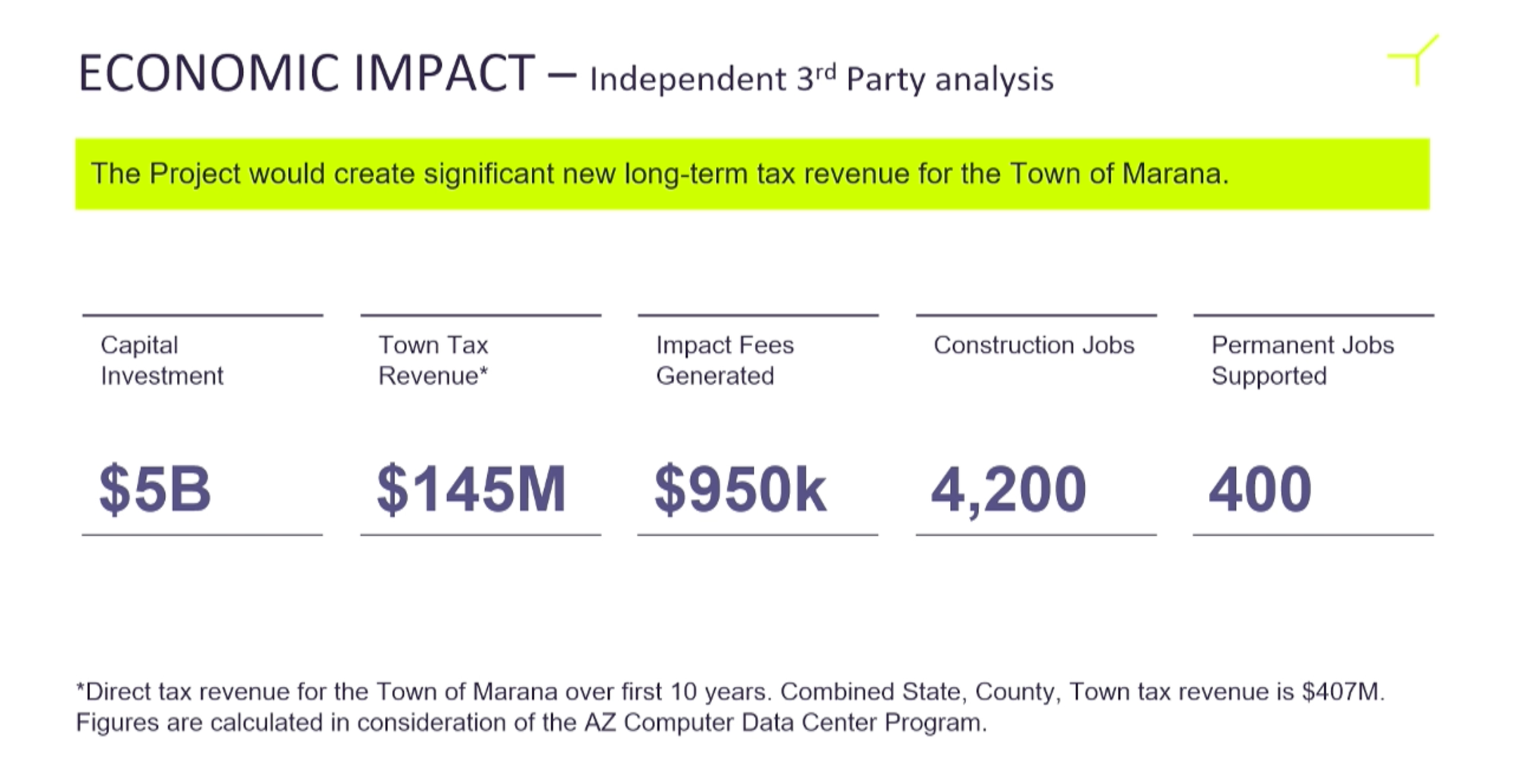
Residents who supported the application said the center will bring jobs, economic development benefits and help keep talent in the region.
“To me, that’s what economic development really looks like: people learning, earning and building a life in the community they love,” said Michael Guymon, chief advocacy officer for the Southern Arizona Chamber of Commerce.
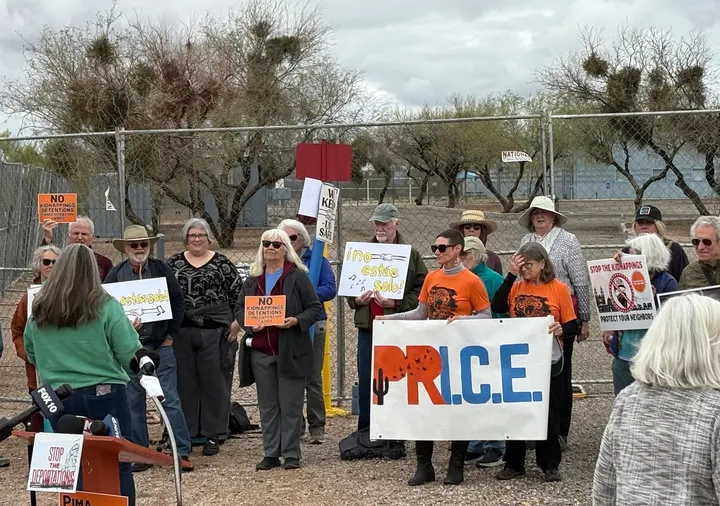
Throughout the hearing, members of the No Desert Data Center Coalition and other residents opposing the center held signs saying “Protect Community Vote No” and cheered in support of residents airing their grievances.
The commission closed the public hearing before moving ahead with the vote, which drew boos and shouts of “shame” and “you didn’t listen.”
“We’ve got to be progressive,” said the planning commission’s Tyson. “If a town or a city is not growing, it’s stagnant.”
The rezoning request will go before the Marana Town Council in the coming weeks for a final decision on the project.
The Pima County Board of Supervisors are also expected to vote on an agreement with Beale Infrastructure during their Dec. 16 meeting, a decision that would move the project forward on county land, even as concerns persist over transparency and environmental impacts.
Arilynn Hyatt is a journalism major at the University of Arizona and Tucson Spotlight intern. Contact her at arilynndhyatt@arizona.edu.
Tucson Spotlight is a community-based newsroom that provides paid opportunities for students and rising journalists in Southern Arizona. Please consider supporting our work with a tax-deductible donation.