UCAB marks 30 years of water cleanup advocacy in Tucson
Community members and officials marked the 30th anniversary of the Unified Community Advisory Board, reflecting on decades of groundwater cleanup efforts and ongoing water contamination challenges in Tucson.
Community members, advocates and government officials gathered last week to mark the 30th anniversary of the Unified Community Advisory Board, reflecting on decades of advocacy for clean water in Tucson and ongoing efforts to address groundwater contamination.
In the 1950s, Hughes Aircraft improperly dumped the industrial solvent trichloroethylene, or TCE, on land that is now Tucson International Airport. The contamination seeped into groundwater in Southside Tucson and was later linked to increased cases of lymphoma, leukemia and other medical conditions in the community.
In response to the contamination, the Unified Community Advisory Board was formed in 1995 to hold entities responsible for the pollution accountable, continuing its advocacy for clean, safe water to this day.
Made up of residents, regulators and responsible parties, the board serves as a forum for community oversight, information sharing and accountability related to the cleanup of pollutants such as trichloroethylene, 1,4-dioxane and PFAS. Its work has focused on ensuring public health protections, transparency in remediation efforts and long-term solutions for safe drinking water in affected communities.
In 2002, 1,4-dioxane, a carcinogen associated with pollution from the same materials that contained TCE, was detected in one of the wells at the Tucson Airport Remediation Project treatment plant, which was originally created to restore groundwater and prevent the migration of TCE.
In 2021, the TARP treatment plant temporarily ceased operations because it was not equipped to address increasing levels of per- and polyfluoroalkyl substances, or PFAS, sourced from firefighting foam the Air Force and Tucson International Airport used on their properties.
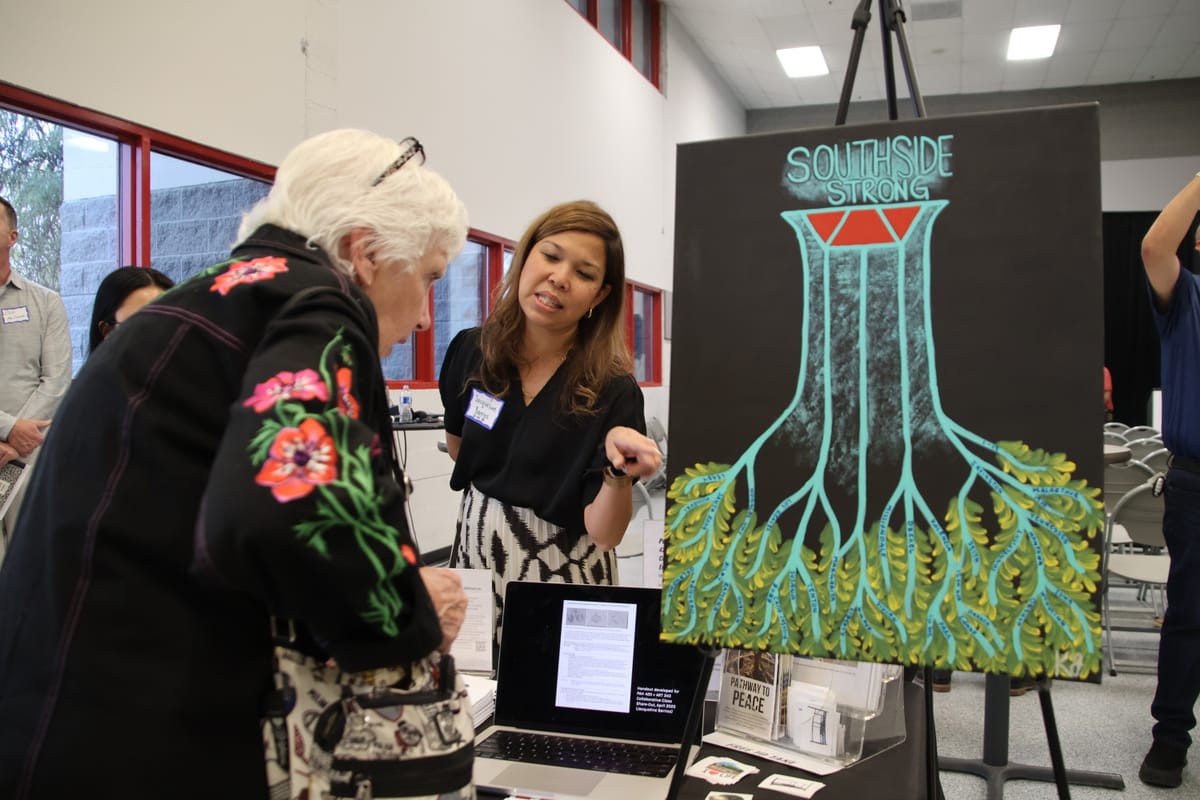
That ongoing challenge set the stage for a moment of reflection and recognition, as the board celebrated its anniversary on Jan. 21 with remarks, commemorative plaques and open-house-style reporting on current remediation projects.
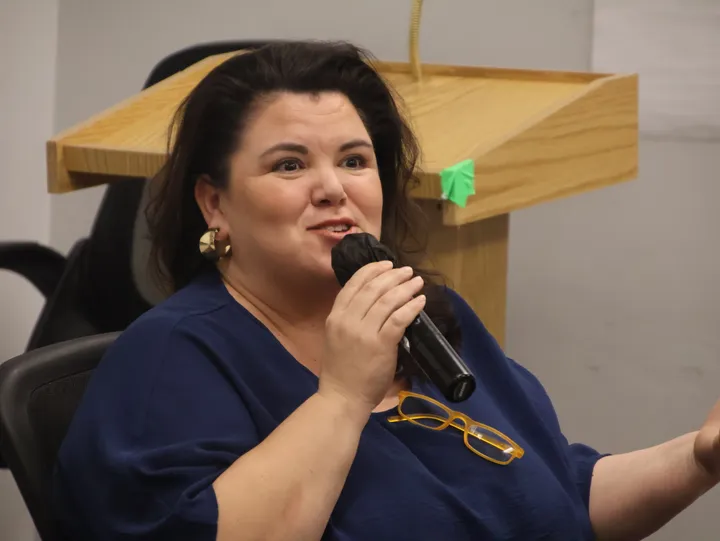
“Everybody thinks water is life,” said UCAB co-chair Yolanda Herrera. “It's not. Safe, clean water is life.”
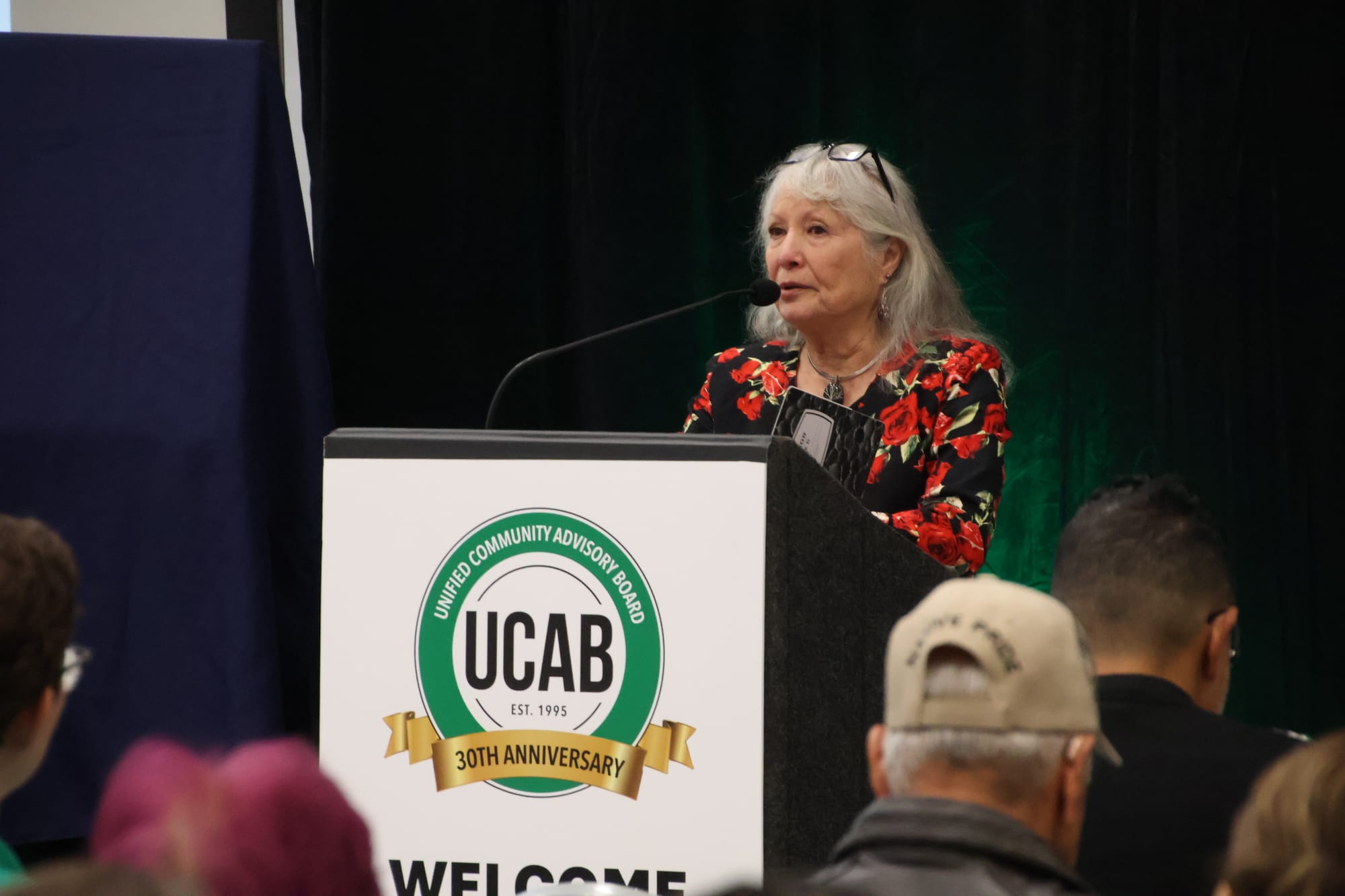
Herrera is the longest-serving community co-chair, and her late father, Manuel Herrera Jr., worked with activist Loraine Lee, who is also deceased, in the 1980s to educate people about the increasing number of illnesses observed in the community from what is now known as TCE contamination.
“He realized all the moms were getting sick,” Herrera said. “Dad and Lorraine got together. They went to Washington, D.C., they started advocating for this attention, brought up to the elected officials to do something to investigate. We are here because of those two individuals.”
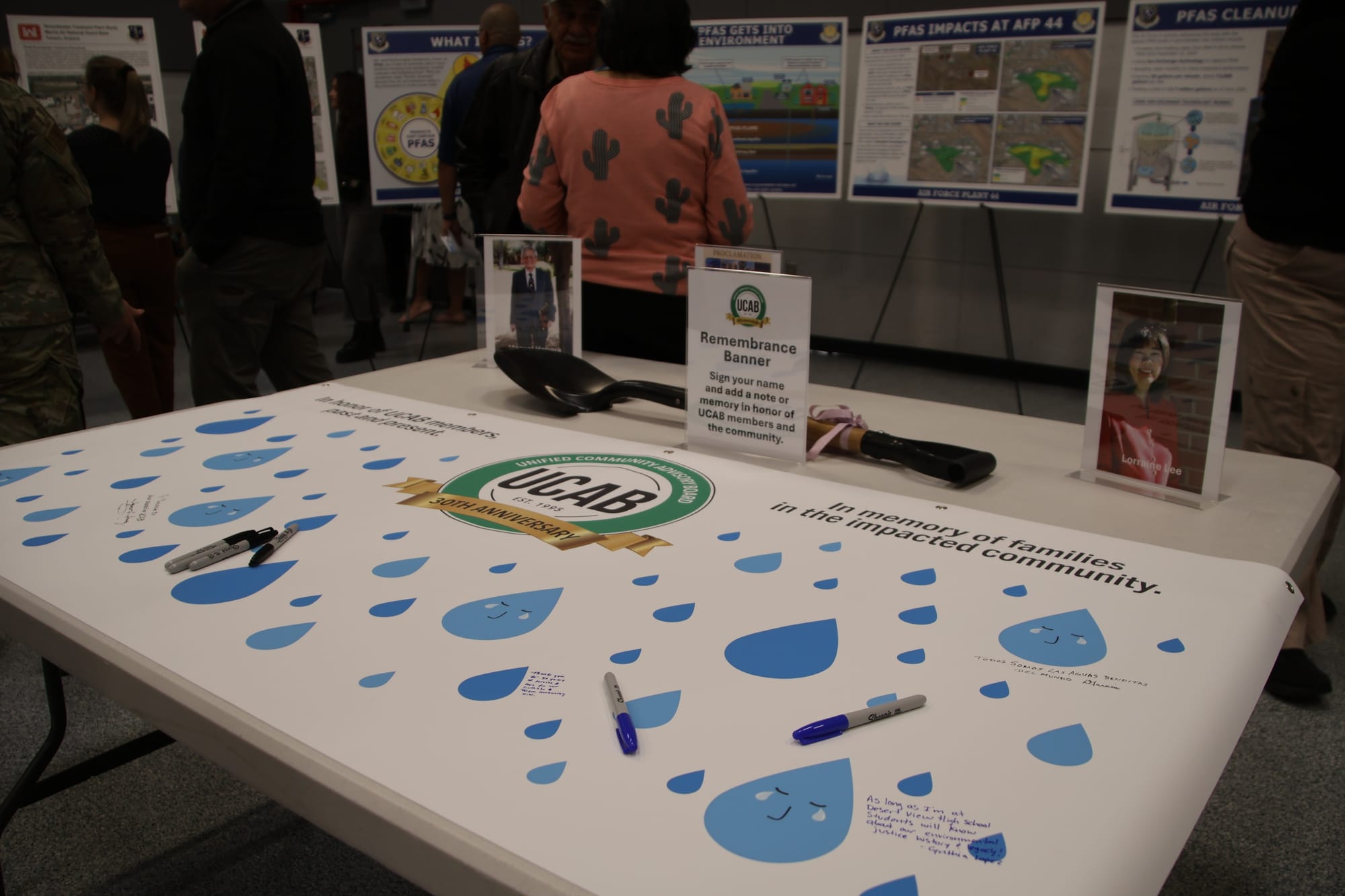
Attendees were invited to write messages on a banner commemorating Herrera Jr., Lee and community members who lost their lives as a result of water contamination. The banner will be hung above the archives at the Valencia Public Library.
Government-citizen relationships between UCAB and its board members — including the U.S. Environmental Protection Agency, the Arizona Department of Environmental Quality, Tucson Water, Tucson Airport Authority and the Department of the Air Force — have helped facilitate citizen-centered plans to combat TCE, 1,4-dioxane and PFAS in the aquifer.
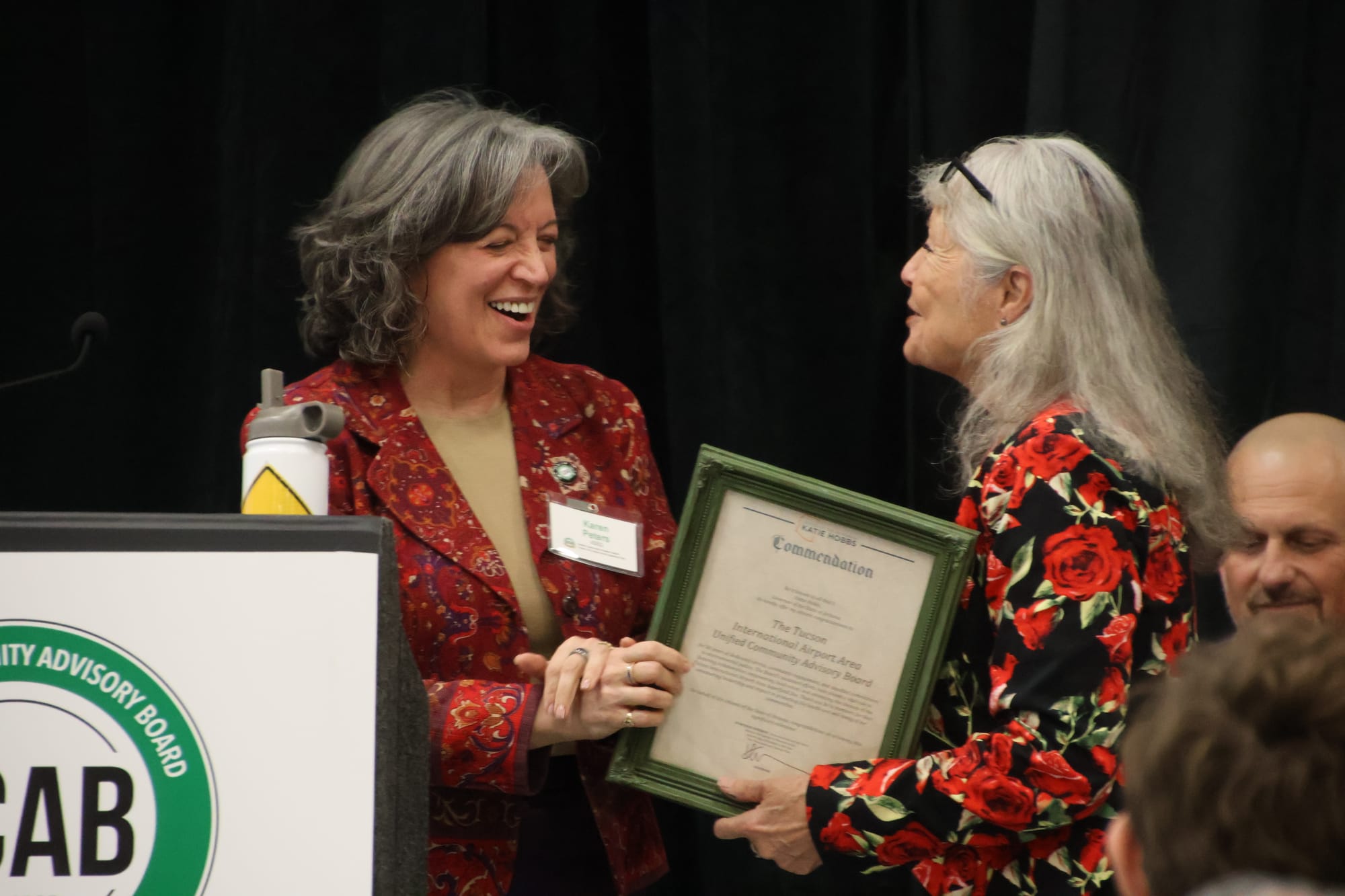
Arizona Department of Environmental Quality Director Karen Peters attended the event to share a message from Gov. Katie Hobbs. Peters oversees community engagement and programs that protect the state’s natural resources.
“The board's sustained efforts have played a vital role in fostering collaboration, empowering local voices and advancing the cleanup of the Tucson International Airport area Superfund site,” Peters said. “Thank you to its members for their unwavering leadership and impact in protecting the health and well-being of our communities.”
Federal partners involved in the remediation efforts echoed that sentiment.
“30 years is no small milestone,” said Air Force Environmental Policy and Programs Director Michelle Brown. “It represents consistency, dedication, a deep commitment to showing up for this community, and you've done that year after year. We want to commend that. The longevity of UCAB says something really powerful.”
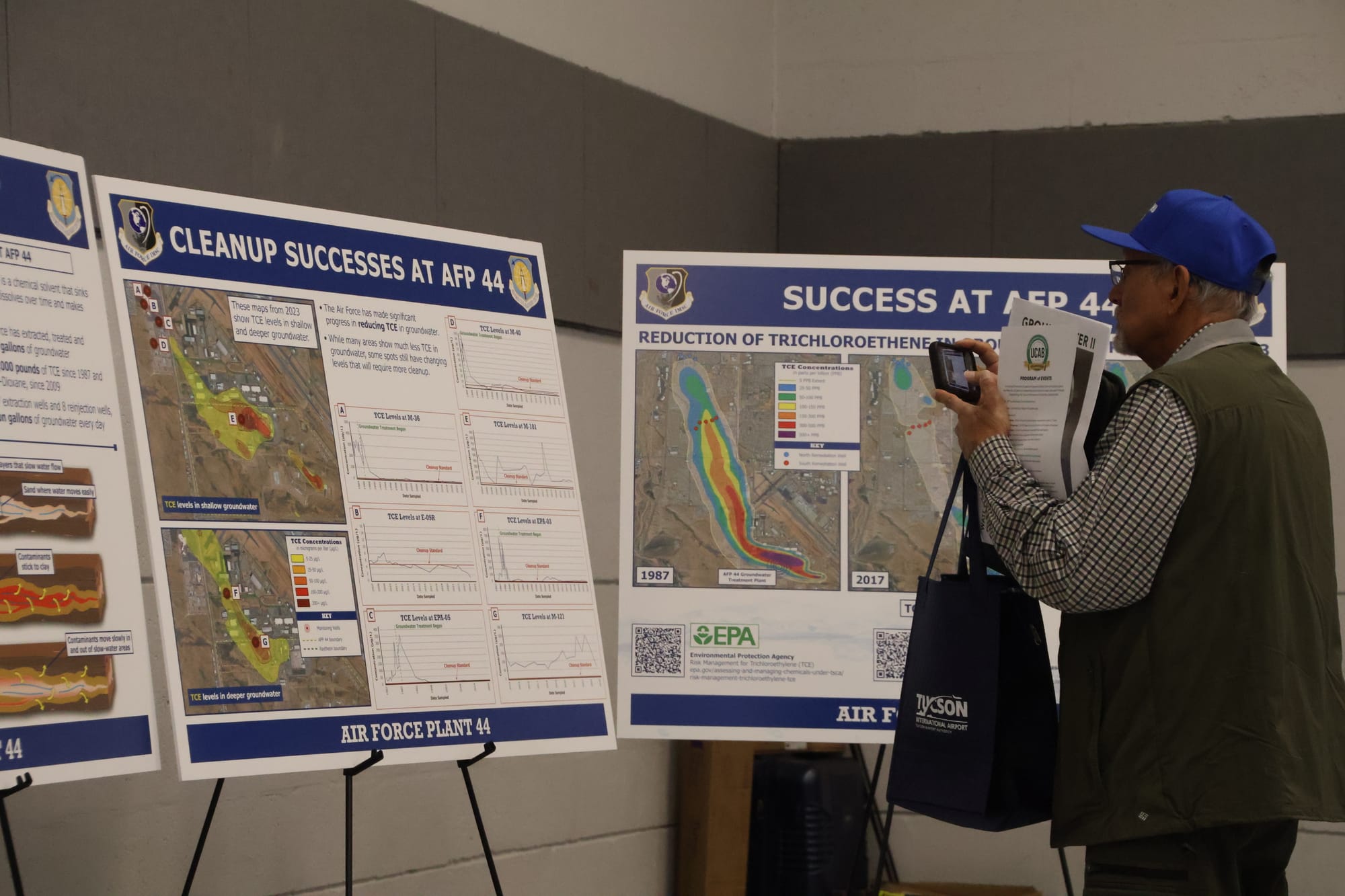
Brown uses her background in environmental science to guide policy, plans and budgets for the Air Force, Space Force and Air National Guard.
Her remarks came as the scope of PFAS contamination in Tucson has continued to come into clearer focus.
PFAS, or “forever chemicals,” were first detected by the city in 2013, with levels later found to have increased by 700% from 2017 to 2021.
In May 2024, the U.S. Environmental Protection Agency ordered the Air Force to develop a long-term plan to treat water in affected areas on its properties. That same year, the city of Tucson sued the federal government over PFAS contamination, seeking reimbursement for damage to the aquifer as well as the cost of treatment systems capable of removing PFAS.
In response, the Air Force discontinued its use of PFAS-containing firefighting foam, opting for environmentally safe alternatives. The Air Force also began a remedial investigation to assess how far PFAS has spread in the environment, including soil, groundwater and sediment in affected areas.
In July of last year, the Air Force submitted a draft remedial investigation report to the EPA and the Arizona Department of Environmental Quality for review, documenting current contamination conditions.
“Our commitment will remain the same, and that's to work with you, to listen to you and to act responsibly on behalf of the community that we're privileged to be a part of environmental stewardship,” Brown said.
Since November 2024, the Air Force has been pumping and treating water at its groundwater plant as part of a pilot study using ion exchange technology to remove PFAS. PFAS molecules are large and tend to adhere to other large molecules. Negatively charged PFAS molecules are filtered through positively charged resin, allowing them to bind to the resin and be removed from the water. The water is then filtered for TCE and 1,4-dioxane.
As of June 2025, the system has treated more than 12 million gallons of groundwater.
“Your willingness to stay engaged and ask those hard questions, hold us accountable, (and) has made the Department of the Air Force a better neighbor,” Brown said. “It has made this board a model for what community partnerships should be able to achieve in the future.”
Tucson International Airport has also created its own remedial investigation to better understand site conditions related to contamination and assess risks to people and the environment. Using that data, the airport can establish goals and options for the most efficient cleanup possible.
“We're marking 30 years of partnership, collaboration and problem solving as we make deliberate efforts to improve the soils and groundwaters,” said Tucson Airport Authority President and CEO Donnette Bewley. “You have our commitment as a steward that we're here to support this issue and solve the issue with all of our community, federal and local partners.”
The EPA and ADEQ reviewed and approved a work plan in September to sample soil and water at different airport locations, continuing that work through April 2026 in hopes of determining next steps by this summer.
The airport has also taken action by replacing fire trucks that previously used PFAS-containing foam with newer models to avoid further contamination.
“We're here as part of the solution, to work with our partners at EPA, ADEQ, the military and all of you to make sure that we're doing the right thing for the community,” Bewley said.
The airport’s current soils remediation project maintains its previous commitment to removing TCE and volatile organic compounds from contamination plumes caused by polluters who previously leased the land.
UCAB’s work extends beyond accountability. The board has also collaborated with University of Arizona professors, including Dr. Jaqueline Barrios and Martina Shenal, a professor in the photography, video and imaging department at the University of Arizona’s School of Art, to provide engaging conversations and projects for students focused on Southside water contamination.
“It is advocacy. (Students) tend to be real inward-looking and reflective, but they have empathy and talent,” Shenal said. “I thought it was really great for them to work outside themselves and really understand that artists do research in a similar way that scientists do research.”
At the end of the program, UCAB was presented with a plaque listing past and present board members, including Herrera Jr., whose name was marked with a star to denote his passing.
Beyond regulatory compliance, the remediation efforts of UCAB partners have demonstrated a commitment to addressing past harm and preventing its recurrence.
“We don't want to ever forget what happened,” Herrera said. “We don't want to ever have this repeat itself. We don't want it to impact and continue to impact the generations that are before you.”
Topacio “Topaz” Servellon is a reporter with Tucson Spotlight. Contact them at topacioserve@gmail.com.
Tucson Spotlight is a community-based newsroom that provides paid opportunities for students and rising journalists in Southern Arizona. Please consider supporting our work with a tax-deductible donation.