UA students turn lived experience into community art
Six University of Arizona students in the JustArts fellowship program spent the past year creating art and community projects rooted in identity, culture and social change.
Six University of Arizona students spent the past year turning their own lived experiences and those of their communities into art, and they brought those projects to the public at the annual TenWest festival.
Students participating in the JustArts fellowship program receive a $6,000 award, a $1,500 budget to execute their project, course credit and the opportunity to present and share their findings. The program is open to undergraduate and graduate students from any academic background.
(The students) "enact some sort of project on campus that speaks to real-world challenges or issues that students face on campus and off campus, be it visibility, accessibility, things of that nature," said program coordinator Ashley Martin-Casler.
Riqué Duhamell Escobedo, a master's student studying Library and Information Science, titled their project "Common Threads."
The focus of their project was to bring more visibility to what they described as feminized making — crafts like embroidery that are deeply rooted in cultural tradition yet rarely taken as seriously as other forms of creation.
Participants worked alongside one another in both Spanish and English, sharing techniques and stories in a slow, intentional process rather than one focused on quick results.
Duhamell Escobedo said makerspaces tend to overlook forms of making rooted in cultural tradition, care work and feminized practices, prioritizing technical skills over crafts like embroidery that carry deep heritage.
"Other forms of making...are often overlooked or undervalued," they said. "(My project) asks what happens when we design maker spaces around cultural practice and shared experience, and who feels a greater sense of belonging than we feel."
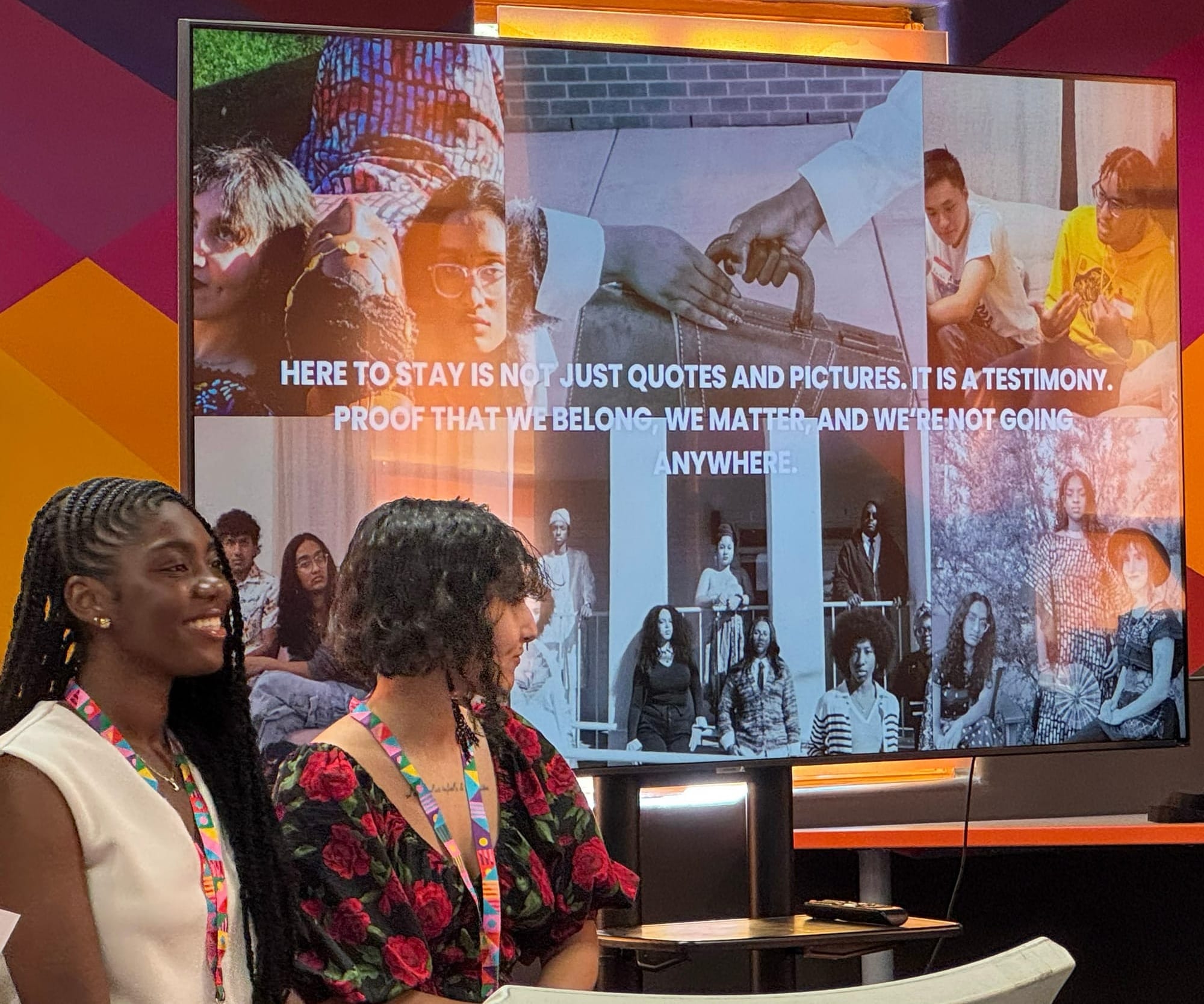
Joanna Labija's project, "Here to Stay," aimed to amplify minority voices and educate others about their experiences through discussion circles and photographs.
"Through things like photo shoots and discussion circles and quotes, thinking qualitative data, I have put all these things together to once again, highlight these voices on the campus," said Labija, an undergraduate student majoring in Interdisciplinary Studies focusing on Arts, Media, and Entertainment. "The goal isn't for it to end like in the four walls of, you know, a building, or even something like this. My goal is for it to reach even outside the UA campus."
The photographs showed students in black and white, wearing traditional dress that reflected their identities rather than what the general public might expect a "traditional American" to look like.
Labija expressed gratitude for the opportunity to create spaces where people can feel proud of their culture and background, especially in environments where that pride is often discouraged, and said she has loved watching that unfold through her project.
"It's kind of frowned upon, in some ways, to be proud of not being from here or being from somewhere else," Labija said. "Just being able to see the impact that it's making, just by being able to take a look at it, or hear about the quotes and hear about the space that was created, it warms my heart, and I hope that it continues."
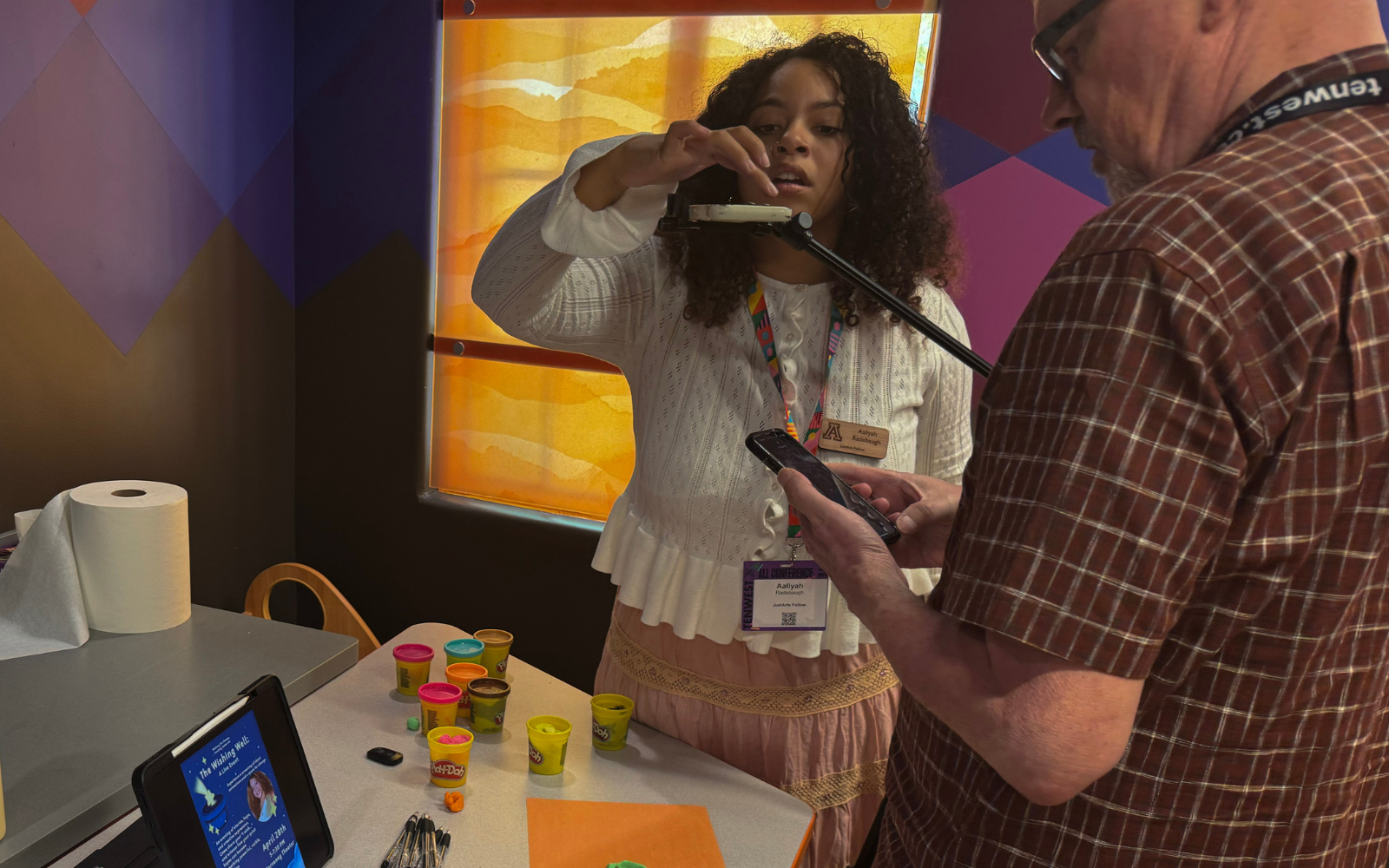
The inspiration for Aaliyah Radebaugh's project came from the rollback of diversity, equity and inclusion policies carried out by UA administrators at the beginning of last summer. Her project, "Wishing for Change, Creating Tomorrow," created a space where people could feel free to express themselves and their identities without feeling the need to adjust their language to fit the new university guidelines.
"Through this project, I transformed people's thoughts and concerns into expressions of hope through simple prompts, 'That can I wish,'" said Radebaugh, an undergraduate student majoring in Studio Art with an emphasis in Illustration, Design, and Animation. "From these submissions, I selected three wishes to develop into short animated films."
The three animated films center on characters representing disabled, Black and transgender students. They'll be featured on an online platform called "The Wishing Well," which is currently in production and will eventually include new projects and animations under the same theme. Radebaugh is also hosting a screening April 28 at the Marroney Theatre from 5 to 7:30 p.m.
Nagasriya Ramisetty, an undergraduate student majoring in Physiology and Medical Sciences as well as Applied Humanities, created a project titled "bit·ter·sweet."
Ramisetty's project focused on the immigrant experience, specifically the pressure that children of immigrants — and immigrants themselves — feel to be seen as hardworking or perfect in American society, often having to outperform their American counterparts. To explore that theme, she combined Greek mythology and poetry with the Asian American experience.
"My project is focused on health humanities for the intersection of understanding health, the body and illness through the perspective of telling people stories like public health awareness and all also promote patient understanding and empathy," Ramisetty said.
In a graphic displayed on her presentation slide, she used the image of a desert Ouroboros, a snake eating its own tail, to symbolize how immigrants can push themselves to the point of exhaustion and self-destruction, a cycle deeply rooted in Greek mythology.
"I actually use Greek mythology and Greek imagery in both my poetry and art to discuss the glorification of tragedy in immigrant communities and the glorification of struggle in pursuit of the American dream, and that's been a really interesting creative process," Ramisetty said.
She will be hosting a live reading of poetry she has written for the project and an art exhibition April 17 from 5 to 7 p.m. at the Health Science Innovation building.
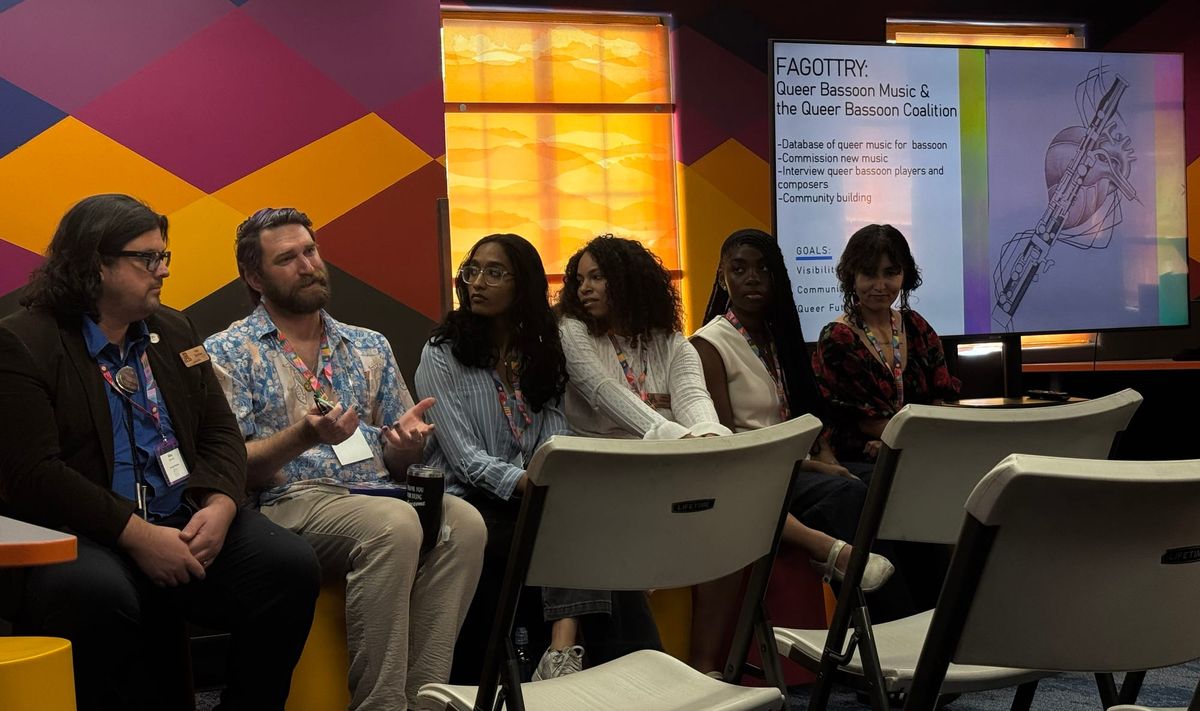
The title of Christopher Werner's project, "Faggotry," is based on a play on words, as the word for bassoon in many European languages is fagotto, which is spelled similarly to the slur used for homosexuals in the United States.
"The idea is to be very campy and very fun and to be very queer," said Werner, a graduate student pursuing a Doctor of Musical Arts in Bassoon Performance.
As part of his project, Werner commissioned bassoon pieces from local queer musicians in Tucson and built digital community spaces, interviewing musicians to identify commonalities and the issues queer artists face locally.
They will showcase music composed by queer artists at an art event June 6 at the Subspace Art Gallery.
Second-year Ph.D. student Niko Sanchez, who studies Applied Intercultural Arts Research, titled his project "PLAing with Trash: Turning 3D Printing Polylactic Acid Waste into Art."
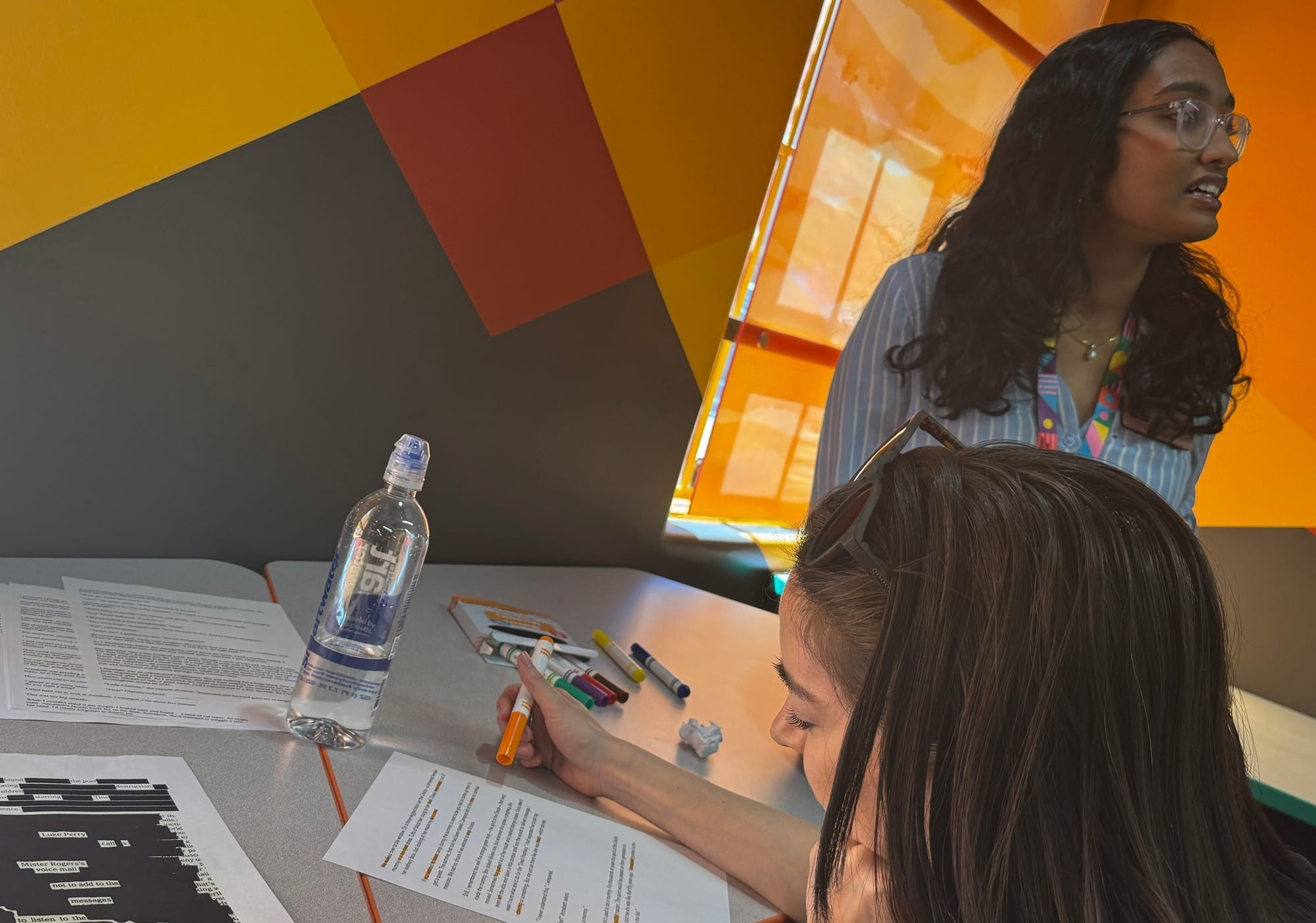
As the digital design and application specialist at the library makerspace at UA, Sanchez began to notice a problem with the accumulation of wasted 3D printer filament.
"Coming from a sculpture background myself, I saw all this waste that we're creating as like raw material, but I didn't have an impetus to actually start a project with it until I learned about the JustArts option," Sanchez said.
The project aimed to help students transform leftover 3D printer material into sculptures, which were added to a much larger sculpture featured at the community hub space during this year's TenWest.
Sanchez said one of the greatest impacts he has seen from his project came when members of the campus' MLK Dream Space reached out to help create a "ball" to drop at midnight at the beginning of Black History Month.
"I fabricated this big basket out of 3D printed waste, and I programmed a countdown timer on the front of it," Sanchez said. "When midnight struck, they hit the timer. And everybody did, like a big countdown, and so that was the biggest impact for me."
Many of the students also experienced unexpected outcomes they had not anticipated at the start. Ramisetty originally planned to follow a strictly scientific path and write a public health paper for publication in a journal. But that changed when she got the opportunity to study abroad in Greece before being named a fellow.
Ramisetty said the experience and shift in her focus have allowed her not only to connect more deeply with her own community but also to delve more deeply into a creative path she had previously closed herself off to.
"I'm approaching interviewing about 15 students in total. It's been incredible to grow into saying that I'm a poet and I'm an artist, instead of I do poetry or I like to do art," Ramisetty said.
For Duhamell Escobedo, one unexpected highlight was that Spanish became the dominant language in their workshops, something they had not anticipated and say is rare in English-centered spaces like the university.
"It was really interesting to see English take this almost back burner sort of role in which those who could speak Spanish either natively or they acquired some fluency later on felt that they could prioritize speaking that language, rather than having to code switch into English, as they have to do with like a lot of other university spaces," they said.
Emma LaPointe is a journalism, political science and German Studies major at the University of Arizona and Tucson Spotlight intern. Contact her at emma.m.lapointe@gmail.com.
Tucson Spotlight is a community-based newsroom that provides paid opportunities for students and rising journalists in Southern Arizona. Please consider supporting our work with a tax-deductible donation.