UA students spotlight lived realities of poverty in Tucson
Sociology students shared firsthand research on housing, food insecurity and financial stress during a community forum examining how rising costs and limited resources affect families.
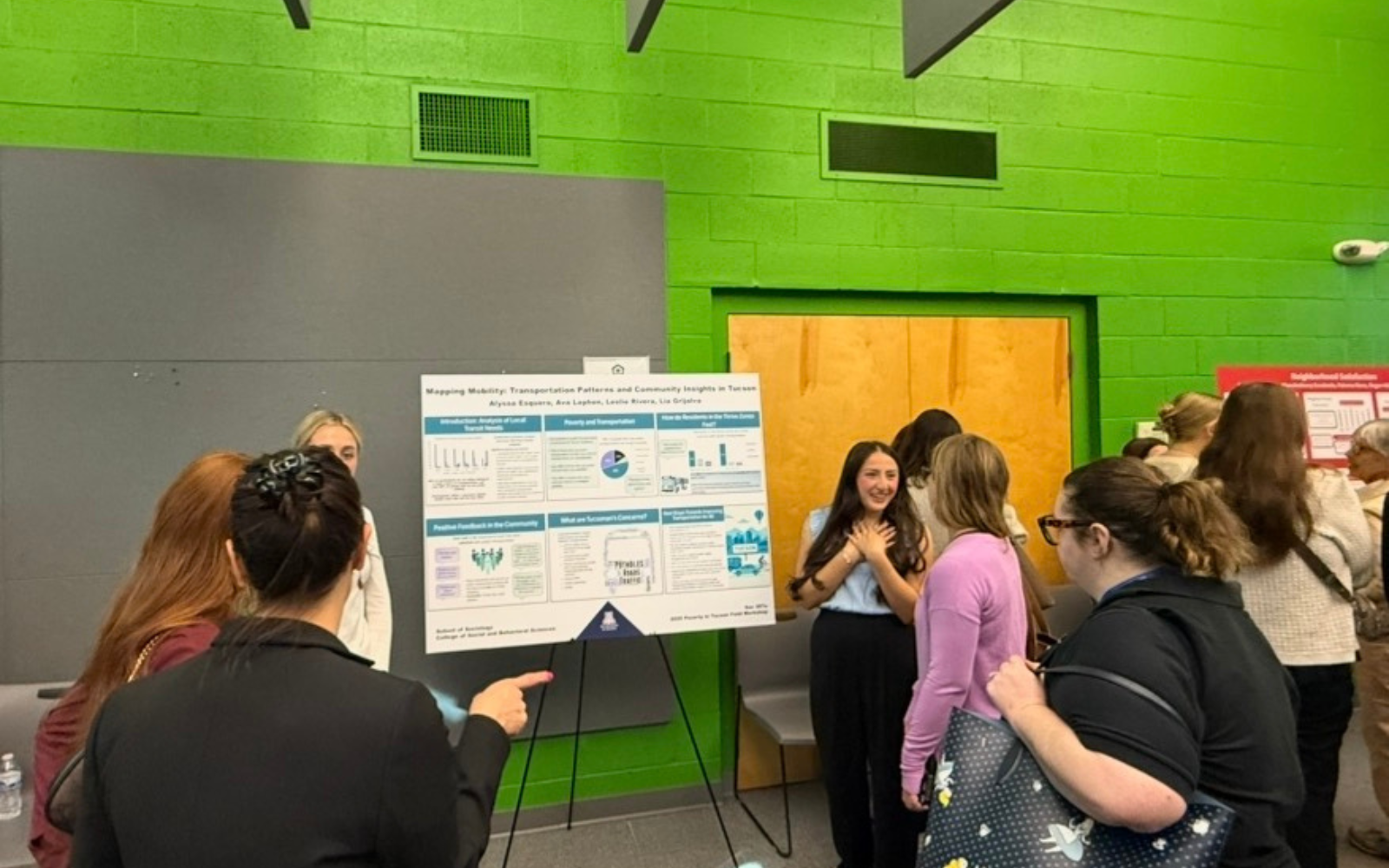
After months of interviewing Tucson residents about housing, food access and financial stress, University of Arizona students shared their findings at a community forum focused on the lived realities of poverty.
The School of Sociology held its ninth annual community forum on housing insecurity and poverty Dec. 15 at Habitat for Humanity Tucson, bringing together students, local leaders and community members to examine how rising costs and limited access to resources are affecting families across the city.
The forum marked the culmination of Dr. Brian Mayer’s Poverty in Tucson Field Workshop course, in which students engage directly with community members to study poverty through lived experience rather than abstract data.
As part of the class, each student interviewed at least eight residents to better understand how economic hardship varies across neighborhoods.
Many of the students participating this year are not from Tucson but said they valued the opportunity to engage directly with residents and learn how poverty, housing instability and access to basic needs intersect, as well as the systemic barriers that continue to shape daily life for many.
Rather than focusing on a single issue, each group’s research painted a broader picture of how poverty is shaped by overlapping pressures, including housing, transportation, food insecurity, health and stress.
Several students, including Edgar Sepulveda, said neighborhood differences play a major role in how people experience poverty. Sepulveda’s group studied health and stress and raised concerns about widespread Medicaid cuts among residents already facing limited access to health care.
A native Tucsonan, Sepulveda said the project helped him see perspectives of lifein the city he had not been aware of growing up.
Sepulveda’s group member Stephanie Ward said many residents are experiencing significant economic stress, particularly related to housing.
“There were some who were very, very stressed on the economy,” Ward said. “They're in some pretty tough situations. People are piling up in one home because they couldn't afford to go somewhere else.”
Ward said her conversations made clear how widespread housing stress is across the city, noting that many families — particularly mothers with children — were one unexpected expense away from eviction.
“It really opened my eyes to how many people are experiencing some pretty tough things, and it's easy to think those things are invisible because you're not seeing it face to face, but it really is a large portion of the population that is dealing with this,” Ward said.
Pima County Supervisor Rex Scott spoke during the forum, reflecting on his time as an educator and praising the students’ presentations. He said their research and proposed solutions demonstrate the power of young voices.
“The majority of people who live in poverty are our children, and I know everybody in this room recognizes this, but that's a dire and compelling statistic,” Scott said. “That we need to keep repeating to the public that we serve, because I don't know how many people recognize that fact.”
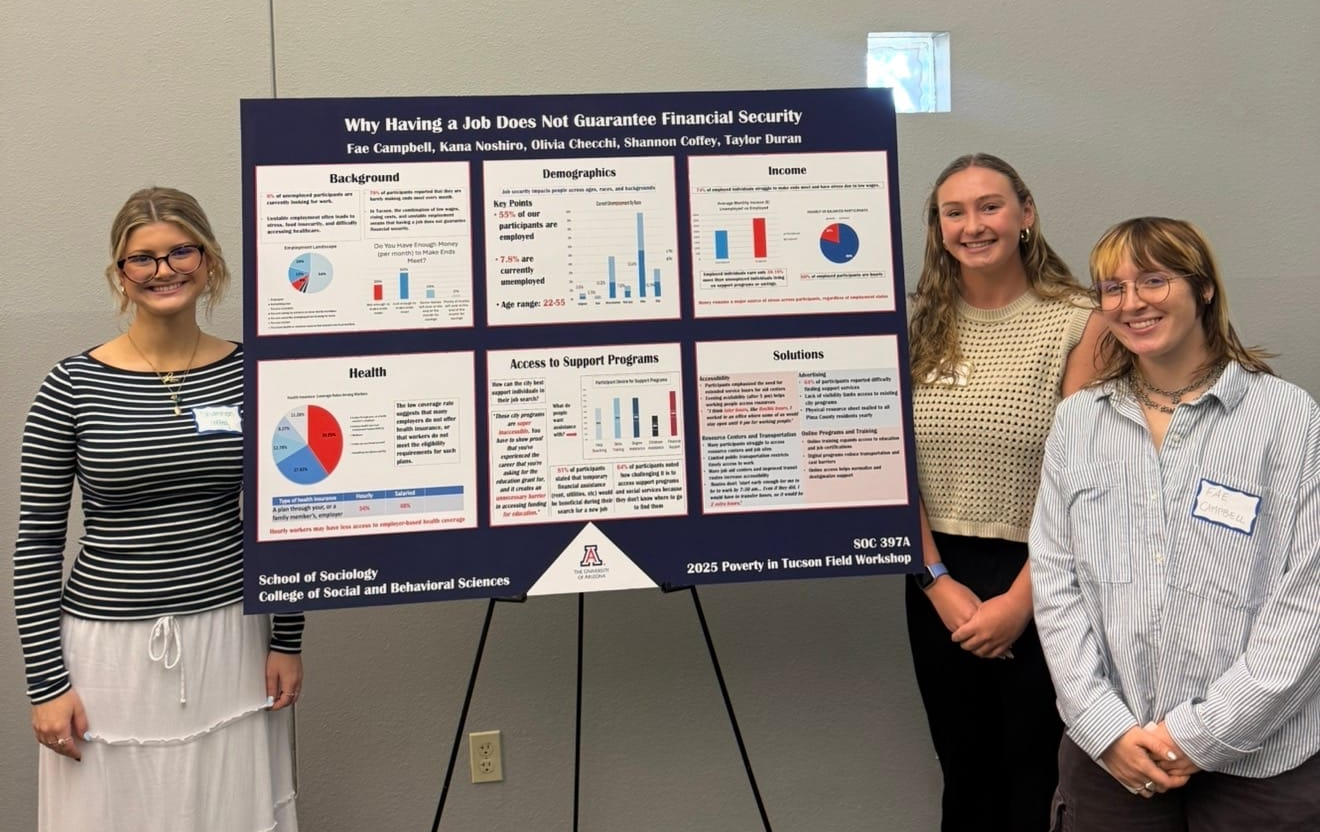
Another student project, titled “Why having a job does not guarantee financial security,” explored the reality of the job market students will soon enter.
“Fifty percent of our participants are employed and financial stress still was common within that demographic, unfortunately,” said team member Shannon Coffey. “That just shows us that financial security isn't really guaranteed even when you're employed.”
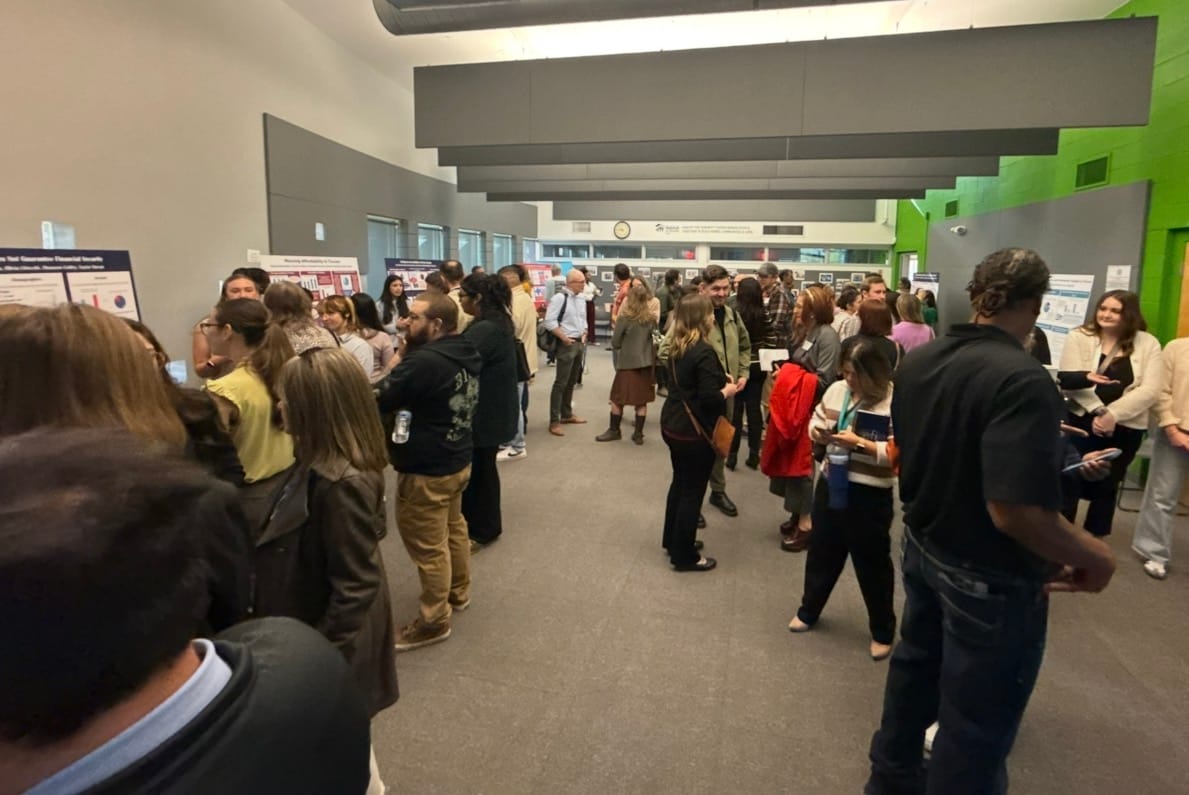
Cameron Myers said poverty exists on a spectrum.
“I think a lot of people think that people that are struggling or are poverty ridden are like drug addicts, or they're not working,” Myers said. “But a lot of the people that I talked to, they had good incomes. They had a consistent job, and they just still couldn't afford to live because of how expensive living has just gotten.”
Another project focused on transportation and its role in employment and access to basic needs. Leslie Rivera said her research revealed clear patterns among residents living in low-income communities.
“Think that public transportation is something very essential for it to be free, for it to stay free, because it is something important for them to go to work,” Rivera said. “Over 60% of individuals who are in the Thrive areas are satisfied, but there could be some improvements to be made.”
The city of Tucson has two Thrive Zones focused on neighborhood reinvestment: Thrive in the 05, located in the Oracle Road and Miracle Mile area of the 85705 ZIP code, and the 29th Street Thrive Zone, located between Alvernon and Craycroft roads and 22nd Street and Golf Links Road.
Alyssa Esquero, who worked alongside Rivera, emphasized how heavily public transportation is relied upon by residents.
“Over 78% who use public transportation are in poverty,” Esquero said.
On their poster board, the students included a quote from survey responses that Esquero said summed up the findings: “The bus is free and it's the only option.”
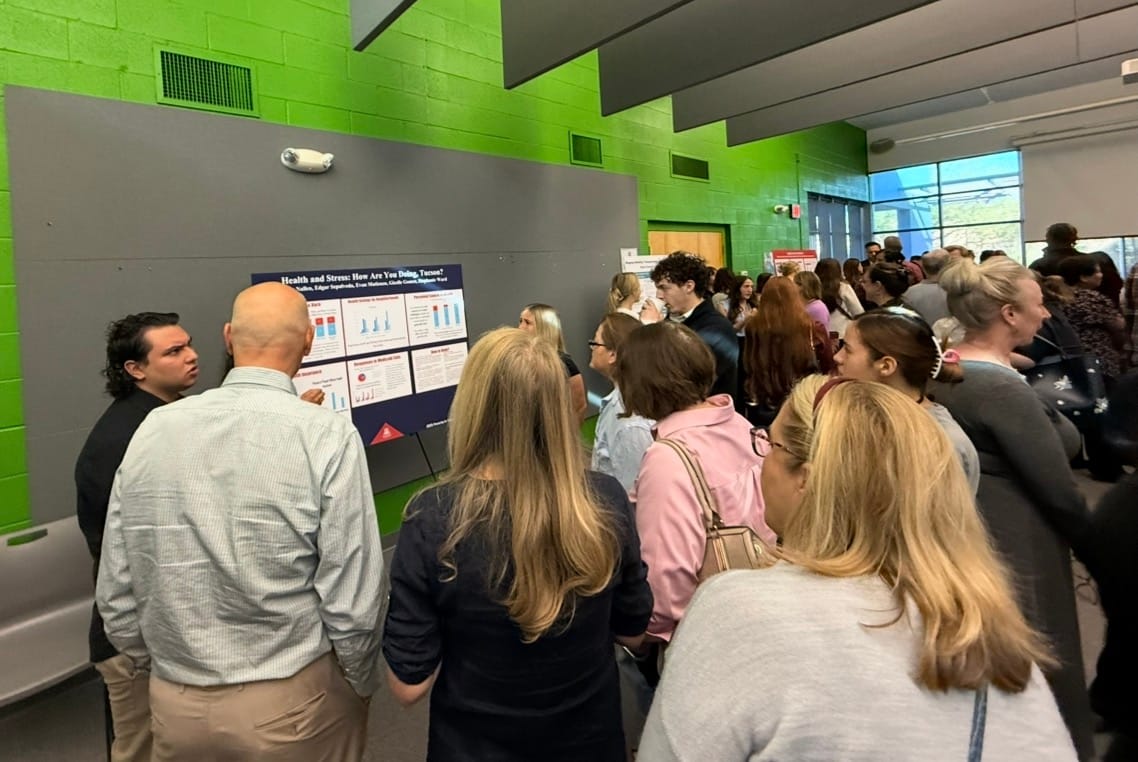
Mayor Regina Romero also spoke at the forum, saying reducing poverty has been a priority throughout her time on the City Council and noting that Tucson’s poverty rate remains higher than state and national averages.
“What I love about Tucson's poverty project is that it's not just studying and researching, but it's actually offering tangible, evidence-based solutions to what policymakers need to do to change the narrative and to change the situation for someone else,” Romero said.
Regardless of income level, food insecurity is affecting neighborhoods across the city, according to student Sophia Hartel. She said her research found many residents skip meals or prioritize feeding children and pets over themselves.
At the same time, residents shared ideas for tangible solutions.
“I kind of loved hearing their responses of what they would do to change their scenario of how they're living and food insecurity,” Hartel said. “One of the people said that they would love to add a food garden into their neighborhood … you also just get different solutions to a big problem that is all over Tucson.”
Hartel also pointed to the recent closure of a Food City grocery store in South Tucson, which she said has significantly worsened food insecurity.
“That was everyone's easiest access to food, right?” Hartel said. “And if you take that away, it's kind of like, OK, now what are we supposed to do?”
Even residents with stable jobs or homeownership were not immune to rising food costs and stagnant wages.
“I interviewed people that were living in a house that they own, they're employed, all the kind of checklist things that people seem to have, but they also can't afford to buy food,” Hartel said.
As costs rise, students found these pressures are also affecting housing, with much of residents’ income going toward rent or mortgage payments.
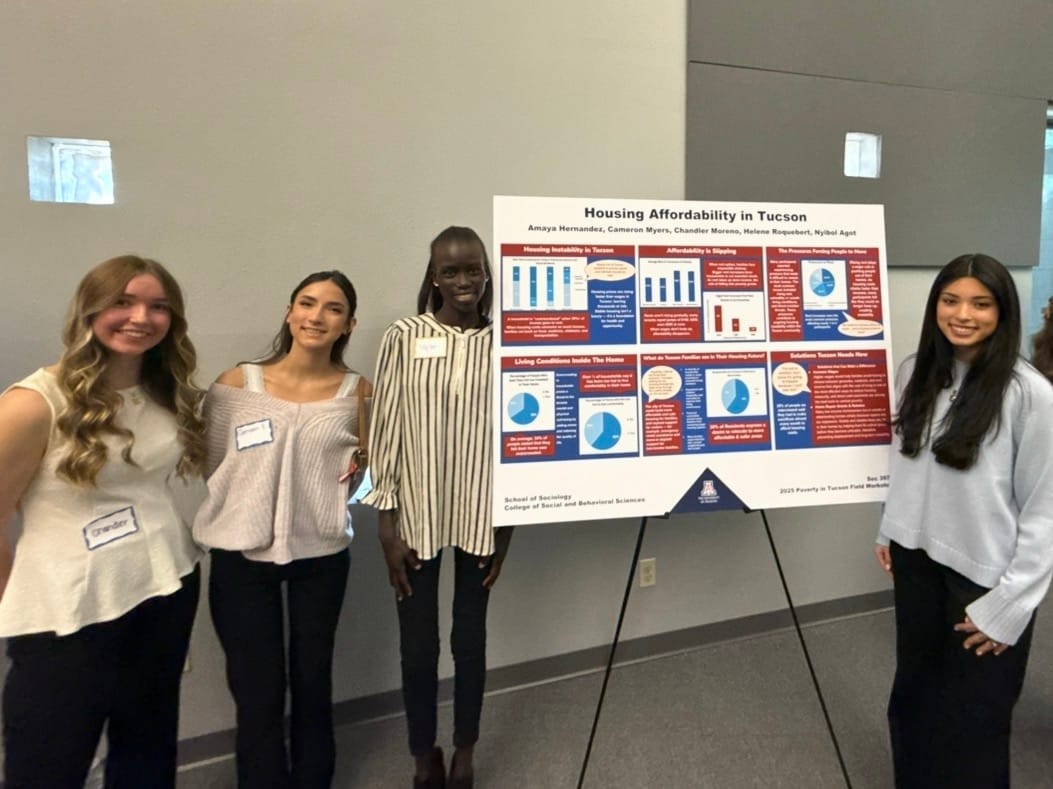
While researching the project “Housing Affordability in Tucson,” Chandler Moreno found that families, particularly mothers, are facing difficult decisions and tradeoffs.
“A lot of them face poverty because they need to afford childcare or they couldn't afford school or groceries,” Moreno said, adding that many were facing eviction or job loss while trying to stay afloat. “These people are trying their best.”
One proposed solution focused on policy changes. Team member Nyibol Agot said renters frequently raised concerns about unchecked rent increases and protections against being taken advantage of.
“I learned from working with these people in our community. They're not just data,” Agot said. “They're real people with real stories, and they need an opportunity to be heard.”
Angelina Maynes is a University of Arizona alum and Tucson Spotlight's social media manager. Contact her at angelinamaynes@arizona.edu.
Tucson Spotlight is a community-based newsroom that provides paid opportunities for students and rising journalists in Southern Arizona. Please consider supporting our work with a tax-deductible donation.