UA program offers free health care to Tucson residents
The University of Arizona's Commitment to Underserved People program operates 12 student-run free clinics serving Tucson's unhoused and uninsured residents, with more than 90% of medical students participating within their first two years.
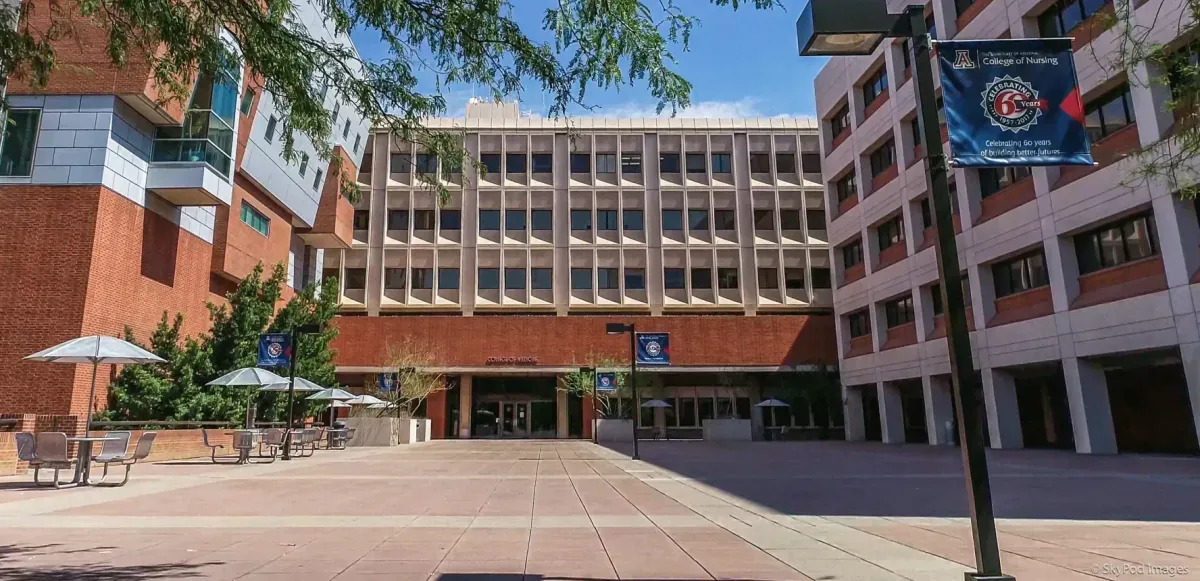
A University of Arizona medical program that started in 1979 with a single clinic serving Central American refugees has grown into 12 student-run free clinics serving Tucson's most vulnerable residents.
"We offer everything from pediatric well child visits to biopsies with board certified dermatologists. We provide the consultation for patients, the labs, and small procedures all for no cost to the patient," said Soham Dave, director of the College of Medicine's Commitment to Underserved People, or CUP, program. "Our primary patients are unhoused or uninsured, or patients that are just between insurances due to any number of life circumstances."
The need is significant. Arizona has the 43rd highest uninsured rate in the country, with 10.3% of residents lacking health insurance, including 8.6% of children, according to America's Health Rankings. The 2025 Point-In-Time Count recorded 2,218 unsheltered individuals in Pima County.
CUP served 525 patients in 2024, with 177 being new patients, a number that is expected to grow, though it remains a fraction of those who need it.
More than 90% of students participate in CUP within their first two years of medical school, drawn in part by the program's reputation for hands-on community engagement.
"I wanted to be at a medical school where students were not just studying medicine there, but also an active part of the community," said medical student and CUP clinics leader Isabella Steidley. "(It's) kind of unheard of, having that many free clinics run by students. So that's what brought me to the UA."
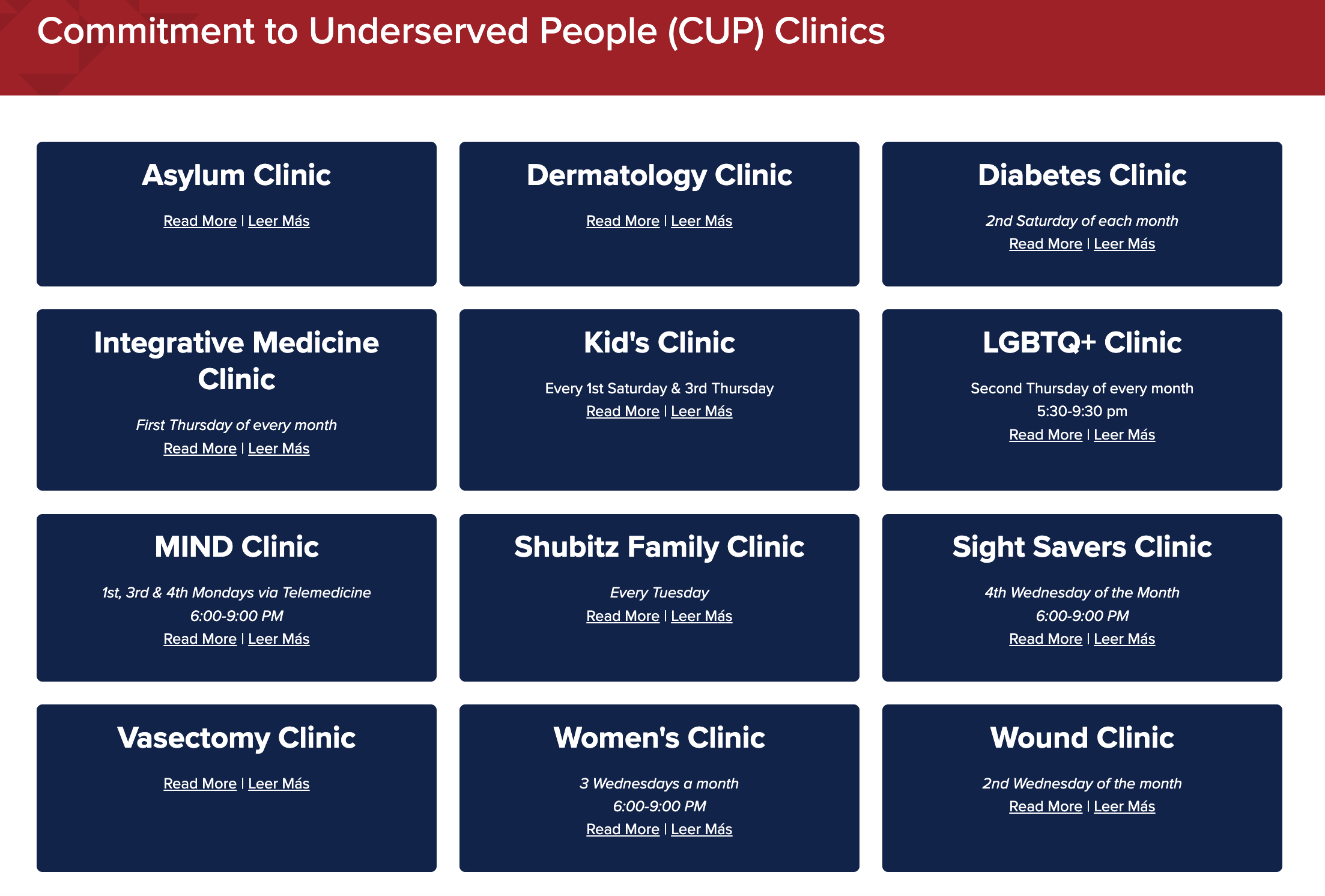
The first CUP clinic, the Shubitz Family Clinic, meets weekly and serves as the program's primary care hub, providing preventive care, referrals and diagnostic tests to patients with no other source of health care.
The other 11 clinics meet one to two times a month, either in person or via telemedicine, covering a wide range of needs including a kids' clinic, an LGBTQ+ clinic, a mental health clinic, a women's clinic run in partnership with Emerge! Center Against Domestic Violence, a wound care clinic and a dermatology clinic.
Students can also travel to Mexico through the Flying Samaritans program or work with refugees and asylum seekers through dedicated clinics, and non-clinical programs connect patients with food resources, cancer support and mentorship for students from underrepresented backgrounds.
"After working with CUP for 20 years, I have seen how students grow in their skills and empathy because of this program and the clinics in particular. They hone in on different underserved issues to create new programs," said senior program coordinator Hildi Williams. "We also had students start a clinic at the Islamic Community Center, because that was an unmet need for that population."
The program operates on a limited budget and relies entirely on student volunteers, meaning its capacity is constrained by the demands of medical school itself. Even so, its medical capabilities continue to expand, with ultrasound services and skin cancer removal at its Dermatology Clinic added in recent years.
In recent years, CUP has added ultrasound services and the ability to remove skin cancer at its Dermatology Clinic.
"For me personally, one of my greatest joys is to be able to provide the care that someone desperately needed but didn't think they could get," Dave said. "We recently dealt with a small child who had a very, very low blood count and due to various circumstances, couldn't get access to care somewhere else. His mom brought him in just to get his shots, and that's when our students and physicians were able to identify a life threatening anemia and get that patient resources to get into the hospital."
His case is not unique.
Mateo Moralez Silvaha was first diagnosed with Type 1 diabetes in Mexico with no access to follow-up care. His mother, Vivian, had lost a sibling to diabetes and was waking up every two hours to check his blood sugar. Through the Shubitz Family Clinic, he was connected to a continuous glucose monitor that allowed her to track his levels in real time, easing the anxiety that had kept her up through the night.
CUP aims to connect underserved patients to care beyond its own clinics, and a key part of that is Care Connections, a network of partners embedded in each clinic that functions as a social work resource for patients.
"If your patient is describing issues with accessing food, or accessing transportation, or even seeking more consistent free health care outside of CUP, Care Connections essentially acts as a social worker to get people to those resources," Steidley said.
That approach to removing barriers extends beyond access to care. CUP also works to ensure patients feel empowered to make their own health decisions, a priority that takes on added weight given that only 40% of U.S. residents said they trusted the healthcare system in 2024, according to Johns Hopkins University research, which found distrust steadily rising among marginalized communities due to a long-standing history of medical discrimination.
"As much as there's an inherent level of trust that's placed on someone with a 'white coat,' trust is ultimately built and patients lose trust with physicians and with healthcare in general if we only give them solutions that they need to jump over so many barriers to get," Steidley said.
As demand for free care grows in southern Arizona, CUP's role as a point of entry is only expected to expand.
"In an ideal world we wouldn't need a clinic because there would be no underserved patients, but I think that is a pipe dream," Dave said. "I think that a realistic approach, where we can provide care in a way that is addressing the very specific needs of our friends and neighbors here in southern Arizona, is what we're doing and we'll continue to strive to do."
Zoey Oberstein is a University of Arizona student majoring in journalism and a Tucson Spotlight intern. Contact her at zoeyoberstein@arizona.edu.
Tucson Spotlight is a community-based newsroom that provides paid opportunities for students and rising journalists in Southern Arizona. Please consider supporting our work with a tax-deductible donation.