
UA lecture challenges anti-trans use of gender regret
A University of Illinois professor argued at a UA lecture that anti-trans politics have weaponized the concept of trans regret to restrict gender-affirming care and pressure transgender people to suppress negative emotions.
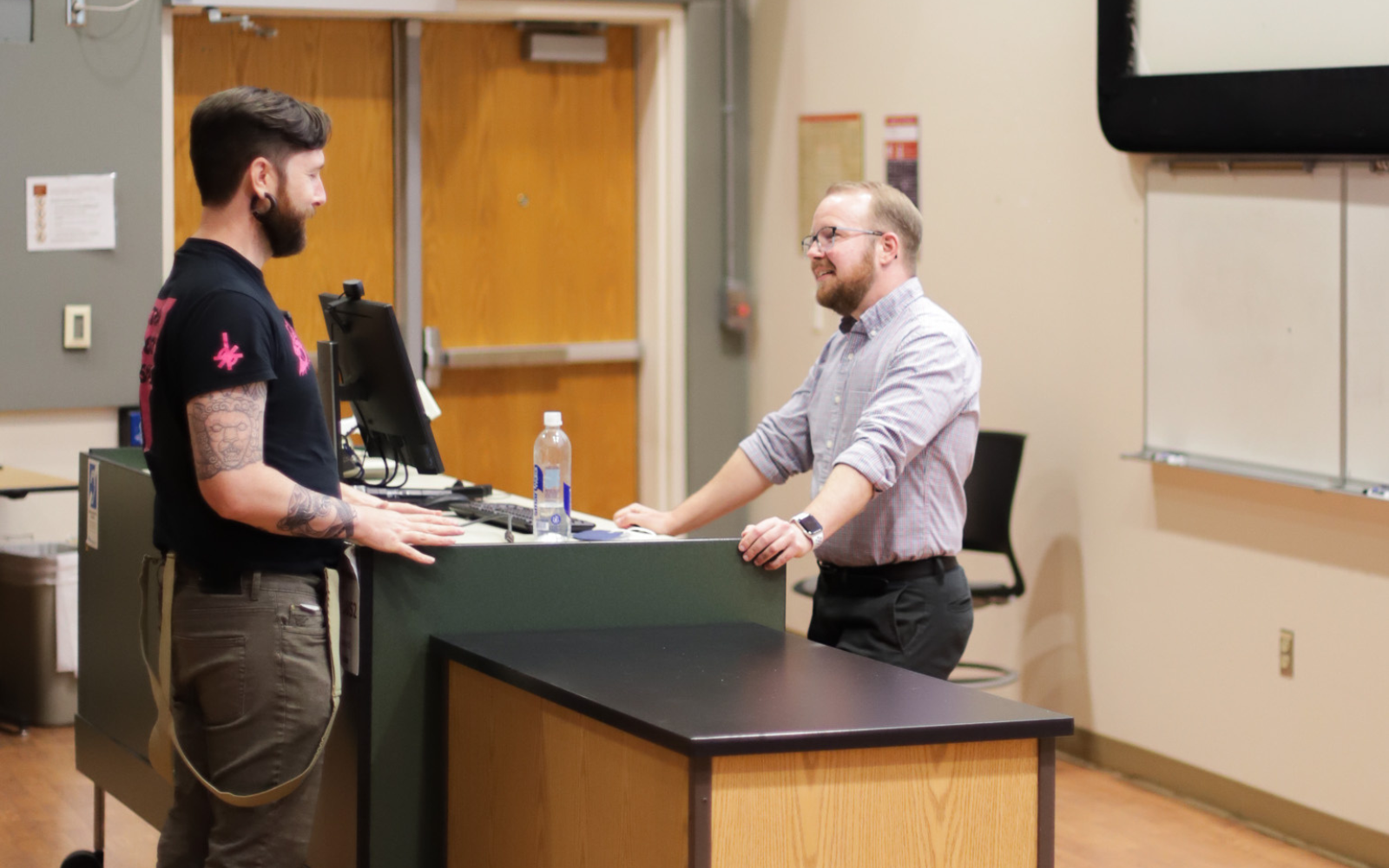
A University of Illinois professor argued at a University of Arizona lecture this month that anti-trans politics have weaponized the concept of trans regret to restrict gender-affirming care and silence transgender voices.
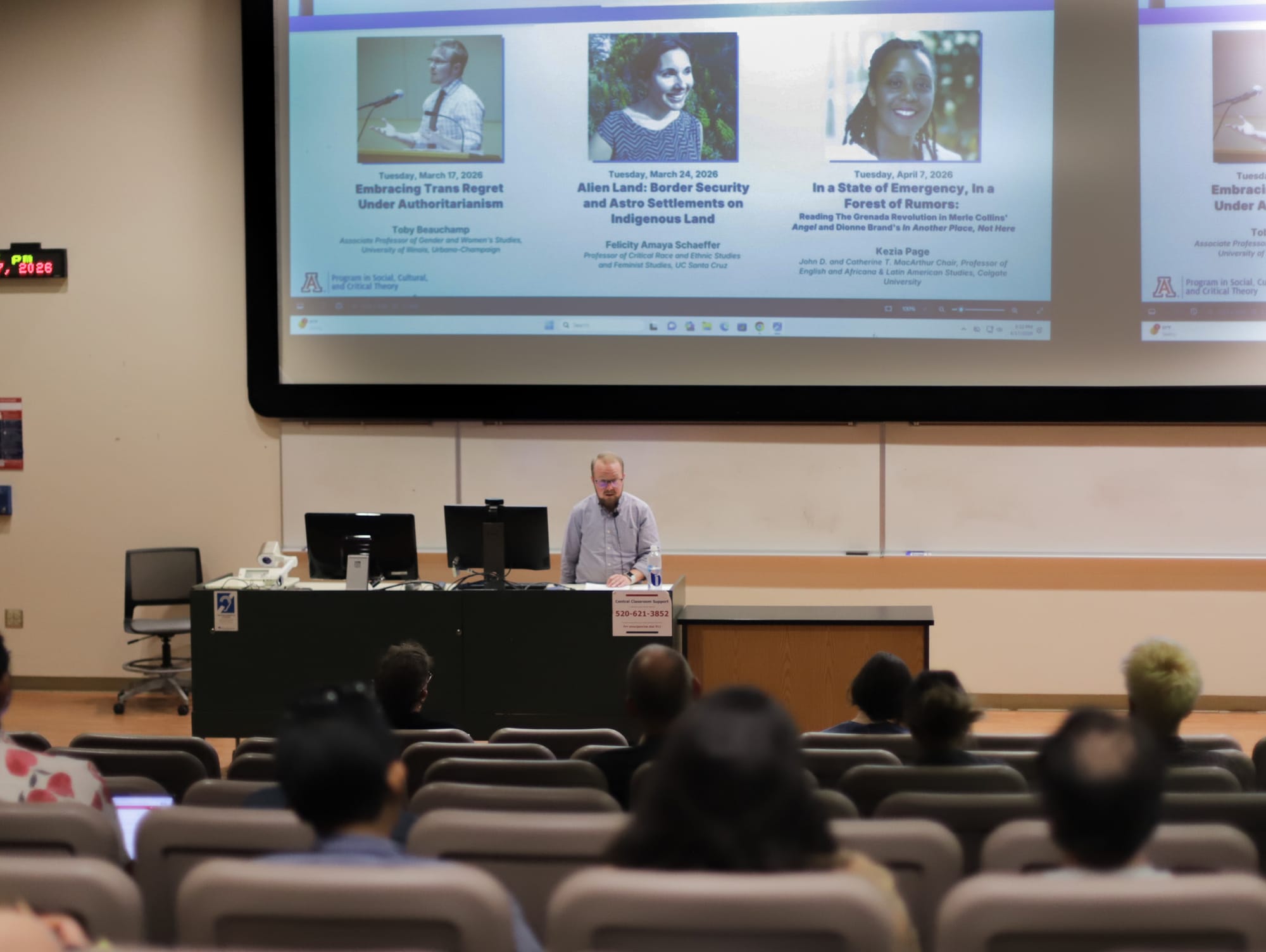
Toby Beauchamp, an associate professor of gender and women's studies at the University of Illinois, Urbana-Champaign, presented his findings during a March 17 lecture hosted by the UA Graduate Interdisciplinary Program in Social, Cultural, and Critical Theory.
"Regret is a valuable disciplinary tool that delegitimizes the political speech and emotional experiences of trans people," Beauchamp said. "When non-trans life is presented as the only possible reality, trans people speaking on our own behalf will be viewed as unreliable narrators at best."
Trans regret refers to dissatisfaction with medical interventions related to gender transition, such as hormone therapy or surgery.
Citing various scholars and legislators, Beauchamp argued that regret is a potential part of all medical care and that trans regret is being used as a justification to restrict gender-affirming care.
Beauchamp situated his lecture in the current wave of anti-trans legislation, arguing that legal and legislative scrutiny of transgender people limits the broader conversation about trans life.
On his first day in office, President Donald Trump signed an executive order aimed at defending "women from gender ideology extremism," directing federal websites to remove gender-related information. The Centers for Disease Control and Prevention's page on transgender and gender diverse persons now carries a note stating that "any information on the page promoting gender ideology is extremely inaccurate and disconnected from the truth."
Weeks later, on Jan. 28, Trump signed a second executive order restricting gender-affirming care for minors. In Arizona, a 2023 law known as the Children Deserve Help Not Harm Act already prohibits gender reassignment surgeries for those under 18, though minors can still access puberty-delaying medication and hormone therapy.
Gender transition is used to treat gender dysphoria, the discomfort caused by a mismatch between gender identity and sex assigned at birth, according to the National Institutes of Health.
While data shows trans regret is rare, Beauchamp argued that such studies are manipulated and exaggerated by anti-trans advocates and do not capture the full scope of transgender experiences.
"In the face of organized attacks on trans healthcare, there is significant pressure to represent transition as producing only good feelings and good experiences. Accordingly, advocates emphasize that transition primarily results in satisfaction and happiness, and they cite many, many, many peer reviewed studies that show vanishingly low rates of regret," he said. "But it's precisely because those studies are so numerous that we should question their efficacy in our current political context."
Beauchamp argued that countering anti-trans narratives with studies showing low rates of regret is ineffective, not because those studies are wrong, but because it pressures trans people to suppress any feelings that don't fit a positive narrative, whether uncertainty, grief or ambivalence.
"The weaponized narrative of imminent regret is not one of our own making, but a counter narrative that denies regret, as well as grief, fear, ambivalence, and other bad feelings can hinder us from expressing and engaging a fuller sense of trans life," he said.
Beauchamp argued that embracing the full emotional spectrum of trans experiences is a more effective way to counter authoritarian control over trans life.
Trans people, he said, face pressure to project complete contentment at every stage of transition, because any sign of discontent, confusion or regret can be used as evidence to deny both their existence and their access to gender-affirming care.
"I'm arguing here that being able to experience and express the full range of possible feelings that one might have in and with their body, should be more evidence of the life-giving qualities of transition, not less," he said. "Embracing those feelings, rather than denying them, can better counter authoritarian efforts to constrain and diminish trans life."
Diana Ramos is a University of Arizona alum and Tucson Spotlight reporter. Contact her at diana@tucsonspotlight.org.
Tucson Spotlight is a community-based newsroom that provides paid opportunities for students and rising journalists in Southern Arizona. Please consider supporting our work with a tax-deductible donation.